
Crypto Markets in Retreat: Analyzing the Massive 40% Plunge in June Trading Volumes
The cryptocurrency landscape, which experienced a meteoric rise in early 2021, hit a significant wall in June. Following a series of regulatory headwinds and market volatility, major digital asset exchanges saw trading volumes collapse by over 40%. This sharp contraction marks a cooling-off period for a sector that had, until recently, been characterized by unprecedented institutional interest and retail fervor.
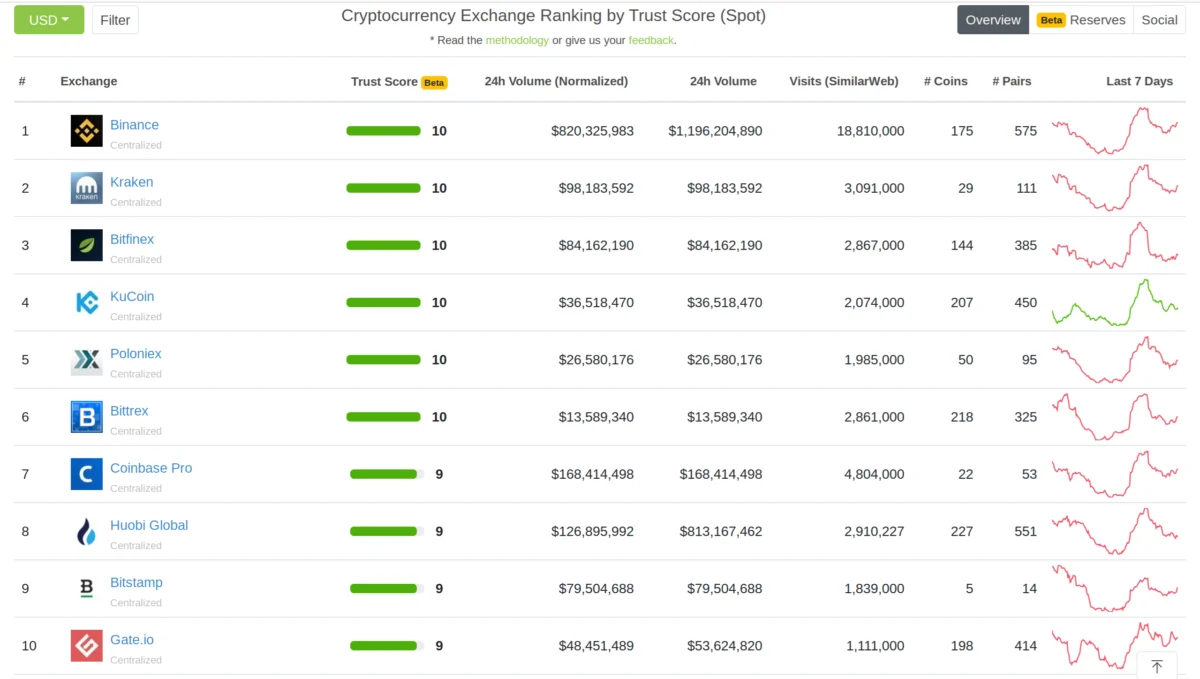
Data provided by London-based market research firm CryptoCompare reveals that this decline was not localized to a single platform but was a widespread phenomenon across industry titans including Binance, Coinbase, Kraken, and Bitstamp. As the market navigates a two-month correction phase, analysts are examining whether this drop represents a temporary lull or a more structural shift in investor sentiment.
Main Facts: The Scope of the June Correction
The month of June served as a sobering reality check for crypto enthusiasts. According to the latest CryptoCompare Exchange Review, spot trading volumes plummeted by a staggering 42.7%, while derivatives markets—often used by institutional traders for hedging—saw a concurrent 40.7% decrease.
This contraction in volume was accompanied by a decline in Bitcoin (BTC) price, which touched a monthly low of $28,908 and closed the month down approximately 6%. The reduction in activity was also reflected in futures open interest; Bitcoin futures and Ethereum (ETH) futures dropped by 31.8% and 29.3%, respectively.
Despite this significant pullback, the market structure remains vastly different from the stagnant periods of previous years. While the headlines focus on the 40% decline, industry experts caution that context is vital: the current volume levels have largely reverted to those seen in the first quarter of 2021, which, until the explosive growth of May, were considered record-breaking highs.
Chronology of the Downturn: A Storm of Regulatory and Market Pressure
To understand the current state of the market, one must look at the chain of events that preceded the June slump.
The Regulatory Onslaught
The primary catalyst for the decline was the escalating regulatory pressure from China. In May, Beijing announced a comprehensive crackdown on Bitcoin mining operations. This move was not merely a rhetorical threat but a decisive policy shift that forced a mass exodus of mining infrastructure out of China. The uncertainty surrounding the "Great Mining Migration" caused immense FUD (fear, uncertainty, and doubt) among global investors, leading to a freeze in trading activity as participants waited for the dust to settle.
The Diverging Narratives
June presented a unique dichotomy in the crypto space. On one hand, China’s hostility toward mining operations acted as a massive bear signal. On the other hand, the global narrative received a historic boost when El Salvador officially passed legislation to adopt Bitcoin as legal tender. This move by a sovereign nation was a landmark event in the history of decentralized finance, yet it was not enough to offset the bearish pressure exerted by the mining crackdown and the broader technical correction of the market.
The Liquidation Cascade
May served as a precursor to the June exhaustion. Because May witnessed some of the highest trading volumes in history due to massive, forced liquidations, any comparison to that month is inherently skewed. The market in June simply lacked the panic-driven volatility that fueled the excessive trading activity of the previous month.
Supporting Data: Examining Exchange Performance
Despite the sector-wide downturn, market hierarchy remains largely intact. Binance, the world’s largest cryptocurrency exchange, maintained its dominance despite a 56% drop in trading volume, which settled at approximately $668 billion for the month.
The following data points highlight the depth of the contraction:
- Spot Market: The 42.7% drop indicates that retail traders and short-term speculators stepped back from the market significantly.
- Derivatives Market: The 40.7% decrease in derivative volume suggests that institutional players and professional traders reduced their exposure, likely waiting for a clearer trend to emerge before re-entering the market.
- Open Interest: The sharp decline in BTC and ETH futures open interest indicates that many leveraged positions were closed out, reducing the overall risk profile of the market but also dampening the liquidity that characterizes a "bull" market.
Official Responses and Expert Analysis
The narrative surrounding the volume drop is nuanced. While the headline numbers appear grim, industry experts emphasize that perspective is necessary to avoid alarmism.

The View from Kaiko
Clara Medalie, research lead at crypto market data provider Kaiko, provided context during an interview with CNBC. Medalie noted that while volume has undoubtedly plunged across all major exchanges, these numbers are still "magnitudes greater" than the levels observed during the same period in 2020.
"June volume still ranks in the top five months of volume ever recorded," Medalie explained. She argued that comparing June to May is an "unfair comparison" because May was an outlier fueled by historic liquidation events. According to her analysis, the market has not "collapsed" but has rather reverted to the robust baseline established at the beginning of 2021.
Implications: What Lies Ahead for Digital Assets?
The contraction in trading volume has several profound implications for the future of the crypto industry.
1. The Shift to Maturity
Lower volumes and reduced volatility, while discouraging for day traders, are often viewed by long-term institutional investors as a sign of market maturation. Excessive volume is frequently synonymous with high volatility; a period of "sideways" price action allows for the consolidation of support levels and the purging of over-leveraged market participants.
2. Mining Decentralization
The exodus of miners from China, while disruptive in the short term, is widely considered a net positive for the long-term health of the Bitcoin network. By decentralizing mining operations across the United States, Europe, and Central Asia, the network becomes more resilient to single-point-of-failure risks, such as government crackdowns in a single jurisdiction.
3. Regulatory Clarity
As exchanges navigate the new reality, the focus is shifting toward compliance and regulatory transparency. The decline in speculative trading may provide a window for exchanges to focus on institutional-grade products and security, which are essential for long-term adoption.
4. The "Legal Tender" Effect
The adoption of Bitcoin in El Salvador remains a "North Star" for the industry. As other emerging markets monitor the success of this experiment, the potential for further state-level adoption could reignite the bullish sentiment that characterized the early months of 2021.
Conclusion
The 40% plunge in trading volumes observed in June is a reflection of a market undergoing a necessary detox. After a period of excessive hype, regulatory shocks, and record-breaking volatility, the cryptocurrency space is currently in a state of consolidation.
While the headline numbers might suggest a loss of interest, the reality—as evidenced by historical comparisons—is that the industry remains in a fundamentally stronger position than it was one year ago. The "sideways" movement of tokens is a period of price discovery, where the market is attempting to find a stable floor in the wake of significant geopolitical shifts.
Investors and stakeholders should view this cooling-off period not as an end, but as a transitional phase. As the mining industry migrates and the global regulatory landscape begins to take shape, the volatility that defined the first half of 2021 may eventually give way to a more stable, albeit less frenetic, environment for digital asset investment.
Disclaimer: The information provided in this article is for educational and informational purposes only and does not constitute financial, investment, or legal advice. Cryptocurrency investments carry a high level of risk. Investors should perform their own due diligence and consult with a qualified financial advisor before making any decisions. The Daily Hodl is not responsible for any losses incurred through trading activities.