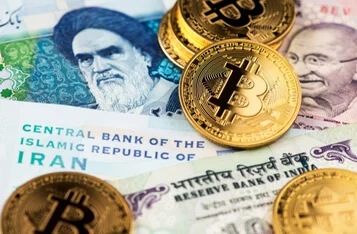
Escalation in the Strait: Polymarket Reprices “U.S. Invade Iran” Odds Amidst New Maritime Blockade
The geopolitical equilibrium in the Middle East faces its most severe test in years as fresh reports of a U.S.-led blockade of Iranian ports and a sustained campaign of targeted airstrikes have sent shockwaves through both global energy markets and predictive financial platforms. On Polymarket, the decentralized prediction market, the contract asking "Will the U.S. invade Iran before 2027?" has seen a volatile surge in activity, with the implied probability of a full-scale invasion jumping from 11.5% to 18.5%.
While the vast majority of market participants—81.5%—remain committed to the "No" outcome, the sudden seven-percentage-point increase in the "Yes" position underscores a growing nervousness regarding the rapid deterioration of the U.S.-Iran diplomatic and military relationship. With $41.7 million in total volume traded on this specific contract, the movement is far from a speculative outlier; it is a significant re-evaluation of tail-risk in a high-stakes geopolitical theater.
The Catalyst: A Breakdown in Diplomacy and Maritime Security
The current market repricing was triggered by reports indicating that the U.S. military has reimposed a blockade on key Iranian ports. This action comes in direct response to Tehran’s recent series of aggressive maneuvers targeting commercial shipping vessels traversing the strategic Strait of Hormuz.
The collapse of the interim de-escalation deal—which had previously served as a fragile dam against open conflict—has unleashed a cycle of tit-for-tat military operations. According to the latest intelligence, U.S. forces have conducted a multi-hour campaign of precision strikes against dozens of Iranian military assets. Tehran, in turn, has issued explicit threats to utilize its strategic position to halt energy exports across the Middle East, a move that would likely trigger a global economic shockwave. Iranian officials have confirmed that the strikes have resulted in casualties, further complicating any potential pathway to a diplomatic off-ramp.
Chronology of Escalation: From MOU to Military Blockade
To understand why traders are shifting their positions, one must look at the rapid disintegration of the status quo over the past quarter.
- Phase 1: The Fragile MOU: Through the first half of the year, both Washington and Tehran operated under a Memorandum of Understanding (MOU) aimed at capping nuclear advancements and ensuring the safe passage of global energy supplies.
- Phase 2: The Strait of Hormuz Crisis: Reports of Iranian interference with shipping lanes began to mount in late spring, testing the resolve of international maritime coalitions.
- Phase 3: The Collapse: Following a series of direct confrontations in the Strait, the U.S. administration signaled the end of the interim deal. The subsequent breakdown in negotiations paved the way for the current blockade and the initiation of expanded air strikes.
- Phase 4: Current Status: The market is now calibrating for the possibility of a "hot" war, as both sides move toward an increasingly confrontational posture with no immediate resumption of formal talks in sight.
Market Dynamics: The Mechanics of Predictive Sentiment
The Polymarket contract, which settles on December 31, 2026, serves as a high-frequency barometer for institutional and retail sentiment regarding a formal U.S. invasion. The "Yes" jump to 18.5% is notable for its velocity.
Data analysts note that while the move is sharp in percentage terms, the "No" side remains the dominant consensus. This suggests that traders are pricing in "escalation risk"—the likelihood of prolonged, high-intensity conflict—rather than a certainty of a full-scale ground invasion. The $41.7 million volume indicates that this contract has become a primary venue for hedge-like positioning.
Historically, this specific market has shown a tendency for "mean reversion." As observed in the 24-hour and 7-day trend data, the market has previously spiked on news, only to settle back as the "No" base case reasserts itself. However, the current structural break from the 5-point average (17.9%) suggests that market participants are increasingly concerned that the "new normal" may be fundamentally more volatile than the previous year.
Supporting Data and Related Contracts
Traders are not looking at the invasion contract in isolation. A suite of related markets provides a broader view of how the current crisis is being interpreted across different sectors:
- Strait of Hormuz Traffic: The contract asking if traffic will return to normal by July 31 is trading at 98.85% for "No," indicating that the market expects the disruption to be structural and long-lasting rather than a temporary anomaly.
- Nuclear Deal Prospects: With the "US-Iran Final Nuclear Deal" contract currently sitting at 29.5%, there is a lingering, albeit thinning, hope that a diplomatic breakthrough could still be achieved before year-end.
- Process and Policy: Traders are also monitoring the probability of Iran withdrawing from MOU negotiations entirely (40% lead) and the unlikely prospect of the U.S. implementing "Hormuz fees" (9.5%). These secondary markets act as a reality check, suggesting that the primary fear remains military disruption rather than a sudden pivot to managed, fee-based trade.
Official Responses and Diplomatic Implications
While the White House has maintained that its objective is to ensure the freedom of navigation and to hold the Iranian regime accountable for its "provocative actions," officials have stopped short of labeling the current operations as the prelude to a full-scale invasion.
Conversely, the Iranian Foreign Ministry has characterized the U.S. military presence as an "illegal infringement" on its sovereign territory, framing the strikes as an act of war. This rhetoric has further fueled the market’s anxiety. Diplomatic observers note that the lack of back-channel communication is the most dangerous variable currently in play. Without a clear mechanism to manage miscalculations, the risk of a "spiral effect"—where accidental fire leads to unintended escalation—is at its highest point since the inception of these prediction contracts.
Implications for the Global Economy and Beyond
The implications of an actual U.S. invasion of Iran would be catastrophic for the global economy, likely dwarfing the impact of any previous geopolitical event in the 21st century. The Strait of Hormuz is the world’s most critical "chokepoint," through which a significant portion of the world’s oil supply passes daily.
Traders on Polymarket are implicitly hedging against three primary risks:
- Energy Price Spikes: An invasion would lead to an immediate and sustained surge in crude oil prices, potentially triggering a global recession.
- Regional Instability: An expanded conflict would likely draw in proxy groups and regional allies, threatening the security of other energy-producing nations in the Gulf.
- Geopolitical Realignment: The crisis is forcing countries to choose sides, potentially deepening the divide between Western-aligned nations and a Sino-Russian-Iranian security bloc.
Conclusion: Watching the Horizon
As the market waits for further updates, the "Will the U.S. invade Iran before 2027?" contract will remain a vital indicator to watch. If the "Yes" side holds above the 17.9% average, it will signify that the market is moving past the phase of "temporary concern" and into a phase of "structural hedging."
The upcoming weeks will be crucial. Observers are looking for any sign of a return to the negotiating table or, conversely, evidence of further troop deployments. For now, the market remains in a state of high-alert, reflecting the profound uncertainty that characterizes this volatile chapter in Middle Eastern history. Investors and policy analysts alike are using these predictive tools not just to win a bet, but to gauge the collective wisdom—and fear—of a global community attempting to forecast the unthinkable.