Ethereum’s Resilience Shines Amidst Bearish Pressures: Network Activity Surges to Historic Highs
Despite a challenging macroeconomic environment and a bearish sentiment that has pushed Ethereum’s price towards the critical $1,500 support level, the underlying Ethereum network is experiencing an unprecedented surge in activity. This robust growth, defying market downturns, signals a deepening reliance on the platform for decentralized finance, tokenization, and a burgeoning ecosystem of blockchain-based applications.
Introduction: A Tale of Two Trends
In the volatile world of cryptocurrency, narratives often swing between extreme optimism and stark pessimism. Currently, Ethereum (ETH), the second-largest cryptocurrency by market capitalization, finds itself at a crossroads. While its market price has succumbed to broader bearish pressures, exhibiting a concerning trend towards retesting the significant $1,500 support level, the fundamental health and utility of the Ethereum network are demonstrably flourishing. This dichotomy presents a compelling case study of how underlying technological adoption and user engagement can diverge from short-term market fluctuations.
This report delves into the multifaceted dynamics shaping Ethereum’s current landscape. We will explore the core drivers behind the surge in network activity, analyze the supporting data that validates these trends, and examine the potential implications for the future trajectory of both the Ethereum network and its native token, ETH.
H2: The Unseen Engine: Surging Network Activity Defies Price Slump
While the price of ETH has been under considerable strain, the Ethereum network itself has been a hive of activity, reaching levels unseen in its history. This resilience in the face of market headwinds is a testament to the fundamental value proposition of the platform and its expanding role in the decentralized web.
H3: Key Metrics Point to Historic Engagement
Data emerging from reputable sources paints a vivid picture of this unprecedented network utilization. Leon Waidmann, Head of Research at Lisk and a recognized market expert, has been instrumental in highlighting these trends. His analyses reveal that Ethereum is currently witnessing a powerful resurgence in network activity, consistently climbing to record levels. This surge is not a fleeting anomaly but a sustained upward trajectory, indicating a deep and growing engagement within the entire Ethereum ecosystem.
The implications of this elevated activity are profound. As Ethereum solidifies its position as the foundational layer for decentralized banking, the proliferation of tokenized assets, and a vast array of blockchain-based applications, this spike in usage directly translates to an increasing demand from a diverse user base. This includes individual users, innovative developers pushing the boundaries of decentralized technology, and increasingly, institutional players recognizing the long-term potential of the network. This robust growth unequivocally underscores the chain’s position as one of the most active and influential networks within the cryptocurrency sector.
H3: Daily Active Addresses: A Barometer of User Engagement
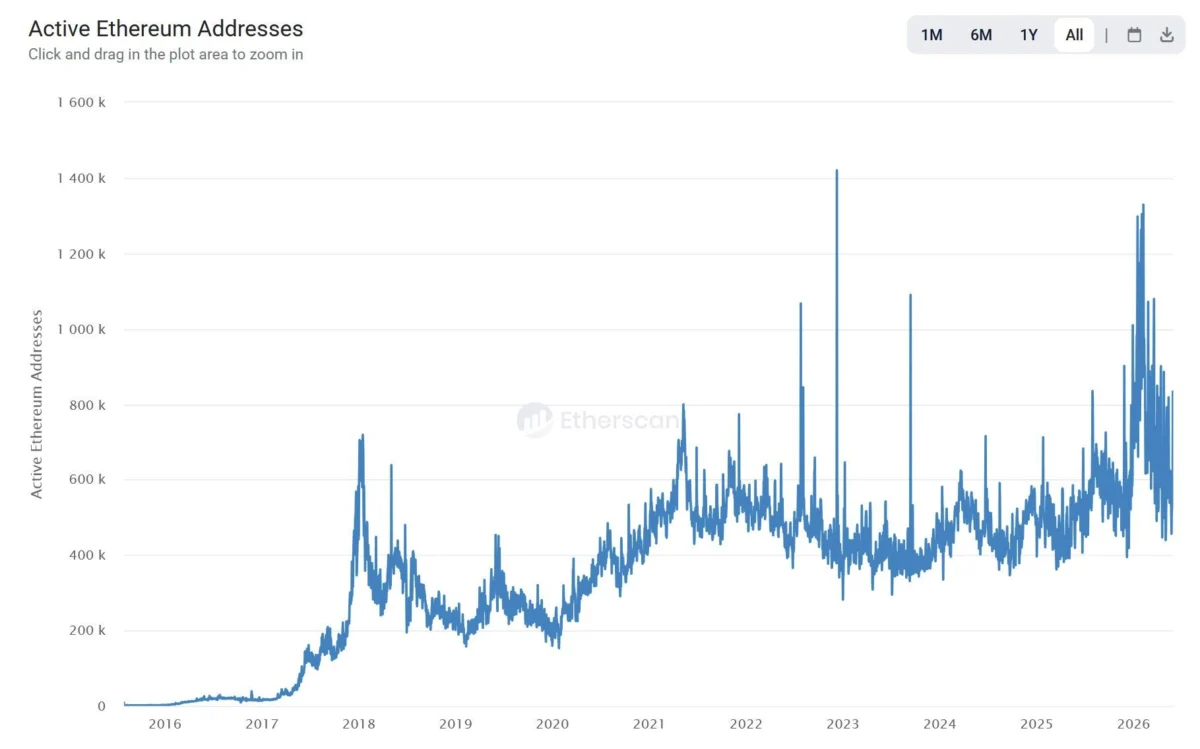
Perhaps one of the most compelling indicators of this network vitality is the surge in daily active addresses. While the price of ETH may appear stagnant or even in decline, data reveals that the number of daily active addresses has consistently hovered near the network’s all-time highest ranges. To put this into perspective, in 2018, during the previous bull market cycle, active wallet addresses on the network peaked at approximately 720,000. This figure then climbed to around 800,000 during the more recent bull market of 2021.
However, the current market cycle, spanning from 2025 into 2026, has witnessed a dramatic escalation. Daily active addresses have not only surpassed previous highs but have been consistently pushing past the one million mark, peaking above an impressive 1.3 million. This signifies a substantial increase in the number of unique participants interacting with the Ethereum network on a daily basis. Crucially, this implies that the network is currently processing more genuine, real-world transactions and interactions than it did even at the zenith of the last bull market cycle. This sustained high level of user engagement, independent of speculative price action, is a strong indicator of the network’s intrinsic value and growing utility.
H3: Declining Exchange Reserves: A Sign of Conviction

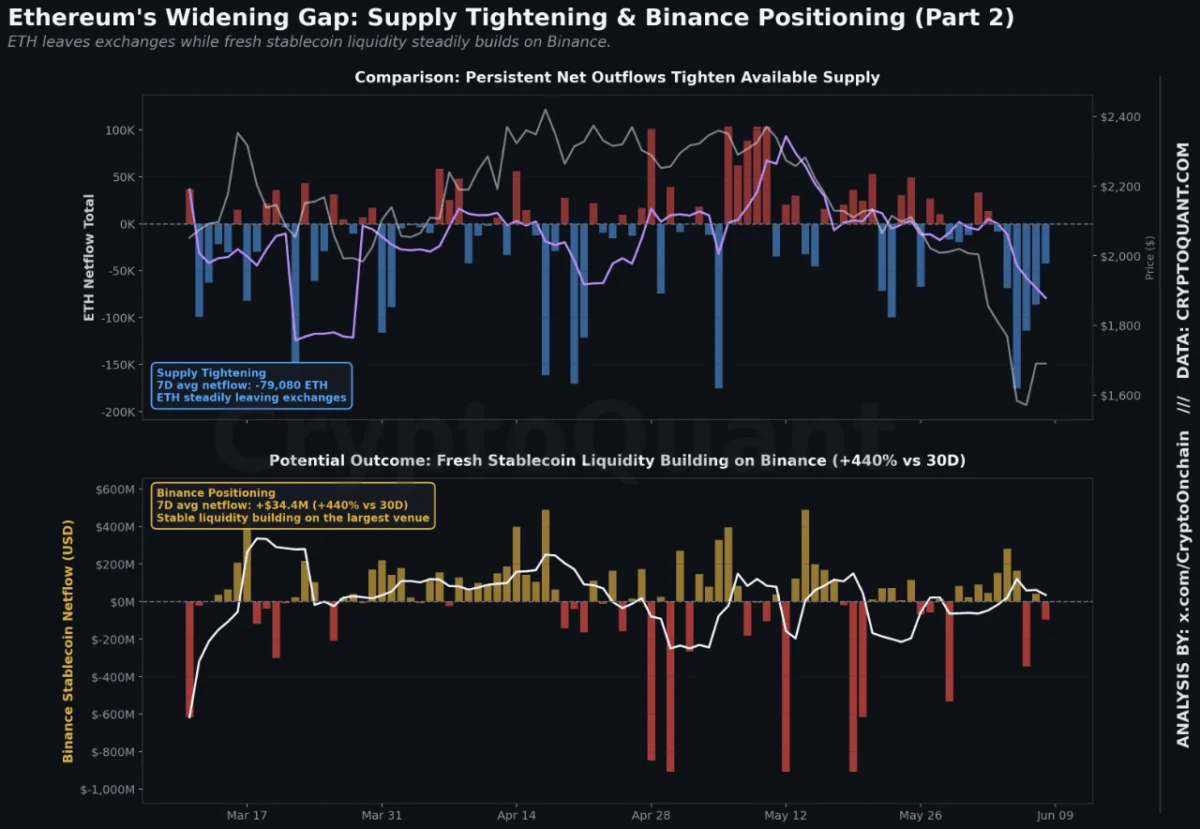
Further bolstering the narrative of growing confidence and long-term holding sentiment is the significant withdrawal of ETH from cryptocurrency exchanges. As of Wednesday, the total amount of ETH held on exchanges has plummeted to approximately 14.5 million ETH. This represents a historic low, notably occurring not during a period of price surge, but rather during the current market downturn.
To contextualize this, in October 2023, the ETH exchange balance stood at its previous low of 21 million ETH. Over the past two and a half years, a staggering exodus of over 6 million ETH has occurred, moving from centralized exchanges into private wallets. Typically, periods of heightened market volatility are characterized by an increase in exchange inflows as traders seek to react to price movements. The observed phenomenon, however, is the direct opposite. This sustained withdrawal suggests that holders are not actively trading or seeking to offload their ETH in response to price dips. Instead, they appear to be accumulating and holding their positions, indicating a strong conviction in the long-term prospects of the network. As Waidmann aptly stated, "Whoever is buying here isn’t selling back." This sentiment suggests a shift from speculative trading towards a more fundamental belief in Ethereum’s enduring value.
H2: Chronology of Network Evolution and Market Dynamics
Understanding the current state of Ethereum requires a look back at its evolution and the cyclical nature of the cryptocurrency market.
H3: From ICO Boom to DeFi Dominance: A Decade of Innovation
Launched in 2015, Ethereum was conceived as more than just a cryptocurrency; it was envisioned as a decentralized platform for running smart contracts. This foundational innovation paved the way for the initial coin offering (ICO) boom of 2017, where numerous projects leveraged the Ethereum blockchain to raise capital. While the ICO era was marked by both groundbreaking innovation and speculative excess, it firmly established Ethereum as the go-to platform for decentralized applications.
The subsequent years saw the emergence and explosive growth of decentralized finance (DeFi). Platforms offering decentralized exchanges (DEXs), lending protocols, and yield farming opportunities all found a home on Ethereum. This period, particularly around 2020-2021, saw a significant increase in network activity, driven by the financial incentives and novel use cases emerging from the DeFi space. The bull market of 2021, in particular, pushed transaction volumes and active addresses to new heights, setting benchmarks that are now being surpassed.
H3: Navigating Bear Markets: Lessons Learned and Infrastructure Strengthened
Bear markets, while challenging for token prices, often serve as crucial periods for infrastructure development and ecosystem maturation. The period following the 2021 bull run saw a prolonged downturn, during which many projects struggled to survive. However, Ethereum continued to evolve. The highly anticipated Merge, which transitioned the network from Proof-of-Work (PoW) to Proof-of-Stake (PoS), was a monumental achievement in terms of scalability and energy efficiency. This upgrade, completed in September 2022, has laid the groundwork for future scalability solutions like sharding, further enhancing the network’s capacity.
The current bearish phase, characterized by macroeconomic headwinds, rising interest rates, and regulatory uncertainties, has once again tested the resilience of the crypto market. Yet, as evidenced by the surging network activity, the fundamental utility and adoption of Ethereum have continued to grow, demonstrating a decoupling from the purely speculative drivers that characterized previous market cycles.
H2: Supporting Data: Quantifying the Ethereum Renaissance
The anecdotal evidence of increased network activity is strongly supported by quantifiable data points across various metrics.
H3: Transaction Volume and Throughput: A Busy Blockchain

While specific real-time transaction volume figures can fluctuate, the consistent rise in daily active addresses strongly suggests a corresponding increase in transaction throughput and overall network utilization. As more users and applications engage with the network, the number of transactions processed naturally escalates. This increased demand, even with ongoing scalability improvements, can sometimes lead to higher gas fees, which, while a point of contention for some users, also serves as a direct indicator of high network demand. The ability of the network to handle these increased loads, especially post-Merge, highlights the success of its technological advancements.
H3: Smart Contract Interactions: The Engine of Decentralization
The core of Ethereum’s functionality lies in its smart contracts. The proliferation of DeFi protocols, Non-Fungible Token (NFT) marketplaces, and decentralized autonomous organizations (DAOs) all rely heavily on smart contract interactions. The sustained high levels of active addresses indicate a continuous stream of users interacting with these smart contracts, driving innovation and economic activity within the decentralized ecosystem. Data from blockchain explorers consistently shows a high volume of smart contract calls, reinforcing the notion that Ethereum remains the dominant platform for building and deploying decentralized applications.
H3: Developer Activity: Building the Future
Beyond user engagement, the health of a blockchain ecosystem is also reflected in its developer community. Reports from various blockchain analytics firms consistently show a strong and growing developer presence on Ethereum. The availability of robust development tools, a large existing codebase, and the network’s established market position continue to attract new developers and encourage ongoing innovation. This sustained developer interest is crucial for the long-term viability and evolution of the Ethereum network, ensuring a constant pipeline of new applications and improvements.
H2: Official Responses and Expert Analysis
While there may not be direct "official responses" from a central authority for a decentralized network like Ethereum, the analysis and commentary from leading figures within the blockchain space provide valuable insights.
H3: Expert Perspectives on Network Strength
The insights from Leon Waidmann, as previously cited, are particularly significant. His meticulous analysis of network metrics provides a counter-narrative to the prevailing bearish sentiment in the price charts. His assertion that current network activity is surpassing that of previous bull market peaks is a powerful endorsement of Ethereum’s fundamental strength.
Furthermore, the analysis from Ali Charts, a seasoned crypto analyst, offers a projection on potential price bottoms. By examining the Ethereum Delta Price metric, which gauges the relationship between investors’ cost basis and miner production costs, Ali Charts has historically identified key market bottoms. His recent analysis suggests a potential price bottom for ETH near the $700 mark. While this is a significantly lower figure than current price levels, it highlights the potential for substantial accumulation phases before the next sustained upward trend. The fact that such an analysis is being conducted, and that the market is absorbing this information, indicates a sophisticated understanding of the underlying dynamics at play.
H3: The Role of Ethereum ETFs and Institutional Adoption
The recent approval and launch of Ethereum Exchange-Traded Funds (ETFs) in some jurisdictions, alongside similar developments for Bitcoin ETFs, signals a growing institutional appetite for exposure to the digital asset space. While these ETFs primarily track the price of ETH, their existence and the associated inflows (or outflows) can provide further data points for market sentiment and demand. The fact that institutions are increasingly looking to gain exposure to Ethereum through regulated financial products underscores the network’s growing maturity and acceptance within traditional finance.
H2: Implications for the Future of Ethereum
The current divergence between Ethereum’s price action and its network activity presents several significant implications for the future.
H3: A Stronger Foundation for Future Growth
The sustained high level of network activity suggests that Ethereum is building a more robust and resilient foundation than ever before. When the broader market sentiment eventually shifts towards a bullish phase, the existing high level of user engagement and application development could provide a powerful catalyst for a more sustained and organic price appreciation. The network is not starting from a low base; it is already operating at peak capacity in terms of user interaction.
H3: Decentralization as a Buffer Against Volatility
The decentralized nature of Ethereum inherently provides a buffer against the extreme volatility that can plague more centralized financial systems. While price fluctuations are inevitable, the continuous utility and adoption of the network ensure its ongoing relevance and value proposition. The current situation demonstrates that even during periods of bearish sentiment, the fundamental demand for Ethereum’s services remains strong.
H3: The Road to $1,500 and Beyond: A Network-Driven Recovery?
The potential retest of the $1,500 support level is a near-term concern for ETH investors. However, the underlying strength of the network suggests that a recovery is not only possible but perhaps inevitable. As the network continues to attract users, developers, and capital, the intrinsic value of ETH is likely to be recognized by the market, potentially driving a price recovery that is underpinned by genuine utility rather than purely speculative enthusiasm.
The insights from Ali Charts regarding a potential $700 bottom, while seemingly bearish in isolation, can also be interpreted as a signal of a significant accumulation opportunity. If history repeats, a dip to such levels, followed by a sustained upward trend, would be a classic market cycle. The key difference in the current cycle is the unprecedented level of network activity that precedes this potential bottom.
Conclusion: Ethereum’s Enduring Value in a Shifting Landscape
In conclusion, while the price of Ethereum may be navigating choppy waters, the network itself is experiencing a period of unprecedented growth and engagement. The surge in daily active addresses, the significant withdrawal of ETH from exchanges, and the continued innovation within its developer community all point towards a fundamental strengthening of the Ethereum ecosystem. This robust underlying activity suggests that Ethereum is not merely a speculative asset but a vital and evolving technological infrastructure that is increasingly indispensable to the burgeoning decentralized web.
As the cryptocurrency market continues to mature and evolve, the resilience and utility demonstrated by the Ethereum network are likely to become increasingly important factors in its long-term success. The current trends suggest that when the broader market sentiment eventually turns bullish, Ethereum is exceptionally well-positioned to capitalize on its solid foundation and emerge even stronger. The narrative of Ethereum is shifting from one of pure price speculation to one of undeniable technological adoption and enduring value creation.