Institutional Capital Flood: Crypto Investment Products See $16.9 Billion Surge as Investors Hedge Against Global Volatility
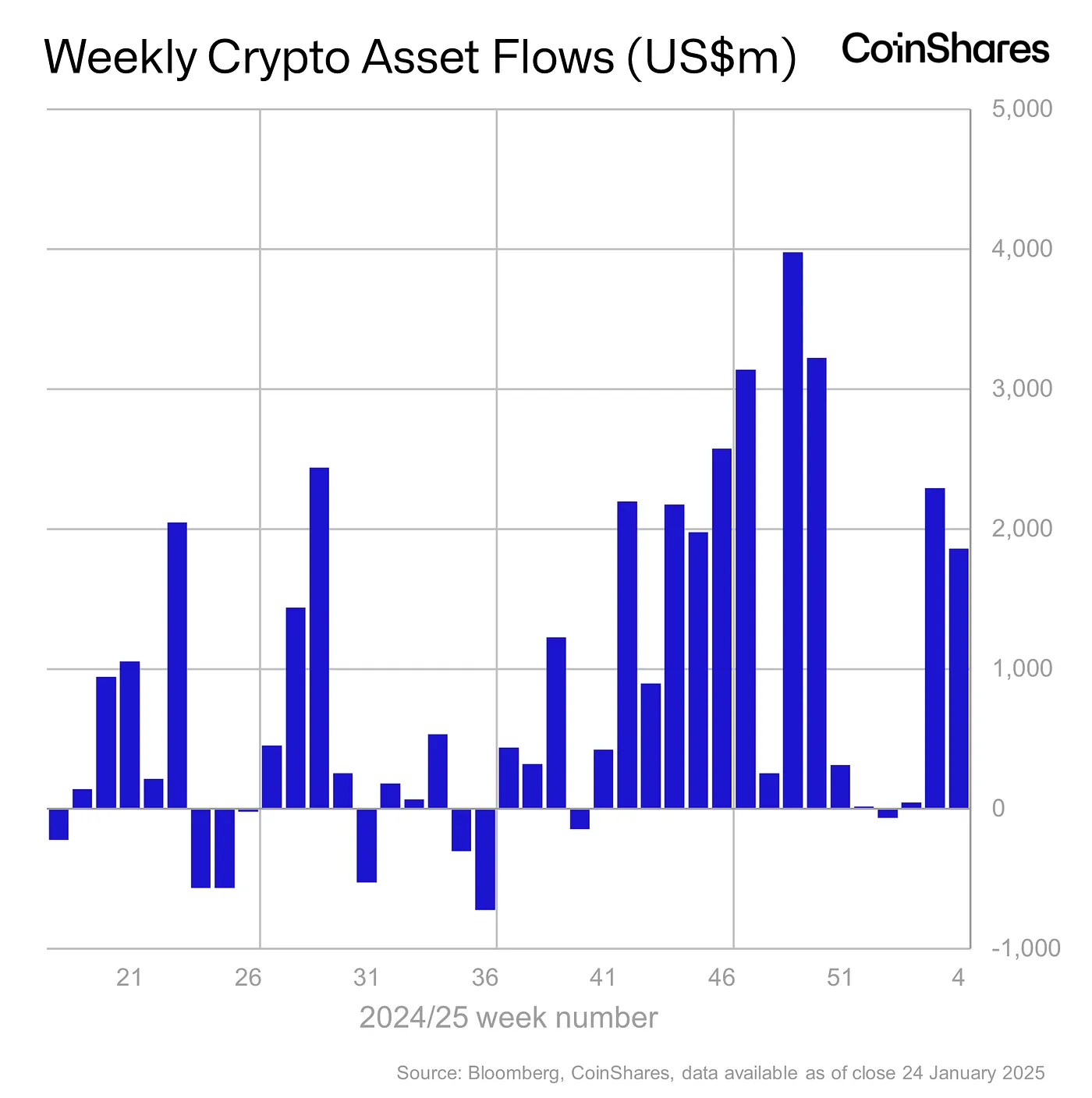
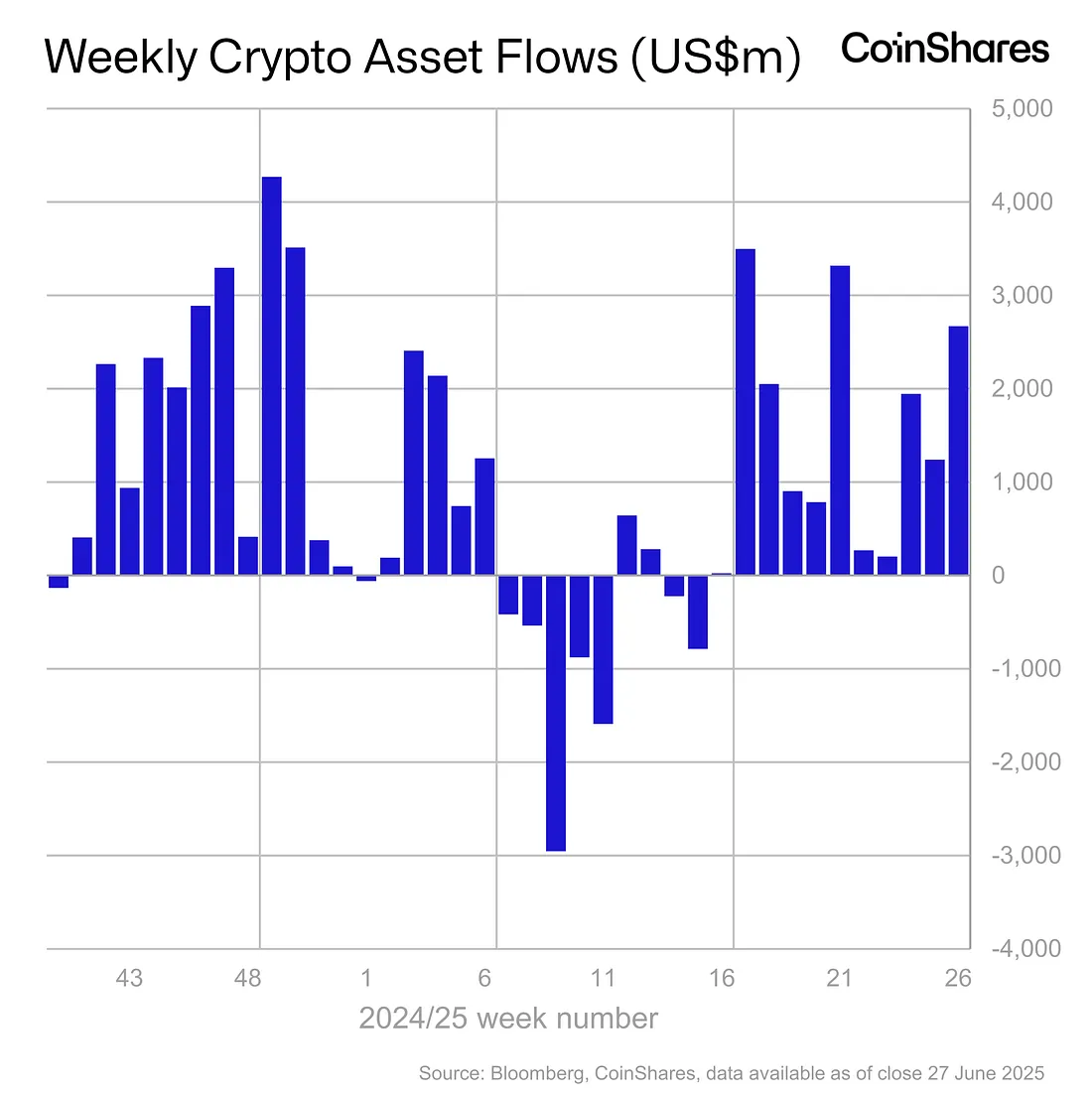
The digital asset landscape is witnessing a profound shift in institutional sentiment. According to the latest Digital Asset Fund Flows Weekly report from premier crypto asset management firm CoinShares, institutional-grade investment vehicles have recorded an unprecedented eleven-week streak of capital accumulation. With a total of $16.9 billion flowing into these products during this period, the sector is signaling a robust appetite for crypto-exposure, effectively mirroring the historic growth patterns observed during the first half of 2024.
The State of the Market: A Mid-Year Review
As the industry crosses the mid-year threshold of 2025, the data provided by CoinShares offers a compelling snapshot of global financial trends. In the first six months of this year, total inflows reached approximately $16.9 billion—a figure that stands in close proximity to the $18.3 billion recorded during the same period in 2024. This continuity suggests that the institutional embrace of digital assets is not merely a transient trend but a structural evolution in portfolio diversification strategies.
CoinShares analysts attribute this resilient demand to a "confluence of factors," most notably the intensification of geopolitical instability and the persistent uncertainty regarding the trajectory of global monetary policy. As traditional banking systems grapple with inflationary pressures and fiscal unpredictability, institutional investors are increasingly viewing Bitcoin and its counterparts as "digital gold"—a hedge against the devaluation of sovereign currencies and systemic market shocks.
Chronology of the Inflow Surge
The current momentum did not appear in a vacuum. To understand the gravity of the recent $2.7 billion weekly inflow, one must look at the trajectory of the last quarter:
- April 2025: Following a period of consolidation, institutional interest began to stabilize as macroeconomic indicators showed signs of potential central bank pivots.
- May 2025: Inflows gained velocity as regional banking concerns in various parts of the globe sparked renewed interest in non-custodial and decentralized assets.
- June 2025: The month culminated in a massive surge, with the final week alone accounting for $2.7 billion in new capital, cementing the eleven-week streak.
This consistent accumulation marks a departure from the "boom-and-bust" cycles of previous years, pointing toward a more mature institutional participant base that utilizes dollar-cost averaging and strategic rebalancing to enter the market.
Regional Divergence: The Global Capital Map
The flow of capital is not uniform across the globe, revealing a distinct geographic concentration of risk and opportunity.
The North American Dominance
The United States remains the undisputed engine of the current bull cycle. With $2.65 billion in inflows recorded last week alone, American institutional investors are setting the pace for the global market. This dominance is largely attributed to the widespread availability of spot-based investment products and a clearer, albeit complex, regulatory landscape that has allowed institutional firms to integrate crypto into their traditional product offerings.
European Dynamics
Switzerland and Germany continue to act as key hubs for European crypto investment, reporting $23 million and $19.8 million in inflows, respectively. These nations have long been pioneers in providing regulatory frameworks that encourage institutional adoption, and their consistent, if more modest, growth underscores the stability of the European market.
Outflow Trends and Regional Challenges
In contrast, other jurisdictions are experiencing a "capital flight" of sorts. Canada, Hong Kong, and Brazil saw net outflows of $13.6 million, $2.3 million, and $2.4 million, respectively. The situation in Hong Kong is particularly noteworthy, with the region suffering $132 million in outflows throughout the month of June. Market analysts suggest that these outflows may be driven by localized profit-taking and shifting regulatory pressures in Asian markets, which often react more sharply to global interest rate fluctuations.
Bitcoin and Ethereum: The Primary Beneficiaries
As has been the case for the better part of the last decade, Bitcoin (BTC) remains the primary recipient of institutional confidence.

Bitcoin’s Resilient Dominance
Bitcoin captured a staggering 83% of all institutional inflows last week, totaling $2.2 billion. Perhaps more telling than the inflows themselves are the outflows from "Short-Bitcoin" products. With an additional $2.9 million flowing out of short-selling vehicles, the year-to-date total for such products has reached $12 million. This trend serves as a strong indicator of "broadly positive sentiment," suggesting that even institutional bears are capitulating as the asset class continues to demonstrate its durability.
Ethereum’s Steady Climb
Ethereum (ETH) continues to solidify its status as the institutional "second-in-command." The asset saw $429 million in inflows last week, maintaining its long-standing streak of positive sentiment. While Bitcoin serves as a store of value, institutional interest in Ethereum is largely driven by its utility as the backbone of decentralized finance (DeFi) and the increasing interest in its staking yields, which offer a unique "bond-like" return profile that is highly attractive to institutional treasury managers.
Implications for the Broader Financial System
The implications of these massive inflows extend far beyond the crypto-native ecosystem.
The Institutionalization of Crypto
The transition from retail-led speculation to institutional-led accumulation signifies a fundamental shift in market mechanics. When multi-billion dollar firms allocate even a fraction of their assets to digital tokens, the market’s volatility profile changes. These "long-term holders" are less likely to liquidate during minor corrections, potentially creating a "liquidity crunch" for exchanges as supply is locked away in cold storage or institutional custody solutions.
The Hedging Thesis
The core thesis driving this wave of investment is the "Macro Hedge." As sovereign debt levels in major economies reach historic highs, investors are seeking assets that are mathematically decoupled from the decisions of central banks. The recent inflows into crypto products suggest that the institutional world has officially moved past the "is it a scam?" phase and into the "how much exposure do we need?" phase.
Expert Analysis and Future Outlook
While the current figures are bullish, financial experts caution that the market remains sensitive to macroeconomic shifts. If central banks maintain "higher-for-longer" interest rate policies, the cost of capital may eventually weigh on the ability of institutional funds to deploy massive amounts of liquidity into risk-on assets.
Furthermore, the ongoing regulatory discussions in the United States regarding the classification of various altcoins will continue to play a pivotal role in the second half of 2025. If legal clarity improves, we could see a diversification of these flows into "Altcoin" investment products, which currently remain in the shadow of Bitcoin and Ethereum.
Conclusion
The $16.9 billion inflow over the past eleven weeks is a testament to the enduring appeal of digital assets in an era of fiscal uncertainty. As institutional players continue to consolidate their positions, the line between traditional finance and decentralized technology continues to blur.
For the individual investor, this institutional backing provides a layer of validation, yet the risks remain substantial. As highlighted by the CoinShares report and the broader market context, volatility is inherent to the space. The current surge is not a guarantee of future performance but a clear reflection of where the "smart money" is positioning itself for the years ahead. As the market heads into the second half of 2025, all eyes will remain on the Federal Reserve’s next moves and the ongoing maturation of the global digital asset regulatory framework.
Disclaimer: The information provided in this article is for educational and informational purposes only and does not constitute financial, investment, or legal advice. Investing in digital assets, including Bitcoin and Ethereum, carries a high degree of risk. Investors should conduct their own research or consult with a qualified financial advisor before making any investment decisions. The author and publisher are not responsible for any financial losses incurred.