Institutional Capital Floods Crypto Markets: A Comprehensive Analysis of the 2026 Opening Surge
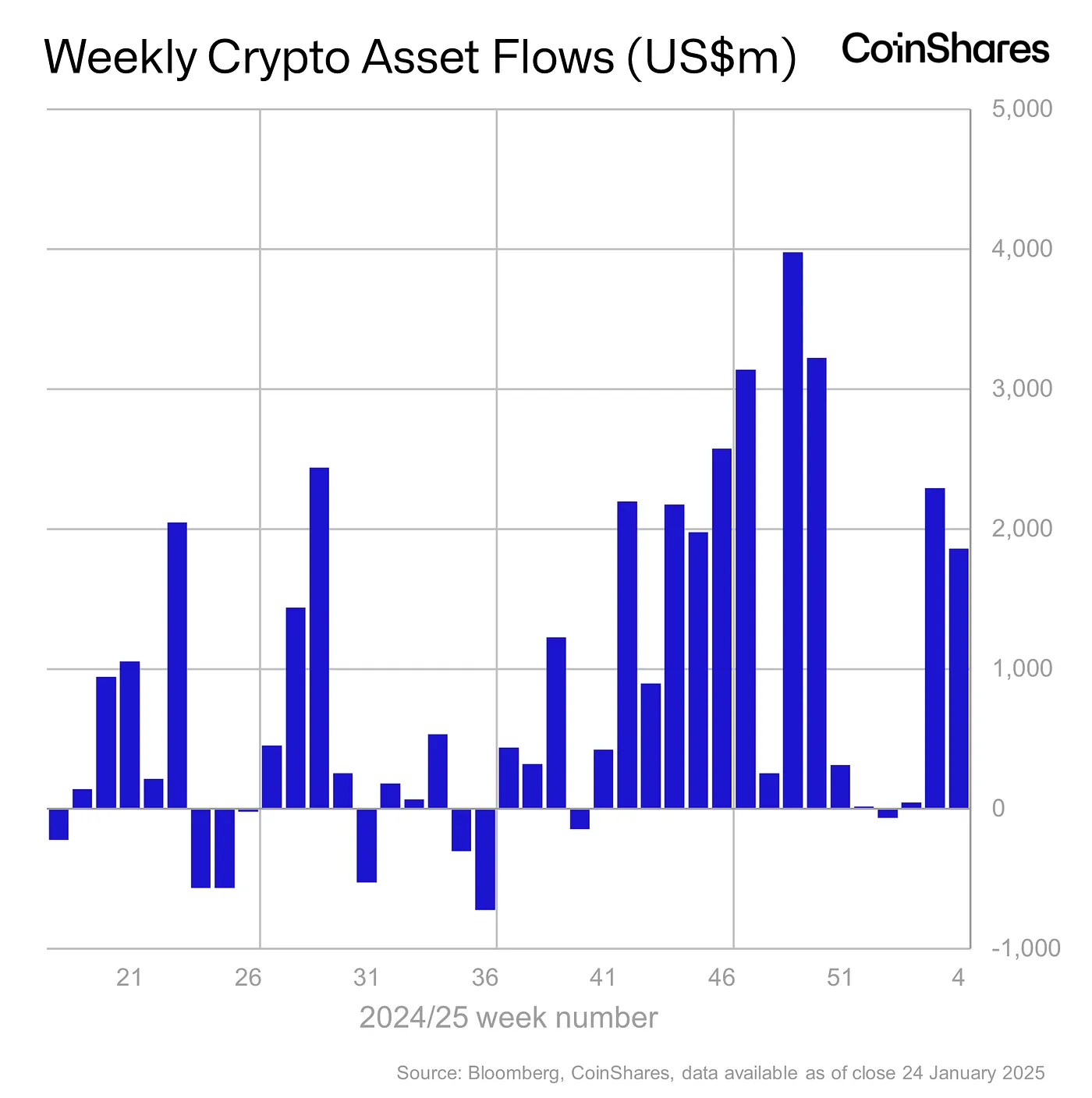
The global digital asset market has commenced the 2026 calendar year with a resounding display of institutional confidence. According to the latest data from CoinShares, the sector has witnessed a substantial influx of capital, signaling that the appetite for regulated crypto-investment vehicles remains robust despite global macroeconomic uncertainties. This surge follows a historic 2025, which saw the digital asset sector nearly eclipse the record-breaking capital inflows of the previous year.
Main Facts: The $582 Million Weekly Kickoff
The digital asset management landscape experienced a volatile yet ultimately bullish start to the first week of 2026. Data indicates that total net inflows reached $582 million. While the week began with a period of selling pressure—resulting in net outflows—a massive rally in sentiment occurred by Friday, during which institutional investors funneled $671 million into various investment products. This late-week buying spree successfully erased earlier losses, cementing a strong positive start for the year.
The distribution of this capital reveals a clear hierarchy of institutional preference. Bitcoin (BTC) remains the dominant asset, attracting $512 million in fresh capital. However, the interest in altcoins is increasingly notable. Ethereum (ETH) saw a robust $119 million in inflows, while XRP captured $10.7 million. Interestingly, Solana (SOL) bucked the broader trend, recording $30 million in outflows, highlighting a divergence in investor sentiment regarding the smart-contract platform’s immediate outlook.
Chronology: From a Record-Breaking 2025 to the 2026 Rally
To understand the current momentum, one must analyze the trajectory of 2025. The digital asset sector closed the year with a staggering $47.2 billion in total inflows. While this figure fell slightly short of the all-time record set in 2024 ($48.7 billion), it represents a period of sustained institutional adoption.
The 2025 Fiscal Landscape
- Q1–Q3 2025: The period was characterized by the normalization of spot ETF flows in the United States, which acted as the primary engine for liquidity.
- Q4 2025: Market sentiment stabilized, with major financial institutions increasing their allocation to digital assets as a hedge against inflationary pressures in traditional markets.
- Year-End 2025: Total inflows reached $47.2 billion, setting a high bar for the start of 2026.
The First Week of 2026
- Early Week: Markets experienced a brief "sell-the-news" event or profit-taking cycle, resulting in initial net outflows.
- Friday, January 2026: Sentiment shifted abruptly. Institutional desks executed large-scale buy orders totaling $671 million.
- Closing: The week concluded with a net positive of $582 million, setting a bullish tone for the remainder of the quarter.
Supporting Data: Regional Trends and Asset-Specific Growth
The geographic distribution of capital inflows remains a critical metric for analysts. The United States continues to lead the global market, accounting for $44.5 billion of the total 2025 inflows. However, the 12% decline from 2024 levels suggests that the market is becoming more globalized.
Germany emerged as the most significant success story of the previous year. After struggling with outflows in 2024, the German market saw a massive turnaround, securing $2.5 billion in inflows. This shift is attributed to clearer regulatory frameworks within the European Union (MiCA) and a growing interest from European pension funds. Canada and Switzerland also remained pivotal, contributing $1.1 billion and $775 million, respectively.
Asset-Specific Performance (2025)
The growth rates of specific altcoins during 2025 provide a roadmap for where institutional smart money is migrating:
- Bitcoin (BTC): Led the pack with $26.9 billion in inflows. Short-Bitcoin products remained a niche segment, accounting for only $105 million, which suggests that institutional investors are overwhelmingly bullish on the long-term price action of the asset.
- Ethereum (ETH): Recorded $12.7 billion in inflows, representing a 138% increase year-over-year. This surge is likely linked to the maturation of staking-related products and institutional interest in Ethereum’s role as a yield-bearing asset.
- XRP: Captured $3.7 billion in inflows, a massive 500% year-over-year gain. This reflects a recovery in confidence regarding the asset’s legal and regulatory status.
- Solana (SOL): Achieved $3.6 billion in inflows, a 1,000% gain compared to the previous year. Despite the recent $30 million outflow, the long-term trend remains heavily positive.
Official Responses and Market Analysis
Analysts at CoinShares noted that while the overall sentiment is positive, the market is beginning to discriminate between assets. The 30% year-over-year decline in inflows for "other altcoins" (those outside the top four) suggests a "flight to quality." Institutions are increasingly focused on assets with deep liquidity, proven utility, and lower regulatory risk profiles.
"The divergence we are seeing is a sign of a maturing market," says one market strategist. "Institutions are no longer casting a wide net across the entire crypto ecosystem. They are building portfolios around core assets that have demonstrated resilience through market cycles. The outflows in Solana this week, for example, should be viewed as tactical rebalancing rather than a fundamental shift in sentiment toward the ecosystem."
Implications: What This Means for the Future
The current influx of capital carries several profound implications for the digital asset landscape:
1. The Institutionalization of Portfolio Diversification
The shift away from purely Bitcoin-focused portfolios into Ethereum, XRP, and Solana indicates that institutions are treating crypto as a multi-asset class. This mirrors traditional equity markets, where investors diversify across sectors (e.g., Tech, Finance, Energy). As these products become more sophisticated, we can expect to see institutional-grade "crypto-baskets" becoming standard in wealth management.
2. Regulatory Pressure and Market Maturity
The strong performance of the US market, despite a slight year-over-year dip, proves that regulatory clarity is the primary driver of institutional participation. As more jurisdictions move to implement frameworks similar to the EU’s MiCA, we can expect capital to flow more freely from institutional coffers into regulated exchange-traded products (ETPs).
3. The "Flight to Quality"
The decline in inflows for smaller, speculative altcoins suggests that the "crypto winter" of previous years has instilled a sense of caution. The institutional community is prioritizing assets that possess high market capitalization and significant daily trading volumes. This will likely lead to a consolidation phase, where top-tier assets capture the vast majority of institutional liquidity, while smaller projects may struggle to attract the same level of support.
4. Macroeconomic Hedge
The timing of the year-end 2025 inflows, combined with the strong start to 2026, suggests that investors are increasingly viewing digital assets as a viable hedge against traditional financial volatility. With inflation remaining a concern in many G7 nations, the programmatic scarcity of Bitcoin and the yield-bearing nature of Ethereum provide a compelling narrative for portfolio managers looking to protect capital.
Conclusion
As 2026 progresses, the data clearly indicates that the institutional embrace of digital assets is not merely a passing trend but a structural shift in global finance. The $582 million weekly inflow, while significant, is merely a reflection of a much larger, multi-billion-dollar annual movement.
For the average investor, this trend underscores the necessity of due diligence. As institutions continue to allocate heavily into Bitcoin, Ethereum, and major altcoins, the market will likely become more efficient, potentially reducing the extreme volatility that characterized the early years of crypto. However, as the disclaimer notes, the market remains high-risk, and the movement of institutional capital is not a guarantee of future performance. Investors must remain vigilant, monitor regulatory developments, and understand that in the world of digital assets, liquidity and sentiment can shift as quickly as the code that powers the underlying protocols.
Disclaimer: The information provided in this article is for educational and informational purposes only and does not constitute financial, investment, or legal advice. The Daily Hodl is not an investment advisor and does not recommend the buying or selling of any specific digital assets. Investing in cryptocurrencies involves significant risk, and you should perform your own research and consult with a professional financial advisor before making any investment decisions.