Institutional Capital Retreats: Analyzing the $414 Million Crypto Selloff Amid Global Geopolitical Tensions
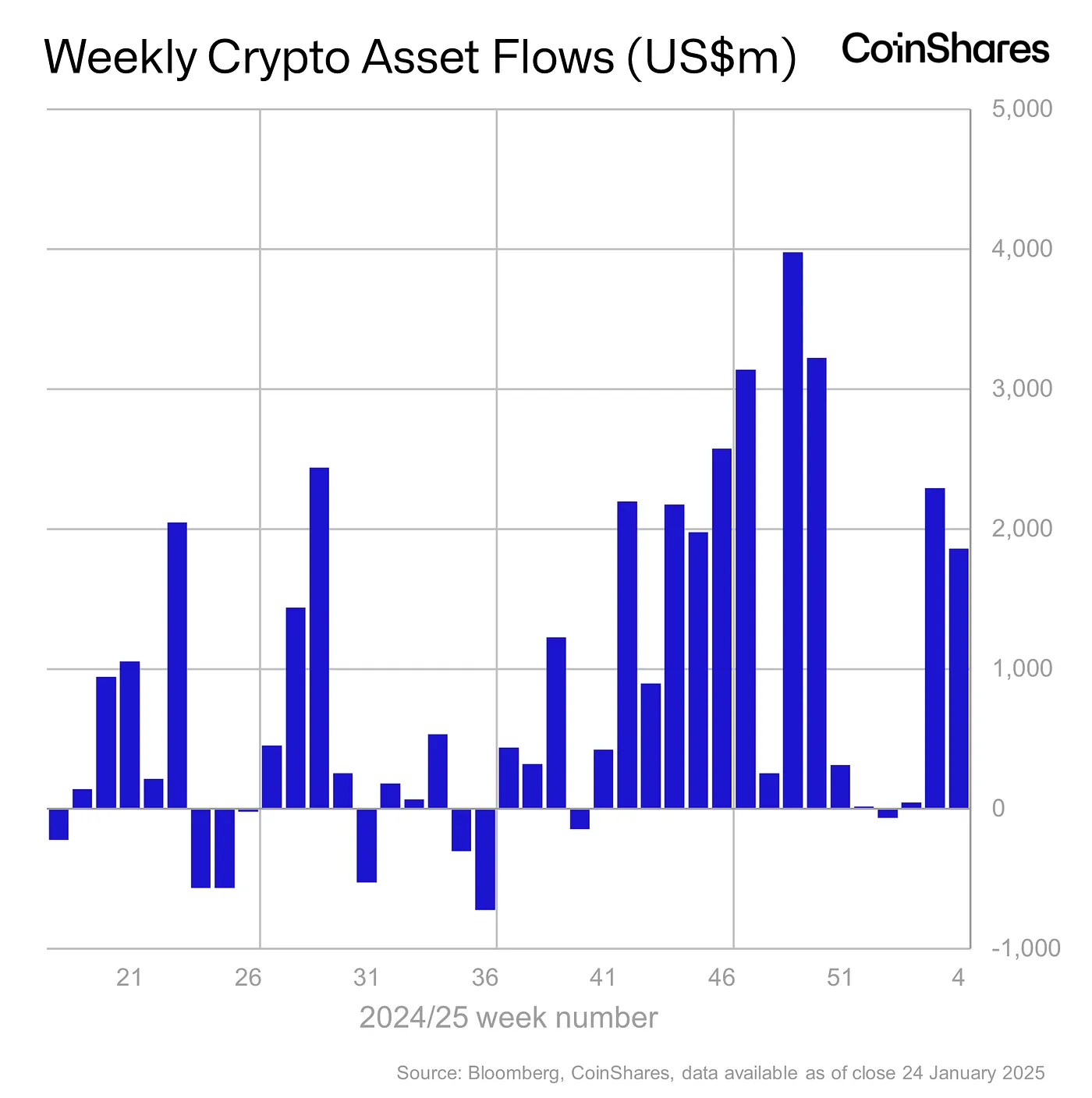
In a sudden shift in market sentiment, institutional investors have moved to significantly reduce their exposure to digital assets, liquidating a total of $414 million in cryptocurrency holdings over the past week. This exodus, detailed in the latest fund flow report from digital asset management firm CoinShares, marks the first major wave of selling in five weeks. The move suggests a broader reassessment of risk by institutional players as they navigate a volatile macroeconomic landscape defined by persistent inflation and escalating geopolitical uncertainty.
Main Facts: A Global Portfolio Rebalancing
The latest data from CoinShares confirms that the recent period of bullish momentum in crypto markets has encountered a significant headwind. The $414 million aggregate outflow represents a decisive pivot from the trend of consistent accumulation observed throughout the previous month.
While the selloff was broad, it was not uniform. The United States bore the brunt of the divestment, with domestic institutional outflows totaling $445 million. Switzerland, often considered a safe harbor for digital assets, also saw minor outflows amounting to $4 million. Conversely, institutional investors in Germany and Canada bucked the trend, viewing the price dip as a strategic entry point; they recorded inflows of $21.2 million and $15.9 million, respectively. Despite this liquidation, total assets under management (AUM) for the sector remain robust at $129 billion, underscoring that while sentiment has cooled, the institutional infrastructure for digital assets remains deeply entrenched.
Chronology: The Road to the Selloff
To understand the current state of play, one must look at the timeline of events leading up to this shift.
The Five-Week Momentum
For the five weeks preceding this report, institutional capital had been steadily flowing into digital assets. Bitcoin ETFs and similar investment vehicles saw consistent net inflows, bolstered by expectations of a softening Federal Reserve stance and optimistic market sentiment.
The Geopolitical Trigger
The tide began to turn as geopolitical tensions in the Middle East—specifically the escalating conflict involving Iran—reached a critical juncture. Markets, which typically abhor uncertainty, reacted with extreme caution. The "flight to safety" narrative, which usually sees investors moving capital into traditional assets like gold or government bonds, began to bleed into the crypto space as investors looked to de-risk their portfolios in anticipation of broader market volatility.
The Inflation Narrative
Simultaneously, U.S. economic data releases served to dampen enthusiasm. With inflation proving stickier than anticipated, the prospect of "higher for longer" interest rates began to weigh heavily on risk-on assets. As the cost of borrowing remains high, the opportunity cost of holding non-yielding assets like Bitcoin increases, prompting a reallocation of capital.
Supporting Data: Dissecting the Asset Flows
The divergence in performance between specific assets highlights the complexity of the current market environment.
Ethereum: The Primary Casualty
Ethereum faced the most severe pressure, recording $222 million in outflows. This brings its year-to-date net outflow position to $273 million, a concerning metric for proponents of the network. Analysts suggest that the uncertainty surrounding Ethereum’s regulatory status in the U.S. and the potential for a shift in decentralized finance (DeFi) activity may be contributing to this sustained bearish sentiment.
Bitcoin: Holding the Line
Bitcoin, the flagship asset, saw $194 million in outflows. While significant, it is important to contextualize this figure against the backdrop of the year-to-date performance. Despite the recent pressure, Bitcoin still retains a strong net inflow position of $964 million for the year. Furthermore, the appetite for bearish exposure has increased, with "Short-Bitcoin" investment products garnering $4 million in new inflows, signaling that some institutional actors are actively hedging against further price depreciation.
Altcoin Divergence: Solana vs. XRP
The secondary market showed mixed results. Solana, which has previously been a darling of institutional investors, recorded $12.3 million in outflows, likely as a result of profit-taking after its strong performance earlier this year. In contrast, XRP emerged as a rare bright spot, attracting $15.8 million in inflows. This resilience in XRP may be linked to ongoing developments in its legal standing and perceived utility within the cross-border payment sector.
Official Responses and Market Perspectives
While the report from CoinShares provides the quantitative framework, the qualitative sentiment across the financial sector is one of watchful waiting. Institutional analysts are currently divided on whether this selloff represents a temporary correction or the beginning of a sustained trend.
"The recent outflows are a direct reflection of the geopolitical risk premium being repriced into all risk assets," says a senior analyst at a major crypto-focused hedge fund. "When you have the threat of direct conflict in energy-rich regions, capital tends to move toward liquidity and away from speculative assets. Bitcoin, while increasingly seen as digital gold, is still being treated as a high-beta asset by institutional portfolio managers in the short term."
Other market participants point to the "buy the dip" activity in Germany and Canada as evidence of institutional maturity. These investors are not fleeing the asset class entirely; rather, they are engaging in tactical rebalancing, taking advantage of the volatility to improve their cost basis for the long term.
Implications: Navigating a New Macro Environment
The implications of this $414 million selloff are twofold: the immediate impact on price action and the long-term impact on institutional adoption.
1. The Sensitivity of Institutional Capital
Institutional investors are fundamentally different from retail traders. They operate with strict risk mandates, stop-loss triggers, and fiduciary responsibilities. When macro volatility spikes, these institutions are programmed to reduce exposure. The current outflow is a reminder that institutional capital is not inherently "loyal" to the asset class; it is driven by risk-adjusted return profiles.
2. The Persistence of Macro Factors
The crypto market is no longer an isolated ecosystem. As evidenced by the correlation between the Iran conflict, inflation reports, and fund flows, digital assets are now inextricably linked to the global macro-financial complex. Investors must now analyze crypto through the lens of interest rate cycles, geopolitical stability, and sovereign monetary policy.
3. The Future of AUM Growth
With total AUM sitting at $129 billion, the industry is significantly larger than it was in previous cycles. This scale provides a buffer, but it also creates greater potential for liquidity events. If the current trend of outflows continues, it could lead to a feedback loop of price suppression. However, if the geopolitical situation stabilizes and inflation data improves, the underlying demand for Bitcoin as a hedge against fiat debasement remains a powerful, long-term catalyst.
Conclusion: A Test of Institutional Resolve
The $414 million liquidation serves as a stark reminder that the integration of digital assets into institutional portfolios is a process, not a destination. While the headline figure is eye-catching, the underlying data suggests a market in transition.
For the remainder of the quarter, market participants will be closely monitoring the interplay between geopolitical stability and the Federal Reserve’s monetary policy. The divergence between the heavy outflows in the U.S. and the selective accumulation in Europe indicates that institutional sentiment is currently fragmented.
As we move forward, the resilience of the $129 billion AUM will be the true test. If the asset class can withstand this period of macro-induced selling without a catastrophic loss in liquidity, it will provide further validation of its role as a permanent fixture in the global investment landscape. Investors are advised to maintain a long-term perspective, acknowledging that while the road to institutional adoption is rarely linear, the fundamental value proposition of decentralized, scarce digital assets continues to command the attention of the world’s largest financial institutions.
Disclaimer: The information provided in this article is for educational and informational purposes only and does not constitute financial, investment, or legal advice. Cryptocurrency investments are subject to high volatility and significant risk. Readers should perform their own due diligence and consult with a certified financial advisor before making any investment decisions. The Daily Hodl does not endorse or recommend the purchase of any specific digital assets.