Institutional Crypto Market Shift: Bitcoin Sees Major Outflows as Solana and Altcoins Gain Momentum
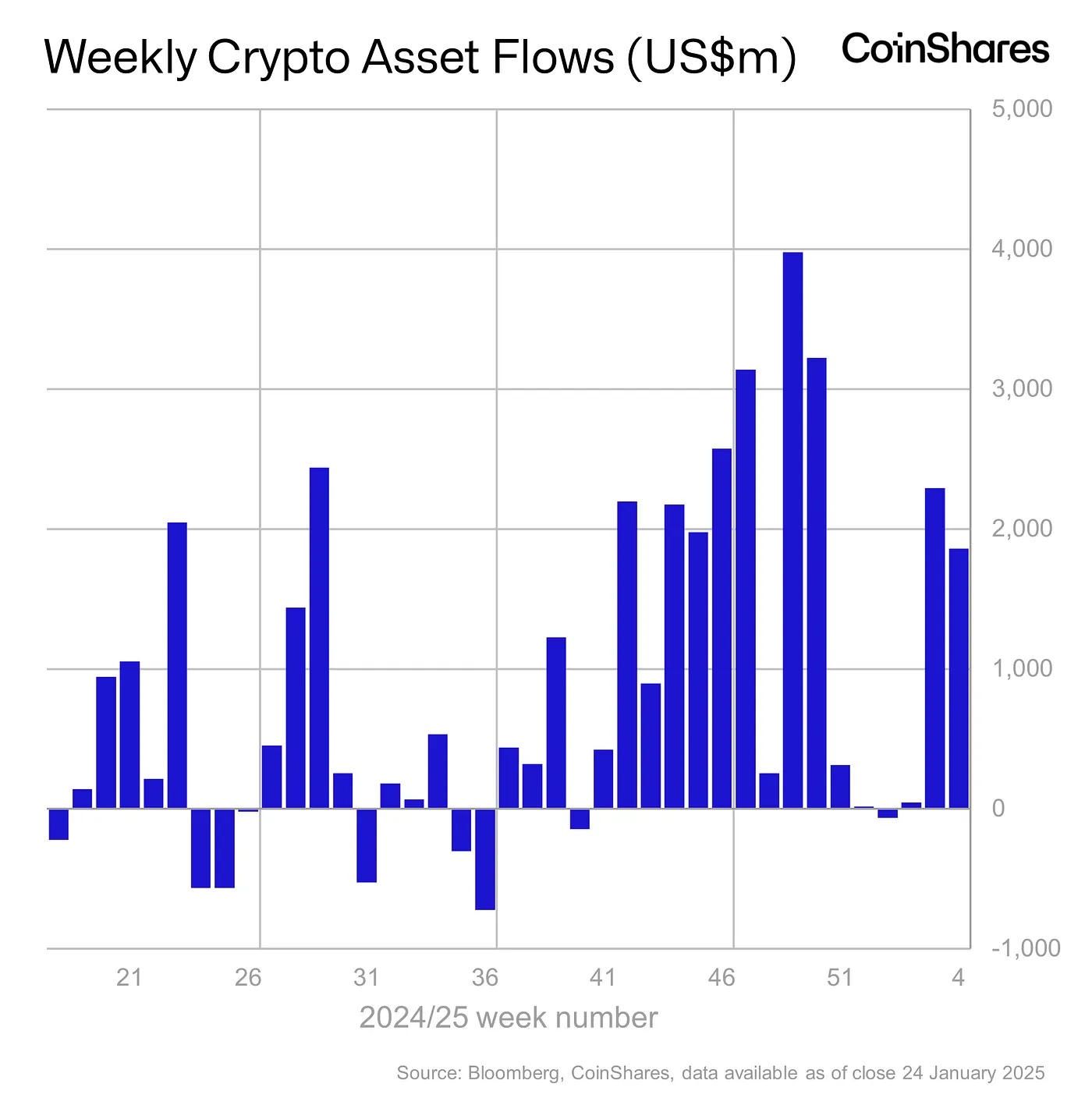
In a week marked by significant market volatility and shifting macroeconomic expectations, the institutional cryptocurrency landscape has experienced a dramatic recalibration. According to the latest weekly fund flow report from CoinShares, institutional investors offloaded a staggering $360 million in digital asset products. This movement was characterized by a pronounced "risk-off" sentiment, primarily driven by a massive $945.89 million exit from Bitcoin, even as Federal Reserve Chair Jerome Powell’s recent policy remarks sent ripples of uncertainty through global financial markets.
The Macroeconomic Catalyst: Powell’s Hawkish Turn
The primary driver behind this sudden pivot in investor sentiment appears to be the shifting rhetoric from the Federal Reserve. Despite a recent interest rate cut intended to provide monetary relief, market participants reacted negatively to comments from Fed Chair Jerome Powell. His tone, interpreted by many analysts as "hawkish," suggested that the path toward further easing is no longer guaranteed.
For the cryptocurrency market, which has thrived on the expectation of a loosening monetary policy, the uncertainty surrounding a potential December rate cut acted as a catalyst for profit-taking. Institutional investors, who often maintain a high sensitivity to interest rate environments, opted to deleverage their Bitcoin positions, signaling a lack of confidence in the short-term macro outlook.
Chronology of the Sell-Off
The week’s activity unfolded in a sequence that highlights the sensitivity of institutional capital to central bank communications:
- Early Week Anticipation: The market entered the week expecting clarity on the Federal Reserve’s future trajectory. Expectations for a December rate cut were high, providing a cushion for Bitcoin prices.
- The Powell Statement: As Jerome Powell addressed the press and the public, his language—emphasizing caution regarding inflation and economic resilience—threw cold water on the "dovish" expectations of the market.
- The Institutional Pivot: Almost immediately following the commentary, institutional desks began moving to shed exposure to Bitcoin, the primary vehicle for institutional crypto investment.
- Regional Divergence: By the close of the trading week, the data revealed a clear geographic split. While the United States saw massive outflows, European markets displayed resilience, with institutional investors in Germany and Switzerland actually increasing their exposure to digital assets.
Supporting Data: A Tale of Two Assets
The headline figure of $360 million in net outflows hides a complex underlying narrative. While Bitcoin suffered a massive exodus, the broader altcoin market experienced a surge of interest that suggests institutional capital is not abandoning crypto entirely, but rather rotating its focus.
The Bitcoin Exodus
The $945.89 million withdrawal from Bitcoin represents one of the most significant single-week outflows for the asset class in recent months. This suggests that the institutional "smart money" that had piled into Bitcoin ETFs earlier in the year is now hedging against the prospect of a stagnant interest rate environment.
The Solana Surge
In a stark contrast to Bitcoin’s performance, Solana (SOL) enjoyed an exceptional week. Institutional inflows into Solana products reached $421.11 million—the second-largest weekly haul in the asset’s history. This influx highlights that institutional investors are increasingly viewing Solana as a viable, high-utility alternative to Bitcoin, likely driven by its growing ecosystem, high transaction throughput, and increasing integration into decentralized finance (DeFi) protocols.
Ethereum and XRP Resilience
Beyond Solana, other major altcoins managed to maintain positive momentum. Ethereum recorded $57.59 million in inflows, suggesting that despite its recent struggles to recapture its all-time highs, institutional appetite for the leading smart-contract platform remains steady. Meanwhile, XRP saw a notable $43.18 million in inflows, likely bolstered by renewed optimism regarding its legal standing and cross-border payment utility.
Regional Variations: US vs. Europe
The geographical breakdown of these flows provides a fascinating insight into regional risk appetites.
- The US Market: The United States led the way in terms of outflows, with a total of $439 million leaving the market. This heavy concentration of selling underscores how domestic institutional players are the most sensitive to Federal Reserve policy and US-centric macroeconomic data.
- European Resilience: Conversely, European markets bucked the downward trend. Germany recorded $32 million in inflows, while Switzerland added $30.8 million. This divergence suggests that European investors may be looking at the crypto market as a hedge against regional economic instability or are simply operating under a different set of macroeconomic constraints than their American counterparts.
Implications for the Broader Crypto Market
The current state of institutional flows holds significant implications for the coming months.
1. The End of the "One-Size-Fits-All" Rally
For much of the year, Bitcoin has acted as the "rising tide that lifts all boats." However, the current data suggests that the market is becoming more discerning. Institutional capital is increasingly seeking out assets with strong fundamentals—such as the high-speed utility of Solana—rather than relying solely on Bitcoin as a proxy for the entire crypto sector.
2. Sensitivity to Central Bank Policy
The reaction to Powell’s comments proves that the cryptocurrency market has not yet "decoupled" from the traditional financial system. In fact, it remains deeply entwined with the Federal Reserve’s decisions. Investors must now brace for a period where every FOMC (Federal Open Market Committee) meeting could trigger significant volatility, as the market constantly re-prices the probability of future rate cuts.
3. The Institutional Rotation Strategy
The shift from Bitcoin to Solana and Ethereum suggests that institutional investors are adopting a more sophisticated "rotation" strategy. By moving capital out of Bitcoin and into high-utility altcoins, these investors are essentially pivoting from a "store of value" thesis to a "platform utility" thesis. This behavior is characteristic of more mature markets, where investors look for specific value drivers rather than broad market exposure.
Conclusion: A Market in Transition
The recent data from CoinShares serves as a reality check for the crypto market. While the headlines regarding Bitcoin outflows are stark, the underlying data reveals a more nuanced reality. The market is not crashing; it is rotating.
As we look toward the end of the year, the primary question for institutional investors remains: will the Federal Reserve provide the clarity needed to fuel the next leg of the bull market, or will the "hawkish" stance continue to suppress appetite for risk assets?
For now, the divergence in performance between Bitcoin and assets like Solana suggests that while the macro environment is tightening, the technological value proposition of altcoins remains a strong draw for institutional capital. Investors should remain vigilant, keep a close eye on upcoming economic indicators, and recognize that the days of uniform market movement may be behind us, replaced by a new era of fundamental-driven, asset-specific performance.
Disclaimer: The information provided in this article is for educational and informational purposes only and does not constitute financial, investment, or legal advice. Cryptocurrency investments involve significant risk, including the loss of principal. Investors should conduct their own thorough research and consult with a qualified financial advisor before making any investment decisions. The Daily Hodl does not endorse any specific asset or strategy mentioned herein.