
Institutional Sentiment Shifts: Crypto Markets Face $414 Million Exodus Amid Global Geopolitical Tensions
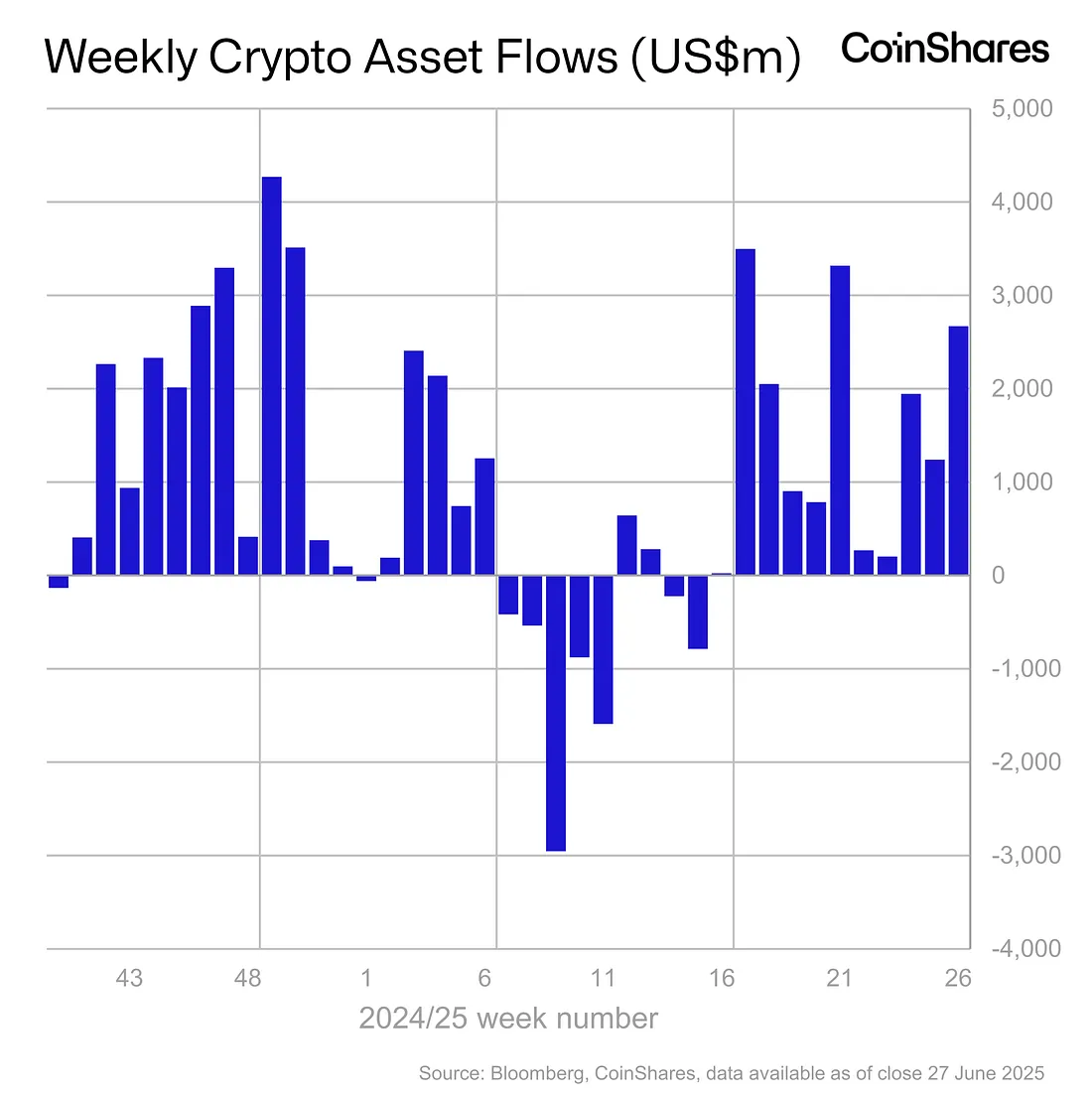
The global cryptocurrency market, often characterized by its high volatility and rapid sentiment shifts, has hit a notable inflection point. According to the latest weekly report from digital asset management firm CoinShares, institutional investors have initiated a significant pivot, offloading a total of $414 million in Bitcoin and broader crypto-asset investment products.
This move marks a definitive break in a five-week streak of sustained buying, signaling a broader retreat from risk-on assets. As macroeconomic pressures mount and geopolitical instability in the Middle East intensifies, institutional capital is displaying a defensive posture, prioritizing liquidity over speculative digital holdings.
Main Facts: The Scope of the Liquidation
The latest data from CoinShares highlights a stark contrast to the bullish optimism that dominated the crypto markets earlier this quarter. The $414 million outflow represents one of the most substantial weekly withdrawals of the year, effectively cooling the momentum that had driven digital assets to record-breaking valuations in recent months.
While the aggregate figure is significant, the distribution of these outflows reveals a nuanced picture. Ethereum, once the darling of institutional DeFi portfolios, bore the brunt of the selloff, shedding $222 million. Bitcoin, the market bellwether, saw $194 million in outflows. Despite these withdrawals, total assets under management (AUM) across global crypto investment products remain robust, standing at approximately $129 billion, suggesting that while institutional appetite has dampened, the structural foundation of these funds remains intact.
Chronology: A Week of Macroeconomic Anxiety
The timing of this capital flight is not coincidental. Over the past seven days, the intersection of geopolitical turmoil and monetary policy uncertainty has created a “perfect storm” for risk assets.
Early Week: The Iran Conflict and Market Sensitivity
The escalation of tensions involving Iran acted as the primary catalyst for the selloff. As the conflict threatened to destabilize energy markets and disrupt global supply chains, institutional desks reacted by trimming exposure to high-beta assets. Crypto, which historically correlates with equities during times of systemic stress, became a primary target for institutional profit-taking.
Mid-Week: The Inflationary Narrative
By Wednesday, the release of updated economic data reinforced the “higher-for-longer” interest rate narrative. Persistent inflation concerns, particularly in the United States, forced a re-evaluation of central bank policy. As the probability of early interest rate cuts diminished, the opportunity cost of holding non-yielding digital assets rose, prompting investors to migrate capital toward cash and short-term Treasury instruments.
Late Week: Divergent Regional Strategies
As the week closed, the data revealed a striking divergence in regional investment behavior. While the United States led the exit, other jurisdictions took a contrarian approach. Germany and Canada, rather than joining the panic, capitalized on the lower entry points, recording net inflows of $21.2 million and $15.9 million, respectively. This geographic split suggests that the selloff was largely driven by US-based institutional desks reacting to immediate domestic policy pressures, rather than a global abandonment of the asset class.
Supporting Data: Regional and Asset-Specific Flows
To understand the mechanics of this week’s price action, one must look closely at the underlying flow data provided by CoinShares.
Regional Breakdown
- United States: The epicenter of the selloff, recording $445 million in outflows. This massive withdrawal underscores the sensitivity of US-based institutional capital to the Federal Reserve’s hawkish stance and geopolitical headlines.
- Switzerland: Recorded minor outflows of $4 million, reflecting a period of consolidation among European institutional players.
- Germany & Canada: Acting as the "buyers of the dip," these regions added $21.2 million and $15.9 million in inflows, respectively, indicating that some institutional players are treating the price correction as a strategic entry opportunity.
Asset-Specific Performance
- Ethereum (ETH): The primary casualty of the week. With $222 million in outflows, ETH has now seen its year-to-date net flows move into the negative territory, totaling a $273 million deficit. This reflects broader market skepticism regarding the short-term regulatory and scaling milestones for the Ethereum network.
- Bitcoin (BTC): Despite the $194 million weekly outflow, Bitcoin remains the strongest performer on a year-to-date basis, maintaining a healthy $964 million in net inflows. This indicates that the long-term “institutional conviction” in Bitcoin as a digital store of value remains largely unshaken.
- Short-Bitcoin Products: As investors sought to hedge their downside risk, short-Bitcoin investment products saw an additional $4 million in inflows, suggesting that institutional desks are actively hedging against further volatility.
- Solana (SOL) vs. XRP: Solana recorded $12.3 million in outflows, signaling a pause in the momentum of the “Ethereum killer.” Conversely, XRP bucked the trend, attracting $15.8 million in inflows, potentially driven by speculative interest regarding ongoing legal and corporate developments within the Ripple ecosystem.
Official Responses and Expert Commentary
While CoinShares provides the quantitative framework, the qualitative narrative is being shaped by analysts and institutional stakeholders. Financial experts suggest that the current selloff is less about a loss of faith in blockchain technology and more about the "de-risking" of portfolios in the face of macro uncertainty.
"Institutional investors are not exiting the crypto space; they are managing risk in a climate of extreme volatility," says a market analyst familiar with institutional flows. "When geopolitical events threaten to impact the broader equity markets, crypto is often the first asset class to be trimmed because of its liquidity and historical correlation with tech stocks."
Furthermore, market makers note that the "buy the dip" activity observed in Canada and Germany serves as a vital counterweight to the US outflows. This indicates that there is no singular institutional sentiment; rather, there is a fragmented market where participants are weighing local economic conditions against global geopolitical risks.
Implications: What Lies Ahead?
The recent outflows carry significant implications for the coming quarter.
1. The Resilience of the $129 Billion AUM
Despite the $414 million withdrawal, the total assets under management remain at $129 billion. This level of liquidity suggests that the institutional infrastructure built over the last several years is not going anywhere. The current drawdown is a correction of recent gains, not a structural collapse.
2. The Return of the Hedging Strategy
The increase in inflows to short-Bitcoin products suggests that the era of “blind optimism” has been replaced by a more tactical, risk-managed approach. We can expect to see more institutional demand for derivative-based crypto products that allow for downside protection.
3. Geopolitical Dominance
Moving forward, crypto prices will remain tethered to the headlines coming out of the Middle East and Washington. As long as inflation remains sticky and the conflict in Iran continues to pose a threat to global oil markets, investors should expect continued volatility. The ability of Bitcoin to decouple from traditional equities will be the ultimate test of its maturity as a “safe haven” asset.
4. Ethereum’s Identity Crisis
Ethereum’s struggle to retain institutional interest is a trend that observers will be watching closely. With a year-to-date net outflow of $273 million, the asset is currently fighting an uphill battle to regain the confidence of institutional capital. Whether this will change depends on upcoming network upgrades and institutional clarity regarding the platform’s utility compared to its competitors.
Conclusion
The crypto market is currently undergoing a stress test. The $414 million exodus is a reflection of a world in transition, where institutional capital is forced to navigate the choppy waters of inflation, geopolitical conflict, and shifting monetary policies. While the headlines may suggest a retreat, the data reveals a more complex reality: a market that is maturing, hedging, and—in some regions—continuing to build positions.
For investors, the message is clear: the volatility that characterizes this market is not a bug, but a feature. As institutional players recalibrate their portfolios, the next phase of the market cycle will likely be defined by those who can successfully navigate these macro pressures, separating short-term sentiment from the long-term value proposition of digital assets.
Disclaimer: The information provided in this report is for educational and informational purposes only and does not constitute financial, investment, or legal advice. Cryptocurrency investments involve significant risk, including the loss of principal. Investors should conduct their own due diligence and consult with a qualified financial advisor before making any investment decisions. The Daily Hodl does not endorse any specific assets or investment strategies.