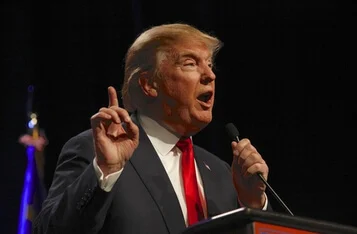
Polymarket Shifts: Presidential 2028 Odds Recalibrate Following Trump’s Georgia Pivot
The landscape of American political forecasting is undergoing a significant transformation as prediction markets digest the latest tactical maneuvers from the nation’s most influential political figures. On Polymarket, the decentralized prediction platform, the “Presidential Election Winner 2028” market has seen a flurry of activity, with over $669.6 million in total volume. Amid this massive liquidity, Donald Trump’s implied odds currently sit at 1.35%, a figure that has drawn significant scrutiny from market observers as they attempt to reconcile the former president’s ongoing influence in local races with his distant positioning for the next open-seat election.
Main Facts: The Georgia Catalyst and Market Repricing
The recent volatility in the 2028 market is largely tied to a high-profile political development in Georgia. Following the defeat of his preferred candidate in the Republican gubernatorial primary, Donald Trump executed a strategic pivot, throwing his support behind the eventual nominee, Rick Jackson. By urging party unity and signaling a renewed focus on Georgia—a critical battleground for the 2026 midterm cycle—Trump has once again placed himself at the center of the Republican narrative.
However, in the world of predictive analytics, this "on-the-ground" influence does not always correlate with a direct boost to presidential prospects. Traders on Polymarket are viewing the move through a dual lens: the immediate impact on state-level elections versus the long-term path to the White House. While Trump remains a kingmaker in local GOP contests, his current 1.35% valuation on the 2028 board reflects a market consensus that is heavily favoring younger, institutional, or alternative candidates for the next cycle.
The market functions as a series of independent binary contracts. Each candidate listed represents a standalone "Yes" or "No" proposition. Consequently, the current leaderboard—led by J.D. Vance at 19.85%, followed by Marco Rubio at 13.85%, and Democrat Gavin Newsom at 12.55%—represents a fragmented field where no single contender has yet captured a dominant share of the implied probability.
Chronology: How the 2028 Narrative Has Evolved
The trajectory of the 2028 presidential market has been defined by a constant recalibration of expectations.
- Initial Phase: Following the most recent election cycles, early momentum favored established party figures. Polymarket’s data suggests that the "front-runner" tier has remained clustered around the 15%–20% range for months.
- The Midterm Pivot: As the 2026 midterm election cycle approaches, market attention has shifted toward specific battleground states. Georgia, with the high-stakes gubernatorial contest between Rick Jackson and Keisha Lance Bottoms, has become a bellwether for party strength.
- The Trump Endorsement: The recent formal endorsement by Donald Trump of Rick Jackson served as a catalyst for increased trading volume. While the news was aimed at securing a gubernatorial seat, it triggered a broader re-evaluation of how Trump intends to wield his influence over the next two years.
- The Current Correction: In the last 24 hours, the market has witnessed a -3.65 percentage point shift in consolidated probability, indicating a "softening" of consensus. Traders are moving away from the previous average of 18.2% for top candidates toward a more conservative 16.4%, suggesting a period of uncertainty as the market awaits further signals.
Supporting Data: Understanding the Market Mechanics
The "Presidential Election Winner 2028" contract is a masterclass in decentralized liquidity. With a total volume nearing $670 million, the market is sufficiently deep to provide a meaningful, albeit speculative, look at political sentiment.
Current Market Leaders (Implied Odds)
| Candidate | "Yes" Odds | "No" Odds |
|---|---|---|
| J.D. Vance | 19.85% | 80.15% |
| Marco Rubio | 13.85% | 86.15% |
| Gavin Newsom | 12.55% | 87.45% |
| A. Ocasio-Cortez | 9.30% | 90.70% |
| Donald Trump | 1.35% | 98.65% |
The data indicates a "weakening consensus." When the latest odds (16.4%) diverge from the 5-day average (18.2%), it suggests that the market is experiencing a period of "price discovery." Traders are currently hesitant to commit to a clear front-runner, preferring to wait for more concrete polling data from the 2026 midterms before locking in long-term positions.
Official Responses and Political Context
The race in Georgia is being closely watched by national committees on both sides of the aisle. The Republican Party, led by the imperative of maintaining unity, has echoed Trump’s call to rally behind Rick Jackson. For the GOP, the Georgia gubernatorial race is not merely about a state house; it is a laboratory for testing the effectiveness of Trump’s endorsement power in a post-presidency landscape.
Conversely, the Democratic camp, represented by Keisha Lance Bottoms, is framing the contest as a referendum on the influence of the former president. Polling in the state remains razor-thin, with both parties mobilizing massive resources. Political analysts suggest that the loser of this race may see their national political capital significantly diminished, which explains the heightened trading volume on related prediction markets.
Implications for Future Markets
The implications of this market activity are twofold: first, it highlights the increasingly blurred line between "event-driven" political betting and long-term speculative futures. Traders are not only betting on the outcome of an election in 2028; they are actively hedging against the results of the 2026 midterms.
The Rise of Related Contracts
Traders are increasingly diversifying their portfolios into adjacent contracts to mitigate the volatility of the main 2028 board. Notable examples include:
- Republican Presidential Nominee 2028: Currently dominated by Robert F. Kennedy Jr. at 49.0% probability. This market boasts an impressive $678 million in volume, often outpacing the winner market in terms of daily activity.
- Institutional Stability: The contract asking, "Trump out as President by July 31?" has seen over $2.2 million in volume, with a 99.7% consensus for "No," indicating that while traders are skeptical of his 2028 chances, they are equally confident in his current standing.
- Geopolitical Hedging: Contracts regarding the "End of the Iranian Blockade" are seeing significant volume ($786k+), proving that users of these platforms are looking for "crisp" resolution criteria where headlines translate directly into financial outcomes.
The "Crowded Field" Phenomenon
As we move toward the resolution date of November 7, 2028, the primary challenge for the market is the sheer number of viable, or at least speculated, candidates. With 46 additional "strike rungs" not fully detailed in the top-tier analysis, the market remains highly fragmented. This fragmentation is a classic indicator of a "pre-primary" cycle, where the lack of an clear incumbent allows for a wide dispersion of probabilities.
Conclusion: What to Watch Next
As the 2026 midterms approach, observers should watch for two specific indicators on the Polymarket dashboard:
- Probability Consolidation: Will the market continue to spread its confidence across the top tier (Vance, Rubio, Newsom), or will a "breakout" candidate emerge to command more than 25% of the total market share? A consolidation would signal that the market has begun to discount the possibility of a surprise candidate.
- The "Weakening Consensus" Trend: If the divergence between the 5-day moving average and the latest odds persists, it suggests that the market is becoming increasingly skeptical of the current front-runners. This could open the door for a surge in volume for "dark horse" candidates who are currently priced at the bottom of the board.
For now, the Georgia gubernatorial race remains the focal point. Whether it serves as a springboard for a rejuvenated Republican coalition or a cautionary tale of shifting voter allegiances will likely dictate the next major shift in the 2028 presidential odds. In the high-stakes world of prediction markets, the only certainty is that liquidity will continue to follow the headlines.