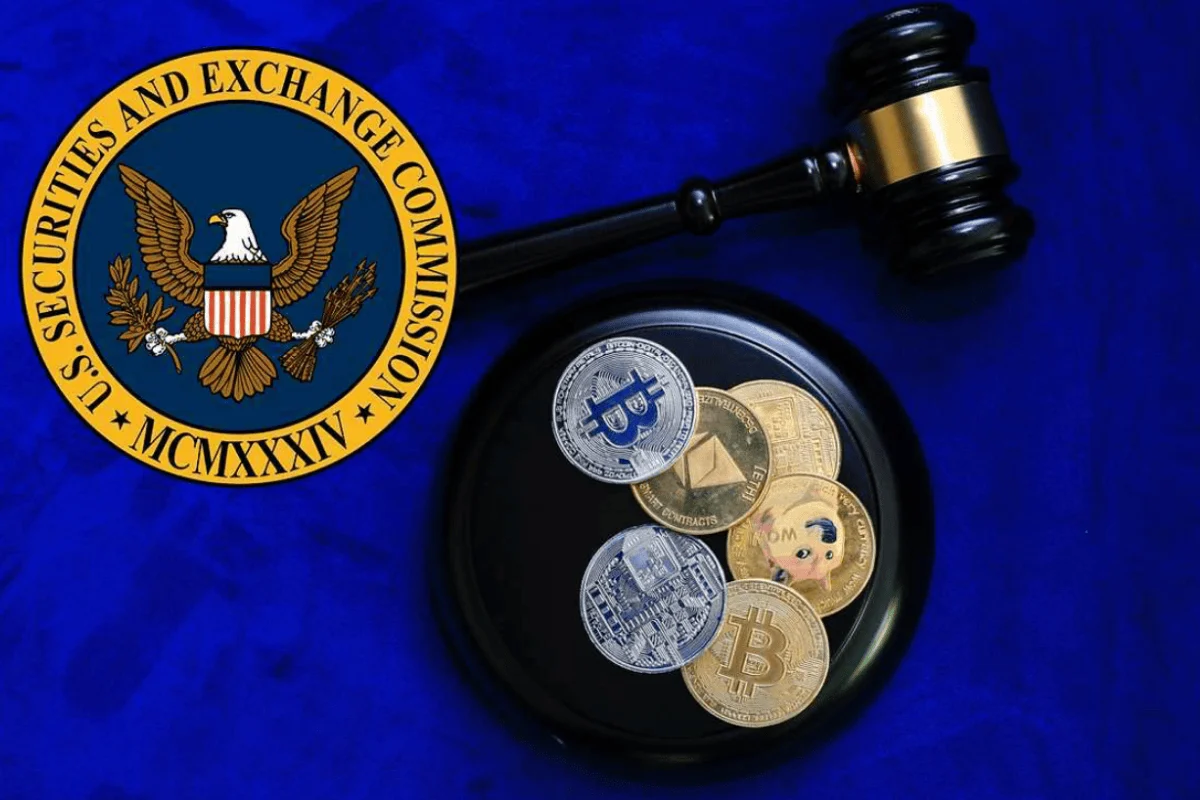
The End of an Era: ‘Crypto Mom’ Hester Peirce to Depart SEC, Leaving a Void in Digital Asset Oversight
TL;DR
- The Announcement: SEC Commissioner Hester Peirce, affectionately known as "Crypto Mom," has announced plans to step down from the U.S. Securities and Exchange Commission in November 2026.
- Next Steps: Peirce is slated to transition into academia, joining the faculty at Regent University School of Law as an associate professor.
- Regulatory Impact: Her departure marks the exit of the commission’s most vocal advocate for clearer digital asset frameworks and a departure from "regulation by enforcement."
- The Clock: With her term having expired in June 2025, Peirce is currently utilizing a statutory grace period. Her departure will leave the SEC with a potential leadership vacuum during a critical period for crypto policy.
A Familiar Voice Exits the Regulatory Stage
In the high-stakes, often adversarial relationship between the U.S. Securities and Exchange Commission (SEC) and the burgeoning cryptocurrency industry, few figures have occupied as pivotal—or as polarizing—a position as Commissioner Hester Peirce. Often referred to by the moniker "Crypto Mom," Peirce has spent years as the internal conscience of the agency, frequently dissenting against the prevailing regulatory strategy of enforcement-led oversight.
This week, it was confirmed that Peirce will bring her long tenure at the SEC to a close in November 2026. Her exit is not merely a personnel change; it represents a significant shift in the agency’s ideological balance. As she prepares to transition into the halls of academia at Regent University School of Law, the industry is left to grapple with the loss of its most consistent ally within the federal government.
Chronology of a Regulatory Tenure
To understand the weight of Peirce’s departure, one must look at the timeline of her service and the specific procedural mechanisms governing her exit.
- January 2018: Hester Peirce was sworn in as an SEC Commissioner, quickly establishing a reputation as a free-market advocate.
- June 2025: Peirce’s second term officially expired. Under the Securities Exchange Act of 1934, commissioners are permitted to serve a grace period of up to 18 months following the expiration of their term, provided a successor has not yet been confirmed or the seat remains vacant.
- November 2026: This date marks the planned conclusion of her service, narrowly avoiding the December 2026 "hard stop" deadline imposed by the statutory grace period.
- Post-2026: Peirce will assume her role at Regent University, where she is expected to continue shaping the discourse on securities law and the evolving intersection of blockchain technology and legacy financial regulations.
Supporting Data: The "Regulation by Enforcement" Debate
Peirce’s tenure has been defined by a fundamental disagreement with the SEC’s aggressive use of litigation to define the rules of the road for digital assets. For years, the SEC has maintained that the existing legal framework—specifically the 1946 Howey test—is sufficient to classify most tokens as securities. Peirce, however, has consistently argued that this approach is both stifling to innovation and legally imprecise.
Data from the past five years underscores the magnitude of the friction she sought to mitigate. According to industry reports, the SEC has initiated dozens of high-profile enforcement actions against major exchanges and token projects, including Coinbase, Binance, Kraken, and Ripple. Peirce’s voting record shows a pattern of dissent in these cases, where she argued that the agency should prioritize "safe harbors" and public comment periods over judicial interventions.
Her advocacy for a "Safe Harbor 2.0" proposal—which would allow nascent blockchain projects a three-year grace period to achieve decentralization before being subject to full-scale federal securities registration—remains one of the most cited policy roadmaps in the industry. While never fully adopted by the commission, the proposal forced a national conversation that brought regulators, developers, and legal scholars to the table.
Official Responses and Internal Dynamics
The departure of a commissioner is rarely a quiet affair, particularly when that commissioner has been the subject of intense media scrutiny. While the SEC has remained publicly neutral regarding her transition, the internal dynamics of the commission are expected to shift.
"Commissioner Peirce has been a tireless advocate for the principle that technology should be allowed to flourish under clear, predictable rules," said a policy analyst familiar with the agency’s inner workings. "Her departure doesn’t necessarily mean the SEC will become even more aggressive, but it does mean that the internal ‘check and balance’ that forced the commission to justify its enforcement actions will be significantly weakened."
The concern for many in the industry is that the SEC’s remaining roster may lack the appetite to challenge the status quo. If the commission continues to operate with a "thin roster," the burden of decision-making falls on fewer individuals, potentially slowing down the approval of critical financial products like exchange-traded funds (ETFs) or the establishment of clear custody rules for digital assets.
Implications for the Future of Crypto Policy
What happens to crypto policy once the "Crypto Mom" is gone? The implications are far-reaching and touch upon several key pillars of the digital economy:
1. The Loss of the "Dissenting Voice"
Peirce’s public dissents were more than just disagreements; they were educational tools for the public and the courts. By publicly articulating why a specific enforcement action was, in her view, an overreach, she provided industry lawyers with the legal scaffolding to mount their own defenses. Without her presence, the SEC’s internal deliberations may become more opaque, potentially leading to a more unified—and therefore more rigid—regulatory front.
2. A Shift to the Courts
With a reduced internal push for rulemaking, the crypto industry is likely to accelerate its reliance on the judicial branch. We have already seen this trend, with major firms opting to fight the SEC in federal court rather than seeking settlement. Peirce’s absence will likely confirm the industry’s belief that there is no "middle ground" to be found within the commission, further incentivizing litigation as the primary method for defining the boundaries of securities law.
3. The Academic Influence
While Peirce is leaving the halls of power, she is not leaving the debate. Her move to Regent University School of Law signals a transition to the "intellectual front" of the war on regulation. In an academic setting, Peirce will have the freedom to publish scholarly articles, influence legal curriculum, and mentor a new generation of lawyers who may be more sympathetic to the nuances of decentralized finance (DeFi) and Web3. This "soft power" could prove just as influential as her formal vote, as she will be free to criticize agency policy without the constraints of administrative protocol.
4. The Pending Regulatory Roadmap
The SEC remains tasked with critical, unresolved issues: how to categorize staking services, the standard for broker-dealer registration for crypto exchanges, and the nuances of disclosure for decentralized autonomous organizations (DAOs). These questions require technical expertise and a willingness to adapt traditional finance models to new digital realities. The departure of a commissioner who actively championed this adaptation leaves a vacancy that will likely be filled by someone with a different—perhaps more traditional—regulatory philosophy.
Conclusion: A Legacy of Skepticism
As November 2026 approaches, the legacy of Hester Peirce will be debated in boardrooms and courtrooms alike. To her supporters, she was a champion of innovation who stood against an agency that refused to modernize. To her critics, she was perhaps an outlier who underestimated the risks inherent in a decentralized, often volatile, market.
Regardless of one’s stance, it is undeniable that the "Crypto Mom" era fundamentally changed how the public perceives the SEC. She transformed the agency from a black box into a subject of public debate, forcing a conversation about the necessity of clarity in law. As the industry enters a new chapter of its evolution, the absence of her voice will be felt, but the framework she helped build—and the arguments she articulated—will continue to serve as the foundation for the next decade of digital asset regulation. The question remains: who, if anyone, will step up to fill the void she leaves behind?