The Gateway to Web3: Why Andreessen Horowitz Believes Gaming Will Spark Mass Crypto Adoption
In the rapidly evolving landscape of digital finance, venture capital titan Andreessen Horowitz (a16z) has identified a potent catalyst for the next major wave of blockchain adoption: Web3 gaming. According to the firm’s comprehensive 2023 "State of Crypto" report, the gaming industry possesses the unique infrastructure and cultural engagement necessary to transition millions of mainstream users into the Web3 ecosystem.
While decentralized finance (DeFi) has long been the face of blockchain utility, a16z suggests that the future of crypto integration lies in the hands of gamers, developers, and the multi-billion dollar economy of digital assets.
Main Facts: The Intersection of Play and Ownership
The core thesis presented by a16z is that Web3 gaming serves as a natural bridge between traditional consumer behavior and blockchain technology. Unlike complex financial protocols that require a deep understanding of market mechanics, gaming offers an intuitive entry point through ownership of in-game items, skins, and virtual land.
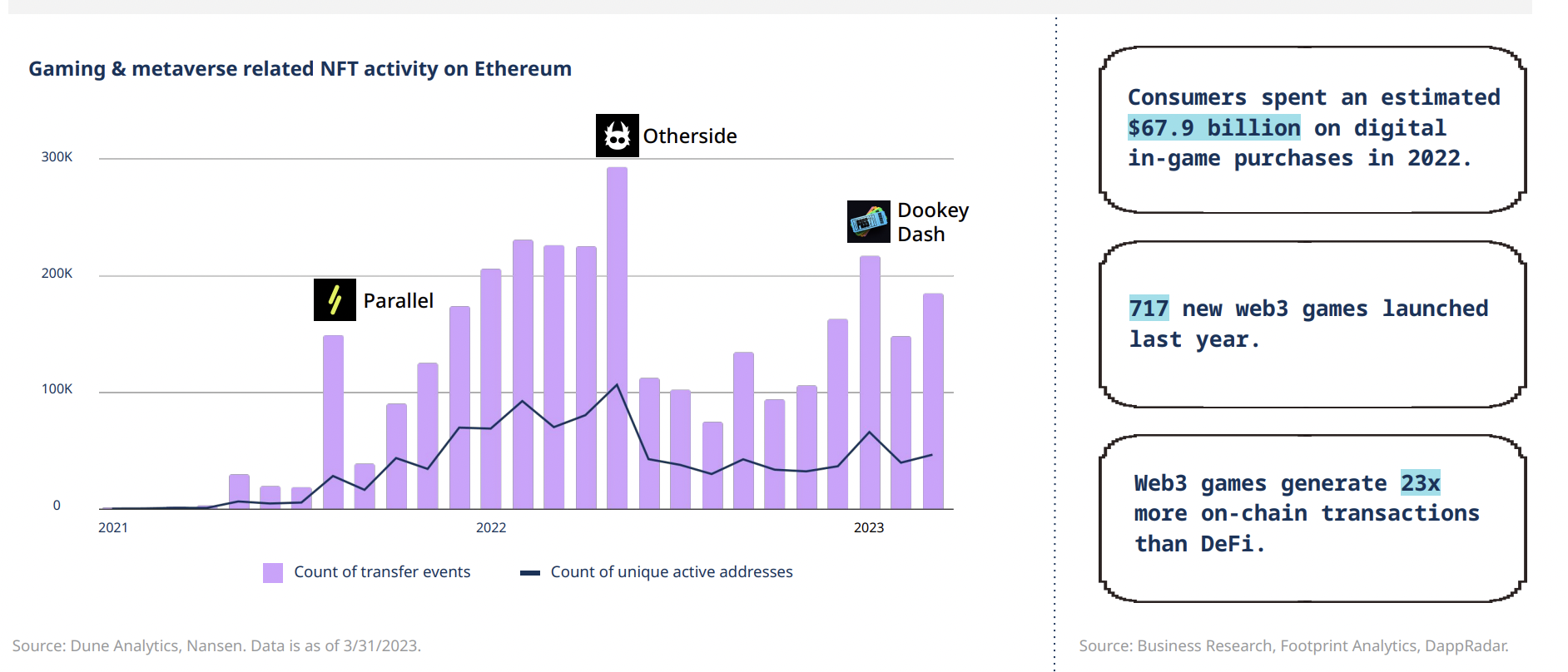
The report underscores that Web3 games are not merely a niche hobbyist movement but a rapidly scaling industry. With 717 new Web3-integrated titles launched within a single calendar year, the ecosystem is expanding at a pace that mirrors the early internet boom. The primary driver for this shift is the concept of "true ownership"—the ability for players to own, trade, and port their digital assets across different platforms—which contrasts sharply with the "walled garden" model of traditional gaming.
Chronology: From DeFi Pioneers to Gaming Innovation
To understand the current state of the industry, one must look at the evolution of blockchain applications over the last decade.
- 2009–2015: The Bitcoin Era. The initial years were dominated by Bitcoin as a store of value. Adoption was largely technical and speculative.
- 2016–2020: The Rise of DeFi. This period saw the emergence of Ethereum and smart contracts, allowing for decentralized lending, borrowing, and trading. This period laid the foundational infrastructure for on-chain transactions.
- 2021: The NFT Explosion. Non-fungible tokens introduced the masses to the concept of digital scarcity. Gaming projects began utilizing these tokens to represent unique assets, setting the stage for the Web3 gaming narrative.
- 2022–2023: Gaming Dominance. As noted in the a16z report, gaming began to eclipse traditional DeFi in terms of on-chain transactional volume. The sector has shifted from "play-to-earn" models, which faced sustainability challenges, to "play-and-own" frameworks that prioritize gameplay quality and long-term user retention.
Supporting Data: By the Numbers
The data provided by a16z highlights a significant shift in how crypto-native activity is being generated. The report serves as a statistical rebuttal to those who believe the crypto space is stagnant.
Transactional Velocity
One of the most striking findings is that Web3 games are currently generating 23 times more on-chain transactions than traditional DeFi protocols. This indicates that users are interacting with blockchain technology more frequently through gaming activities than through financial services, suggesting that high-frequency, low-barrier interactions are the key to driving daily active usage.

Market Potential
The report highlights that consumers spent an estimated $67.9 billion on digital in-game purchases in 2022. This massive existing market is the target demographic for Web3 gaming. If even a small percentage of this expenditure shifts toward blockchain-based marketplaces where players own their assets, the economic impact on the crypto ecosystem would be profound.
The Adoption Comparison
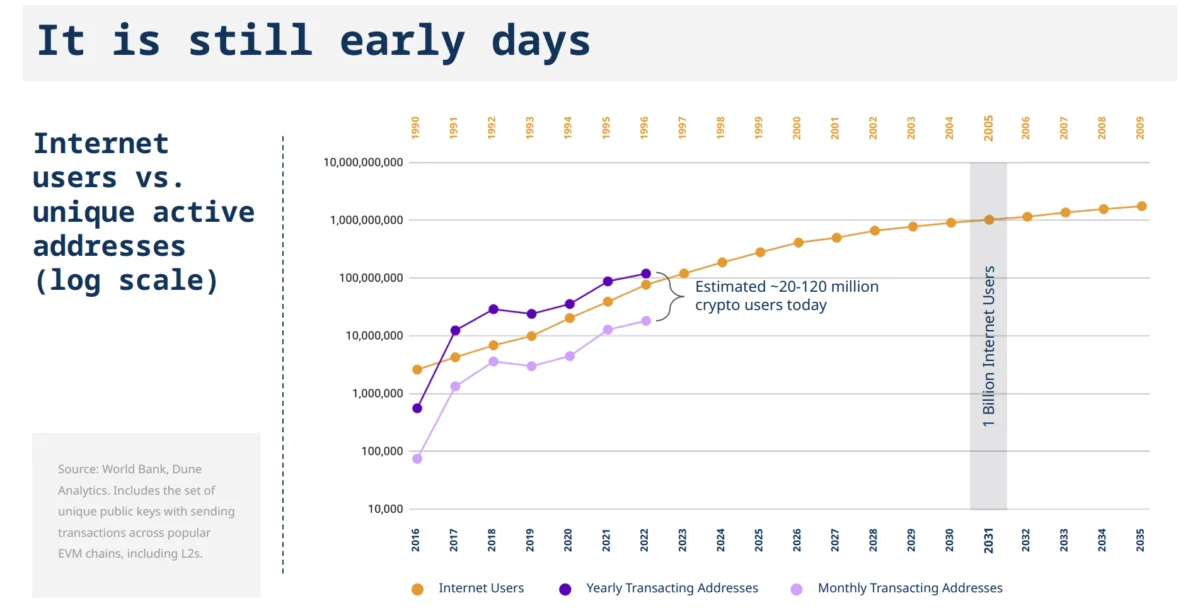
A16z draws a historical parallel between the growth of internet users (starting in 1990) and the growth of crypto users (starting in 2016).
- 1996: The internet reached approximately 100 million users.
- 2022: The crypto space recorded approximately 120 million yearly transacting addresses.
By aligning these timelines, a16z argues that crypto is currently at the "Netscape moment"—the threshold where user interfaces become intuitive enough to support mass adoption.
Official Responses and Industry Perspectives
The a16z report has sent ripples through both the gaming and blockchain industries. Industry analysts have pointed to the shift as a necessary evolution, moving away from purely speculative tokens toward functional assets.
"Gaming is the ultimate Trojan horse for blockchain," says a prominent analyst in the Web3 space. "Users don’t care about the underlying technology; they care about the experience. By giving players property rights over their virtual swords and armor, developers are providing tangible value that was previously locked behind a central server."
However, the report also acknowledges the hurdles. Critics and skeptics have long pointed to the "crypto-hostile" nature of traditional gaming communities, which often recoil at the mention of NFTs or crypto due to concerns over monetization and predatory microtransactions. The industry’s challenge, as noted in the report, is to implement Web3 elements in a way that enhances the user experience rather than detracting from it.
Implications: The Road Ahead
What does this mean for the future of digital assets? The implications are three-fold:
1. Shift in User Demographic
The typical crypto user is evolving from a financial investor to a digital native gamer. This demographic is generally younger, more technologically fluent, and accustomed to managing digital identities and assets. This shift could help stabilize the crypto market by introducing a user base driven by utility rather than speculative price action.
2. Standardization of Infrastructure
For Web3 gaming to reach its full potential, the infrastructure must become invisible. A16z highlights that the industry is working toward "wallet-less" experiences or abstracting the complexities of private keys. Future developments will likely focus on interoperability—allowing an asset earned in one game to be recognized in another.
3. Regulatory Clarity
As gaming becomes a major entry point for retail users, it will inevitably draw greater regulatory scrutiny. Governments will be tasked with defining the line between "in-game items" and "securities." The industry’s ability to navigate these regulations will determine whether Web3 gaming becomes a legitimate, regulated sector or remains in a legal gray area.
Final Thoughts
Andreessen Horowitz’s "State of Crypto" report presents a compelling vision: the path to the next billion crypto users is paved with pixels, quests, and player-owned assets. While the sector remains in its infancy, the sheer volume of capital and transactional activity suggests that the gaming industry is poised to fundamentally alter the perception of blockchain technology.
By focusing on the "early days" trajectory, the firm encourages stakeholders to look past short-term volatility and focus on the structural shifts occurring beneath the surface. If the 1990s were the birth of the information age, the 2020s may well be remembered as the era where digital ownership—fueled by gaming—became the standard for the global economy.
Disclaimer: Opinions expressed in this report are for informational purposes only and do not constitute investment advice. Investors should conduct their own thorough research before making high-risk investments in Bitcoin, cryptocurrency, or digital assets. The Daily Hodl and its contributors are not responsible for any financial losses incurred through trading or investment activities. Please consult with a certified financial advisor regarding your specific situation.