The Great Bitcoin Miner Capitulation of 2026: Inside the Record-Breaking Sell-Off and Treasury Shift
By Financial Markets Desk
Published: April 2026
Main Facts
The global Bitcoin mining industry is facing one of the most punishing environments in its history. As of early 2026, approximately 20% of all active mining operations worldwide are running at a net financial loss. This stark reality has triggered a wave of distress across the sector, forcing major publicly traded mining corporations to liquidate massive portions of their digital asset reserves simply to cover operational overhead, electricity costs, and hardware maintenance.
Data compiled by Hashrate Index indicates that the industry’s primary profitability metric—known as hashprice (the daily revenue generated by a miner per unit of computing power)—has been on a persistent downward trajectory since July 2025. Hashprice currently hovers near $33 per petahash per second (PH/s) per day. Meanwhile, the operational breakeven threshold for a substantial portion of the industry, particularly for operators relying on older generation ASIC hardware, sits at roughly $35.
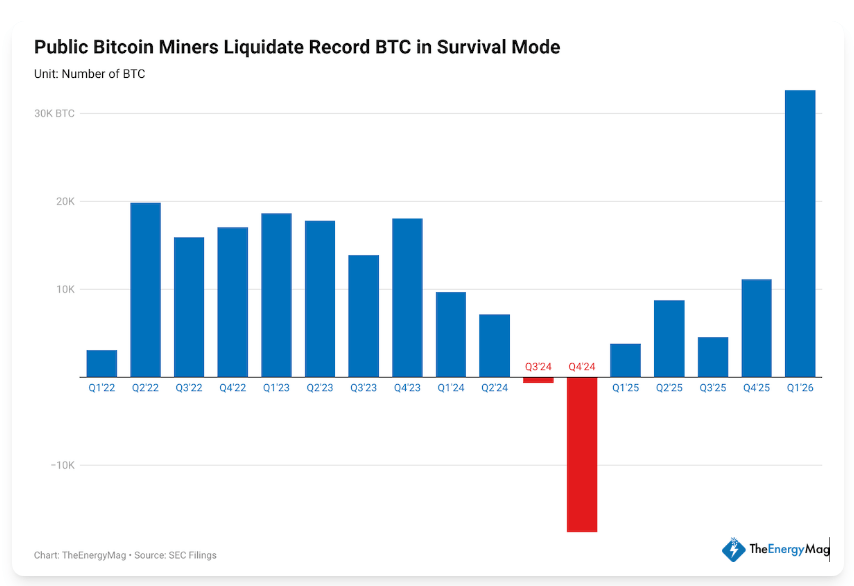
That narrow $2 deficit has pushed a significant fraction of the network into the red. To survive, premier publicly traded mining entities—including MARA, CleanSpark, Riot, Cango, Core Scientific, and Bitdeer—collectively offloaded more than 32,000 BTC during the first three months of 2026, according to a report by TheEnergyMag.
This unprecedented corporate liquidation outpaces the total volume sold by these same firms across all four quarters of 2025 combined. Furthermore, it shatters the previous quarterly liquidation record of roughly 20,000 BTC, which was established during the chaotic second quarter of 2022 in the wake of the Terra-Luna ecosystem collapse.

Chronology of the Crisis: How the Squeeze Developed
To understand how the Bitcoin mining sector arrived at this critical juncture in 2026, it is necessary to examine the compounding pressures that have steadily eroded profit margins over the past several years:
- Late 2023 – 2024 (The Accumulation Phase): Coming out of the bear market, mining reserves sat at relative highs. At the close of 2023, aggregate miner reserves across the network exceeded 1.86 million BTC. Companies felt comfortable holding their rewards, anticipating future price appreciation.
- Mid-2024 (The Halving Event): The fourth Bitcoin halving slashed block rewards from 6.25 BTC to 3.125 BTC per block. While anticipated, this instantly halved baseline revenue overnight, forcing operators to rely heavily on transaction fees and operational efficiency.
- July 2025 (The Hashprice Tipping Point): Hashrate Index metrics show that hashprice began a steep, sustained decline in July 2025. As global network hashrate continued to surge due to the deployment of next-generation, high-efficiency mining rigs, competition for blocks intensified fiercely, driving down individual miner yields.
- Q4 2025 – Early 2026 (The Margin Compression): Broader macroeconomic headwinds kept spot Bitcoin prices under persistent downward pressure, while energy costs remained sticky. By early 2026, hashprice dipped to $33, falling below the crucial $35 breakeven line and turning profitability negative for one-fifth of the ecosystem.
- Q1 2026 (Record Capitulation): Facing imminent cash crunches, publicly traded miners pulled the trigger on massive liquidations, dumping over 32,000 BTC onto the market in Q1 alone and accelerating a multi-year drainage of industry treasuries.
Supporting Data and Market Metrics
The underlying blockchain and market data paint a clear picture of an industry under severe structural stress.
According to on-chain analytics provider CryptoQuant, total Bitcoin held in all miner wallets has been on a downward slope since 2023. At the end of that year, miners collectively held roughly 1.86 million BTC. By the end of Q1 2026, that aggregate balance had shrunk to approximately 1.8 million BTC. This steady erosion indicates that even before the acute crisis of early 2026, miners were consistently dipping into their long-term savings to fund expansions, service debts, or cover day-to-day power bills.
[2023 Year-End Reserves]  -->  1.86 Million BTC
                                      │
                                      ▼  (Steady Multi-Year Drain)
                                      │
[Q1 2026 Reserves]        -->  1.80 Million BTC
                                      │
                                      ▼  (Q1 2026 Acceleration)
                                      │
[Public Miner Dump]       -->  >32,000 BTC Sold in 3 Months
On the derivatives and trading front, spot price volatility has added salt to the wound. As illustrated by TradingView charts, Bitcoin (BTC/USD) has faced choppy consolidation around the $75,000 mark. While historical bulls might view this price level as elevated, the combination of a reduced 3.125 BTC block reward, skyrocketing network difficulty, and high electricity expenses means that $75,000 Bitcoin is no longer the safe haven for miners that it once was.
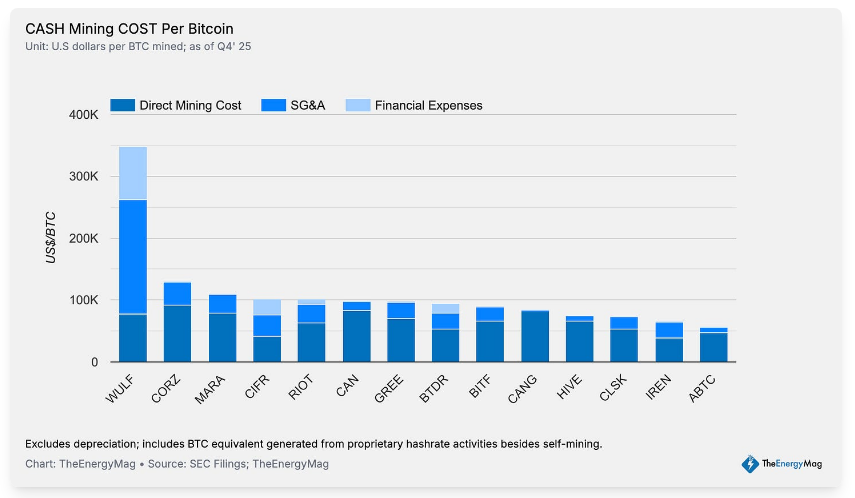
Furthermore, asset manager CoinShares, in its exhaustive Q1 2026 Bitcoin Mining Report, highlighted that the pain is far from evenly distributed. High-cost operators—those tied to expensive energy grids or running legacy hardware—face an existential threat. CoinShares warned that continued capitulation is virtually guaranteed for these higher-cost entities through the first half of 2026 unless spot prices experience a rapid and substantial breakout.
Official Responses and Industry Commentary
As institutional players and market analysts process the scale of the Q1 sell-off, industry leaders have offered divergent perspectives on what these movements mean for the broader digital asset economy.
Asset managers and conservative institutional researchers have adopted a cautious tone. CoinShares emphasized in its quarterly briefing that operational efficiency is now the single most important metric for survival. Companies that failed to secure long-term, low-cost power purchase agreements (PPAs) during the 2024–2025 window are now paying the ultimate price, forced to liquidate core assets at unfavorable times.
Conversely, corporate treasury buyers are viewing the miners’ distress as a strategic opportunity. While mining pools and public operators are forced sellers, corporate entities with robust balance sheets are aggressively absorbing the available supply.
Michael Saylor, co-founder and executive chairman of Strategy (the world’s largest corporate Bitcoin treasury holder), signaled earlier this week that another massive corporate acquisition was imminent. Posting the company’s historical BTC acquisition chart on social media with the caption "Think bigger," Saylor triggered widespread speculation across financial circles. Followers and market analysts immediately recognized the signal as a precursor to another multi-million-dollar treasury expansion, underscoring the stark dichotomy in the current market: miners are selling to survive, while corporate treasuries are buying to accumulate.
Broader Implications for the Bitcoin Ecosystem
The unfolding events of early 2026 carry profound implications for the structure, security, and financialization of the Bitcoin network.
1. Centralization of Mining Power
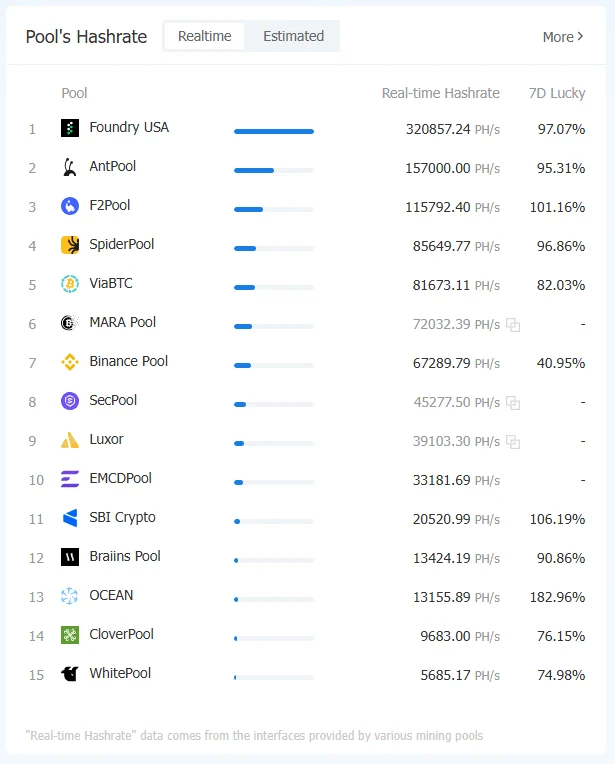
The ongoing capitulation of smaller, less-capitalized miners risks accelerating centralization within the mining sector. As older machines are unplugged and smaller operators go bankrupt or are acquired, hash power increasingly concentrates in the hands of massive, well-capitalized publicly traded conglomerates that possess cheaper energy access and superior financing options. While this drives network efficiency up in the short term, it raises long-term questions regarding geographic and corporate decentralization.
2. Shift in Supply Dynamics
For years, traditional market theory held that miners were the ultimate "HODLers," acting as a stabilizing force that permanently removed newly minted coins from circulation. The events of Q1 2026 challenge this narrative. When macro conditions turn hostile, miners can—and do—become aggressive net-sellers, capable of overwhelming order books with tens of thousands of coins. However, the simultaneous absorption of these coins by corporate treasury buyers like Strategy suggests that circulating supply is simply migrating from weak operational hands to strong institutional balance sheets.
3. The Road Ahead for Q2 and Beyond
Looking forward, the health of the Bitcoin mining sector remains inextricably linked to two variables: global hash rate difficulty adjustments and the spot price of Bitcoin. If network difficulty adjusts downward as unprofitable miners power down, the remaining operators will see an immediate improvement in their hashprice margins. However, until a decisive macroeconomic catalyst pushes Bitcoin out of its current consolidation range, the industry will continue to operate under a harsh Darwinian filter where only the leanest, most efficient miners will live to tell the tale.