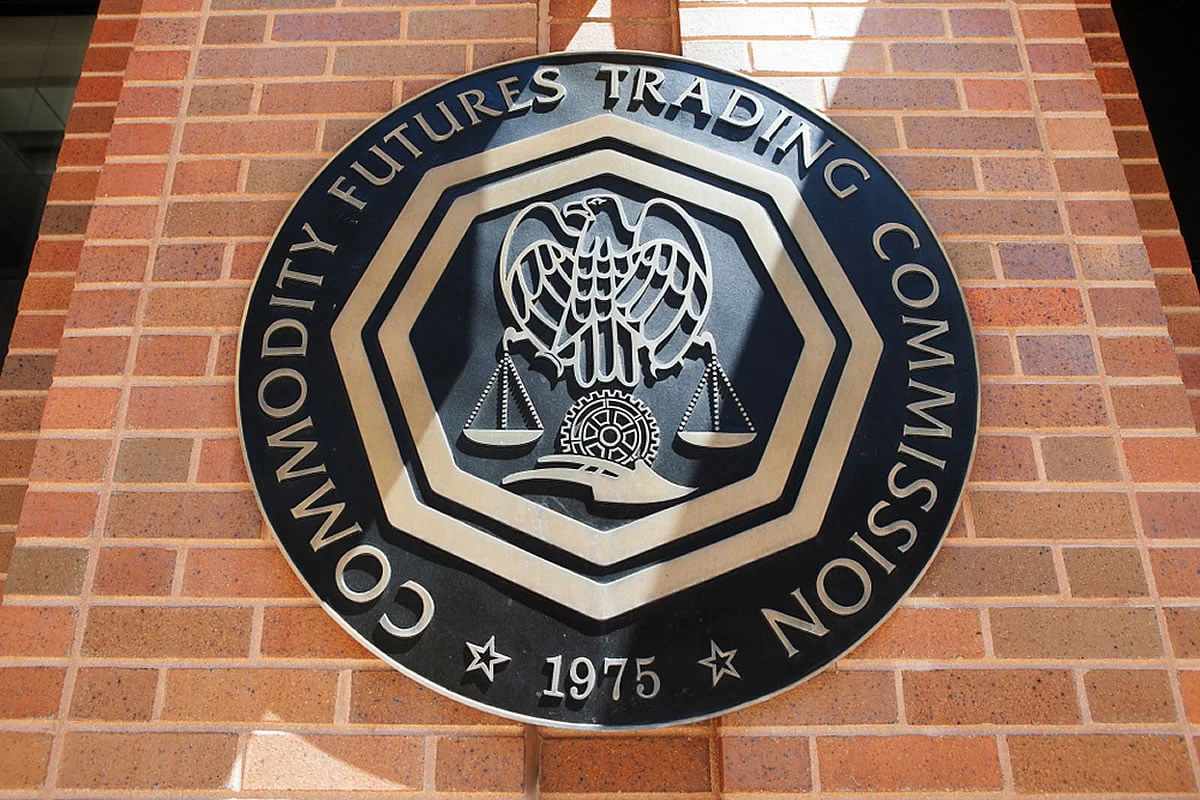
The Jurisdictional Tug-of-War: CFTC and Kentucky Clash Over the Future of Prediction Markets
The landscape of American financial innovation is currently being reshaped in a federal courtroom, where a high-stakes legal battle between the Commodity Futures Trading Commission (CFTC) and the Commonwealth of Kentucky is unfolding. At the heart of the dispute is the classification of "event contracts"—digital assets that allow users to speculate on the outcomes of real-world occurrences, ranging from presidential elections to interest rate adjustments and sporting events.
The CFTC’s decision to sue Kentucky officials marks a significant escalation in the federal agency’s quest to assert preemptive authority over these platforms. As firms like Kalshi and Polymarket grow in prominence, the question of whether these products are "federally regulated derivatives" or "state-regulated gambling" has moved from academic debate to existential threat.
The Core Conflict: Federal Oversight vs. State Sovereignty
At the center of this legal friction is a fundamental tension in American law: the supremacy of federal financial oversight versus the traditional police powers of individual states to regulate gaming and wagering.
The CFTC contends that event contracts—specifically those offered by federally designated contract markets—fall squarely under the jurisdiction of the Commodity Exchange Act (CEA). Under this view, the agency argues that it possesses the exclusive authority to oversee these markets, ensuring they operate with appropriate transparency, risk management, and investor protections. By suing Kentucky, the CFTC is attempting to establish a "federal shield" that would prevent state gambling regulators from shutting down, taxing, or imposing restrictive compliance regimes on these platforms.
Conversely, Kentucky officials and several other state regulators argue that these platforms are, in practice, operating as unlicensed casinos. They contend that the "contracts" traded on these platforms are essentially binary bets on social or political outcomes, lacking the hedging utility typically associated with legitimate financial derivatives. From the perspective of state authorities, if a platform facilitates wagers on outcomes, it should be subject to local gambling statutes, which often involve strict licensing requirements, age verification, and consumer protection mandates that the current crop of prediction markets may not meet.
Chronology: A Path to the Federal Courtroom
The road to the current litigation was paved by a rapid explosion in the popularity of prediction markets over the last 24 months.
- 2022-2023: The Rise of Polymarket and Kalshi: During this period, platforms like Kalshi received approval from the CFTC to offer certain event contracts, while Polymarket expanded its on-chain operations. As these platforms gained traction, they drew the ire of various state-level gaming commissions.
- Early 2024: Regulatory Scrutiny Intensifies: As the 2024 U.S. election cycle approached, interest in election betting spiked. Several state regulators began issuing cease-and-desist letters to platforms, claiming their services violated state law.
- Mid-2024: The CFTC Takes a Stand: Recognizing that a fragmented regulatory map—where a platform is legal in one state but a crime in another—would cripple the industry, the CFTC stepped in. The agency sought to clarify that federal law preempts state gaming laws for contracts designated by the commission.
- Late 2024: The Kentucky Lawsuit: The conflict culminated in the CFTC’s legal action against Kentucky, marking the first time the commission has targeted a Republican-led state to protect the integrity of its regulatory perimeter.
Why the Crypto and DeFi Industry Is Watching
For the broader digital-asset industry, this case is not an isolated incident; it is a bellwether for how the United States will handle the intersection of blockchain technology and traditional finance.
Prediction markets represent a unique nexus of trading, speculation, and information theory. Because many of these platforms utilize stablecoin rails and on-chain settlement, they are inherently tied to the crypto ecosystem. For crypto proponents, the prediction market is the "ultimate decentralized oracle"—a way to aggregate public sentiment and turn it into a quantifiable, tradable asset class.
Industry analysts observe that this struggle mirrors the broader "regulatory fog" that has plagued tokens, staking, and DeFi protocols. The recurring pattern is one where technological capability outpaces legislative definitions. In the eyes of many crypto participants, if the CFTC loses this fight, it signals that state-level bureaucracy will continue to act as a bottleneck, forcing developers to geofence users and fragmenting the global liquidity that makes these markets effective.
Supporting Data: The Growth of Event Contracts
While the debate is legal, the impetus is economic. According to recent data, the volume of trading on event-contract platforms has seen exponential growth:
- Liquidity Surge: Trading volume on major prediction platforms has surged by over 400% year-over-year as of Q3 2024.
- Market Depth: The open interest in "event-based" contracts has reached record highs, suggesting that institutional traders and market makers are beginning to treat these as a legitimate alternative asset class for hedging political or economic risk.
- Retail Participation: Unlike traditional futures markets, which have high barriers to entry, prediction markets have democratized access. User growth metrics show a high concentration of retail participants who utilize stablecoins to access markets that were previously unavailable.
This data underscores why the CFTC is so protective of its jurisdiction: it sees a burgeoning market that, if managed correctly at the federal level, could become a significant pillar of the U.S. financial system.
Official Responses and Stakeholder Perspectives
The CFTC’s Stance
The Commission has remained largely tight-lipped regarding specific litigation strategies, but its public filings are clear. The agency emphasizes that the Commodity Exchange Act was designed to provide a uniform national regulatory framework. They argue that if states are permitted to apply individual gambling laws to federally approved products, it would create an "untenable conflict" that renders federal oversight meaningless.
The Kentucky Position
Kentucky officials maintain that the state has a vested interest in protecting its citizens from "unregulated wagering." They point to the societal risks associated with betting on sensitive political events, arguing that the "financialization" of democracy could have detrimental effects on public discourse and election integrity.
Industry Commentary
Platforms like Kalshi have argued that they are not betting sites but rather "event contracts" designed to allow businesses to hedge against economic risks. "We provide tools for people to trade their view of the world," a spokesperson for a leading platform noted. "Labeling us as a casino is a fundamental misunderstanding of the market structure we provide."
Broader Implications: A Future in Flux
The outcome of the Kentucky case will likely have profound ripple effects, regardless of which side prevails.
If the CFTC Wins
A victory for the federal regulator would cement the status of event contracts as legitimate financial instruments. This would likely trigger a "gold rush" of product launches. With a clear regulatory pathway, major institutional players might enter the space, bringing with them the liquidity and sophisticated market-making strategies that characterize traditional exchanges.
If Kentucky Wins
A victory for the state would be a massive blow to the centralized prediction market model. It would embolden other states to follow suit, leading to a "compliance patchwork." Platforms would be forced to retreat from the U.S. market entirely or invest millions in sophisticated geofencing and state-by-state licensing, effectively strangling the industry in its infancy.
The Impact on Innovation
Furthermore, the case touches on the sensitive nature of the markets being offered. Because these platforms facilitate bets on elections, they invite political scrutiny. If the courts rule that these are "gambling products," we may see a permanent chilling effect on what these platforms are allowed to list. Conversely, a federal win could protect the right to trade these instruments, shielding them from the political whims of local legislatures.
Conclusion: The Road Ahead
As the federal court prepares to weigh in on the boundaries of state vs. federal power, the prediction market industry remains in a state of nervous anticipation. The case is, at its core, a test of whether the U.S. regulatory system can adapt to a digital-first economy where the line between "betting" and "hedging" is increasingly blurred by the speed of technology.
For investors, traders, and crypto enthusiasts, the immediate impact may be muted. However, the long-term significance cannot be overstated. We are witnessing the birth of a new asset class. Whether that class is allowed to flourish under a unified national framework or is relegated to a fragmented, state-regulated shadow market will be decided in the coming months.
As the legal proceedings continue, the industry must remain focused on the ultimate goal: demonstrating that these markets are not just mechanisms for speculation, but vital tools for price discovery and risk management in an increasingly unpredictable global economy. The verdict in Kentucky will not just settle a lawsuit—it will define the geography of the next decade of American financial innovation.