The Tokenization Frontier: Coinbase CEO Brian Armstrong Predicts Trillion-Dollar Shift in Global Equities
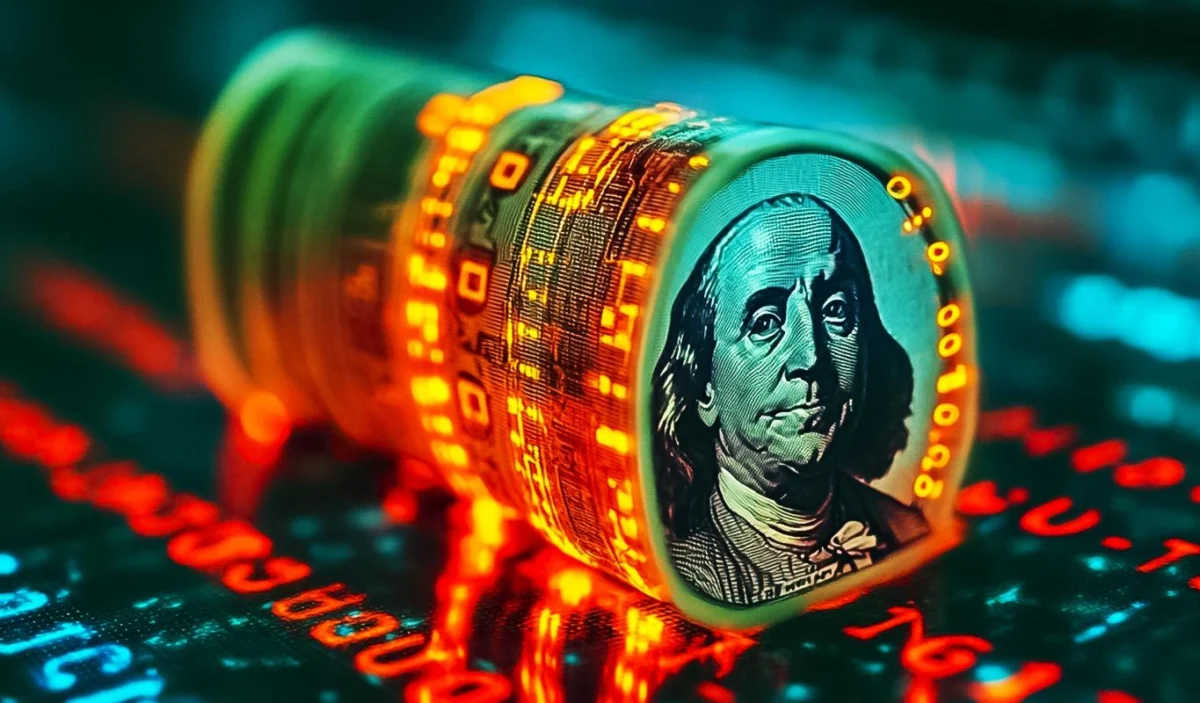
In a visionary discourse that marks a potential inflection point for traditional finance, Coinbase CEO Brian Armstrong has outlined a bold roadmap for the future of global markets. During a high-profile discussion hosted by Goldman Sachs, Armstrong posited that the financial industry is on the cusp of a "tokenization revolution" that could mirror the meteoric rise of stablecoins. By leveraging blockchain technology to bridge the gap between legacy brokerage systems and decentralized networks, Armstrong believes the next decade of finance will be defined by the migration of traditional assets—specifically equities—onto the blockchain.
The Foundation: The Stablecoin Precedent
To understand the gravity of Armstrong’s prediction, one must look at the recent trajectory of stablecoins. Only a few years ago, the concept of a digital dollar—a tokenized version of the greenback—was viewed with skepticism by traditional institutional players. Critics questioned the utility of such instruments, often dismissing them as niche tools for crypto-native day traders.
However, the reality has been vastly different. As Armstrong noted during his dialogue with Goldman Sachs, stablecoins have become a foundational layer for the global economy. Their adoption was catalyzed by a fundamental necessity: residents in high-inflation environments required a reliable, censorship-resistant store of value. By providing direct, digital access to dollar-denominated assets, stablecoins bypassed the friction of traditional banking, which is often slow, geographically restricted, and prohibitively expensive for the unbanked.
The data supports this narrative. Over the past twelve months, the stablecoin ecosystem has facilitated a staggering $30 trillion in payment volume. This figure, which rivals the transaction throughput of major global credit card networks, underscores that stablecoins are no longer experimental—they are a critical utility for cross-border payments, B2B settlements, and global liquidity.
The Next Frontier: Tokenizing Equities
Building on the success of stablecoins, Armstrong argued that the equity market is the next logical sector for disruption. The current infrastructure for stock ownership is, in his view, an antiquated relic of the 20th century. Trading stocks today involves a complex web of custodians, clearinghouses, and brokers, all of which contribute to T+2 settlement times (the time it takes for a trade to fully settle) and significant "friction" that prevents global participation.
Under the model proposed by the Coinbase executive, traditional shares currently held by legacy custodians would be "mirrored" on-chain as digital tokens. This transformation would not merely be a technical upgrade; it would fundamentally change the accessibility and utility of equity ownership.
Key Advantages of the Tokenized Model:
- 24/7 Global Liquidity: Unlike the stock market, which operates on a rigid schedule and remains closed on weekends, tokenized assets on a blockchain can be traded continuously. This constant market availability aligns with the global, always-on nature of the modern digital economy.
- Fractional Ownership: Tokenization allows for the subdivision of assets into micro-fractions. This lowers the barrier to entry for retail investors globally, allowing individuals to hold pieces of high-value stocks that were previously gated by high share prices or restrictive brokerage requirements.
- Programmable Governance: Perhaps the most innovative aspect of tokenized stocks is the integration of smart contracts. These self-executing contracts could automate corporate actions, such as dividend distributions, and enable sophisticated, transparent voting mechanisms. For instance, a company could restrict shareholder voting rights specifically to long-term holders, ensuring that those with a vested interest in the company’s future are the ones steering its direction.
- Perpetual Futures and Advanced Instruments: By placing equities on-chain, investors could gain access to the same exotic, high-efficiency market structures currently found in the crypto space, such as perpetual futures, without the counterparty risk associated with centralized exchanges.
The Chronology of Disruption
The movement toward tokenization has been a gradual buildup that is now accelerating into a mainstream conversation.
- 2020–2021 (The Incubation Phase): Blockchain networks began proving their ability to handle high-volume stablecoin transactions. During this time, the "DeFi Summer" demonstrated that lending, borrowing, and yield generation could occur programmatically without intermediaries.
- 2022–2023 (Institutional Awareness): Financial giants began experimenting with private blockchains. Institutions like JPMorgan and BlackRock started exploring the tokenization of money market funds and bonds, recognizing the cost-saving potential of automated settlement.
- 2024–2025 (The Integration Phase): As seen in Armstrong’s recent commentary, the conversation has moved from "private ledgers" to the public blockchain, with CEOs of major exchanges advocating for the standardization of on-chain assets. The focus is shifting from "Can it be done?" to "How do we scale this globally?"
Regulatory and Institutional Implications
The transition to a tokenized equity market is not without its hurdles. The regulatory landscape remains a complex tapestry of international law. For tokenized stocks to reach their full potential, they must navigate strict KYC (Know Your Customer) and AML (Anti-Money Laundering) requirements.
Armstrong acknowledges that the precise path for this evolution remains uncertain. The integration of traditional finance (TradFi) with decentralized finance (DeFi) requires a delicate balance between innovation and compliance. However, the pressure to evolve is mounting. As blockchain technology continues to reduce the costs of international transactions and operational overhead, traditional brokerage firms may find themselves at a competitive disadvantage if they do not adopt on-chain capabilities.
From an institutional perspective, the implications are profound. If equities become programmable, the "plumbing" of the global financial system—custody, clearing, and settlement—could be rewritten. This would drastically reduce the capital tied up in the settlement cycle, freeing up billions in liquidity that is currently stagnant within the legacy banking system.
The Future of Global Access
Perhaps the most compelling argument made by the Coinbase CEO is the democratization of wealth. Currently, millions of people in developing economies lack access to U.S. equities or global blue-chip stocks due to the requirements of traditional brokerage accounts.
By tokenizing these assets, a smartphone and an internet connection could become the only tools required to participate in the global economy. This creates a more inclusive financial system, where the ability to build wealth is not determined by one’s physical proximity to Wall Street or the presence of a local banking infrastructure.
Conclusion: A Paradigm Shift
Brian Armstrong’s vision represents a fundamental shift in how we perceive value transfer and asset ownership. While the "tokenization of everything" was once a buzzword, the rapid growth of the stablecoin market has provided the proof of concept that the industry desperately needed.
If the equity market follows the path established by stablecoins, we are looking at the potential for a massive influx of capital into the crypto ecosystem. More importantly, we are looking at the evolution of the global market into a more efficient, transparent, and inclusive engine for growth. While the road ahead will be filled with regulatory debates and technical challenges, the direction is clear: the future of finance is increasingly digital, increasingly on-chain, and rapidly approaching.
Disclaimer: The information provided in this article is for educational purposes only and does not constitute financial, investment, or legal advice. Cryptocurrency investments involve high risk. Investors should conduct thorough due diligence and consult with a professional financial advisor before making any investment decisions. The Daily Hodl does not endorse or recommend any specific assets, and any financial losses incurred are the sole responsibility of the individual.