TRON Network Sets Historic Transaction and Active Address Records Driven by Surging Stablecoin Settlements
The global cryptocurrency market has long struggled to separate speculative noise from structural utility. While market participants frequently fixate on daily token price fluctuations, the underlying health of a blockchain network is more accurately measured by its transactional throughput, active user base, and the velocity of capital moving across its rails.
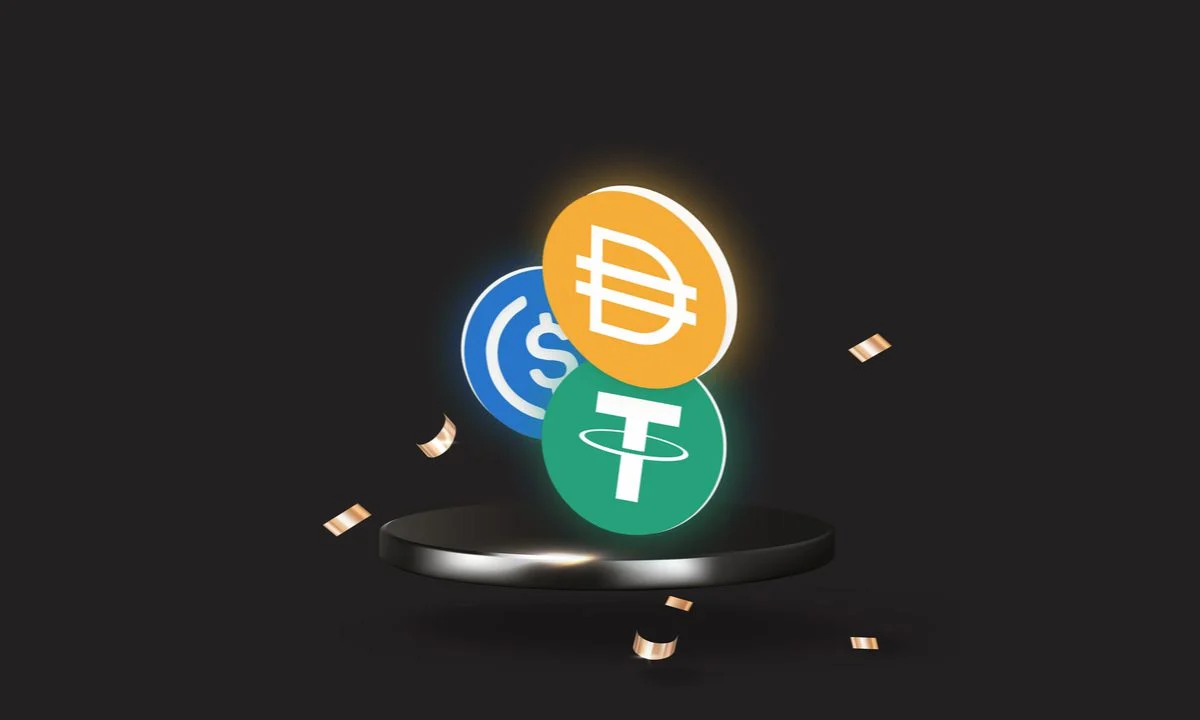
In a development that underscores this shift toward real-world utility, the TRON network has established historic milestones in network usage. According to verified protocol-level data, TRON recorded unprecedented levels of transaction volume and active wallet addresses during the month of June 2026. This surge was primarily driven by the continuous expansion of stablecoin settlements, particularly Tether (USDT) and other prominent stablecoins like Origin Dollar (OUSD).
This analysis provides a comprehensive breakdown of these network milestones, tracing the chronological growth of the protocol, examining the supporting data, exploring official responses, and assessing the broader implications for the global digital asset ecosystem.
Main Facts: The June 2026 Milestones
The network performance metrics recorded by TRON in June 2026 represent a significant departure from typical baseline activity, signaling a deeper consolidation of stablecoin market share on the network. The core verified facts of this development include:
- Record-Breaking Transaction Volume: The TRON network successfully processed over 385 million total transactions during June 2026. This metric, sourced directly from Tronscan’s global network transaction database, reflects the highest monthly transaction count in the network’s history.
- Unprecedented Wallet Activity: The number of unique active wallet addresses interacting with the TRON blockchain reached an all-time high of 26.9 million during the same period. This points to a broadening retail and institutional user base.
- Stablecoin-Centric Growth: The primary catalyst for this activity was stablecoin settlement velocity. The transfer of TRC-20 USDT, alongside yield-generating stablecoins like OUSD, accounted for the vast majority of network congestion, gas consumption, and transactional volume.
- Network Capacity and Stability: Despite the massive influx of transactions, the TRON blockchain maintained 100% uptime, validating the scalability of its Delegated Proof of Stake (DPoS) consensus mechanism under extreme load.
- Price Disconnection: Crucially, these network utility records did not translate into all-time high prices for TRON’s native utility token, TRX. The milestone is strictly a measure of network utility, volume, and address expansion, rather than speculative asset appreciation.
Chronology: The Path to Network Dominance
To understand how TRON achieved these record-breaking figures in June 2026, it is necessary to examine the chronological evolution of the network’s positioning within the stablecoin market.
   [2018–2020]                    [2021–2023]                    [2024–2025]                    [June 2026]
   TRON launches TVM;             TRC-20 USDT surpasses          Emerging markets adopt         TRON hits record
   focuses on high-speed,         ERC-20 USDT in volume;         TRON for remittances;          385M+ transactions
   low-fee architecture.          fees remain ultra-low.         OUSD integration grows.        & 26.9M active wallets.
1. The Architectural Foundation (2018–2020)
Following its migration from the Ethereum network to its independent mainnet in 2018, TRON focused heavily on high-throughput, low-latency architecture. By utilizing the TRON Virtual Machine (TVM) and a DPoS consensus model, the network positioned itself as a faster, cheaper alternative to Ethereum, which was beginning to suffer from severe congestion and prohibitive gas fees.
2. The Stablecoin Pivot (2021–2023)
As decentralized finance (DeFi) and global payments matured, the demand for stablecoins grew exponentially. Tether (USDT) recognized the limitations of Ethereum’s ERC-20 standard for microtransactions and expanded its issuance of TRC-20 USDT on the TRON network. By 2022, the volume of USDT on TRON regularly bypassed that of Ethereum, making TRON the primary settlement rail for everyday crypto transactions.
3. Integration of Advanced Yield Protocols (2024–2025)
Recognizing the dominance of USDT on its network, TRON integrated and optimized support for yield-bearing stablecoins and decentralized peg mechanisms, such as OUSD. This allowed users not only to transfer value cheaply but also to generate native yields directly within the TRON ecosystem, further locking in liquidity.
4. The June 2026 Surge
By mid-2026, persistent economic challenges in emerging markets—such as high inflation and limited access to traditional banking—drove millions of retail users toward digital dollars. This organic demand, coupled with institutional settlement migrations, culminated in the record-breaking 385 million transactions and 26.9 million active addresses recorded in June 2026.
Supporting Data: Analyzing the On-Chain Metrics
The claims surrounding TRON’s record-breaking performance are anchored in verifiable on-chain data retrieved from Tronscan, the primary block explorer and analytics platform for the TRON ecosystem.
Monthly Transaction Volumes
According to Tronscan’s global network transaction charts, the total transaction count for June 2026 surpassed 385 million. To put this into perspective, the following table compares TRON’s performance against historical averages and competing Layer-1 networks during the same timeframe:
| Metric (June 2026) | TRON Network | Ethereum Mainnet | Solana Network |
|---|---|---|---|
| Total Monthly Transactions | ~385,000,000 | ~33,000,000 | ~1,200,000,000 (inc. votes) |
| Active Wallet Addresses | 26.9 Million | ~5.8 Million | ~18.5 Million |
| Primary Use Case | Stablecoin Settlement | DeFi / NFTs / L2s | Memecoins / High-Freq Trading |
| Average Transaction Fee | <$0.10 (with energy) | $1.50 – $12.00 | <$0.01 |
While Solana boasts a higher raw transaction count, a significant portion of its volume consists of validator vote transactions and high-frequency arbitrage attempts. TRON’s transaction profile, by contrast, is heavily weighted toward value transfers, specifically stablecoin smart contract interactions.
Active Address Expansion
The reaching of 26.9 million active addresses in June 2026 highlights a steady upward trajectory in user retention. Unlike speculative networks where user activity spikes briefly during a token launch or airdrop and then collapses, TRON’s active address growth has remained consistent.
This sustained activity is largely due to the "energy" and "bandwidth" model of the TRON network. Users who stake TRX can generate energy and bandwidth, allowing them to execute stablecoin transfers entirely free of gas fees. This mechanism has made TRON highly attractive to payment processors, remittance startups, and retail users in developing nations who cannot afford to lose a percentage of their capital to network fees.
Official Responses and Ecosystem Reactions
The milestone has drawn reactions from network developers, industry analysts, and the TRON DAO. Representatives from the TRON ecosystem emphasized that the data validates the network’s long-term focus on utility over speculation.
TRON DAO Statement
In a technical brief addressing the June 2026 data, the TRON DAO stated:
"The achievement of 385 million monthly transactions and nearly 27 million active addresses is a testament to TRON’s role as the global settlement layer of choice. While other networks focus on highly speculative, transient narratives, TRON continues to build the infrastructure necessary to democratize access to financial services. Our network was built to handle high throughput without compromising on cost-efficiency, and these metrics prove that we are successfully fulfilling that mandate."
Industry Analysts weigh in
Independent blockchain researchers have noted that TRON’s dominance in the stablecoin sector is becoming increasingly difficult for competitors to challenge. A lead analyst at a prominent blockchain analytics firm commented:
"What we are seeing on TRON is not a temporary bubble of activity. It is the consolidation of global remittance traffic. In regions like Latin America, Southeast Asia, and parts of Africa, TRC-20 USDT is treated as a digital cash equivalent. The low fees and fast settlement times mean that merchants and individuals use TRON daily. The June 2026 data proves that stablecoins are the true killer app of crypto, and TRON is currently the undisputed leader in hosting them."
Implications for the Broader Crypto Market
The record-setting performance of the TRON network in June 2026 carries significant implications for the wider cryptocurrency industry, regulatory frameworks, and the competitive dynamics of Layer-1 blockchains.
1. The Decoupling of Network Utility and Token Price
One of the most critical takeaways for investors and market observers is the clear decoupling of network utility from token price appreciation. While TRON set monumental records in transactions and active addresses, the price of its native token, TRX, did not experience a parallel parabolic surge.
This phenomenon demonstrates that a network can serve as a highly successful, high-volume utility protocol without necessarily driving speculative retail mania into its native asset. For long-term industry health, this is a positive sign, indicating that utility-driven adoption can exist independently of speculative market cycles.
       [Real-World Utility]                   [Speculative Price Action]
   - 385M+ Transactions (June 2026)       - TRX price remains stable
   - 26.9M Active Addresses               - Decoupled from retail FOMO
   - Dominant global remittance rail     - Driven by utility, not speculation
2. Emerging Markets and Financial Inclusion
The concentration of stablecoin volume on TRON highlights the growing role of decentralized networks in providing financial alternatives to unbanked and underbanked populations. In nations experiencing hyperinflation or severe capital controls, stablecoins function as a critical tool for wealth preservation and cross-border trade. TRON’s ability to facilitate these transactions cheaply and reliably has cemented its position as a vital piece of global financial infrastructure.
3. The Layer-1 Competitive Landscape
TRON’s dominant position in stablecoin settlements poses a strategic challenge to other major blockchains:
- Ethereum: While Ethereum remains the security and liquidity hub for institutional DeFi, high gas fees on its base layer have effectively pushed retail stablecoin transfers to other networks. Layer-2 scaling solutions (L2s) are attempting to capture this traffic, but fragmentation across multiple L2s remains an obstacle for user experience.
- Solana: Solana has emerged as a major competitor for fast, low-cost transactions, but its historical struggles with network stability and its heavy association with speculative asset trading have made some payment processors hesitant to rely on it exclusively for high-volume corporate settlements.
- TRON’s Advantage: By offering a highly stable, specialized environment optimized for TRC-20 and other stablecoin standards, TRON has built a moat around the payments sector that remains highly resilient.
4. Regulatory and Compliance Considerations
With great volume comes increased regulatory scrutiny. Because TRON hosts a vast portion of the circulating supply of USDT, it remains a focal point for global regulators monitoring stablecoin compliance, anti-money laundering (AML) protocols, and counter-terrorist financing (CTF) measures.
As regulatory frameworks like the Markets in Crypto-Assets (MiCA) regulation in Europe and stablecoin bills in the United States continue to evolve, TRON’s developer community and the TRON DAO will face ongoing pressure to ensure that the network’s infrastructure remains compatible with international compliance standards without sacrificing its permissionless, low-cost nature.
Conclusion: A Snapshot of Structural Utility
The data from June 2026 paints a clear picture: the TRON network has evolved into a cornerstone of the global digital payments landscape. By processing over 385 million transactions and supporting 26.9 million active wallet addresses in a single month, the protocol has demonstrated its capacity to manage massive, real-world transaction loads driven by stablecoin settlements.
However, as with any blockchain network, execution risks, liquidity fluctuations, and shifting regulatory landscapes remain permanent factors. Market participants must distinguish between the verifiable, protocol-level utility of the TRON network and the speculative price dynamics of its native TRX token.
For now, these milestones serve as a powerful reminder that while speculative trends come and go, the protocols that provide fast, affordable, and accessible utility are the ones that continue to build lasting, structural value in the digital asset economy.