
Winter Storm Paralysis: How a Severe US Cold Snap Plunged Bitcoin’s Hashrate and Tested Grid Resilience
Main Facts
A severe, sweeping winter storm that paralyzed large swaths of the United States over the weekend triggered a dramatic, albeit temporary, shock to the global cryptocurrency ecosystem. As sub-zero temperatures, heavy ice, and blinding snowfalls battered regions across the South, Southeast, and Pacific Northwest, a significant portion of the domestic Bitcoin mining fleet was forced offline. The primary drivers behind this massive curtailment were a combination of catastrophic weather-induced power outages and voluntary cooperation agreements between major mining corporations and local utility providers.
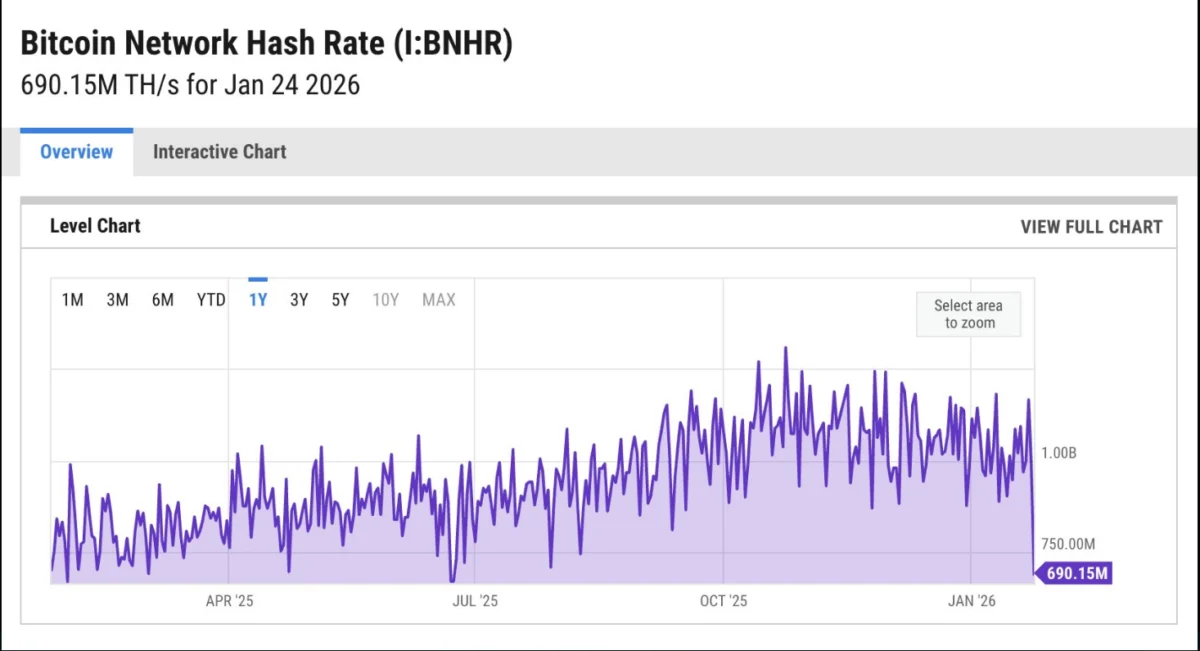
With the US accounting for nearly 38% of worldwide Bitcoin mining power—according to metrics from the Hashrate Index—the localized weather emergency manifested immediately on a global scale. Total network hashrate, the aggregate computational power securing the Bitcoin blockchain, plummeted to a seven-month low before staging a robust and rapid recovery.
While the sudden contraction in mining activity severely slashed the daily production yields of several industry heavyweights, such as Marathon Digital and CleanSpark, the broader financial markets displayed remarkable resilience. Bitcoin’s spot price hovered around the $88,000 threshold, weathering both the physical strain on energy grids and compounding macroeconomic anxieties. This unfolding event has once again thrust the complex, symbiotic relationship between decentralized digital asset infrastructure and centralized municipal power grids into the international spotlight.
Chronology of Events
The sequence of events unfolded rapidly as meteorological forecasts materialized into a full-scale winter crisis over the weekend.
Friday: The First Wave and Voluntary Curtailment
As the polar front descended upon the southern United States—striking energy-intensive hubs in Texas and surrounding states—regional grid operators began issuing high-alert advisories. Recognizing the surging demand for residential heating, major Bitcoin mining operations proactively initiated load-shedding protocols. Rather than waiting for transmission lines to fail under the strain, miners intentionally powered down racks of Application-Specific Integrated Circuit (ASIC) rigs. This deliberate step allowed regional utilities to preserve precious generation capacity for hospitals, emergency services, and residential homes.

Saturday into Sunday: The Hashrate Trough
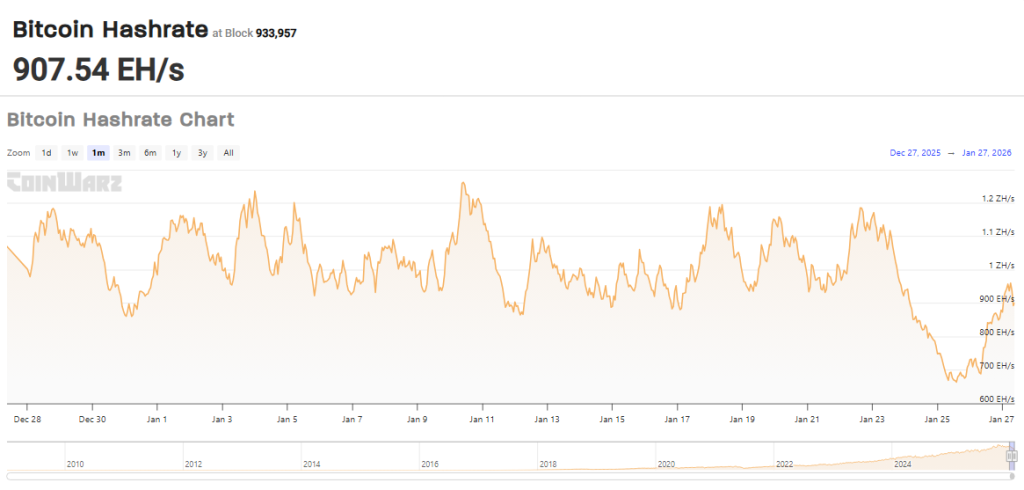
By Saturday, the operational impact was unmistakable on-chain. Network monitoring services began registering a precipitous descent in total computational power. The downward trajectory continued through Sunday, culminating at a striking low of approximately 663 Exahashes per second (EH/s). This level represented the lowest aggregate hashrate the network had experienced in seven months. Oregon-based crypto mining firm Abundant Mines noted via social media intelligence that an estimated 40% of global mining capacity had vanished within a localized 24-hour window, underscoring just how heavily the decentralized network has concentrated its operations within North American borders.
Monday and Beyond: The Swift Resurgence
As weather systems eventually tracked eastward and atmospheric pressure systems stabilized, utility companies began restoring baseline generation capabilities. Mining engineers and operations crews immediately went to work inspecting facilities, clearing ice accumulation from cooling vents, and safely booting up hardware arrays. The recovery was remarkably swift; within roughly 48 hours of hitting its trough, the network’s hashrate rebounded sharply, climbing back toward the 854 EH/s baseline as rigs returned to full industrial output.
Supporting Data and Production Metrics
The statistical footprint left by the weekend storm offers a fascinating window into the vulnerabilities and structural elasticity of industrial-scale cryptocurrency mining. According to a comprehensive report published by the federal Energy Information Administration (EIA), there are more than 130 dedicated commercial crypto mining installations dispersed across the United States. When extreme weather events cross geographic corridors that host clusters of these facilities, the disruption is instantly quantifiable.
Data compiled by on-chain analytics platform CryptoQuant and verified by independent market trackers revealed immediate, severe contractions in daily coin minting for publicly traded and private mining enterprises alike:
- Marathon Digital (MARA): Recognized for its volatile "solo" mining configurations and immense operational scale, Marathon saw its daily Bitcoin production drop precipitously from an average of 45 coins down to a mere seven coins at the height of the storm.
- CleanSpark (CLSK): Daily output experienced a sharp cut, falling from approximately 22 mined bitcoins down to 12.
- Riot Platforms (RIOT): Production figures plummeted from a steady daily average of 16 bitcoins down to just three.
- IREN (formerly Iris Energy): Output dropped from 18 daily coins to six.
On the network level, CoinWarz tracking charts demonstrated that the aggregate hashrate fell by nearly 200 EH/s from pre-storm highs before recovering. Bitcoin traded tightly within the $87,800 to $88,300 range during the height of the operational volatility, though derivatives markets noted wider swings earlier in the week driven by overlapping geopolitical headlines and shifting macroeconomic forecasts that had previously pushed prices near $96,000.
Official Responses and Industry Reactions
The crisis prompted significant commentary from energy analysts, mining executives, and grid operators, illuminating the evolution of how industrial crypto miners interface with public utilities.
In past years, large-scale miners were frequently criticized as energy hogs that strained local grids during peak consumption periods. However, the events of this recent winter storm highlighted a maturing, highly cooperative dynamic—particularly in deregulated energy markets like Texas. Mining farms are increasingly viewed by utility planners as a flexible "load resource." Because ASIC rigs can be powered down remotely within seconds and booted back up just as fast, they act as massive electrical sponges that can be instantly wrung out when local communities require emergency power.
Julio Moreno, Head of Research at CryptoQuant, emphasized the direct correlation between the storm’s geographic footprint and corporate balance sheets, noting on social media that daily production metrics for companies like CLSK, RIOT, and MARA were battered as executives chose grid stability over continuous coin accumulation.
Furthermore, corporate statements from firms like Abundant Mines reinforced that the massive drop in capacity was not the result of sudden hardware failure or infrastructure destruction, but rather a calculated, civic-minded pause. By stepping back voluntarily, miners avoided catastrophic grid failures that could have resulted in prolonged, multi-day blackouts for civilian populations—outcomes that would have courted intense regulatory backlash.
Implications for the Bitcoin Network and Mining Sector
The weekend’s events carry profound implications for the future governance, geographic distribution, and economic modeling of the Bitcoin network.
1. Proof of Network Antifragility
Critics of proof-of-work consensus mechanisms frequently point to geographic centralization as a fatal flaw. Yet, this winter storm proved the absolute opposite: the Bitcoin network is fundamentally antifragile. Even with 40% of global capacity disappearing overnight, the blockchain continued to process transactions, blocks continued to be mined (albeit at slower intervals until the difficulty adjustment catches up), and zero downtime was recorded. The decentralized architecture absorbed a massive geopolitical and environmental shock without missing a beat.
2. The Economics of Curtailment
For mining operators, extreme weather events introduce a unique economic calculation. While losing days of production directly impacts short-term revenue and cash flow, modern mining contracts often include lucrative "demand response" incentives. Utility providers frequently pay or credit industrial consumers substantial sums to curtail their power usage during emergencies. Consequently, while output drops on paper, the net financial impact can be partially offset by energy-reduction subsidies and avoided spot-market power costs.
3. Geographic Diversification Pressures
The incident also serves as a stark reminder of the risks associated with regional mining concentration. With over a third of global hash power residing within US borders—and heavily concentrated in southern and western states prone to both extreme summer heatwaves and winter polar vortexes—operators may increasingly look toward geographic diversification. Spreading operations into jurisdictions with milder, more stable climates or tapping into stranded, off-grid energy sources (such as flared natural gas or isolated geothermal and hydro plants) could mitigate future weather-related downtime.
4. Regulatory and Public Relations Wins
Perhaps most importantly, the collaborative response by the mining sector serves as a massive public relations and regulatory victory. By demonstrating that they can act as a stabilizing valve for stressed public utilities rather than a parasitic drain, industrial miners have strengthened their hand in ongoing policy debates across Washington and state legislatures. As energy grids globally face mounting pressures from electrification and extreme weather, the model of the flexible, curtailment-ready Bitcoin miner may well become the gold standard for industrial power management in the 21st century.