
Bitcoin Mining Difficulty Surges to All-Time Highs: A Double-Edged Sword for the Network
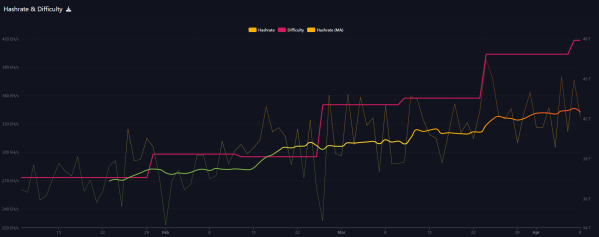
Despite Bitcoin’s ongoing struggle to decisively breach the psychological $30,000 resistance level, the underlying architecture of the world’s largest cryptocurrency continues to demonstrate unprecedented resilience. On April 6, 2023, the Bitcoin network underwent its latest scheduled difficulty adjustment, catapulting mining difficulty to a historic all-time high of 47.8 trillion. This represents the fourth consecutive increase, signaling a robust—if increasingly competitive—landscape for those securing the blockchain.
As Bitcoin’s price recovery continues to gain momentum following a tumultuous 2022, the surge in difficulty highlights a fascinating paradox: while the network is more secure than ever, the profitability for individual miners is being squeezed by the very competition that bolsters that security.
The Mechanics of Resilience: Understanding Difficulty Adjustments
To comprehend the significance of this milestone, one must first understand the self-regulating nature of the Bitcoin protocol. Bitcoin is designed to maintain a consistent block production time of approximately 10 minutes, regardless of how much computing power (hashrate) is directed at the network.
Every 2,016 blocks—roughly every two weeks—the network automatically adjusts its "mining difficulty." This adjustment ensures that if more miners join the network and increase the total hashrate, the mathematical puzzles required to mine a block become harder. Conversely, if miners leave, the puzzles become easier. The recent 2.3% increase in difficulty reflects a persistent influx of computing power, a testament to the renewed confidence miners have placed in the asset’s long-term viability.
A Chronology of the 2023 Mining Boom
The current trend of rising difficulty stands in stark contrast to the sentiment that dominated the industry just a few months ago.
- February 11, 2023: The last recorded downward trend in mining difficulty, providing a brief respite for miners grappling with thin margins.
- March 2023: A sustained period of growth as Bitcoin’s price appreciation—driven by a broader market recovery—began to incentivize dormant mining operations to come back online.
- April 6, 2023: The network hit the 47.8 trillion difficulty mark, cementing a trend of four straight bi-weekly increases.
- Current Outlook: While the price has faced resistance near the $30,000 threshold, the mining industry remains in an expansionary phase, with major firms continuing to deploy next-generation ASIC miners.
Supporting Data: Hashrate Fluctuations and Market Metrics
While difficulty is a measure of the effort required to solve blocks, the "hashrate" is the actual processing power being exerted. The relationship between these two metrics is symbiotic but not always perfectly linear.
According to data from industry-standard explorers, Bitcoin’s hashrate has been remarkably high, though it has seen slight volatility in recent days. BTC.com currently estimates the network hashrate at approximately 338 EH/s (Exahashes per second), while the data visualization platform Mempool.space reports a slightly higher figure of 347 EH/s. The discrepancy arises from different methodologies in estimating the hashrate based on block discovery times.

The Hash Price Squeeze
The primary implication of this increased difficulty is the decline in "hash price"—a metric denoting the expected revenue per unit of hashrate. As more miners contribute their processing power, the fixed daily issuance of Bitcoin (the block reward) is spread thinner. For the individual miner, this means that even if the price of Bitcoin is rising, their individual share of the "mining pie" is shrinking. This leads to a scenario where only the most efficient operations—those with access to the cheapest electricity and the most advanced hardware—remain profitable.
Implications: The High Cost of Security
The record-breaking difficulty is a triumph for network decentralization and security. A higher difficulty makes it exponentially more expensive for a malicious actor to attempt a 51% attack. However, for the mining industry, the implications are profound and multifaceted.
1. The Consolidation of Mining Power
The current environment favors industrial-scale operations. Small-scale or "home" miners, who previously enjoyed profitability during the crypto winter, are increasingly finding themselves priced out. We are witnessing a professionalization of the industry, where capital-rich firms are acquiring distressed assets from failed mining operations to expand their footprint.
2. The 2022 Hangover vs. 2023 Optimism
To understand the current surge, one must look at the "bear market" of 2022. The collapse of the Terra (LUNA) ecosystem, followed by the catastrophic failure of the FTX exchange, sent shockwaves through the mining industry. Faced with plummeting BTC prices and rising energy costs, many miners were forced to liquidate their BTC holdings, sell off their hardware, or shutter operations entirely. The 50% price recovery observed since the start of 2023 has acted as a lifeline, enabling these miners to reconnect their machines and rejoin the network, driving the difficulty to its current heights.
Regulatory and Environmental Challenges
Despite the technical success of the network, the mining sector faces significant headwinds from external factors, specifically regarding energy policy.
The Texas Regulatory Climate
Texas has long been considered a "haven" for Bitcoin miners due to its deregulated power grid (ERCOT) and abundance of renewable energy. However, that perception is shifting. State legislators have recently introduced bills aimed at modifying incentives for large-scale industrial energy consumers, including Bitcoin miners.
Proponents of these regulations argue that the strain miners put on the power grid during extreme weather events necessitates oversight. Conversely, industry advocates argue that miners provide "demand response" services, helping to balance the grid by powering down during peak demand. The uncertainty surrounding these policies remains one of the largest "known unknowns" for the industry in the coming months.
Expert Analysis: Is the Bull Run Real?
Market analysts are divided on whether the current mining activity is a leading indicator of a sustained bull market or a "bull trap."
"The fact that miners are betting big on the network despite the $30,000 barrier suggests a long-term belief in the asset class," says one industry analyst. "However, the hash price squeeze is real. We are seeing a race to the bottom in terms of operational costs. The miners who can’t optimize their energy procurement are likely to face another round of capitulation if the price doesn’t break out soon."
The Bitcoin Bollinger Bands are currently signaling high volatility, suggesting that the "rollercoaster ride" mentioned by traders is likely to materialize in the short term. Whether that movement is upward or downward will dictate the survival of many mining firms that are currently operating on thin margins due to the high difficulty.
Conclusion: A Network Built for Endurance
The Bitcoin mining difficulty reaching 47.8 trillion is not merely a number on a chart; it is a manifestation of the network’s core promise: security through competition. While the path ahead is fraught with regulatory hurdles and the constant pressure of shrinking profit margins, the mining community continues to demonstrate a unique ability to adapt.
As the industry matures, the focus will undoubtedly shift from "who can mine the most" to "who can mine the most efficiently." For the Bitcoin network, this evolution ensures that despite the volatility of the crypto market and the shifting sands of global regulation, the blockchain remains the most secure, decentralized, and robust financial ledger ever conceived. The current record-high difficulty is simply the latest chapter in the network’s ongoing quest to achieve global, trustless consensus.