The 20 Million Milestone: Bitcoin Enters the Final Act of Its Monetary Evolution
In a historic development for the digital asset landscape, the Bitcoin network has officially surpassed the 20 million mark in total coins mined. This milestone, achieved this past Sunday, marks a definitive point in the life cycle of the world’s first cryptocurrency. As the network continues its programmed path toward a total supply of 21 million, the achievement serves as a stark reminder of the protocol’s immutable scarcity and the long-term economic experiment that began in the wake of the 2008 global financial crisis.
The Chronology of Scarcity: 17 Years of Mining
The journey to 20 million coins began on January 3, 2009, when Satoshi Nakamoto mined the "Genesis Block." Since that moment, the network has operated with rhythmic, algorithmic precision, governed by a difficulty adjustment mechanism and a halving schedule that occurs roughly every four years.
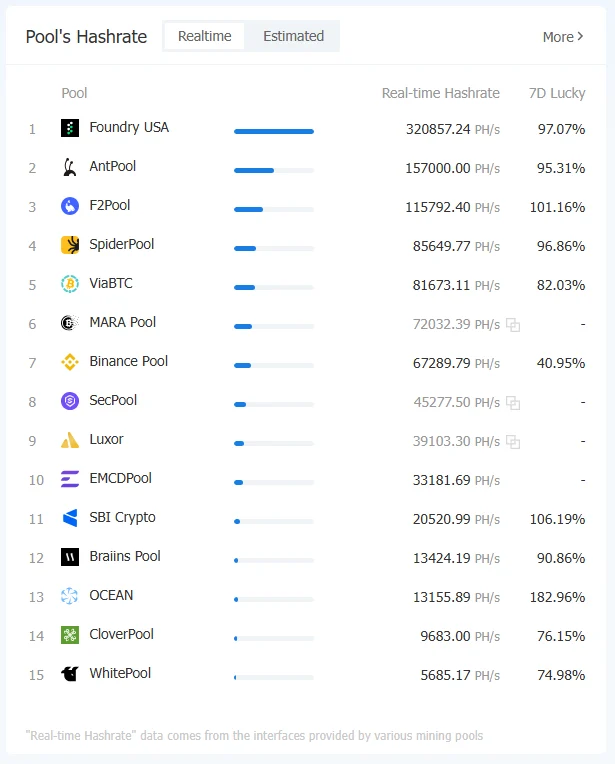
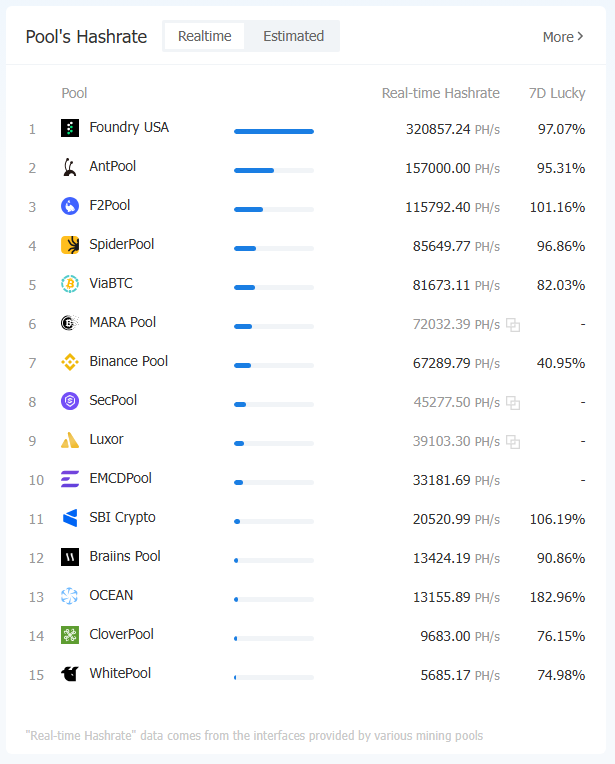
Exactly 17 years, two months, and one week after that inaugural block, the 20 millionth Bitcoin was pulled from the blockchain at block height 939,999. The honors went to the Foundry USA mining pool, which received a block reward of 3.125 BTC for their computational efforts. This reward reflects the post-halving reality established in April 2024, which effectively slashed the daily issuance of new coins from 900 to approximately 450 BTC.
The timeline leading to this point is a testament to the resilience of the Proof-of-Work (PoW) consensus mechanism. While the first few years saw Bitcoin mined on simple home computers, the process has since evolved into a global industrial sector, with massive data centers competing to secure the network. The path from the first coin to the 20 millionth has been a steady climb, with the issuance rate slowing predictably as the network matures.
Supporting Data: By the Numbers
The 20 million mark represents a significant threshold: approximately 95.24% of all Bitcoin that will ever exist is now in circulation. The remaining 1 million coins are set to be released over the next 114 years. Because of the halving mechanism, the issuance curve becomes increasingly shallow. The last full Bitcoin is projected to be mined sometime in the 2090s, after which only fractional satoshis will be distributed until the final unit is produced in roughly 2140.
However, the "circulating supply" is a misleading metric. According to comprehensive reports from blockchain analytics firms like Chainalysis and River Financial, the actual liquidity of the network is significantly lower than the 20 million headline suggests. Analysts estimate that between 2.3 million and 3.7 million BTC are effectively lost forever.

These losses stem from a variety of historical factors:
- The "Lost and Found" Era: During Bitcoin’s infancy, the asset held negligible value. As a result, early adopters often lost access to wallets due to misplaced private keys, hardware failure, or forgotten passwords. It is estimated that approximately 1.8 million coins were lost during the first five years of the network’s existence.
- Irretrievable Outputs: A portion of the supply—approximately 230 BTC—is locked in the Genesis block and other early outputs written with scripts that are fundamentally incompatible with modern spend-path protocols.
- The "HODL" Reality: Beyond the lost coins, a massive percentage of the 20 million supply is held in cold storage by long-term institutional and individual investors who view Bitcoin as a "digital gold" store of value, further tightening the available supply for daily trading.
The Economics of Mining: A Transition in Revenue
The success of Bitcoin’s scarcity model brings with it a complex long-term challenge: the economic sustainability of miners. Currently, mining operations are incentivized by two streams of revenue: the block subsidy (newly minted coins) and transaction fees.
As the block subsidy continues to shrink, miners are increasingly dependent on transaction fee volume. The next halving, scheduled for April 11, 2028, will cut the block reward from 3.125 BTC to 1.5625 BTC. By the 2040s, daily issuance will drop below 30 BTC, and by the 2060s, it will fall below 2 BTC per day.
This transition creates a "security budget" dilemma. Critics and researchers alike have questioned whether transaction fees alone will be sufficient to incentivize the massive energy expenditure required to secure the network once the block subsidy effectively reaches zero. Proponents argue that as the network matures and its utility as a global settlement layer grows, the cumulative volume of transaction fees will rise proportionally, compensating for the reduction in new coin issuance.
Implications for the Future
The passing of the 20 million milestone has triggered renewed debate regarding the long-term viability of Bitcoin as both a currency and a reserve asset.
1. Institutionalization and Macro-Sensitivity
The milestone was reached against a backdrop of significant market volatility. With Bitcoin trading near $70,000, the asset continues to navigate a turbulent macroeconomic environment. Despite a 21% year-to-date decline and persistent pressure from geopolitical tensions in the Middle East, Bitcoin has shown a 3.44% weekly gain, signaling that the asset remains a focus for institutional capital allocation. The 20 million mark reinforces the "digital scarcity" narrative that has historically drawn institutional players to the asset during times of inflationary pressure.
2. The Final 5%
The remaining 1 million coins represent the final chapter of Bitcoin’s supply expansion. As the network enters this final phase, the behavior of miners will likely shift. We may see a consolidation of the mining industry into more energy-efficient, larger-scale operations that can leverage economies of scale to survive on thinner margins. Furthermore, the protocol may see Layer-2 implementations, such as the Lightning Network, drive higher transaction volumes, which in turn could increase the fee-based revenue pool for miners.
3. A Shift in Monetary Perception
Economists have long debated the deflationary nature of Bitcoin. With only 5% of the total supply left to enter the market, the protocol’s rigid supply schedule becomes a point of focus for central bankers and monetary theorists. Unlike fiat currencies, which can be expanded by policy decisions, Bitcoin’s supply is mathematically capped. The crossing of the 20 million mark serves as a tangible demonstration of this "hard money" policy in action.
Conclusion: The Horizon of 2140
As we look toward the 2090s and eventually 2140, the Bitcoin network is transitioning from a "growth-oriented" mining phase to a "maintenance-oriented" phase. The 20 millionth coin is more than just a number; it is a checkpoint in a century-long experiment in decentralized finance.
For the miners at Foundry USA who processed that 20 millionth block, it was a routine operation in a high-stakes industry. For the global community, it is a reminder that the window for "easy" Bitcoin acquisition is closing. As the final 1 million coins are slowly released over the coming century, the network will be tested on its ability to sustain its own security without the crutch of high block subsidies. Whether the network evolves into the bedrock of a new global financial system or remains a niche, highly secure digital asset, the 20 million milestone will be remembered as the moment the protocol began its final descent toward absolute scarcity.