Institutional Capital Floods Crypto Markets Following Federal Reserve Interest Rate Pivot
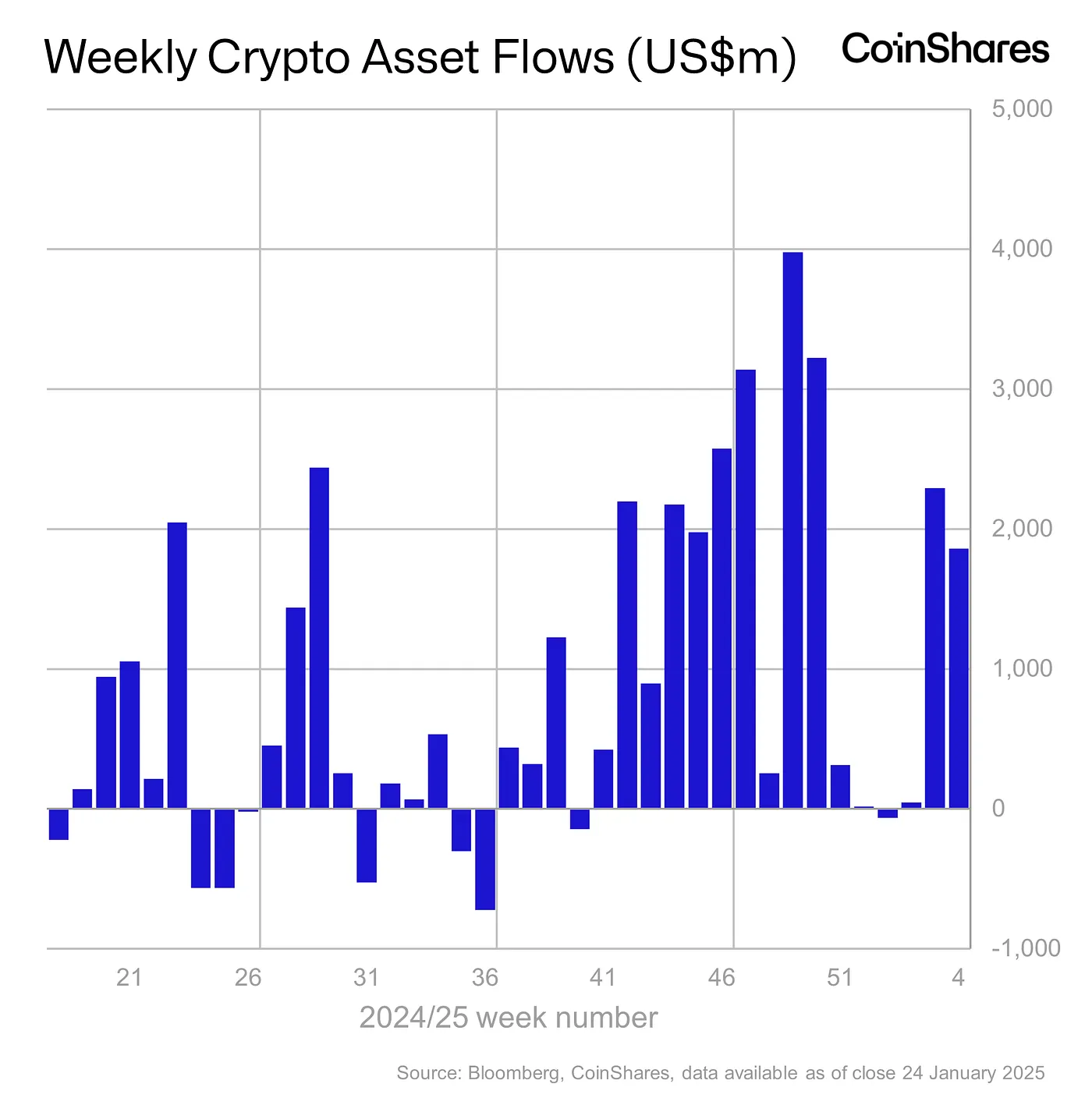
The global cryptocurrency market is experiencing a significant resurgence in institutional interest, according to the latest data from leading digital asset management firm CoinShares. Following the U.S. Federal Reserve’s historic decision to cut interest rates last week, institutional investors have funneled a staggering $1.9 billion into digital asset investment products, signaling a robust renewal of confidence in the sector.
The findings, published in CoinShares’ Digital Asset Fund Flows Weekly Report, highlight a fascinating shift in investor behavior. While the market initially displayed a measure of hesitation—what analysts are calling a "hawkish cut" reaction—the subsequent influx of capital suggests that institutional players are now viewing the Federal Reserve’s pivot as a long-term catalyst for digital asset growth.
The Chronology of Market Sentiment: From Caution to Conviction
The week began under a cloud of uncertainty. On the day of the Federal Reserve’s announcement, market participants were tasked with interpreting the nuances of a "hawkish cut"—a scenario where rates are reduced, yet the central bank’s language remains conservative regarding future easing. This typically creates a volatile environment for risk-on assets, and cryptocurrency was no exception.
Early in the week, institutional investors held their positions, adopting a "wait-and-see" approach. However, as the week progressed and the broader implications of the rate cut became clearer, the narrative shifted rapidly. By Thursday and Friday, the market saw a surge in buying activity, with approximately $746 million flowing into crypto exchange-traded products (ETPs) in just those 48 hours alone.
This late-week rally was a definitive response to the macroeconomic shift. As the cost of borrowing decreases, the opportunity cost of holding non-yielding assets—or assets perceived as hedges against currency devaluation—becomes more favorable. Institutional investors, who had been sitting on the sidelines during months of speculation, finally moved to capitalize on the new monetary policy environment.
Supporting Data: A Global Inflow Breakdown
The appetite for digital assets was not evenly distributed, with the United States acting as the primary engine for this capital movement.
Regional Analysis
- The United States: Dominating the global landscape, the U.S. recorded a massive $1.8 billion in net inflows. This concentration of capital underscores the pivotal role that spot Bitcoin and Ethereum ETFs play in the American financial system.
- Germany & Switzerland: As key European hubs for crypto investment, these nations saw inflows of $51.6 million and $47.3 million, respectively.
- Brazil: Emerging as a significant player, Brazil added $9.3 million to the total inflow count.
- Hong Kong: In a minor outlier to the global trend, Hong Kong experienced a slight contraction, with outflows totaling $3.1 million, reflecting a localized divergence in market sentiment.
Asset-Specific Performance
The inflows were heavily concentrated in market leaders, though the diversification of the capital suggests a broader interest in the crypto ecosystem beyond just Bitcoin:
- Bitcoin (BTC): Maintaining its status as the institutional "king," Bitcoin attracted $977 million in inflows. Conversely, short-Bitcoin investment products—which profit from a decline in price—suffered, recording $3.5 million in outflows. The total Assets under Management (AuM) for short-Bitcoin products have now dwindled to a multi-year low of $83 million, indicating that the "bearish" institutional trade is effectively capitulating.
- Ethereum (ETH): Ethereum saw a major resurgence, pulling in $772 million. This strong showing suggests that institutional investors are optimistic about the long-term utility and ecosystem growth of the second-largest cryptocurrency.
- Altcoin Momentum: Beyond the top two, Solana (SOL) captured $127.3 million, while XRP saw a notable $69.4 million inflow, pointing to a healthy appetite for alternative layer-one and payment-focused blockchain protocols.
Institutional Perspectives and Market Implications
The influx of nearly $2 billion in a single week is not merely a statistical anomaly; it is a fundamental indicator of institutional maturation. Financial analysts point to three primary drivers behind this surge.

1. The End of the "High-Rate" Era
For the past two years, the Federal Reserve’s aggressive interest rate hikes created a challenging environment for speculative assets. High interest rates increased the yield on "risk-free" government bonds, making the volatility of crypto less attractive by comparison. Now that the Fed has initiated a cutting cycle, the calculus has changed. Institutional capital is rotating back into assets that provide higher upside potential in a "lower-for-longer" interest rate environment.
2. The Normalization of Digital Asset ETPs
The proliferation of spot ETFs in the U.S. has provided institutional investors with a regulated, compliant, and highly liquid mechanism to gain exposure to digital assets. The ease with which these institutions can now move hundreds of millions of dollars into BTC or ETH has removed the technical and custodial barriers that previously prevented widespread adoption.
3. The "Hedge" Thesis
Despite the Fed’s hawkish undertones, many investors remain concerned about the long-term sustainability of the U.S. debt load and the potential for persistent inflation. Digital assets, particularly Bitcoin, are increasingly viewed by institutional desks as "digital gold"—a hedge against the debasement of fiat currency. The influx of capital following the rate cut suggests that smart money is preemptively hedging against potential currency volatility.
Future Outlook: What to Watch Next
While the recent inflows are undeniably positive, the market must remain cognizant of the volatility inherent in digital assets. CoinShares’ report serves as a reminder that sentiment can shift rapidly.
The "hawkish cut" indicates that the Federal Reserve intends to move cautiously, leaving the door open for future policy adjustments depending on inflation data and employment reports. Should the U.S. economy show signs of cooling faster than anticipated, we may see further acceleration in crypto inflows as the Fed accelerates its easing cycle.
Conversely, if inflation proves stickier than expected, the central bank may be forced to pause or slow its rate-cutting trajectory. Such a scenario would likely introduce renewed turbulence in the crypto markets. Investors should monitor the following indicators in the coming weeks:
- Employment Data: Weak labor market reports will likely push the Fed toward more aggressive cuts, which is generally bullish for crypto.
- ETF Flow Consistency: Whether the $1.9 billion inflow is a one-time event or the beginning of a sustained trend of capital allocation will determine the sustainability of the current price rally.
- Regulatory Developments: As the U.S. enters the final stretch of the election cycle, policy announcements regarding digital asset oversight will likely impact institutional sentiment.
Conclusion
The data from CoinShares confirms that the institutional "wait-and-see" period has effectively ended. The market has digested the Federal Reserve’s message and has decided that the risk-reward profile of digital assets is once again compelling. With nearly $2 billion flowing into the space in a single week, the foundation for a potential end-of-year rally appears to be firmly in place. However, as always, the crypto market remains a high-beta environment where careful due diligence and a long-term perspective remain the best tools for any investor.
Disclaimer: The information provided in this article is for informational purposes only and does not constitute financial, investment, or legal advice. Digital assets are highly volatile and carry significant risks. Always conduct your own research and consult with a qualified financial advisor before making any investment decisions. The Daily Hodl is not responsible for any financial losses incurred based on the information provided herein.