Ethereum Faces Critical Juncture as Derivatives Market Signals Shifting Sentiment
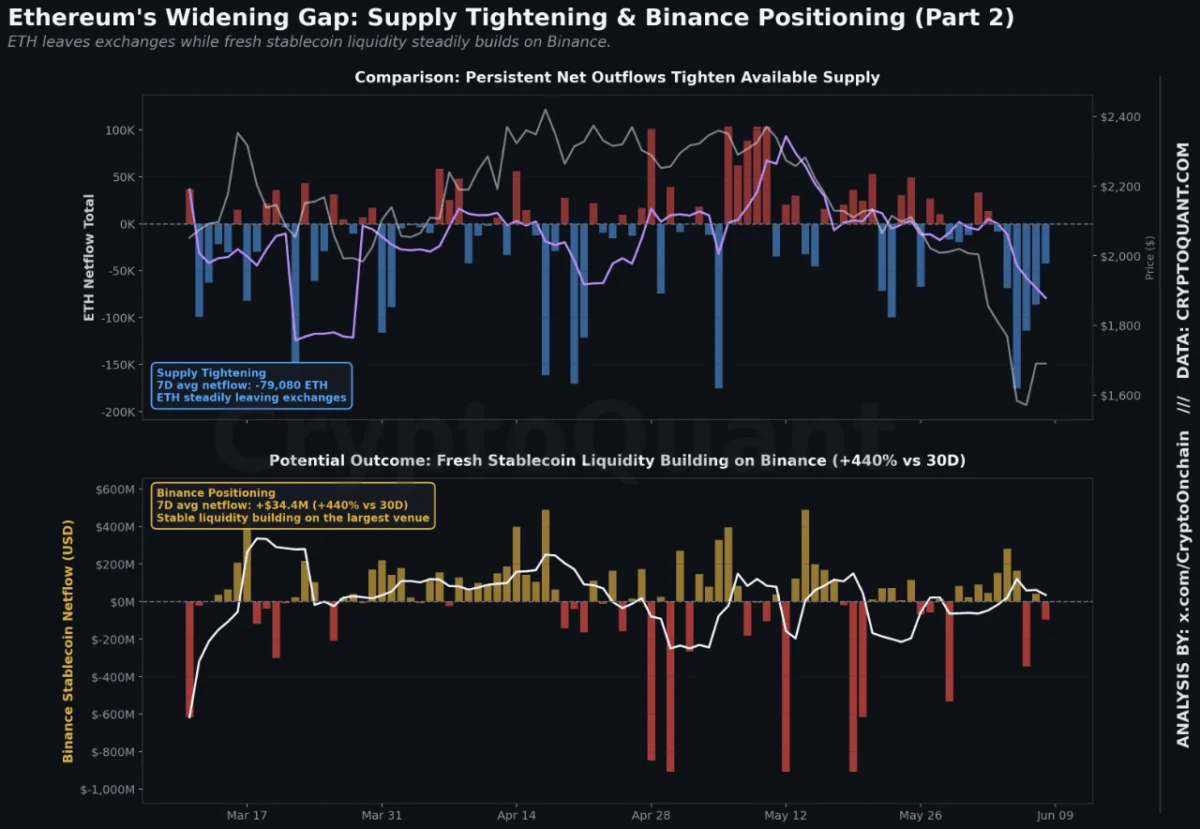
New York, NY – June 10, 2026 – Ethereum (ETH), the second-largest cryptocurrency by market capitalization, is currently navigating a pivotal moment, trading precariously below the $1,700 mark. The cryptocurrency has experienced a significant downturn, shedding approximately 28% from its recent highs. This price action, coupled with an intricate analysis of derivatives market data, suggests a structural shift that extends far beyond short-term price fluctuations. A recent report by CryptoQuant highlights a substantial unwinding of leveraged positions across major exchanges, a development that could dictate the trajectory of Ethereum’s price in the coming months.
The core of the concern lies not solely in the price decline, but in the dramatic reduction of Open Interest (OI) on major derivatives exchanges. This metric, which represents the total number of outstanding derivative contracts, has seen a precipitous fall, effectively erasing over a year’s worth of accumulated leveraged exposure in a compressed timeframe. This deleveraging event has brought multiple trading venues back to levels not observed since April 2025, indicating a significant reset in market sentiment and risk appetite.
Derivatives Data Reveals Extensive Deleveraging
The extent of this deleveraging is starkly illustrated by the figures from leading exchanges. On Gate.io, ETH Open Interest plummeted from $4.84 billion on May 7 to $2.68 billion on June 9, a staggering reduction of roughly $2.16 billion, or approximately 45%. This current reading closely mirrors the $2.67 billion recorded on April 11, 2025. A similar pattern is evident on Bybit, where Open Interest has receded to near $805 million, a level comparable to the $795 million seen on April 9, 2025.
The simultaneous return of two major exchanges to their April 2025 market structure signifies a broad clearing of leverage that was built up over the subsequent period. This deleveraging event is further corroborated by Binance’s funding rates, which have turned negative. This indicates that the remaining futures activity on the platform is not driven by bullish conviction, but rather by uncertainty or a mild bearish bias.
The Unfolding Narrative in Funding Rates
The CryptoQuant analysis delves deeper into the nuances of this Open Interest reset, pointing out an asymmetry between different exchanges that complicates a straightforward interpretation. While Gate.io and Bybit have effectively cleared their leveraged positions, Binance has not followed suit. ETH Open Interest on Binance remains elevated, hovering around $2.76 billion, close to its higher range, while other major venues have experienced sharp contractions.
This retained positioning on Binance does not inherently signal a bullish intent to remain in the market. The true story, according to the analysis, is told by the funding rates. With Binance’s funding rate dipping to approximately -0.0038, it suggests that traders are not paying a premium to hold long positions. The presence of Open Interest, therefore, does not equate to directional conviction; instead, it points towards a shift from directional bets to defensive strategies.

The report elaborates on the implications of this combination of factors. The derivatives reset is a tangible event, but its uneven nature presents a complex market dynamic. While some exchanges have purged leverage, Binance maintains its position under a funding backdrop that reflects caution rather than confidence. Negative funding during a price decline can be attributed to several conditions: participants hedging existing exposure, traders betting against a recovery by initiating short positions, or a general absence of aggressive long conviction that would typically drive positive funding rates.
Crucially, none of these conditions are indicative of a market poised for an imminent rally. Collectively, they paint a picture of a derivatives structure that has undergone a partial reset, with the most significant exchange holding residual positions without the directional commitment that would signal constructive market sentiment.
Ethereum’s Technical Breakdown and Support Levels
Beyond the derivatives market, Ethereum’s price action on the charts presents a concerning picture. The cryptocurrency has decisively broken below its February lows, reaching levels not seen since early 2023. This move is significant as it invalidates the broad trading range that had contained ETH for much of 2026 and confirms the continuation of a bearish structure that has been in development since the rejection from the $4,800 cycle peak.
From a market structure perspective, the chart is characterized by a clear sequence of lower highs and lower lows. Following its failure to sustain a break above the $2,250-$2,350 resistance zone, Ethereum lost the critical $1,800 support area, which had previously served as the floor for its February-March consolidation. This breakdown triggered a rapid descent towards the $1,500 region, where some buying interest emerged, preventing a more severe collapse.
A particularly concerning observation is that ETH is now trading below all major weekly moving averages. The 50-week, 100-week, and 200-week moving averages are all situated significantly above the current price, reinforcing the strength of the prevailing downtrend and establishing substantial overhead resistance.
The recent low near $1,500 now stands as the most critical support level on the chart. Should buyers manage to defend this area, Ethereum could potentially build a base and attempt a recovery towards the $1,800 mark. However, a weekly close below these recent lows would expose the market to a deeper retracement, potentially targeting the $1,300-$1,400 region, thereby extending the current correction and confirming further deterioration in long-term market structure.

Historical Context and Market Cycles
The current price action and derivatives data can be viewed within the broader context of cryptocurrency market cycles. Historically, significant price corrections have often been preceded by periods of intense leverage building, followed by sharp deleveraging events. The unwinding of Open Interest observed in Ethereum’s derivatives market is consistent with such patterns, suggesting that the market may be undergoing a necessary cleansing of speculative excess.
The years leading up to 2025 and 2026 saw a significant influx of capital and a surge in leveraged trading activity within the crypto space. Many projects, including Ethereum, experienced substantial price appreciation, fueled in part by this speculative fervor. However, as the market matures, it is not uncommon to witness periods of consolidation and deleveraging, where unsustainable gains are corrected, and the market recalibrates.
The current situation for Ethereum is not unprecedented. The cryptocurrency has demonstrated resilience in the past, recovering from significant downturns to reach new all-time highs. However, the confluence of a technical breakdown, a substantial derivatives reset, and a bearish macroeconomic environment presents a formidable challenge for bulls.
Expert Analysis and Potential Scenarios
Industry experts are closely monitoring the unfolding situation, with various scenarios being discussed. Some analysts believe that the current deleveraging event, while painful, could pave the way for a healthier and more sustainable rally in the future. By clearing out excess leverage, the market becomes less susceptible to cascading liquidations and more driven by fundamental value.
Conversely, others express caution, highlighting the persistent bearish sentiment indicated by the negative funding rates and the breakdown of key technical support levels. This camp suggests that further downside is probable, with the $1,300-$1,400 range serving as the next significant area of interest for potential support.
The asymmetry in Open Interest reduction across exchanges is a key point of discussion. The fact that Binance retains a significant portion of its Open Interest while other major platforms have deleveraged could indicate differing market dynamics or strategic positioning by larger entities. Understanding the motivations behind this retained positioning on Binance will be crucial in deciphering the short-to-medium term outlook for Ethereum.

Implications for Investors and the Broader Market
The current situation has significant implications for both retail and institutional investors. For those holding Ethereum, the breakdown below key support levels necessitates a reassessment of their risk management strategies. The potential for further downside means that stop-loss orders and diversified portfolios are more important than ever.
For traders, the volatile price action and shifting sentiment present both risks and opportunities. The deleveraging event could lead to increased volatility, creating opportunities for short-term trades. However, the overall bearish trend suggests that caution is warranted, and any bullish positions should be approached with a clear exit strategy.
The performance of Ethereum often acts as a bellwether for the broader cryptocurrency market. A sustained downturn in ETH could signal a wider market correction, impacting other altcoins and even Bitcoin. Conversely, a stabilization and subsequent recovery in Ethereum could provide a much-needed boost to the entire crypto ecosystem.
The Road Ahead: What to Watch
As Ethereum hovers at a critical juncture, several key factors will determine its future trajectory:
- Support at $1,500: The ability of buyers to defend the $1,500 level will be a crucial test of market sentiment. A failure to hold this support could lead to a rapid descent into the $1,300-$1,400 range.
- Binance Funding Rates and Open Interest: Continued negative funding rates on Binance, coupled with the retained Open Interest, will be closely watched for any signs of capitulation or a shift in conviction.
- Macroeconomic Factors: Global economic conditions, including inflation rates, interest rate policies, and geopolitical events, will continue to play a significant role in shaping investor sentiment towards risk assets like cryptocurrencies.
- Regulatory Landscape: Evolving regulatory frameworks surrounding digital assets can also influence market dynamics and investor confidence.
The current market environment for Ethereum is characterized by a clear divergence between price action and derivatives market sentiment. While the price has fallen significantly, the substantial unwinding of leverage suggests a cleansing of excesses. However, the retained positioning on Binance and persistent negative funding rates inject an element of uncertainty. Investors and traders will need to remain vigilant, closely monitoring these key indicators as Ethereum navigates this critical test. The coming weeks will likely provide greater clarity on whether the current levels can hold as support or if further deterioration is on the horizon.