Riding the Hash Rate Wave: Riot Platforms’ Strategic Expansion in a Volatile Bitcoin Market
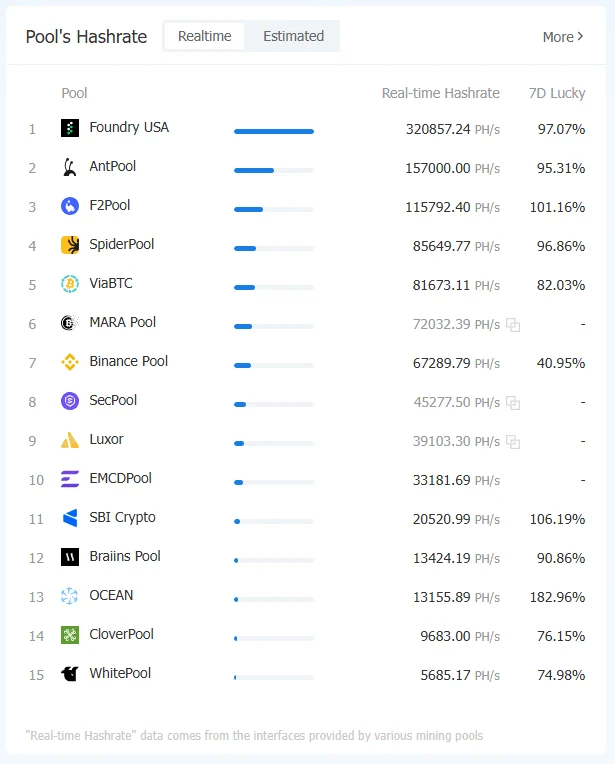
The global Bitcoin mining landscape has undergone a profound transformation over the last twelve months. Despite the lingering shadows of a crypto winter and the inherent volatility of digital asset markets, the underlying infrastructure of the Bitcoin network has reached unprecedented levels of strength. In the second quarter of 2023, the blockchain network recorded an all-time high in hash rate—a testament to the escalating competition and technological prowess among the industry’s major players.
Amidst this industrial acceleration, Riot Platforms, Inc. (formerly Riot Blockchain), one of the most prominent publicly traded Bitcoin mining companies in the United States, has emerged as a bellwether for the sector. Its latest financial disclosures for the second quarter of 2023 paint a picture of a company not merely surviving the market downturn, but actively scaling its operations through aggressive infrastructure deployment, strategic power management, and a robust balance sheet.
The Core Narrative: Operational Excellence Amidst Volatility
Riot Platforms’ Q2 2023 financial report provides a compelling case study in operational efficiency. While the broader cryptocurrency market faced significant headwinds—characterized by fluctuating prices and regulatory scrutiny—Riot managed to capitalize on the increasing transaction volume of the Bitcoin network.
The company’s performance was defined by a critical pivot: maximizing production efficiency while simultaneously lowering the cost of energy. By focusing on next-generation hardware and optimizing its power strategy in Texas, Riot managed to produce 1,775 BTC during the second quarter. This figure represents a 27% increase compared to the 1,395 BTC produced during the same period in 2022. This growth is particularly significant when considering that the total network difficulty—the measure of how hard it is to find a hash below a given target—remained at near-record levels throughout the quarter.
Chronology: A Quarter of Strategic Milestones
To understand Riot’s trajectory, one must look at the progression of their activities throughout the quarter.
Early Q2: Stability and Production Scaling
As the quarter began, Riot focused on stabilizing its operations at its Rockdale facility. By May 2023, the company hit a productive stride, outputting 676 BTC in a single month. This translated to a daily average of 21.8 BTC. Perhaps most impressively, the average cost to mine each Bitcoin fell significantly to $8,389, a marked improvement from the $11,316 average observed in Q2 2022. This reduction in the cost of production suggests that Riot’s energy-hedging strategies and hardware upgrades were beginning to yield substantial dividends.
Mid-Q2: Revenue Diversification
June brought a shift in the company’s narrative, as it showcased its ability to generate revenue beyond mere block rewards. While the price of Bitcoin during the quarter was roughly 15% lower than in the corresponding period of the previous year, Riot’s total revenue climbed to $76.7 million, up from $72.9 million in Q2 2022.
The composition of this revenue is revealing:
- Mining Revenue: $49.7 million
- Engineering Revenue: $19.3 million
- Data Hosting Revenue: $7.7 million
- Power Curtailment Credits: $13.5 million
This multi-faceted revenue stream demonstrates that Riot is effectively positioning itself as a hybrid infrastructure company, leveraging its electrical capacity to serve as a grid stabilizer as much as a digital asset miner.
Late Q2: Preparing for Future Hash Power
The quarter concluded with a strategic move that sets the stage for 2024. In a move to secure its competitive edge, Riot finalized a long-term purchase agreement with MicroBT to acquire 33,280 next-generation miners. This hardware procurement is the cornerstone of their plan to grow their hash rate capacity to 20.1 EH/s by the second quarter of 2024.
Supporting Data: The Financial Health of a Mining Giant
A deep dive into the numbers reveals a company that has successfully trimmed the fat from its balance sheet. As of June 30, 2023, Riot held 7,264 BTC on its balance sheet. At a market price of $30,477 per coin, this represents a significant store of value, providing the company with the liquidity required for future capital expenditures.
Capital Position
Riot ended the quarter in a strong liquidity position, reporting $408.4 million in working capital. This includes $289.2 million in cash on hand and $221.4 million in Bitcoin holdings. Most notably, the company made a massive dent in its profitability metrics, reducing its net loss to $27.7 million, compared to the $353.6 million loss recorded in Q2 2022. This represents a significant step toward operational profitability and long-term sustainability.
Official Responses and Strategic Vision
Management at Riot Platforms has consistently emphasized that their success is not purely accidental, but rather the result of a calculated "Power Strategy." By operating in the ERCOT (Electric Reliability Council of Texas) market, Riot acts as a flexible load resource.
When energy demand in Texas spikes due to extreme weather or grid stress, Riot curtails its mining operations and sells its power back to the grid. The $13.5 million in power curtailment credits earned in Q2 is a direct result of this strategy.
"Our ability to be a flexible load is a competitive advantage," a company spokesperson noted in their earnings call. "By choosing to power down when the grid needs it most, we not only help stabilize the state’s energy infrastructure but also create an additional, high-margin revenue stream that offsets our production costs."
The partnership with MicroBT is another pillar of this vision. By transitioning to high-efficiency, next-generation mining rigs, Riot aims to decrease its "joules per terahash," making the company more resistant to the inevitable increase in mining difficulty that occurs as more miners enter the space.
Implications: What This Means for the Industry
The success of Riot Platforms carries broader implications for the Bitcoin mining industry at large.
1. The Shift to Professionalization
Riot’s performance highlights the transition of Bitcoin mining from a cottage industry into a sophisticated, capital-intensive sector. Only companies with massive economies of scale, access to cheap power, and the ability to manage complex energy-hedging contracts are likely to survive the periodic "halving" events and market cycles that characterize the Bitcoin ecosystem.
2. Grid Integration as a Business Model
The model employed by Riot—whereby miners act as a "battery" for the power grid—is increasingly viewed as a solution to energy waste. Critics of Bitcoin mining often cite its environmental impact; however, Riot’s strategy of providing demand-response services suggests that mining can actually incentivize the development of renewable energy infrastructure by providing a reliable, secondary buyer for excess energy.
3. Investor Sentiment
The market has responded positively to these developments. Riot’s stock (RIOT) has seen a staggering 158.14% increase over the past six months. This suggests that investors are beginning to distinguish between "pure-play" miners and companies with integrated, diversified business models. As the market looks toward the next Bitcoin halving—which will reduce the daily supply of new BTC—investors are favoring firms that have proven they can lower their cost per coin while maintaining high hash rate growth.
Conclusion: Looking Toward the Future
As the industry approaches the next stage of the Bitcoin cycle, the divide between efficient, well-capitalized miners and those reliant on speculative price action is widening. Riot Platforms has successfully navigated the challenges of the last year by focusing on what it can control: operational efficiency, energy arbitrage, and long-term hardware acquisition.
With a target hash rate of 20.1 EH/s by mid-2024, the company is signaling that it intends to remain a dominant force in the global Bitcoin network. For stakeholders, the Q2 2023 report serves as a benchmark—a demonstration of how a disciplined, strategic approach to mining can turn a volatile market into a platform for growth. Whether this momentum can be sustained through the next market cycle will depend on the continued execution of their infrastructure goals and the broader stability of the global energy markets in which they operate.