The Bitcoin Mining Crucible: Difficulty Hits Record Highs Ahead of Crucial Halving
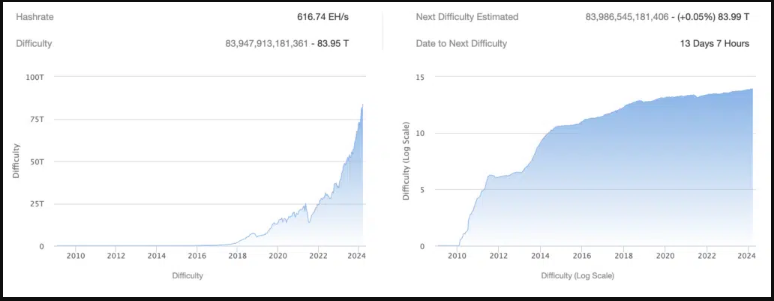
The Bitcoin network is currently navigating a period of unprecedented intensity. On March 14, 2024, the blockchain reached a significant milestone as mining difficulty surged to a historic peak of 84 trillion hashes. This development is not merely a technical adjustment; it represents a critical inflection point for the world’s leading cryptocurrency. As the network braces for the quadrennial "halving" event scheduled for April, the convergence of record-breaking difficulty, an all-time high hashrate, and shifting market dynamics creates a complex landscape for miners, investors, and industry analysts alike.
Main Facts: The Numbers Behind the Network
The recent adjustment, as reported by blockchain data aggregator BTC.com, saw mining difficulty climb by approximately 5.80% in a single movement. This metric, which dictates how hard it is for miners to find a valid hash for a new block, has been on an aggressive upward trajectory. Concurrent with this difficulty spike, the Bitcoin hashrate—the total computational power dedicated to securing the network—has also hit record highs, currently hovering at roughly 617 exahashes per second (EH/s).
This correlation is essential to understanding the current ecosystem: as more hardware is plugged into the network, the difficulty adjusts upward to maintain the protocol’s target of one block every ten minutes. The fact that both metrics are pushing boundaries simultaneously indicates a massive influx of capital and hardware into the mining sector, likely triggered by Bitcoin’s recent price rally, which saw the asset climb to an all-time high of $73,800 on the same day the difficulty record was set.
Chronology of the Mining Surge
To understand the gravity of the current situation, one must look at the recent timeline of the Bitcoin network:

- Early 2024: Bitcoin ETFs began trading in the United States, providing a massive liquidity injection into the ecosystem and driving the price of BTC toward record levels.
- February 2024: As the price began to climb, mining firms accelerated the deployment of newer, more efficient ASIC (Application-Specific Integrated Circuit) miners to capitalize on the increasing value of block rewards.
- March 14, 2024: The network difficulty hit the 84-trillion-hash mark, marking the highest point in Bitcoin’s 15-year history.
- April 2024 (Upcoming): The Bitcoin halving, the fourth of its kind, is set to occur, reducing the block subsidy from 6.25 BTC to 3.125 BTC.
This chronology highlights a "gold rush" mentality. Miners have been racing to maximize their production capacity before the April halving effectively slashes their revenue in half, creating a high-stakes environment where efficiency is the primary determinant of survival.
Supporting Data: The Profitability Paradox
Despite the daunting difficulty levels, the economic landscape remains nuanced. On the surface, rising difficulty makes it more expensive to mine a single unit of Bitcoin. However, the data suggests that miners are still generating substantial revenue. Recent reports indicate that daily mining rewards have reached near-record levels, occasionally eclipsing $79 million in a single day.
This phenomenon is explained by the price of Bitcoin. Because the fiat value of the rewards is currently high, miners are able to offset the increased electricity costs associated with the higher hashrate. However, this is a delicate balancing act. If the price of Bitcoin were to experience a sharp correction, many mining operations—particularly those running older, less efficient hardware—could find themselves operating at a loss, leading to a potential capitulation event where the least profitable miners are forced to shutter their operations.
Official Perspectives and Industry Responses
The mining industry is currently divided between optimism regarding the long-term value of the asset and pragmatism regarding short-term operational costs.

Major mining firms have publicly stated that they are "halving-ready," having invested heavily in next-generation rigs like the Antminer S21. These machines offer superior joules-per-terahash efficiency, allowing miners to remain profitable even when the difficulty increases and the subsidy decreases.
Conversely, market analysts have warned that the "difficulty dilemma" poses a systemic risk to smaller, localized mining operations. "The upcoming halving is a stress test," says one industry observer. "We are moving into an era where mining is no longer a hobbyist pursuit or even a small-business venture; it is becoming a highly institutionalized industrial activity where economies of scale and access to cheap, renewable energy are the only metrics that matter."
Implications: The Future of Proof-of-Work
The convergence of these events carries profound implications for the future of the Bitcoin network.
1. The Sustainability Question
As difficulty climbs, the total energy consumption of the Bitcoin network continues to rise. This has reignited the global debate regarding the environmental footprint of Proof-of-Work (PoW). While proponents argue that Bitcoin mining is increasingly becoming a driver for renewable energy grid balancing, critics remain concerned about the sheer scale of the electricity demand. The pressure to transition toward carbon-neutral mining will likely become a primary political and regulatory hurdle in the coming years.
2. The Centralization Risk
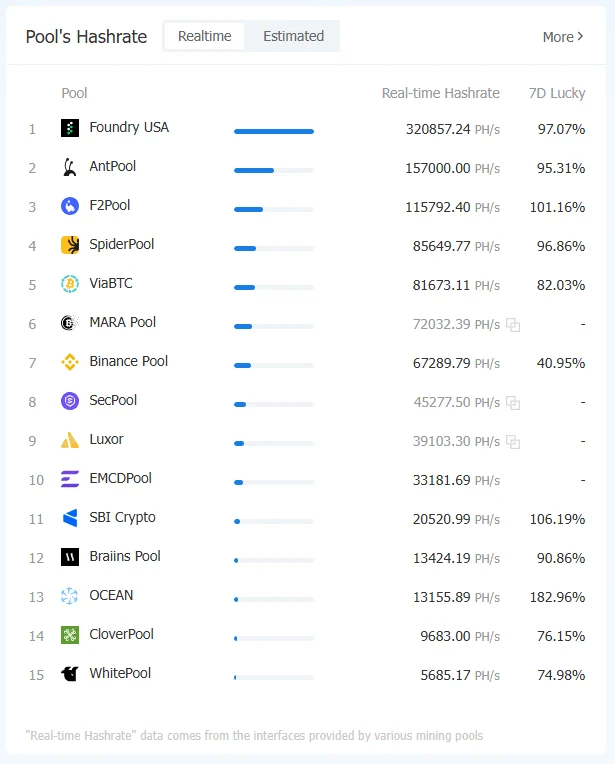
The requirement for massive, high-efficiency hardware to remain competitive creates a natural trend toward centralization. If only the largest, publicly traded mining corporations can afford to stay profitable, the decentralized ethos of the network could be perceived as under threat. Maintaining a decentralized distribution of hashrate is crucial for the censorship-resistant nature of Bitcoin, and the industry will need to innovate to ensure that smaller players can continue to participate.
3. The Security of the Network
Ironically, the rise in difficulty and hashrate is a sign of immense network security. The higher the hashrate, the more computationally expensive and, therefore, impossible it becomes to perform a 51% attack on the network. From a security standpoint, the current record-breaking stats are a testament to the robustness of the Bitcoin protocol. The network has never been safer, even if it has never been harder to mine.
4. Economic Scarcity
The upcoming halving is the ultimate expression of Bitcoin’s deflationary monetary policy. By cutting the daily issuance of new Bitcoin, the protocol is forcing a supply-side shock. While past performance does not guarantee future results, the historical precedent suggests that the market often prices in this scarcity well in advance. The current behavior of miners—investing heavily despite the imminent reward cut—suggests that the industry is betting on a continued increase in demand that will outpace the reduction in supply.
Conclusion: A New Era
The Bitcoin network is currently in a state of rapid evolution. The record-breaking difficulty of 84 trillion is a clear signal that the ecosystem is maturing, moving from the fringe to the institutional stage. While the upcoming halving will undoubtedly create short-term volatility and force a shakeout among inefficient operators, the underlying security and scarcity of the asset remain intact.
For observers and investors, the next few months will be critical. The industry is effectively undergoing a "Darwinian" process, where only the most efficient, well-capitalized, and strategically located miners will survive. As the network continues to scale and the difficulty continues to adjust, the world is witnessing the most significant real-time experiment in digital economic history—a decentralized, energy-backed ledger that continues to function with clockwork precision, regardless of the challenges it faces.
Whether this leads to a new price plateau or a period of consolidation, one thing is certain: the Bitcoin mining sector is no longer a quiet corner of the crypto world—it is the engine room of a global financial revolution, and it is currently running at maximum capacity.