
Institutional Capital Shifts: Bitcoin Outflows Surge as Markets Recalibrate Expectations
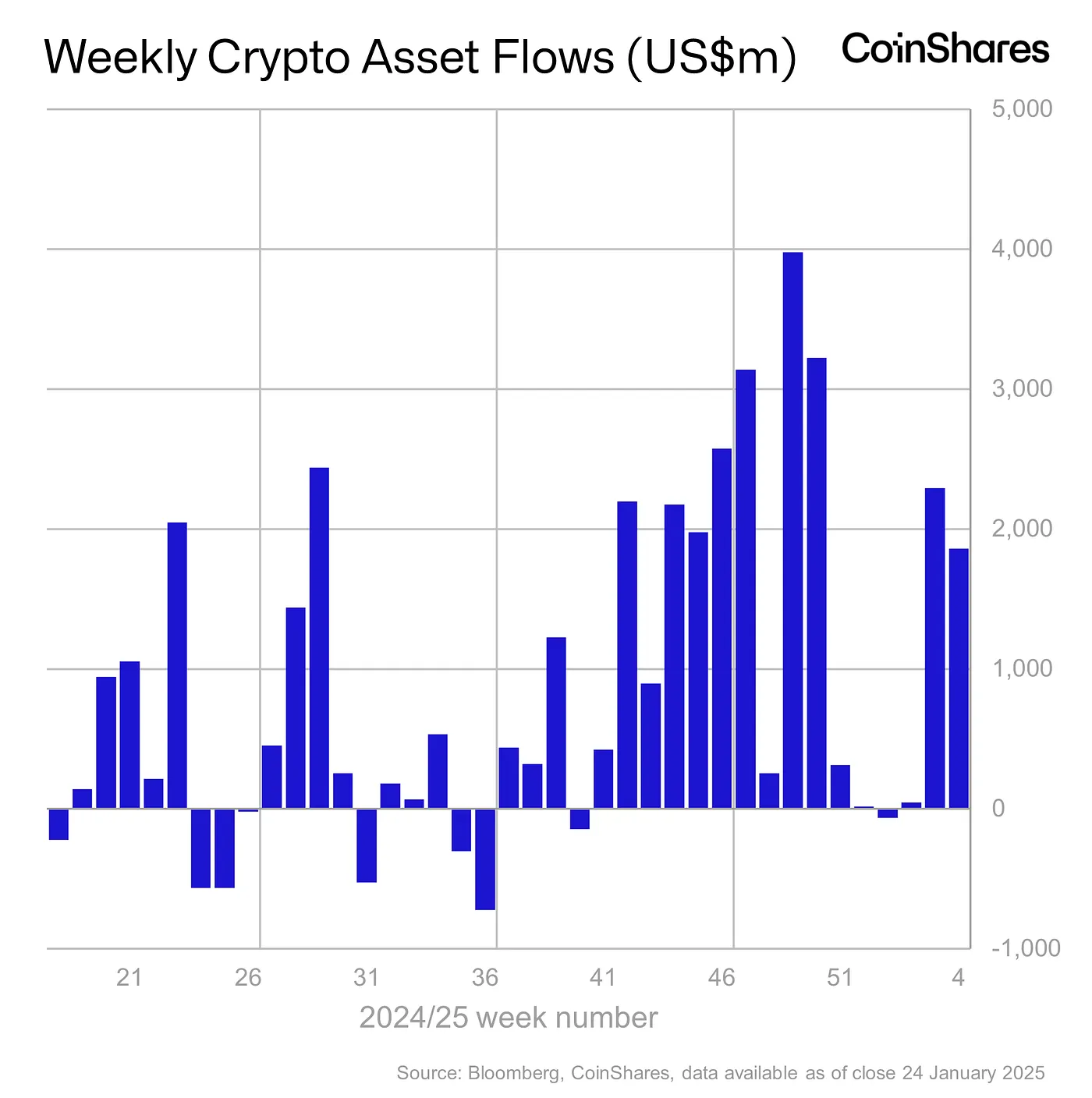
The global cryptocurrency market experienced a significant period of volatility last week, characterized by a sharp pivot in institutional sentiment. According to the latest "Digital Asset Fund Flows" report from CoinShares, institutional investors offloaded a staggering $360 million in aggregate from crypto-focused investment products. The headline figure, however, masks a deeper, more complex story: while Bitcoin faced a massive liquidity exit, alternative digital assets—specifically Solana—witnessed record-breaking institutional interest, signaling a growing divergence in investor strategy.
Main Facts: The Great Institutional Rotation
The primary catalyst for this week’s turbulence was a cooling in investor enthusiasm for the world’s largest digital asset, Bitcoin (BTC). Institutional entities liquidated $945.89 million in Bitcoin positions, a move largely attributed to shifting macroeconomic signals emanating from the U.S. Federal Reserve.
Despite a fresh interest rate cut by the Federal Reserve, the broader crypto market struggled to find sustained upward momentum. This disconnect between monetary easing and asset performance suggests that the market is currently hyper-sensitive to "forward guidance"—the specific language used by central bank officials to signal future policy directions. While the U.S. led the regional sell-off with $439 million in total outflows, the global market displayed regional disparities; Europe, in particular, maintained a more bullish posture, with Germany and Switzerland attracting $32 million and $30.8 million in inflows, respectively.
Chronology of the Shift
The week began with high anticipation surrounding the Federal Reserve’s policy meeting. Investors were positioned for a continuation of the aggressive easing cycle that has characterized the latter half of the year. However, the mood shifted mid-week following comments from Federal Reserve Chair Jerome Powell.
- Pre-Powell Anticipation: Early in the week, crypto markets remained buoyant, with institutional inflows tracking closely with the expectation of a "dovish" stance from the Fed.
- The "Hawkish" Pivot: Jerome Powell’s post-meeting commentary injected a sense of caution into the markets. His remarks—perceived as hawkish—cast doubt on the probability of a consecutive rate cut in December.
- Market Realignment: Following these comments, institutional capital began to flee Bitcoin. The heavy sell-off accelerated through the latter half of the week, with the majority of the $945 million in Bitcoin outflows concentrated in the final 48 hours of the trading cycle.
- The Institutional Pivot: By Friday, while Bitcoin was being dumped, a counter-narrative emerged: institutional capital did not leave the asset class entirely. Instead, it was rotated into high-performance smart contract platforms, most notably Solana.
Supporting Data: Dissecting the Asset Breakdown
The data provided by CoinShares reveals a stark contrast between "Store of Value" assets like Bitcoin and "Utility" assets like Solana and Ethereum.
The Bitcoin Exodus
The $945.89 million outflow from Bitcoin represents one of the largest single-week departures in recent history for institutional ETFs. This indicates that institutional players—typically long-term holders—are currently engaged in profit-taking or risk-off reallocation as they prepare for a potential "higher-for-longer" interest rate environment in the United States.
The Solana Surge
Perhaps the most notable finding in the report is the performance of Solana (SOL). Despite the bearish sentiment surrounding the broader crypto market, Solana recorded a massive $421.11 million in inflows. This marks the second-largest weekly haul in the asset’s history. This suggests that while institutions are retreating from the macro-volatility of Bitcoin, they are simultaneously doubling down on the technological utility and throughput capabilities of the Solana network.
Ethereum and XRP Resilience
Ethereum (ETH) and Ripple (XRP) also defied the broader negative trend, recording inflows of $57.59 million and $43.18 million, respectively. These figures highlight a shift toward "smart contract" dominance. Investors appear to be betting on the long-term utility of the Ethereum ecosystem and the ongoing regulatory developments surrounding XRP, even as they trim their exposure to the benchmark cryptocurrency.
Official Perspectives and Market Implications
The divergence in institutional behavior—selling Bitcoin while buying Solana—is a phenomenon that deserves closer scrutiny. Financial analysts suggest that this behavior is symptomatic of a maturing market where institutional investors are transitioning from "crypto as a monolith" to a more nuanced, sector-specific strategy.
The Fed’s Role
Jerome Powell’s influence cannot be overstated. When the Fed signals uncertainty regarding future rate cuts, "risk-on" assets are the first to suffer. Institutional investors often use Bitcoin as a high-beta proxy for global liquidity. When that liquidity outlook becomes murky, the standard operating procedure is to reduce exposure. The current uncertainty regarding the December rate cut has created a "wait-and-see" environment, causing capital to seek refuge in assets with unique, fundamental catalysts—such as Solana’s ecosystem growth—rather than assets that trade strictly on macro-liquidity trends.
The Regional Divide
The disparity between US and European flows is equally telling. Germany and Switzerland’s net inflows suggest that European institutional investors may be operating under a different risk appetite or regulatory framework than their American counterparts. This regional divergence may eventually lead to a fragmented market where liquidity shifts based on local central bank policies rather than global trends.
Future Outlook: What Does This Mean for Investors?
As we look toward the end of the year, the market is bracing for a period of heightened sensitivity. Investors should consider several key takeaways from this week’s data:
- Macro-Correlation is Not Dead: Despite the rise of utility-focused altcoins, Bitcoin remains the primary gauge for institutional sentiment. When the Fed speaks, the crypto market listens.
- Rotation, Not Abandonment: The data clearly shows that capital is moving within the sector rather than exiting it entirely. This is a sign of a robust, albeit volatile, asset class.
- The Importance of Fundamentals: The massive inflow into Solana suggests that institutional players are increasingly looking at "Total Value Locked" (TVL), developer activity, and network throughput when deciding where to park capital.
Risks and Considerations
Investors must remember that institutional flows are not always indicative of long-term price action. Large inflows or outflows can be driven by rebalancing, arbitrage, or specific fund liquidations that do not necessarily reflect the retail sentiment.
Furthermore, as CoinShares and other financial analysts emphasize, the cryptocurrency market remains a high-risk environment. The recent volatility underscores the need for rigorous due diligence. Investors should not view institutional movements as a guaranteed roadmap for future returns. Instead, these data points should serve as one component of a broader, well-diversified investment strategy.
Conclusion
The latest CoinShares data serves as a critical pulse check on the health of the crypto-institutional relationship. While the near-billion-dollar outflow from Bitcoin creates a headlines-grabbing narrative of a market retreat, the underlying data tells a more nuanced story of strategic rotation.
As the Federal Reserve continues to navigate a complex economic landscape, and as crypto assets differentiate themselves based on utility and performance, the market is likely to see further shifts in capital allocation. For the savvy investor, the current environment is not just about the macro-pressure from Jerome Powell; it is about recognizing the growing sophistication of institutional capital as it seeks out the next generation of blockchain winners.
Disclaimer: This report is for informational purposes only and does not constitute financial, investment, or legal advice. Cryptocurrency investments involve significant risk. Always conduct your own research and consult with a qualified financial advisor before making any decisions.