
Institutional Exodus: Crypto Markets Reel as Tariff Wars Trigger Massive Capital Flight
The global financial landscape is currently navigating a period of profound volatility, characterized by shifting geopolitical alliances and aggressive trade policies. At the epicenter of this turbulence is the digital asset market, which has recently faced a brutal reality check. According to the latest Digital Asset Fund Flows Weekly Report published by CoinShares, the institutional sector—long viewed as the pillar of crypto’s maturation—has initiated a massive retreat, spurred primarily by the economic uncertainty surrounding President Trump’s recent “calamitous” tariff initiatives.
The State of the Market: A Tectonic Shift in Sentiment
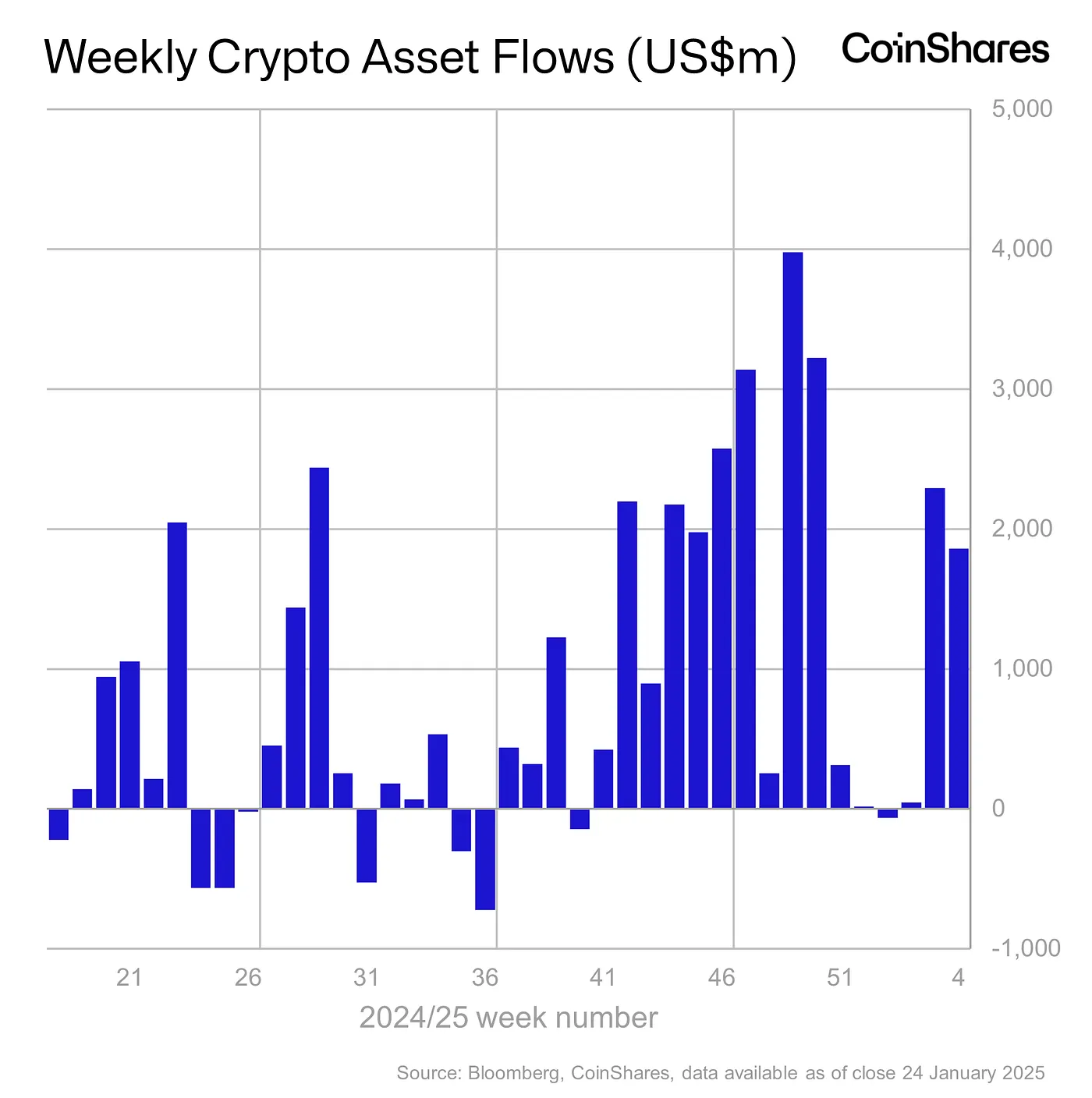
For the past several weeks, the cryptocurrency market has grappled with a wave of negative sentiment that has effectively undone months of accumulation. CoinShares reports that digital asset investment products have suffered a third consecutive week of outflows, totaling approximately $795 million. This sustained sell-off, which intensified in early February, has culminated in a staggering year-to-date (YTD) net outflow of $7.2 billion.
To put this in perspective, the total YTD inflows have been whittled down to a mere $165 million—a figure that underscores just how precarious the institutional commitment to digital assets has become in the face of macro-economic instability.
The Role of Tariff Wars
The primary catalyst for this shift, as identified by research analysts, is the reintroduction of high-stakes trade barriers. President Trump’s aggressive tariff stance has sent shockwaves through traditional markets, with investors fleeing high-risk assets—including Bitcoin and other cryptocurrencies—in favor of safer havens or liquidity. CoinShares explicitly labels these trade maneuvers as “calamitous,” noting that the policy-driven uncertainty has created a toxic environment for risk-on assets. When institutional capital, which typically seeks long-term growth, perceives that the macro-economic environment is being compromised by protectionist trade wars, the immediate reaction is to liquidate exposure to hedge against potential recessionary pressures.
Chronology of the Decline: From February to April
The current crisis did not emerge in a vacuum. To understand the gravity of the situation, one must look at the timeline of events that led to the present market state.
Early February: The Turning Point
The initial cooling of sentiment began in early February. As discussions regarding new tariff impositions grew louder, institutional investors began to re-evaluate their portfolios. What began as a cautious reduction in exposure quickly spiraled into a systematic exodus.
Mid-March: The Acceleration
By mid-March, the outflows were no longer just defensive; they were widespread. The correlation between the volatility in traditional equity markets and the crypto sector became starkly apparent. As the trade war rhetoric intensified, the “risk-off” sentiment spread like wildfire across institutional desks, leading to the record-breaking $7.2 billion in total outflows.
Early April: The Nadir and the Rebound
April 8th marked a significant low point for the sector, with Assets under Management (AuM) dropping to levels not seen since early November 2024. However, the end of the second week of April provided a glimmer of hope. Following a temporary, partial reversal of the proposed tariffs by the administration, the markets reacted with a late-week price surge. This technical rebound helped lift total AuM to $130 billion—a modest 8% increase from the bottom, yet still a far cry from the peak valuations seen earlier in the year.
Supporting Data: Where the Money Flowed (and Where It Fled)
The data provided by CoinShares offers a granular view of which assets suffered the most during this period of intense liquidation.
The Heavy Hitters: Bitcoin and Ethereum
Bitcoin, as the primary institutional vehicle, faced the brunt of the pressure. Last week alone, Bitcoin-based investment products saw a staggering $751 million in outflows. This suggests that large-scale holders—often hedge funds and family offices—are not just trimming their positions but are actively exiting their BTC exposure to reallocate capital elsewhere.

Ethereum, despite its utility as a platform for decentralized finance (DeFi), did not fare much better. The second-largest cryptocurrency by market capitalization saw $37.6 million in outflows. The consistent exit from these two assets signals a broader lack of appetite for the “Blue Chip” crypto assets in the current macro-environment.
The Altcoin Landscape
Beyond the major coins, smaller altcoins also struggled, though the scale was significantly lower. Solana (SOL) lost $5.1 million, while AAVE and SUI saw outflows of $0.78 million and $0.58 million, respectively. These figures, while smaller than Bitcoin’s, reflect a general trend of risk-aversion where even high-growth DeFi tokens are being shed to prioritize cash reserves.
The Outliers: Minor Inflows
Interestingly, despite the broader market carnage, some assets saw minor inflows, suggesting that certain investors remain bullish on specific niches within the ecosystem:
- XRP: Managed to secure $3.5 million in inflows, potentially linked to specific legal or developmental milestones.
- Ondo, Algorand, and Avalanche: Each saw marginal inflows of $0.46 million, $0.25 million, and $0.25 million, respectively. These figures indicate that some institutional capital is being rotated into specific, high-utility protocols rather than a total exit from the space.
Implications for the Future of Institutional Crypto
The current situation poses fundamental questions for the future of institutional cryptocurrency investment. Is this a permanent shift away from the asset class, or a temporary reaction to short-term geopolitical friction?
The Liquidity Trap
The most immediate implication of these outflows is a decrease in liquidity. As institutions pull back, the market becomes thinner, making it more susceptible to “flash crashes” and extreme volatility. This, in turn, discourages newer institutional entrants who require a stable, high-liquidity environment to execute large-scale trades.
The Regulatory and Geopolitical Hurdle
The “calamitous” tariffs represent a new frontier of risk for crypto investors. Historically, crypto was touted as a hedge against fiat currency debasement. However, when those same fiat systems are threatened by trade wars, the crypto market is proving to be highly sensitive to the resulting economic uncertainty. This undermines the “digital gold” narrative, at least in the eyes of risk-averse institutional managers who view these assets through a lens of total volatility rather than long-term store-of-value.
The Path to Recovery
For the market to stabilize, several factors must align:
- De-escalation of Trade Tensions: A definitive cooling of the tariff war would likely serve as the strongest catalyst for a rebound in AuM.
- Institutional Re-entry: The return of institutional capital is dependent on clarity regarding both trade policy and the broader economic outlook.
- Resilience of Altcoin Ecosystems: The fact that projects like XRP and Ondo saw inflows suggests that there is still interest in the underlying technology and utility of blockchain, provided the projects are viewed as distinct from the broader macro-economic noise.
Conclusion: A Critical Juncture
The cryptocurrency market is currently at a critical juncture. The massive $7.2 billion exodus underscores the vulnerability of digital assets to the whims of geopolitical leaders and the fallout of aggressive trade policies. While the recent price rebound offers a brief respite, the underlying structural challenges remain.
Investors must remain vigilant. As the market continues to react to daily news cycles, the distinction between long-term value and short-term speculative reaction will become increasingly important. Institutional firms, once the cheerleaders of the crypto revolution, are now playing the role of the cautious observer, waiting for a clearer signal that the economic storm is beginning to pass. For the individual retail investor, the message from the data is clear: in an era of global trade wars, the digital asset landscape is no longer immune to the fallout of traditional politics.
Disclaimer: The information provided in this article is for educational and informational purposes only and does not constitute financial, investment, or legal advice. Cryptocurrency investments involve high risk, including the potential loss of principal. Readers should conduct their own research and consult with a professional financial advisor before making any investment decisions. The Daily Hodl is not responsible for any financial losses incurred based on the information provided herein.