CleanSpark Secures $2.276 Billion in Senior Notes to Fuel Infrastructure and Compute Expansion
By the News Desk | Edited by Samuel Rae
Source: SEC Filings / CleanSpark Corporate Communications
Main Facts
In a landmark transaction highlighting the convergence of cryptocurrency mining and high-performance computing infrastructure, Bitcoin mining firm CleanSpark has officially priced a massive $2.276 billion offering of senior secured notes due 2031. Carrying an annual interest rate of 7.875%, the debt issuance ranks among the largest capital-raising operations in the history of the digital asset mining sector.
According to official filings with the U.S. Securities and Exchange Commission (SEC), the proceeds are earmarked primarily to accelerate the expansion of the company’s power and data-center footprint. Specifically, the capital will fund advanced development at CleanSpark’s sprawling campus in Sandersville, Georgia. This site is slated to house infrastructure capable of supporting both traditional Bitcoin mining workloads and high-performance computing (HPC) operations, including artificial intelligence (AI) applications.
The transaction underscores a profound shift in the broader digital infrastructure ecosystem. While CleanSpark built its reputation and balance sheet on the bedrock of proof-of-work mining, the company—alongside several prominent industry peers—now controls an asset that the wider technology and computing industries desperately crave: large-scale, grid-connected powered land and heavy electrical infrastructure.
By utilizing senior secured debt rather than a conventional equity raise, CleanSpark has opted to avoid immediate shareholder dilution. However, this strategy introduces a significant fixed financing obligation, placing the burden on management to deploy the $2.276 billion efficiently enough to service a 7.875% annual coupon in a volatile macroeconomic environment.
Chronology: The Road to a Multi-Billion-Dollar Infrastructure Play
To understand the magnitude of CleanSpark’s $2.276 billion debt offering, it is essential to trace the strategic evolution of the company and the digital asset mining sector over the past several years.
Phase One: Pure-Play Bitcoin Accumulation (2020–2022)
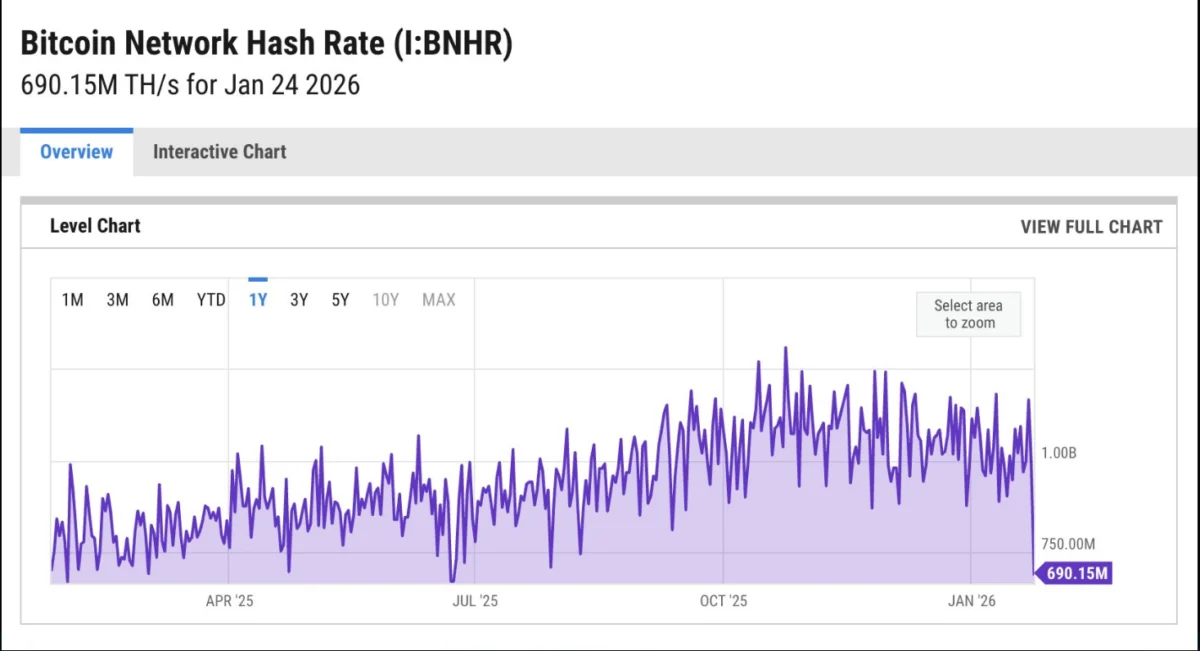
For much of its early history, CleanSpark operated much like its contemporaries: as a specialized, capital-intensive Bitcoin miner. The company’s growth metrics were almost entirely tethered to hash rate expansion, fleet efficiency upgrades via the acquisition of next-generation application-specific integrated circuit (ASIC) miners, and access to low-cost power markets. During this era, capital markets primarily interacted with miners through equity offerings or asset-backed equipment financing. The concept of building general-purpose data centers for external clients was largely secondary to the immediate pursuit of bitcoin block rewards.
Phase Two: Geographical Scaling and Power Securitization (2023)
As the Bitcoin network’s difficulty surged and the 2024 halving event loomed on the horizon, profit margins for pure-play mining compressed. CleanSpark recognized that survival and dominance required direct control over power assets and physical real estate. The company embarked on an aggressive acquisition spree, snapping up turnkey facilities and greenfield sites—notably in Georgia and Mississippi. By securing proprietary access to hundreds of megawatts of electrical capacity, CleanSpark insulated itself from fluctuating regional energy prices and built a robust operational moat.
Phase Three: The AI and HPC Convergence (Late 2023–2025)
Concurrently, the explosive rise of generative artificial intelligence created an unprecedented global shortage of data-center capacity and grid power. Technology giants, hyperscalers, and enterprise AI firms began scouring the globe for power-dense sites capable of housing thousands of specialized accelerators (such as GPUs). Bitcoin miners suddenly found themselves sitting on the exact resource tech giants needed most: multi-hundred-megawatt power substations connected to transmission lines. CleanSpark began pivoting its long-term strategic vision to incorporate high-performance computing alongside its core mining operations.
Phase Four: The $2.276 Billion Capital Injection (Current Era)
Culminating these years of structural preparation, CleanSpark’s pricing of the $2.276 billion senior secured notes due 2031 marks its definitive entry into the upper echelon of infrastructure developers. Rather than relying on piecemeal funding, the company has secured a war chest large enough to construct institutional-grade facilities that can pivot fluidly between cryptocurrency mining and enterprise-grade AI workloads, effectively bridging the gap between digital asset generation and traditional data-center operations.
Supporting Data and Financial Breakdown
The sheer scale of CleanSpark’s latest financial maneuver is best understood through a granular examination of the offering’s terms, the economics of modern data-center development, and the shifting metrics of the mining sector.
Key Terms of the Offering
- Total Principal Amount: $2.276 billion
- Maturity Date: 2031 (Senior Secured Notes)
- Coupon Rate (Interest): 7.875% per annum
- Primary Deployment Focus: Sandersville, Georgia campus development and general infrastructure scaling
- Collateral Structure: Senior secured debt, providing lenders with priority claims on pledged corporate assets in the event of default.
The Economics of Debt vs. Equity
In corporate finance, management teams continually weigh the cost of capital against shareholder value. By selecting a debt financing structure over a massive secondary equity offering, CleanSpark avoided diluting its existing shareholders’ ownership percentages.
However, a 7.875% interest rate on a principal of over $2.276 billion translates to a substantial annual cash interest expense. To maintain financial health, CleanSpark must ensure that the assets built with these funds generate sufficient operating cash flow to comfortably service the debt service obligations without straining corporate liquidity during potential Bitcoin bear markets.
The Mining Sector Valuation Shift
Historically, Wall Street valued Bitcoin miners strictly using metrics such as:
- Hash Rate: Total computational power contributed to the network (measured in EH/s).
- Fleet Efficiency: Joules per terahash ($J/TH$) of deployed hardware.
- Power Cost: Dollar per kilowatt-hour ($textkWh$) at operational sites.
Today, institutional analysts evaluate mining enterprises through a hybrid lens that incorporates traditional data-center metrics:
- Megawatt (MW) Pipeline: Total available and contracted electrical capacity.
- Land and Fiber Assets: Ownership of real estate and proximity to high-speed telecommunication backbones.
- Workload Flexibility: The technical capability to transition power capacity dynamically between low-latency AI compute and continuous Bitcoin mining based on real-time economic yields.
Official Responses and Corporate Strategy
While official statements from executive leadership emphasize the transformational nature of the Sandersville campus development, industry observers and market participants have offered varied interpretations of the strategy.
CleanSpark’s executive team has consistently framed the company’s infrastructure investments as a dual-engine growth model. In corporate communications accompanying the SEC disclosures, management emphasized that owning scale-ready powered land provides unmatched strategic optionality.
"Our ability to secure long-term capital at this scale validates the quality of our power portfolio and our operational execution," noted representatives close to the transaction. "We are building the foundational infrastructure that will power the digital economy of the next decade, whether that compute is dedicated to securing the Bitcoin network or processing advanced enterprise workloads."
Conversely, financial analysts following the sector have urged caution, highlighting the inherent risks of leveraging up in a capital-intensive industry. While the allure of the AI data-center trade is undeniable, converting a standard Bitcoin mining facility into a tier-ready AI facility is neither trivial nor cheap.
Industry analysts point out that crypto mines generally utilize air-cooled, high-density ASIC housings with relatively straightforward networking requirements. In contrast, enterprise AI data centers demand sophisticated liquid-cooling infrastructure, carrier-neutral network redundancy, ultra-low latency fiber connectivity, and strict uptime SLAs (Service Level Agreements) that frequently exceed 99.999%. Consequently, while CleanSpark’s access to hundreds of megawatts in Sandersville provides an invaluable head start, the company faces significant engineering and capital expenditures to fully capture the high-end HPC market.
Implications for the Future of Bitcoin Mining and Compute
CleanSpark’s $2.276 billion debt raise is far more than a routine corporate finance story; it serves as a bellwether for the structural transformation sweeping across the entire digital asset industry.
1. The Blurring Lines Between Miners and Tech Utilities
The traditional boundaries separating Bitcoin miners, independent power producers (IPPs), and commercial data-center operators are dissolving. As grid capacity becomes increasingly scarce globally—particularly in North America and Europe—power-secured real estate has emerged as the ultimate bottleneck for the expansion of artificial intelligence. Miners who successfully transition into multi-tenant digital infrastructure providers will likely command higher enterprise valuations than those remaining pure-play operators.
2. Capital Market Maturation
The ability of a Bitcoin mining enterprise to successfully price over $2.2 billion in senior secured notes demonstrates the growing comfort institutional debt markets have with the digital asset ecosystem. Although 7.875% reflects a meaningful cost of capital, the successful syndication of the notes proves that traditional fixed-income investors view top-tier mining infrastructure as a tangible, productive asset class worthy of multi-billion-dollar commitments.
3. Execution Risk and Strategic Adaptability
Ultimately, the long-term legacy of CleanSpark’s 2031 notes will depend entirely on execution. If management successfully transforms the Sandersville campus and future sites into dual-purpose powerhouses capable of pivoting seamlessly between Bitcoin mining and lucrative AI compute contracts, the 7.875% interest burden will be viewed as a masterstroke of leveraged growth. If, however, macroeconomic conditions deteriorate or the integration of HPC workloads encounters technical bottlenecks, the fixed debt obligations will test the company’s financial resilience.
As the dust settles on this historic capital raise, one reality remains clear: the days of the standalone, single-purpose Bitcoin mining farm are rapidly fading, replaced by an era where power, compute, and capital converge on an unprecedented scale.