Bitcoin Mining Crisis 2026: Public Miners Offload Record Reserves as 20% of the Industry Operates in the Red
NEW YORK — The global Bitcoin mining industry is navigating one of the most perilous operational environments in its history. As the sector crosses the threshold into the second quarter of 2026, fresh data reveals that approximately 20% of the entire Bitcoin mining network is operating at a net loss. This stark economic reality has triggered a historic wave of distress selling among publicly traded mining corporations, forcing executives to liquidate long-held treasury reserves simply to cover operational overhead, electricity costs, and hardware maintenance.
The current crisis highlights a volatile convergence of macroeconomic pressures, structural halving impacts, and relentless network difficulty increases. While individual miners battle for survival, the broader digital asset ecosystem is experiencing a fascinating structural shift, with corporate balance-sheet buyers stepping in to absorb the heavy supply hitting the open market.
1. Main Facts: The Anatomy of a Mining Squeeze
At the core of the current turmoil is a metric known as hashprice—the daily estimated revenue a miner earns per unit of computing power. According to market data from Hashrate Index, hashprice has been on a downward trajectory since July 2025. It currently languishes at roughly $33 per petahash per second (PH/s) per day.
For a significant portion of the global mining fleet—particularly operations utilizing older-generation ASIC rigs—the operational breakeven threshold sits at approximately $35 per PH/s per day. That seemingly narrow two-dollar deficit on paper has pushed nearly a fifth of the industry into the red, leaving operators with agonizing choices: unplug unprofitable hardware, restructure debt, or liquidate mined Bitcoin reserves.

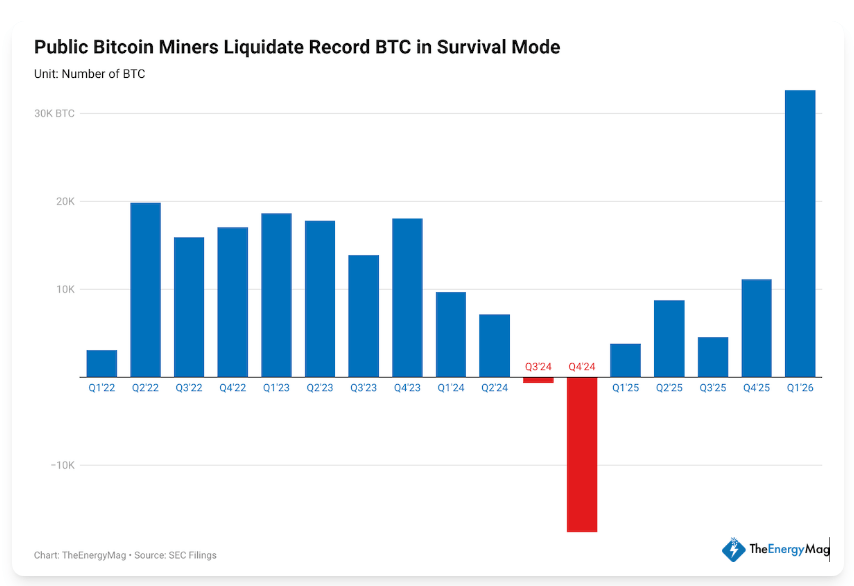
The scale of this liquidation became undeniable during the first three months of 2026. Data compiled by TheEnergyMag reveals that major publicly traded mining firms—including MARA, CleanSpark, Riot, Cango, Core Scientific, and Bitdeer—collectively offloaded more than 32,000 BTC during Q1 2026.
To put this figure into perspective, the volume sold in just the first quarter of this year eclipses the total amount these same entities sold across all four quarters of 2025 combined. Furthermore, it completely shatters the previous historical quarterly record of roughly 20,000 BTC, which was set during Q2 2022 amid the catastrophic collapse of the Terra-Luna ecosystem.
2. Chronology of the Decline: How the Industry Reached Breaking Point
To understand how the Bitcoin mining sector arrived at this critical juncture, industry analysts look back at a sequence of compounding market pressures that began unfolding years prior:
- Late 2023 – Steady Reserve Draining: According to on-chain analytics provider CryptoQuant, total Bitcoin reserves held by all miners globally peaked near the end of 2023 at over 1.86 million BTC. Since then, a slow, methodical bleed has taken place, reducing total miner balances to approximately 1.8 million BTC by early 2026.
- July 2025 – The Hashprice Inflection: Hashprice began a sustained descent in mid-2025. As global computational efficiency improved and more advanced hardware flooded the market, revenue per unit of processing power began steadily slipping toward production costs.
- The Halving Aftershocks: The lingering deflationary supply shock of the latest Halving event reduced block subsidies significantly, slicing core revenue streams for miners while network competition remained fierce.
- Q1 2026 – The Capitulation Wave: Pushed past their financial limits by rising electricity bills, macroeconomic tightening, and sub-$35 hashprices, public miners broke historical liquidation records, dumping 32,000 BTC onto the market in 90 days.
3. Supporting Data and Market Metrics
The intersection of on-chain metrics, derivatives markets, and corporate reports paints a vivid picture of the current landscape:
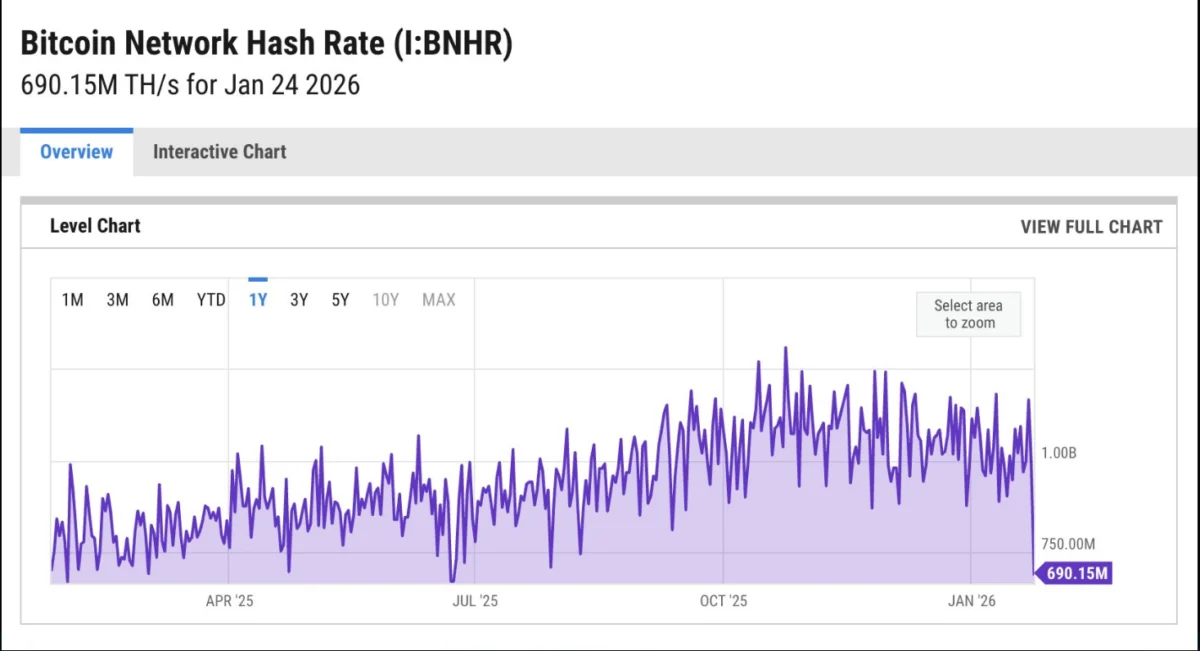
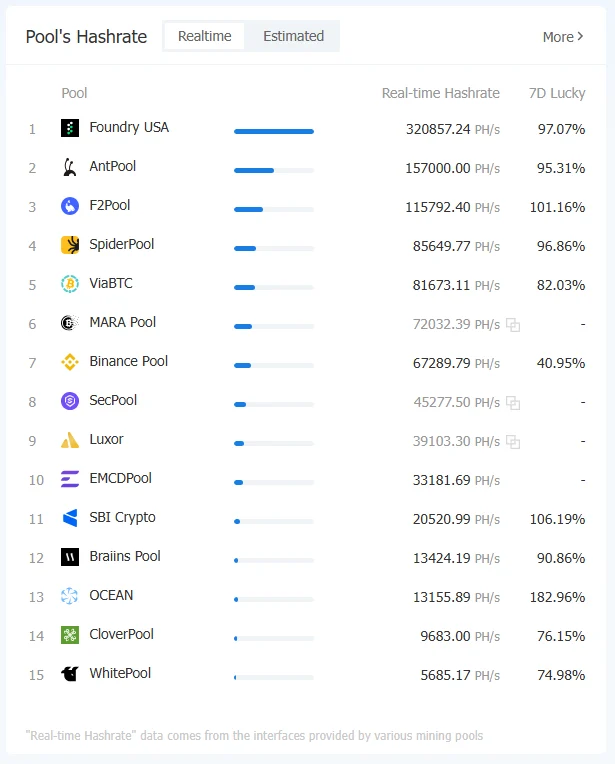
- Hashrate and Competition: Despite sliding revenues, the network’s total hashrate has remained stubbornly high, driven by enterprise-grade facilities locked into long-term energy contracts. This creates an ironic paradox: as prices and profit margins drop, competition (and thus mining difficulty) remains near historic highs, squeezing weaker players out.
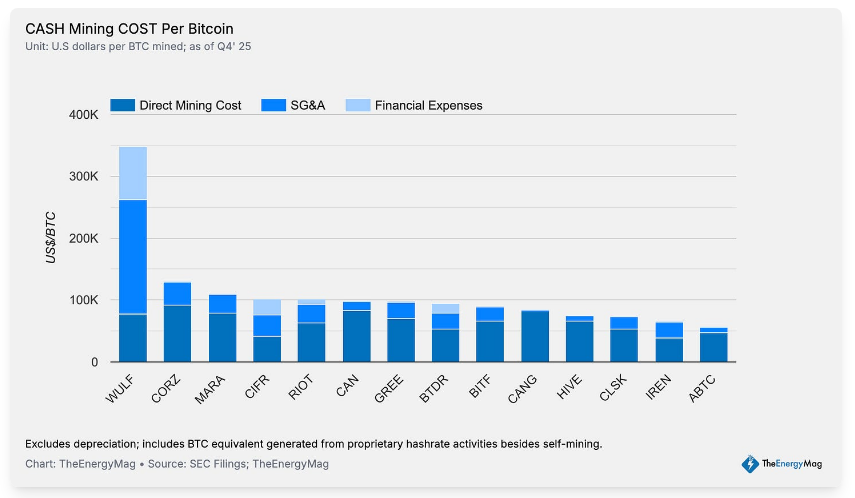
- Price Action: On the charts, Bitcoin (BTCUSD) has faced persistent headwinds, trading near the $75,000 region on daily timeframes according to TradingView data. While a $75k BTC price would have been considered a boom-market level in past cycles, modern institutional mining operations carry vastly inflated overhead costs—including massive infrastructure buildouts, high-performance computing (HPC) pivots, and expensive power purchase agreements (PPAs)—making current margins razor-thin.
- Corporate Liquidations: The 32,000 BTC sold by public miners in Q1 represents a major structural shift in how mining firms manage treasury risk. Historically prone to "HODLing" their digital assets as a bullish bet on price appreciation, public companies are now heavily penalized by public markets if they fail to show immediate liquidity and operational cash flow.
4. Official Responses and Industry Outlook
Financial institutions and market researchers are watching the miner capitulation closely. In its comprehensive Q1 2026 Bitcoin Mining Report, asset manager CoinShares issued a stern warning to market participants: higher-cost operators should expect continued capitulation through the first half of the year unless Bitcoin orchestrates a substantial and sustained price recovery.
CoinShares analysts noted that capital markets have grown increasingly intolerant of mining firms that rely entirely on debt financing or continuous equity dilution to fund operations. Companies that failed to lock in cheap, long-term power contracts or diversify into AI and high-performance computing (HPC) data centers are bearing the brunt of the current downturn.
Mining executives, meanwhile, have increasingly turned to operational pivots. Several major players are retrofitting their existing warehouse space and electrical infrastructure to lease out computing power to artificial intelligence (AI) and machine learning workloads, transforming traditional crypto-mining sites into diversified digital infrastructure hubs.
5. Implications: Corporate Treasuries Fill the Void
While distressed miners are forced to downsize their balance sheets, a mirror-image phenomenon is occurring elsewhere in the corporate world. Massive institutional treasury buyers are stepping in to absorb the heavy supply relinquished by the mining sector.
Chief among them is Strategy, the world’s largest corporate holder of Bitcoin. Demonstrating unwavering conviction despite broader market uncertainty, the company has continued aggressively adding to its massive holdings. Co-founder and executive chairman Michael Saylor signaled that another major corporate acquisition was imminent, sharing the company’s comprehensive BTC acquisition history chart via social media—a clear signal that the corporate treasury juggernaut views discounted market conditions as an accumulation opportunity rather than a deterrent.
What Lies Ahead for the Sector?
The spring of 2026 marks a profound maturation test for the Bitcoin mining industry. The era of speculative, poorly capitalized mining operations is rapidly coming to a close. As the weakest 20% of the network faces forced shutdowns or acquisitions by more resilient, well-capitalized competitors, the remaining ecosystem is likely to emerge leaner, more energy-efficient, and structurally fortified against macroeconomic shocks.
For now, all eyes remain glued to the hashprice ticker and macroeconomic indicators. Whether Bitcoin can mount the recovery needed to push hashprices back above the critical $35 breakeven threshold will dictate whether Q1’s historic miner sell-off was an isolated emergency or the precursor to a wider structural transformation of the mining landscape.