The 20 Million Milestone: Bitcoin Passes a Historic Supply Threshold as Just One Million Coins Remain
By Financial Markets Desk
Published March 2026
Main Facts
Cryptocurrency history was quietly rewritten on Sunday as the Bitcoin network crossed a monumental threshold: the 20 millionth coin was successfully mined. This milestone means that an overwhelming 95.24% of the absolute 21-million-coin supply cap written into Bitcoin’s foundational source code by Satoshi Nakamoto has now been brought into existence.
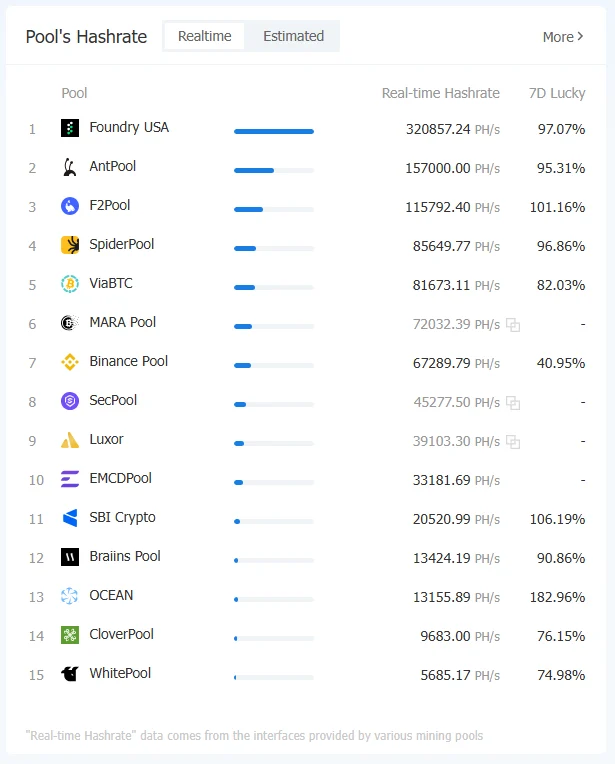
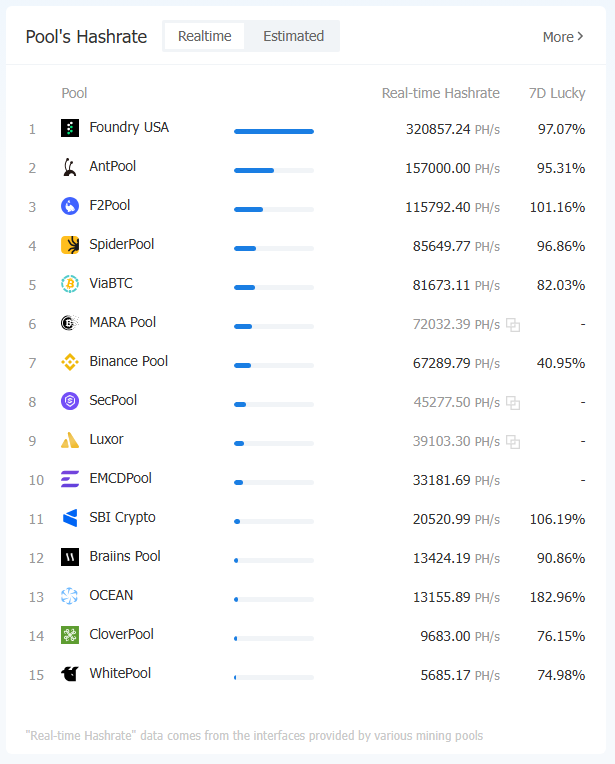
The landmark event occurred precisely 17 years, two months, and one week after the network’s genesis block was mined in January 2009. The final piece of the puzzle—block height 939,999—was solved by the major mining pool Foundry USA, which collected the standard block reward of 3.125 BTC.
While the headline figure suggests an abundance of circulating capital, the reality of Bitcoin’s circulating supply is far more constrained. Industry analytics firms, including Chainalysis and River Financial, estimate that between 2.3 million and 3.7 million Bitcoins are permanently lost to history, trapped behind forgotten passwords, discarded hard drives, and dead wallets from the cryptocurrency’s earliest, experimental days. Consequently, the actual liquid supply available for institutional accumulation, retail trading, and macroeconomic hedging is significantly lower than the numerical milestone implies.
As the network approaches its ultimate scarcity limits, the mathematical runway for the remaining one million coins stretches long into the future. The final full Bitcoin is not projected to be mined until sometime in the 2090s, with fractional satoshis trickling out until the final unit is minted around the year 2140.
Chronology: The Journey to 20 Million Coins
To understand the magnitude of this supply milestone, one must trace the deliberate, programmatic rhythm of Bitcoin’s emission schedule.
- January 2009: Pseudonymous creator Satoshi Nakamoto mines the Bitcoin Genesis Block (Block 0), introducing a decentralized digital currency with a strict hard cap of 21 million coins and a deflationary halving schedule designed to mimic precious metal extraction.
- Early Era (2009–2012): During the network’s infancy, block rewards stood at a lucrative 50 BTC per block. Millions of coins were rapidly brought into circulation, though many were lost due to the negligible fiat value of the asset and primitive security practices. Approximately 1.8 million coins vanished during this initial phase alone.
- November 2012: The first-ever Bitcoin halving occurs at block 210,000, reducing the block reward to 25 BTC.
- July 2016: The second halving cuts block rewards to 12.5 BTC. Bitcoin’s adoption begins expanding beyond cryptography circles into mainstream financial consciousness.
- May 2020: The third halving drops rewards to 6.25 BTC amid global macroeconomic shifts driven by pandemic-era monetary stimulus.
- April 2024: The fourth halving reduces the daily network production from 900 BTC to approximately 450 BTC, setting the block reward at the current 3.125 BTC.
- March 2026: Miners officially pull the 20 millionth coin from the network at block height 939,999, leaving precisely one million coins left to be mined over the next 114 years.
- April 11, 2028 (Projected): The upcoming fifth halving is scheduled to cut the block subsidy in half once again, lowering the payout from 3.125 BTC to 1.5625 BTC per block.
Supporting Data and Market Dynamics
The 20-million-coin milestone arrived while Bitcoin was changing hands around $69,282, reflecting a slight contraction of roughly 21% year-to-date. The asset has weathered compounding pressures from broader macroeconomic uncertainty, shifting interest rate expectations, and geopolitical tensions in the Middle East, yet it managed to print a modest 3.44% gain over the trailing seven days.

Data compiled from on-chain analytics platforms and network explorers highlights key economic variables currently shaping the asset:
- Total Supply Cap: 21,000,000 BTC
- Coins Currently Mined: 20,000,000 BTC (95.24%)
- Remaining Supply to be Issued: 1,000,000 BTC (4.76%)
- Permanently Lost Coins: Estimated 2.3 million to 3.7 million BTC
- Genesis & Unspendable Outputs: ~230 BTC
- Current Daily Issuance: ~450 BTC (post-April 2024 halving)
- Projected Daily Issuance in the 2040s: Below 30 BTC
- Projected Daily Issuance in the 2060s: Below 2 BTC
The stark disparity between theoretical supply and accessible liquidity underpins the core thesis of long-term Bitcoin investors. With nearly 20% of all minted coins locked away forever in dormant addresses, the real-world float is considerably tighter than standard market capitalization metrics suggest.
Official Responses and Industry Perspectives
The crossing of the 20 million mark has sparked widespread commentary across the digital asset ecosystem, uniting miners, developers, and institutional economists in discussions regarding the network’s long-term sustainability.
Representatives from Foundry USA, the mining pool responsible for processing the historic block, emphasized the quiet, methodical nature of the network’s operation. "Bitcoin does not pause for milestones," a senior mining infrastructure strategist noted. "Block by block, the protocol executes its code without emotion. Crossing 20 million coins is a testament to the resilience of the decentralized miners who secure this ledger 24 hours a day, 365 days a year, across every economic cycle."
Macroeconomic analysts have also weighed in on the structural significance of the event. Traditional finance commentators point out that while central banks globally possess the discretionary power to expand fiat currency supplies infinitely, Bitcoin’s programmatic scarcity is entirely inflexible.
"We are watching a real-time experiment in absolute digital scarcity," remarked a leading digital assets researcher at a prominent institutional advisory firm. "At the exact moment when global sovereign debt levels are reaching unprecedented zeniths, Bitcoin’s supply curve is decelerating. For long-term allocators, this contrast remains the primary driver of value proposition."
Implications for Miners, Markets, and the Future
While the 20 million milestone serves as a psychological triumph for the crypto community, it simultaneously casts a spotlight on the structural challenges awaiting the network in the decades ahead. Chief among these is the long-term economic security model of Bitcoin mining.
The Subsidy Decline and Revenue Pressures
Bitcoin miners have historically relied on block subsidies—newly minted coins created with every valid block—as their primary source of revenue. However, because the block reward halves every four years, this subsidy is on an inevitable trajectory toward zero.
By the 2040s, daily issuance will drop below 30 BTC. By the 2060s, it will fall below 2 BTC per day. As the block subsidy approaches zero, transaction fees will become the sole economic incentive compensating miners for expending computational power and electrical energy to secure the blockchain.
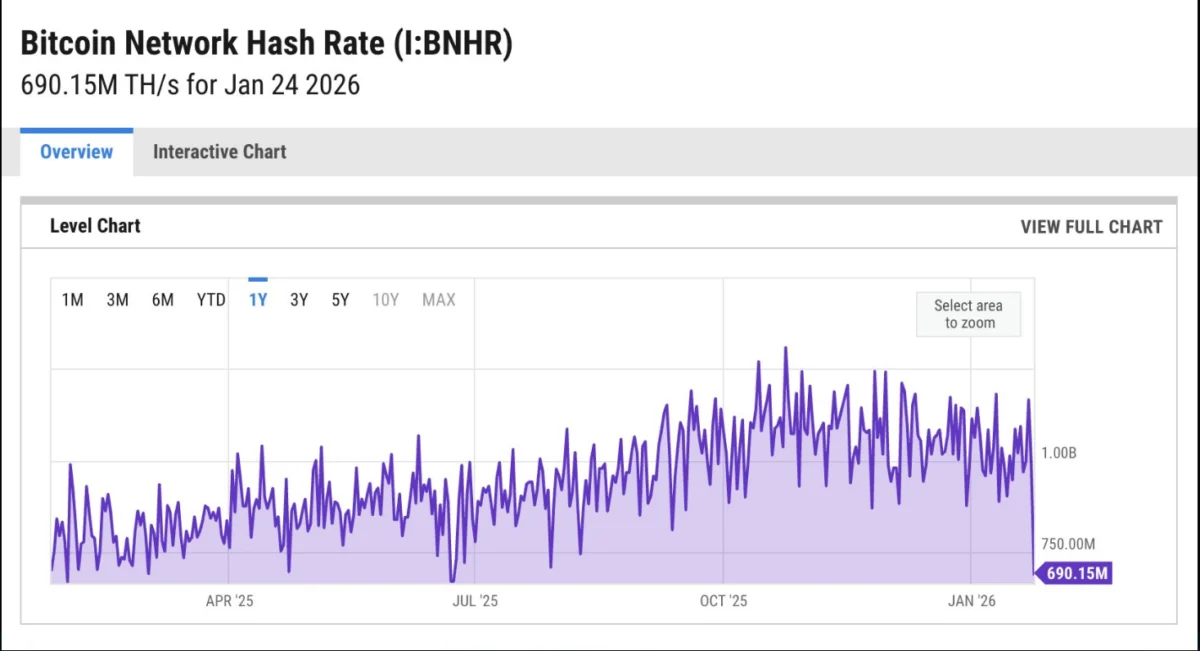
Whether transaction fee volumes—driven by layer-2 scaling solutions, ordinals, inscriptions, and standard peer-to-peer transfers—will scale sufficiently to replace the fading subsidy remains one of the most intensely debated subjects in cryptographic economics. If fee markets fail to mature adequately, network hash rates could experience consolidation or contraction, posing theoretical questions about long-term immutability and attack resistance, though protocol developers remain confident that organic demand for decentralized settlement will naturally drive fee generation.
The Road to 2140
As the industry looks past the 20 million milestone, attention turns toward the immediate horizon: the next scheduled halving on April 11, 2028, which will slash block rewards from 3.125 BTC to 1.5625 BTC.
Every subsequent halving will compress miner margins further, tightening the circulating supply dynamics and amplifying the scarcity shock on global exchanges. While the final satoshi will not be minted until deep into the 22nd century—around 2140—the financial world is already adapting to a reality where the era of abundant Bitcoin supply is definitively coming to a close.