US Winter Storm Plunges Bitcoin Hashrate to Seven-Month Low as Miners Curtail Operations to Stabilize Local Grids
WASHINGTON — A fierce and expansive winter storm that swept across large swathes of the United States over the weekend triggered an immediate crisis for the nation’s power infrastructure, forcing a massive portion of the domestic Bitcoin mining fleet to voluntarily power down. The unprecedented curtailment drained the global blockchain network of a significant fraction of its computational power within a matter of hours, driving the total network hashrate down to its lowest level in seven months.
While the sudden drop in processing power alarmed some market observers, it simultaneously highlighted the increasingly critical role that large-scale cryptocurrency operations play as a flexible, dynamic load resource for regional power grids during extreme weather events. As temperatures plummeted and energy demand skyrocketed, miners across Texas and the Southeast paused their rigs, demonstrating how the digital asset industry interacts with traditional energy markets under stress.
Main Facts
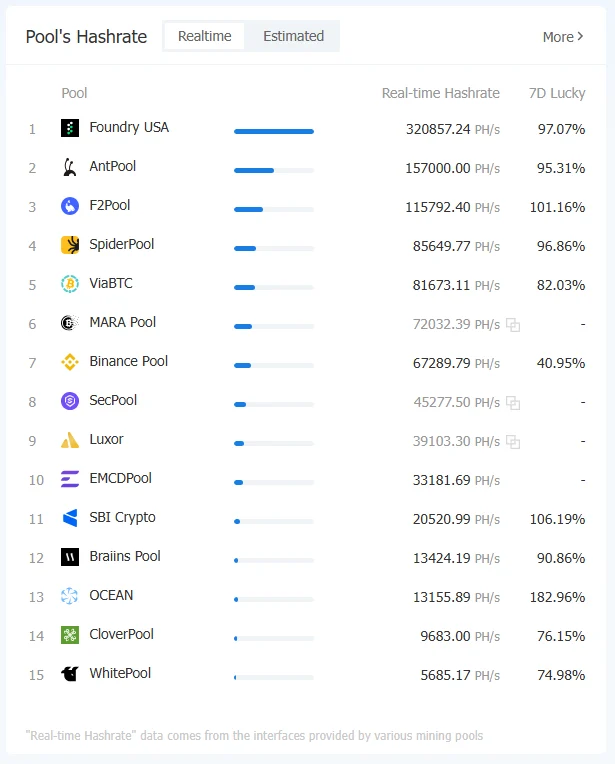
The core of the disruption centered on the heavy concentration of Bitcoin mining infrastructure in regions vulnerable to extreme winter weather, most notably Texas and the broader Southeast. According to data from the US Energy Information Administration (EIA), there are more than 130 dedicated commercial-scale crypto mining facilities operating across the United States. With Hashrate Index data indicating that the US supplies nearly 38% of the world’s total Bitcoin mining power, any regional climate emergency in North America instantly reverberates across the global ledger.
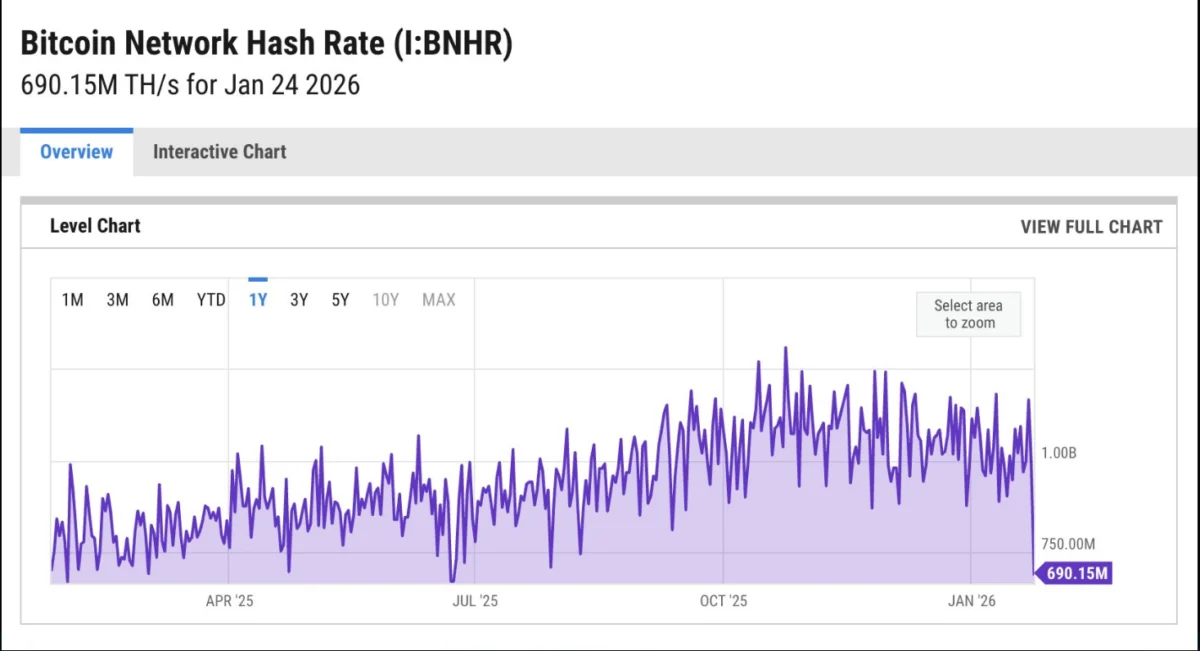
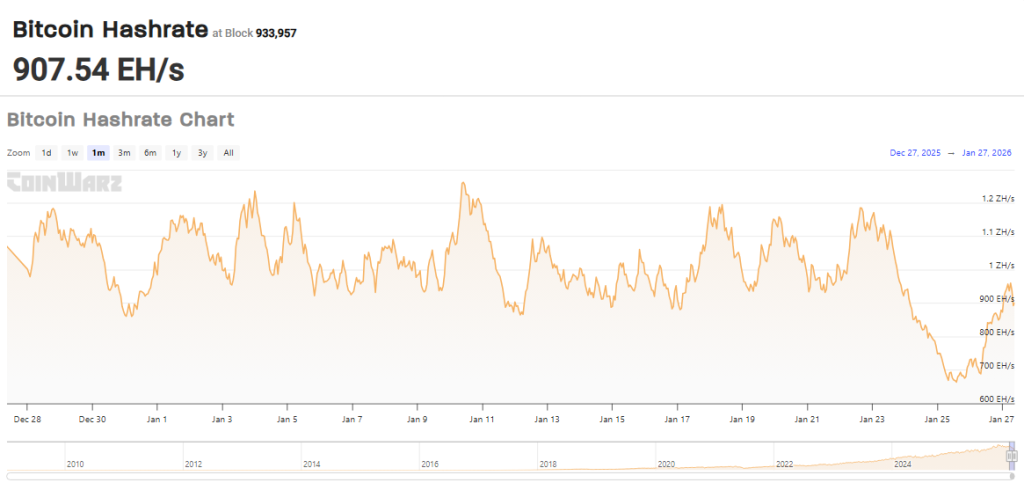
Between Friday and Sunday, the total network hashrate—a measure of the total computational power being used to mine and secure transactions on the Bitcoin blockchain—plummeted from its baseline levels down to roughly 663 EH/s (exahashes per second). This represented a loss of more than 110 EH/s in a remarkably short window.
The primary catalyst for this massive drop was not hardware failure, but rather deliberate load-shedding. Major publicly traded and private mining firms systematically powered down tens of thousands of application-specific integrated circuit (ASIC) rigs. This coordinated retreat was designed to relieve immense pressure on local electrical utilities, which were struggling to meet heating and electricity demands for residential and commercial customers as sub-freezing temperatures gripped the region.
Despite the sharp contraction in network security and a temporary cratering of daily coin production for several major mining companies, the Bitcoin network continued to function without interruption. Transactions were processed, blocks were mined at a slightly slower interval, and the decentralized architecture absorbed the shock seamlessly.

Chronology of the Disruption
The unfolding crisis followed a rapid timeline dictated by the advancing cold front over the weekend:
- Friday: Meteorological forecasts materialized into harsh winter conditions across the Southern and Southeastern United States. As local temperatures dropped below freezing, residential and commercial heating demands spiked. Concurrently, power generation capacity in certain regions faced constraints due to frozen infrastructure. Regional grid operators, particularly in Texas, issued preliminary warnings and requested voluntary conservation from heavy industrial consumers. Bitcoin mining farms in the path of the storm initiated preliminary scaling back of their operations.
- Saturday: The storm intensified, blanketing major mining hubs in ice and snow. The curtailment scaled exponentially. According to on-chain analytics and statements from mining operators, massive amounts of computational power were yanked offline. Oregon-based crypto mining firm Abundant Mines reported that roughly 40% of global mining capacity went offline within a tight 24-hour window. Network tracking metrics began to reflect a precipitous drop, with the global hashrate breaking below the critical 700 EH/s threshold.
- Sunday: The hashrate hit its absolute trough, bottoming out at approximately 663 EH/s—a low not witnessed in seven months. Major corporate miners published stark drops in their daily coin output. CryptoQuant data revealed that industry giants like Marathon Digital saw their daily production plunge from 45 Bitcoin down to just 7. Other firms, including CleanSpark (CLSK) and Riot Platforms (RIOT), experienced similar downward spirals as their massive fleets sat idle to preserve grid integrity.
- Monday and Tuesday: As weather systems gradually moved eastward and temperatures began to normalize, utility operators confirmed that the immediate threat to the regional grids was subsiding. Mining crews mobilized to inspect hardware, clear any localized ice obstructions, and safely boot up their server racks. Within roughly 24 to 48 hours of hitting the bottom, the global hashrate rebounded sharply, climbing back toward 854 EH/s as normalcy returned to the mining facilities.
Supporting Data and Market Impact
The intersection of extreme weather and digital asset mining provided analysts with a wealth of empirical data regarding the operational elasticity of the Bitcoin network.
Hashrate and Output Metrics
The scale of the shutdown was unprecedented in its velocity. CoinWarz and Hashrate Index charts documented the steep vertical drop in network difficulty and output. Individual corporate reports compiled by market analysts like Julio Moreno of CryptoQuant underscored the direct financial impact on public miners:
- CleanSpark (CLSK): Daily production fell sharply from 22 Bitcoin down to 12 Bitcoin.
- Riot Platforms (RIOT): Output dropped from 16 Bitcoin to a meager 3 Bitcoin.
- Marathon Digital (MARA): Production fell from 45 Bitcoin down to 7 Bitcoin, demonstrating higher volatility due to its participation in "solo" mining pools and large-scale proprietary setups.
- IREN: Daily output plummeted from 18 Bitcoin to 6 Bitcoin.
Bitcoin Price Action
While mining operations were severely disrupted, the price of Bitcoin exhibited resilience, trading within a relatively stable band around $88,300 throughout the height of the volatility. Market participants weighed the short-term negative headlines regarding miner revenue against broader macroeconomic and geopolitical crosscurrents.
Earlier in the month, Bitcoin had touched peaks near $96,000 amid spikes in geopolitical tension, while other stretches saw downward pressure from macroeconomic risks. During the winter storm weekend, the temporary hashrate dip sparked conversations among derivatives traders regarding short-term miner capitulation and potential selling pressure, but it failed to trigger a broader market crash. Traders closely monitored whether distressed miners would be forced to liquidate their treasury holdings to cover fixed operational costs during the downtime, though widespread liquidations ultimately failed to materialize thanks to the rapid recovery of the grid.
Official Responses and Stakeholder Reactions
The reaction from industry participants, grid operators, and market analysts underscored a maturing relationship between heavy industrial power consumers and utility companies.
In regions like Texas—governed by the Electric Reliability Council of Texas (ERCOT)—large-scale Bitcoin miners have formal, sophisticated agreements in place with grid operators known as Demand Response programs. Under these protocols, miners agree to turn off their machines on short notice when the grid faces emergency conditions, effectively acting as a massive financial shock absorber for the electrical system. In exchange, miners often receive financial incentives or power cost credits during periods of non-emergency operation.
Abundant Mines highlighted the unique mechanics of this relationship in a social media statement, noting:
"The likely cause: the winter storm impacting Texas & the southeast, where a large share of US mining happens. Power outages and voluntary grid-stabilization measures have taken miners offline. What this means: fewer miners online…"
CryptoQuant analysts reinforced this narrative, emphasizing that the deliberate curtailment was a feature, not a bug, of modern industrial crypto mining. Rather than fighting local utilities for power during a humanitarian crisis, modern mining fleets are designed with automated shutdown triggers that prioritize human safety and grid stability over continuous block generation.
Federal regulators and energy analysts reviewing the event noted that while the reliance of the crypto sector on localized power grids introduces systemic vulnerabilities during extreme weather anomalies, it simultaneously offers utility providers an unprecedented degree of load management flexibility that traditional heavy industries cannot easily replicate.
Broader Implications
The weekend winter storm serves as a case study in the resilience and adaptability of both the Bitcoin network and the commercial mining industry operating within the United States.
From a technological standpoint, the event proved the robustness of Bitcoin’s core protocol. The system is intentionally engineered to automatically adjust its mining difficulty downward if blocks are found more slowly due to a vanishing hashrate. However, because the US storm-induced outage lasted only a matter of days, the network’s automated difficulty adjustment did not even need to kick in aggressively before miners were already back online, demonstrating that the blockchain can shrug off multi-exahash shocks without missing a beat.
Economically, the incident forced a temporary squeeze on corporate mining revenues. Publicly traded firms that rely on steady daily coin production to fund their capital expenditures, service debt, and pay operational overhead experienced a brief cash-flow pinch. This dynamic is likely to prompt more mining CFOs to adopt robust treasury hedging strategies—such as holding larger cash reserves or utilizing financial derivatives—to insulate their businesses from weather-related downtime in the future.
Furthermore, the storm reignited policy discussions regarding the environmental and infrastructural footprint of proof-of-work mining. While critics continue to point to the immense energy consumption of these facilities as a liability during peak load periods, proponents argue that this weekend’s events validated miners as ideal grid partners. By instantly shedding hundreds of megawatts of load within minutes of a grid emergency, miners arguably freed up vital electricity for residential heating, potentially preventing more severe rolling blackouts.
As climate patterns become increasingly volatile and extreme weather events more frequent, the symbiotic—and sometimes tense—relationship between Bitcoin mining fleets and regional power utilities will remain a critical variable in the stability of both the global blockchain and domestic energy markets.