Institutional Crypto Surge: A Deep Dive into the $16.9 Billion Mid-Year Influx
Executive Summary: A Resilient Asset Class
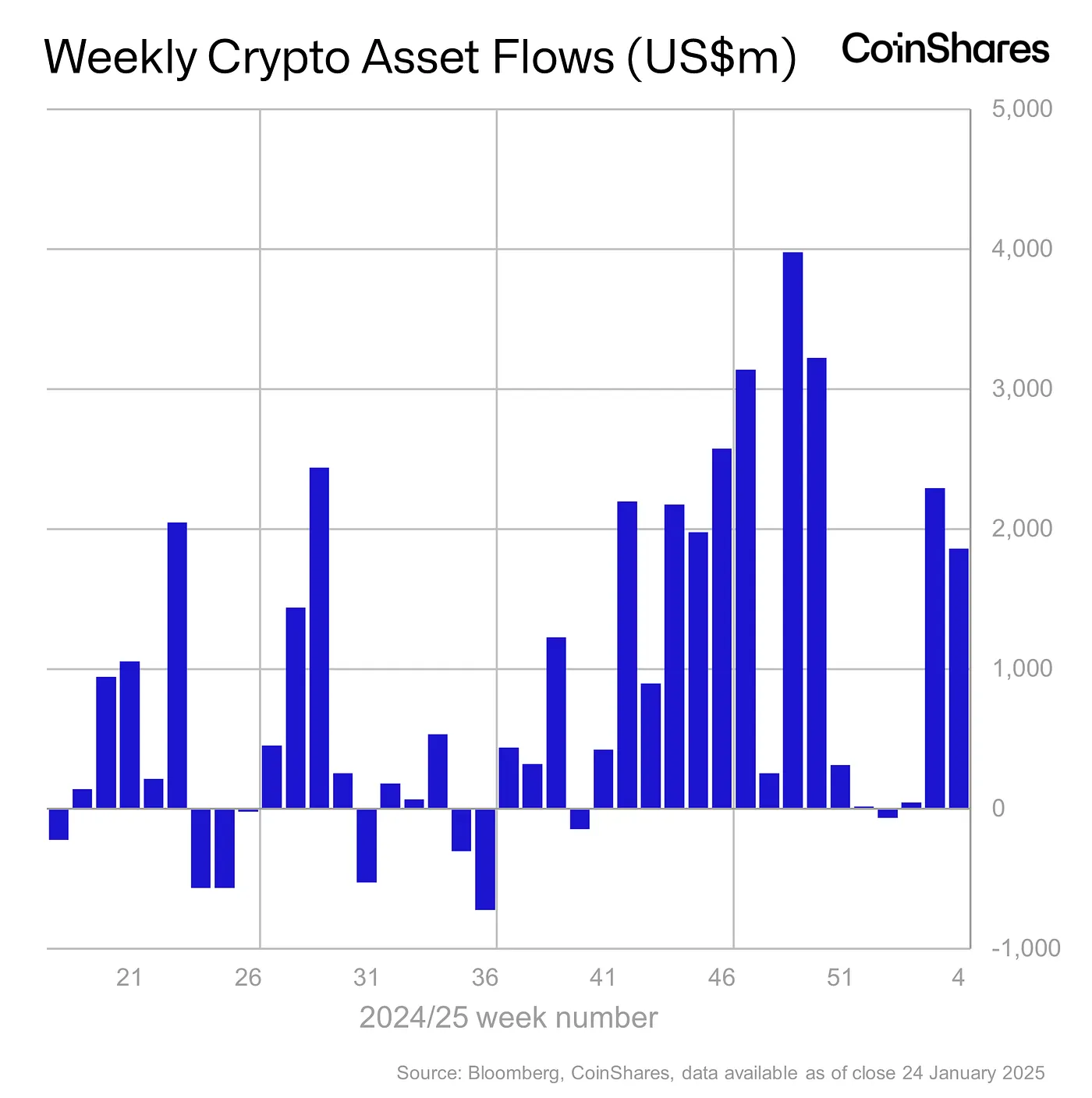
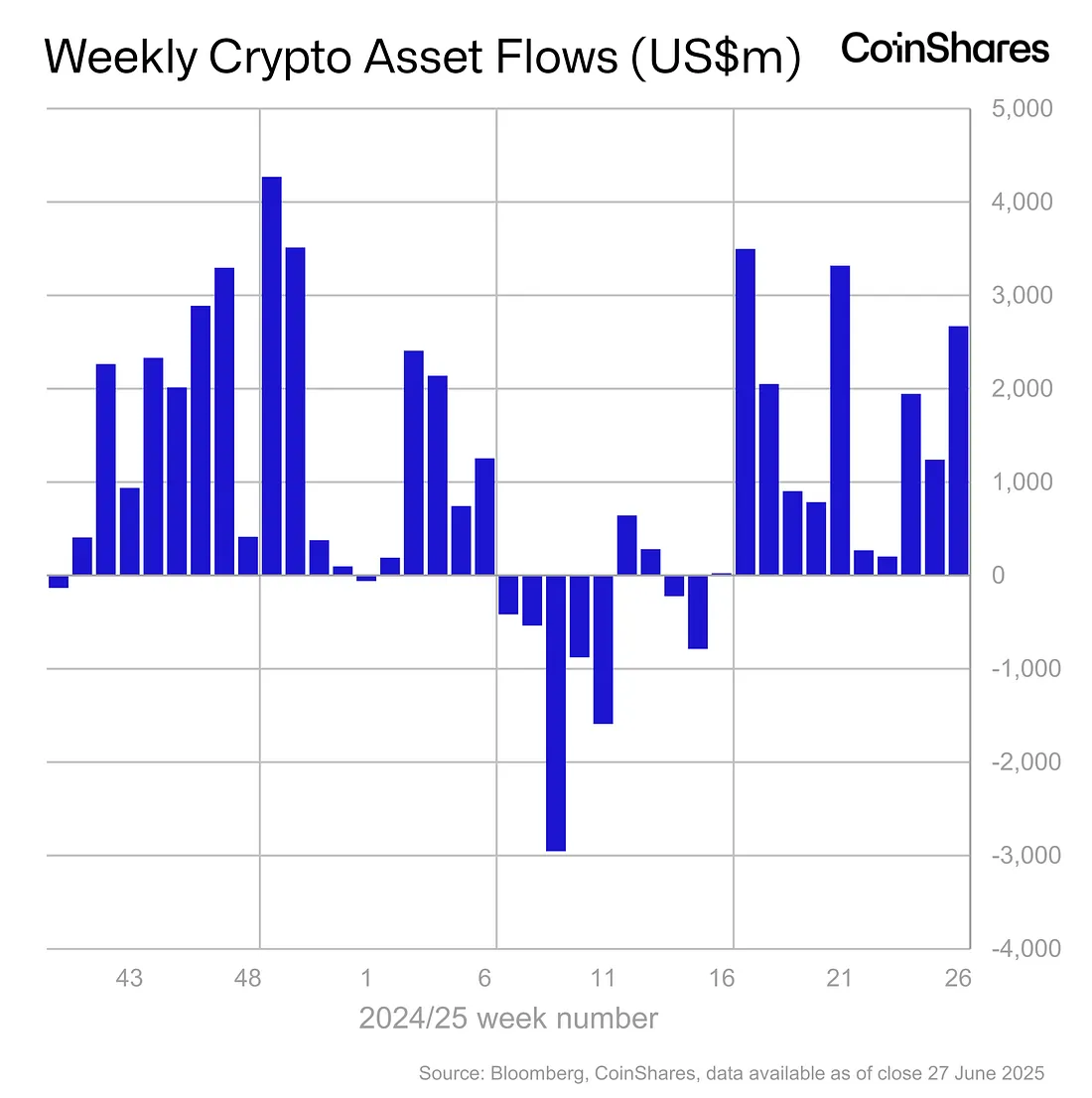
In a demonstration of remarkable market resilience, institutional digital asset investment vehicles have secured a staggering $16.9 billion in inflows over the last eleven consecutive weeks. According to the latest Digital Asset Fund Flows Weekly report from CoinShares, the global financial landscape is witnessing a sustained pivot toward crypto-assets.
As of the conclusion of the first half of 2025 (H1), the total volume of institutional capital entering the space is rivaling the record-breaking figures of the previous year. While the 2024 mid-year total stood at $18.3 billion, 2025 is tracking remarkably close to those figures, suggesting that despite macroeconomic headwinds, the "institutionalization" of digital assets is not merely a temporary trend but a foundational shift in portfolio allocation strategies.
The Chronology of Growth: An Eleven-Week Winning Streak
The current surge did not occur in a vacuum. The past three months have been defined by a systematic accumulation phase among institutional players.
- April 2025: The period began with tentative caution as markets navigated lingering concerns over interest rate persistence.
- May 2025: Sentiment shifted as geopolitical tensions in key regions prompted investors to seek "digital gold" as a hedge against fiat currency instability.
- June 2025: The final month of the quarter saw an acceleration in inflows, culminating in the most recent weekly figure of $2.7 billion.
This eleven-week streak represents one of the most consistent periods of buying pressure in the history of institutional crypto products. Unlike the speculative retail-driven frenzies of the past, this current cycle is characterized by institutional entities—asset managers, family offices, and pension funds—deploying capital with a long-term horizon.
Supporting Data: Regional Disparities and Asset Preferences
The geographic distribution of these inflows reveals a clear concentration of capital within the United States, which continues to dominate the landscape.
Regional Breakdown
- The United States: A powerhouse of activity, the U.S. recorded $2.65 billion in inflows last week alone. The success of spot ETFs and domestic regulatory clarity continues to make the U.S. the preferred jurisdiction for institutional custody.
- European Hubs: Switzerland and Germany maintain their status as critical gateways for European capital, contributing $23 million and $19.8 million respectively.
- Outflow Markets: Conversely, Canada, Hong Kong, and Brazil have experienced net outflows. Notably, Hong Kong—a region that had previously signaled aggressive expansion into crypto ETFs—saw $132 million in outflows throughout June, reflecting a broader cooling in Asian institutional sentiment for these specific vehicles.
Asset Class Performance
Bitcoin (BTC) remains the undisputed heavyweight, accounting for 83% of the total weekly inflows, totaling $2.2 billion. Perhaps the most telling metric of investor confidence is the performance of "short-Bitcoin" products. These vehicles saw an additional $2.9 million in outflows, bringing the year-to-date (YTD) total of short-position exits to $12 million. This indicates a near-total capitulation among those betting against the world’s largest cryptocurrency.
Ethereum (ETH), meanwhile, continues to solidify its role as the secondary pillar of institutional portfolios. With $429 million in recent inflows, the second-largest digital asset is proving that institutional interest is diversifying beyond Bitcoin, reflecting a growing appetite for smart-contract ecosystems and decentralized infrastructure.
Analyzing the Drivers: Geopolitics and Monetary Policy
CoinShares’ analysts point to two primary catalysts driving this massive capital migration:
1. Geopolitical Volatility
As global trade routes face disruption and geopolitical alliances shift, the traditional financial system is increasingly viewed through the lens of risk. Investors are utilizing Bitcoin not only as a speculative asset but as a decentralized insurance policy against the systemic risks inherent in centralized banking and sovereign debt.
2. Monetary Policy Uncertainty
The global economic outlook remains clouded by inconsistent data regarding inflation and interest rate trajectories. With central banks struggling to balance growth with price stability, institutional investors are moving capital into digital assets—which offer a fixed, algorithmic supply—as a hedge against the potential debasement of fiat currencies.

Institutional Implications: What This Means for the Future
The implications of sustained $16.9 billion inflows are profound for both the crypto ecosystem and the traditional financial sector.
A. The Legitimacy Threshold
When institutional inflows reach this magnitude, the "fringe" argument against digital assets becomes increasingly difficult to sustain. These investments are coming from regulated entities subject to strict fiduciary duties. Their participation acts as a stamp of approval, lowering the barrier to entry for conservative institutional players who have been waiting on the sidelines for greater market maturity.
B. Liquidity and Market Depth
A consistent influx of capital creates greater liquidity, which in turn reduces the volatility that has historically deterred mainstream adoption. As liquidity increases, the market becomes more resilient to large-scale liquidations, creating a feedback loop that attracts even more cautious institutional capital.
C. The Regulatory Feedback Loop
Governments and regulatory bodies are observing these flows closely. The massive volume of capital moving through institutional channels incentivizes regulators to provide clearer frameworks. It is no longer just about protecting retail investors; it is about managing the stability of large-scale financial portfolios that now hold digital assets.
Expert Commentary and Market Outlook
While the data paints a bullish picture, analysts caution that the market remains sensitive to macro-surprises. The transition from H1 to H2 will be defined by how the Federal Reserve and the European Central Bank navigate the final quarters of the year.
If inflation remains sticky, we may see a "flight to quality" that benefits Bitcoin even further. Conversely, if global growth stabilizes, we might see a rotation into riskier assets, including smaller-cap altcoins, as investors look to capture higher alpha.
The consensus among market observers is that the "institutionalization" phase is still in its relative infancy. If the current pace continues, 2025 could easily surpass the record-setting benchmarks of previous cycles, potentially solidifying the industry’s place as a permanent component of global multi-asset portfolios.
Conclusion: A New Era of Financial Infrastructure
The $16.9 billion influx over the past eleven weeks is more than just a headline number; it is a signal. It indicates that the bridge between traditional finance and the digital asset economy has been completed and is now being traversed by the largest institutional players on the planet.
As we move into the second half of 2025, the focus will shift toward whether these inflows can be sustained in the face of evolving regulatory mandates and shifting economic cycles. However, one thing is clear: the skepticism that once defined the institutional attitude toward crypto has been replaced by a calculated, methodical accumulation.
Disclaimer: Opinions expressed in this report are for informational purposes only and do not constitute financial advice. Investors should conduct their own thorough due diligence before making high-risk investments in Bitcoin, cryptocurrency, or digital assets. All trades and transfers are performed at the user’s own risk. The author and publisher are not investment advisors, and this article does not recommend the purchase or sale of any specific assets.