Institutional Investors Retreat: A Deep Dive into the $414 Million Crypto Selloff
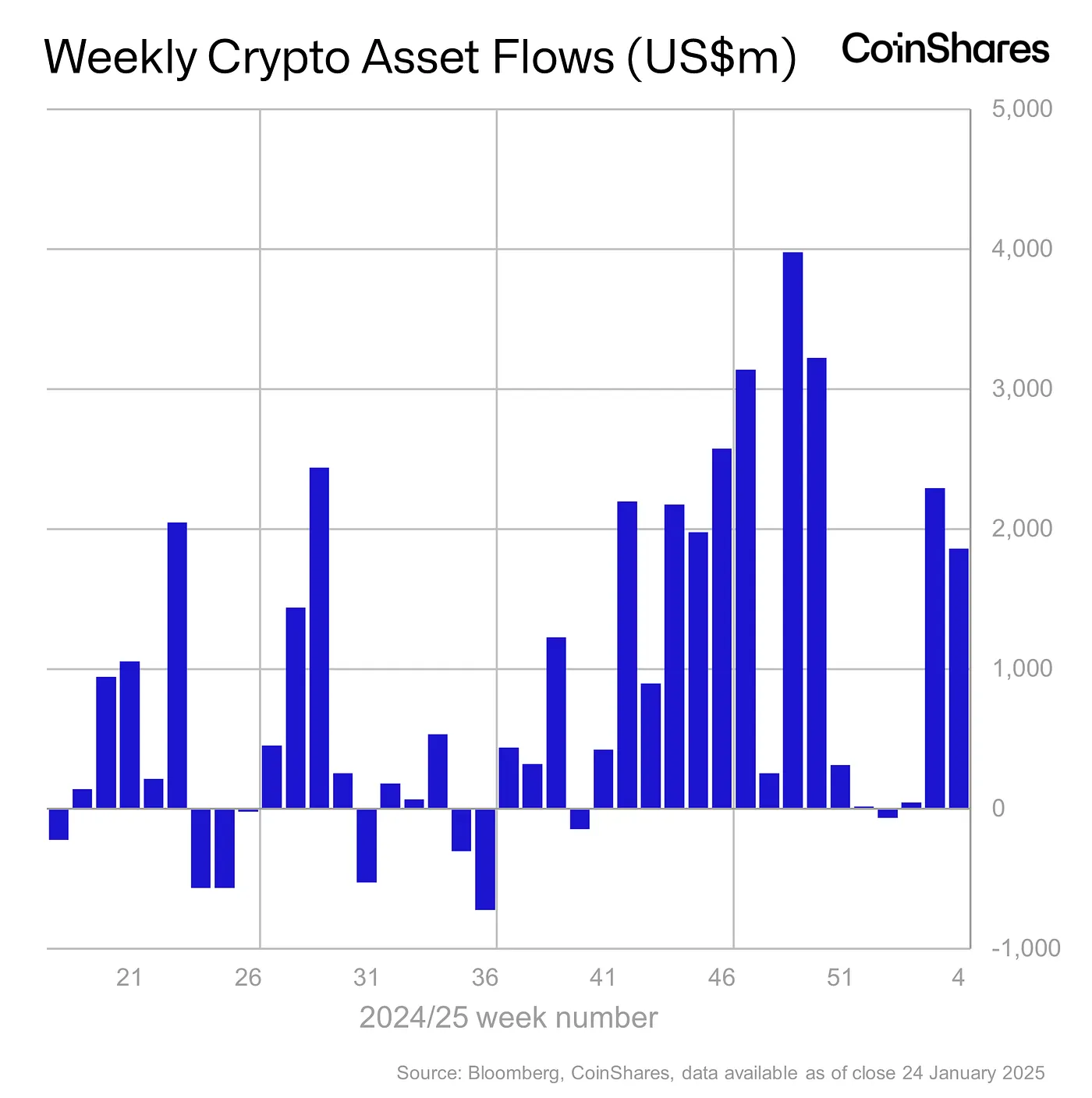
The digital asset market, often characterized by its inherent volatility and sensitivity to macroeconomic shifts, has hit a sudden period of turbulence. According to the latest data from CoinShares, institutional investors have initiated a significant retreat from the crypto space, liquidating $414 million in assets over the past week. This marks the first major selloff in five weeks, signaling a potential shift in sentiment among large-scale market participants as geopolitical tensions and stubborn inflation data begin to weigh heavily on investor confidence.
Main Facts: A Sudden Reversal in Sentiment
The recent report from CoinShares highlights a stark contrast to the bullish trend that dominated the previous month. After weeks of consistent inflows, the crypto market saw a net outflow of $414 million, a figure that underscores the fragility of current institutional enthusiasm.
While the headline figure reflects a broad cooling of the market, the impact was unevenly distributed across geographies and specific digital assets. The United States, serving as the primary hub for institutional crypto activity, accounted for the bulk of the selling pressure, recording outflows of $445 million. In contrast, Switzerland saw a relatively minor divestment of $4 million.
Interestingly, the global market did not move in complete lockstep. Germany and Canada stood out as contrarian participants, choosing to “buy the dip.” Investors in these regions injected $21.2 million and $15.9 million into digital asset products, respectively, suggesting that not all institutional players share the same immediate bearish outlook. Despite the $414 million exodus, the total assets under management (AuM) across the sector remain substantial, sitting at approximately $129 billion, a testament to the growth achieved throughout the early stages of the year.
Chronology of the Market Shift
To understand the current state of play, one must look at the timeline leading up to this week’s correction.
The Lead-Up: Five Weeks of Optimism
For the five weeks preceding this report, the institutional crypto market had been in a state of sustained accumulation. Prices for major assets like Bitcoin had been bolstered by expectations of monetary easing and the growing integration of crypto-assets into traditional financial portfolios. During this period, inflows were consistent, suggesting that institutional desks were positioning themselves for a sustained bull run.
The Trigger: Macroeconomic and Geopolitical Pressure
The pivot began as external pressures intensified. The primary driver of the recent volatility has been the escalating conflict in the Middle East, specifically the tensions involving Iran. Geopolitical instability historically drives investors toward "safe-haven" assets, such as gold or government bonds, often at the expense of high-risk assets like cryptocurrencies.
Simultaneously, the release of inflation data—which exceeded expectations—has forced a recalibration of interest rate forecasts. Investors who had previously priced in aggressive rate cuts by the Federal Reserve are now tempering their expectations, fearing that "higher-for-longer" interest rates will continue to dampen the appeal of speculative assets.
The Mid-Week Pivot
By the middle of the week, the cumulative data from fund managers began to show a clear trend of outflows. The selloff accelerated as the week progressed, particularly within the Ethereum ecosystem, which faced significant liquidation pressure. By the time the final tally was calculated, it was clear that the sentiment had shifted from proactive growth to risk mitigation.
Supporting Data: A Breakdown of the Assets
The CoinShares report provides a granular look at how different assets performed under the weight of the market-wide selloff.
Ethereum (ETH) Leads the Retreat
Ethereum bore the brunt of the bearish sentiment. The second-largest cryptocurrency by market capitalization saw outflows of $222 million. This substantial movement has pushed Ethereum’s year-to-date (YTD) flows into a net deficit of $273 million, marking it as the weakest performer among major assets in the current institutional landscape. Analysts suggest that the uncertainty surrounding regulatory status and the recent performance of ETH-based financial products have contributed to this sustained divestment.
Bitcoin (BTC) Remains Resilient but Soft
Bitcoin, the industry bellwether, recorded outflows of $194 million. While this figure is significant, it must be viewed in the context of Bitcoin’s overall trajectory. Despite this week’s losses, Bitcoin maintains a strong YTD inflow position of $964 million. Notably, "Short-Bitcoin" products—financial instruments that profit when the price of Bitcoin falls—saw an additional $4 million in inflows, indicating that some institutional investors are actively hedging against further downside risk.
Altcoin Divergence: Solana vs. XRP
The altcoin market presented a bifurcated picture:
- Solana (SOL): Once a darling of the institutional set, Solana recorded $12.3 million in outflows, reflecting a broader cooling of interest in the ecosystem following recent price rallies.
- XRP (XRP): In a rare move against the prevailing trend, XRP managed to attract $15.8 million in inflows. This resilience suggests that institutional investors may be finding specific utility or value-based opportunities in XRP that are currently absent in other large-cap altcoins.
Official Responses and Institutional Commentary
While institutional firms rarely comment on specific weekly outflows, the sentiment in broader financial circles has been one of "cautious repositioning."
Institutional analysts suggest that the selloff is not necessarily a signal of a long-term abandonment of the asset class, but rather a temporary reallocation of capital. Many funds are currently navigating a "risk-off" environment, where the primary objective is the preservation of capital during times of geopolitical uncertainty.
The divergence between the U.S. markets (which saw heavy selling) and the European/Canadian markets (which saw buying) suggests that institutional strategy is highly dependent on the local macroeconomic outlook and regulatory environments. In regions where inflationary concerns are perceived to be peaking, some investors are taking the opportunity to acquire assets at a discount, banking on a medium-term recovery.
Implications: What Comes Next?
The recent $414 million exit raises critical questions for the remainder of the year.
1. The Impact of Geopolitical Sensitivity
The crypto market has often marketed itself as a "hedge" against traditional market failures. However, the current reality shows that crypto remains highly sensitive to geopolitical shocks. If the Iran conflict continues to escalate or spills over into broader regional instability, we may see further flight-to-safety, which typically disadvantages digital assets.
2. The Inflation Dilemma
Inflation is the "great enemy" of the risk-on trade. If the Consumer Price Index (CPI) and other metrics continue to show that inflation is sticky, the Federal Reserve will have little room to pivot toward dovish monetary policy. Without the prospect of lower interest rates, institutional appetite for Bitcoin and Ethereum may remain muted in the short term.
3. Market Resilience and "Buy the Dip"
The fact that Germany and Canada recorded inflows during this period is a positive indicator of the market’s long-term maturity. It demonstrates that there is a deep bench of institutional capital waiting to capitalize on volatility. The existence of $964 million in YTD inflows for Bitcoin suggests that the fundamental thesis—institutional adoption—is still intact, despite the current "risk-off" week.
4. Regulatory and Product Maturation
The growth of Short-Bitcoin products and the specific inflows into XRP suggest that institutional desks are becoming more sophisticated in their use of crypto-financial instruments. Investors are no longer just "long-only" buyers; they are utilizing complex strategies to hedge risk, which in the long run, leads to a more stable and professionalized market.
Conclusion
The $414 million selloff is a sobering reminder that cryptocurrency is not immune to the pressures of the global economy. When inflation rises and the drums of war beat louder, institutional investors prioritize liquidity and safety.
However, looking beyond the weekly volatility, the landscape is far from apocalyptic. With $129 billion still managed in institutional products and positive year-to-date inflows for flagship assets like Bitcoin, the broader trend of institutional adoption appears to be stalling rather than reversing. The coming weeks will be critical; investors will be watching closely to see if the recent "buy the dip" activity in Europe matures into a broader market stabilization, or if the current macroeconomic headwinds will force a deeper retreat.
As always, the digital asset market remains a high-stakes environment. For institutional players, the challenge lies in balancing the potential for long-term growth against the immediate, high-pressure demands of a shifting geopolitical and fiscal landscape.
Disclaimer: Opinions expressed at The Daily Hodl are not investment advice. Investors should do their due diligence before making any high-risk investments in Bitcoin, cryptocurrency or digital assets. Please be advised that your transfers and trades are at your own risk, and any losses you may incur are your responsibility. The Daily Hodl does not recommend the buying or selling of any assets including cryptocurrencies, nor is The Daily Hodl an investment advisor. Please note that The Daily Hodl participates in affiliate marketing.