Institutional Exodus: How Geopolitical Tariff Volatility Triggered a $7.2 Billion Crypto Sell-Off
The digital asset landscape is currently grappling with a significant liquidity contraction as institutional investors pivot away from risk-on assets in response to escalating geopolitical tensions. According to the latest Digital Asset Fund Flows Weekly Report from CoinShares, a premier digital asset manager and research firm, the crypto sector has faced a brutal period of capital flight, largely attributed to the economic uncertainty stemming from President Trump’s recent tariff policies.
The report highlights a sobering reality for the crypto market: the sustained outflow of institutional capital has effectively neutralized the gains made in early 2024. As markets react to the "calamitous" tariff war, investors have sought refuge in traditional safe-haven assets, leaving digital asset investment products struggling to maintain their momentum.
The Main Facts: A Watershed Moment for Institutional Crypto
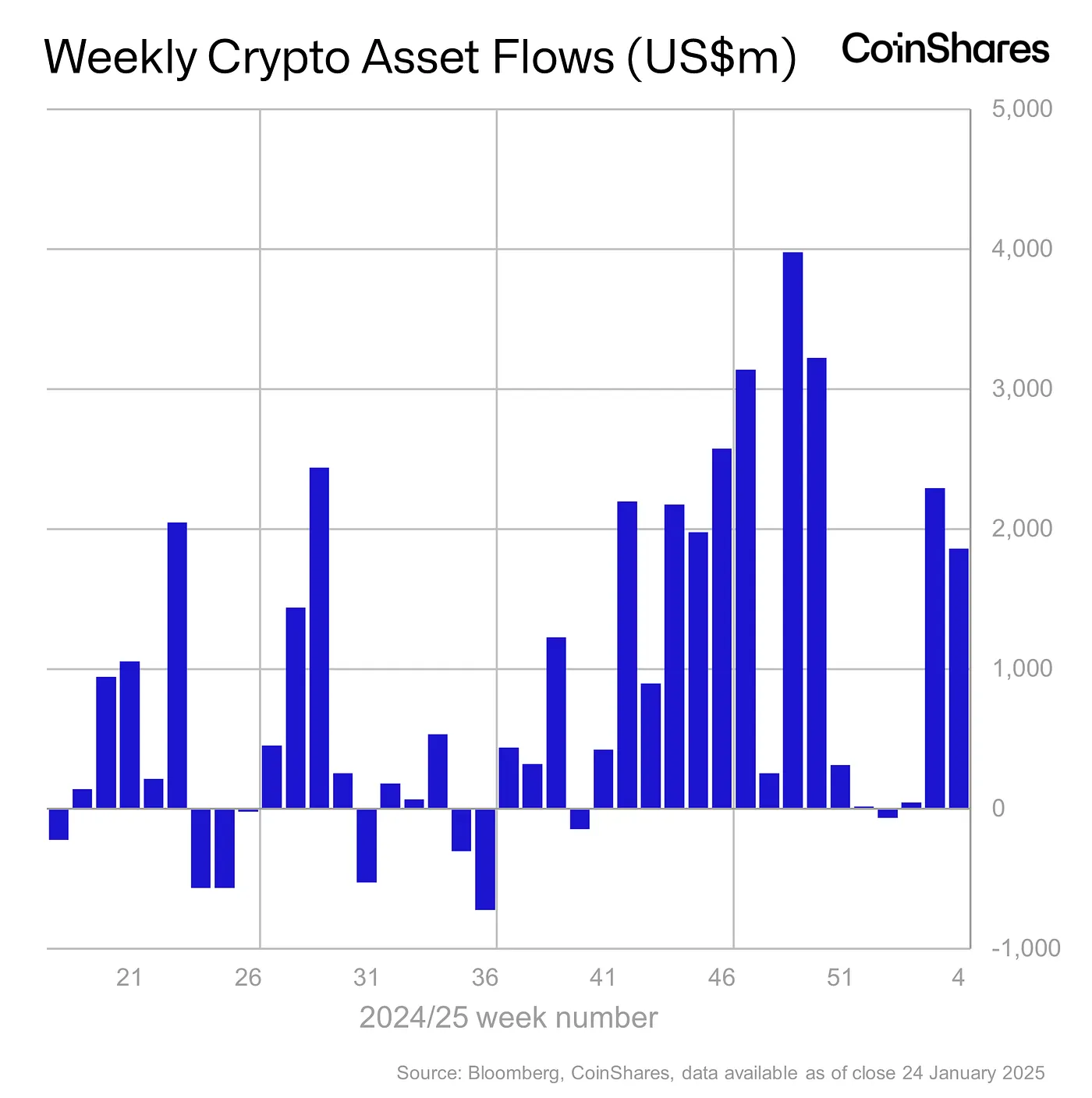
The figures released by CoinShares reveal the depth of the current market anxiety. Over the last three weeks alone, institutional investment products have recorded a staggering $795 million in outflows. This trend, which began in early February, has culminated in a year-to-date (YTD) total outflow of $7.2 billion, a figure that has decimated the sector’s previous accumulation trajectory.
Prior to this period of volatility, the industry was riding a wave of optimism, buoyed by institutional adoption and growing regulatory clarity. However, the sudden shift in macro-economic policy has forced a re-evaluation of risk. The $7.2 billion figure is particularly concerning, as it represents a near-total wipeout of the capital inflows recorded since the start of the year, leaving total YTD net inflows at a precarious $165 million.
Despite this bleeding, the total Assets Under Management (AuM) staged a late-week recovery, rebounding to $130 billion—a notable 8% increase from the low point of April 8. Analysts point to the temporary reversal of the tariff policies as the catalyst for this marginal stabilization, proving that crypto asset valuations remain highly sensitive to executive decision-making.
Chronology: The Escalation of Market Sentiment
To understand the current state of the crypto market, one must examine the timeline of events that catalyzed this shift in sentiment.
Early February: The Trigger
The downturn began in early February, coinciding with the initial announcement and subsequent implementation of aggressive trade tariffs. Institutional investors, who typically view crypto as a high-beta growth asset, began hedging their portfolios against the potential inflationary pressures and supply chain disruptions associated with a trade war.
Mid-March: The Peak of Outflows
By mid-March, the "tariff effect" had fully integrated into market pricing. The consistent daily selling pressure created a negative feedback loop, where falling prices triggered automated sell orders and margin calls for institutional funds. This period saw the highest concentration of outflows, as funds scrambled to pivot toward liquid, lower-risk instruments.
April 8: The Nadir
April 8 marked the bottom of the current cycle, with AuM levels reaching their lowest point since November 2024. This date serves as a stark reminder of how quickly sentiment can sour when macroeconomic stability is perceived to be at risk.
Mid-April: The Reversal
The tide began to turn in mid-April when the administration signaled a temporary reversal of the more aggressive tariff measures. The market reacted instantly; the correlation between trade policy announcements and crypto price action has become one of the most significant metrics for institutional traders in the current fiscal year.
Supporting Data: Dissecting the Asset-Specific Bleed
The outflow was not distributed evenly across the digital asset spectrum. Bitcoin (BTC), the industry’s flagship asset, bore the brunt of the institutional exit, recording $751 million in outflows last week. This indicates that while retail investors may be "HODLing," institutional desks are aggressively liquidating BTC positions to shore up balance sheets or move to cash.
Ethereum (ETH) also saw significant outflows totaling $37.6 million, reflecting a broader disillusionment with smart-contract platforms in the face of macro-uncertainty. Mid-cap and niche altcoins were not spared, with Solana (SOL), AAVE, and SUI recording outflows of $5.1 million, $0.78 million, and $0.58 million, respectively.

However, the data offers a glimpse of resilience among certain altcoins. A divergence in sentiment was noted for specific assets:
- XRP: Led the inflows with $3.5 million, suggesting that institutional interest in cross-border payment assets remains isolated from the broader tariff-driven sentiment.
- Ondo, Algorand, and Avalanche: These projects saw modest inflows of $0.46 million, $0.25 million, and $0.25 million, respectively, indicating that "smart money" is still identifying value in specific blockchain ecosystems despite the overall market bearishness.
Official Responses and Macroeconomic Context
While the White House has not issued a direct statement regarding the impact of its trade policies on the cryptocurrency market, economic advisors have framed the tariffs as a necessary tool for long-term domestic industrial revitalization.
Market analysts, however, remain divided. The "calamitous" label applied to the tariffs by researchers reflects the prevailing sentiment on Wall Street and in the crypto-financial sector. The primary concern is that by increasing the cost of goods and disrupting global supply chains, these policies introduce an unpredictable variable into an already fragile post-pandemic economy.
CoinShares, in their analysis, emphasizes that the current outflows are a direct reflection of "sentiment-driven de-risking." When the global economic environment becomes hostile, institutional capital—which is inherently more sensitive to regulatory and trade policy volatility—tends to exit high-growth, high-volatility sectors in favor of liquidity.
Implications: What Lies Ahead for Digital Assets?
The current market environment presents several long-term implications for the future of digital assets as an institutional asset class.
1. Increased Sensitivity to Geopolitical Events
The events of the past few months have demonstrated that crypto is no longer an isolated, speculative silo. It is now deeply integrated into the global macro-financial system. Traders must now account for trade wars, geopolitical conflicts, and executive policy shifts as primary indicators for price action, alongside traditional metrics like hash rate and network adoption.
2. The Need for Hedging Tools
The massive outflows underscore an urgent need for more sophisticated hedging instruments within the crypto space. As institutional participation grows, the demand for decentralized options, futures, and insurance products that can protect against macro-volatility will likely increase.
3. The "Flight to Quality"
The minor inflows into specific projects like XRP, Ondo, and Algorand suggest that while the sector as a whole is suffering, the market is becoming more discerning. Investors are increasingly looking for utility-based projects that offer tangible value propositions, rather than relying solely on the broad momentum of the BTC market.
4. Policy Advocacy
The crypto industry’s reliance on a stable regulatory and trade environment will likely force the sector to become more politically active. Organizations, lobby groups, and major exchanges will likely ramp up their advocacy efforts to ensure that lawmakers understand the impact of economic policy on the burgeoning digital asset economy.
Final Conclusion
The $7.2 billion outflow is a sobering indicator of the challenges facing digital assets in an era of unpredictable economic governance. While the industry has shown remarkable resilience in the past, the current intersection of trade policy and market sentiment serves as a reminder of the volatility inherent in this emerging asset class.
For the individual investor, the key takeaway is the importance of due diligence. As institutional money flows in and out with increasing velocity based on the latest headlines, retail participants must ensure they have a clear understanding of the macroeconomic factors that drive their investments. The recovery in Assets Under Management to $130 billion provides a glimmer of hope, but the path forward remains inextricably linked to the stability of the global trade environment.
Disclaimer: The information provided in this report is for informational purposes only and does not constitute financial, investment, or legal advice. Digital assets are high-risk investments; the value of your assets can fluctuate significantly. Investors should conduct their own research and consult with a qualified financial advisor before making any decisions. The Daily Hodl and its contributors are not responsible for any financial losses incurred.