CleanSpark Crosses Major 30 EH/s Threshold Ahead of Schedule Following Mississippi Data Center Acquisitions
By the News Desk | Edited by Samuel Rae
Published in association with market analysis and CleanSpark investor disclosures.
Main Facts
Bitcoin mining and energy infrastructure firm CleanSpark has officially surpassed the monumental operational milestone of 30 exahashes per second (EH/s) in deployed hashrate. The milestone was achieved ahead of the company’s internal projections, catalyzed by the successful finalization and integration of two state-of-the-art data center facilities located in Mississippi.
The strategic acquisition immediately injects 75 megawatts (MW) of operational power capacity into CleanSpark’s growing portfolio. This addition significantly bolsters the firm’s standing among North America’s elite tier of publicly traded Bitcoin mining corporations.
However, market analysts emphasize a critical distinction in the terminology used by the company: operational deployed hashrate represents active, hashing machines currently securing the network, rather than theoretical "nameplate" capacity sitting in warehouses or awaiting grid interconnection. While this scale provides a distinct competitive advantage in the post-halving mining landscape, industry experts caution that raw hashrate does not serve as a linear, guaranteed proxy for monthly Bitcoin ($BTC) production. Output remains subject to external macro variables, including global network difficulty adjustments, machine fleet efficiency, weather events, and overall hashprice economics.
Chronology of Expansion: The Road to 30 EH/s
To understand the significance of CleanSpark’s latest achievement, it is necessary to examine the rapid evolutionary timeline of the company’s infrastructure strategy over the past several years.
1. Transition from Regional Operator to National Heavyweight
Historically recognized for its localized energy ventures and microgrid strategies, CleanSpark executed a decisive pivot toward industrial-scale Bitcoin mining during the 2021–2022 crypto bull cycle. Rather than relying purely on speculative capital, the company pursued an aggressive mergers-and-acquisitions (M&A) strategy, targeting distressed or undercapitalized mining fleets and stranded energy assets across the American Southeast and Georgia.
2. The Post-Halving Race for Efficiency
Following the April 2024 Bitcoin halving—which slashed block subsidies from 6.25 BTC to 3.125 BTC—mining economics underwent a violent structural reset. Inefficient operators with older-generation Application-Specific Integrated Circuit (ASIC) rigs (such as the Antminer S19 series or older) faced severe margin compression.
Recognizing that survival depended on securing low-cost power and deploying next-generation hardware (such as the Antminer S21 series), CleanSpark accelerated its capital expenditure programs. Throughout late 2023 and 2024, the company steadily absorbed regional facilities, building a robust pipeline of energized power slots.
3. The Mississippi Acquisition and the 30 EH/s Breakthrough
The final puzzle pieces fell into place with the recent targeting and acquisition of the two Mississippi data center assets. These facilities came equipped with ready-to-use electrical infrastructure and cooling systems, allowing CleanSpark’s engineering teams to rapidly deploy modern ASICs. The integration of these sites pushed the firm’s total operational power capacity up by 75 MW, instantly driving aggregate deployed hashrate past the psychological and financial threshold of 30 EH/s ahead of the company’s original forecast timeline.
Supporting Data & Market Metrics
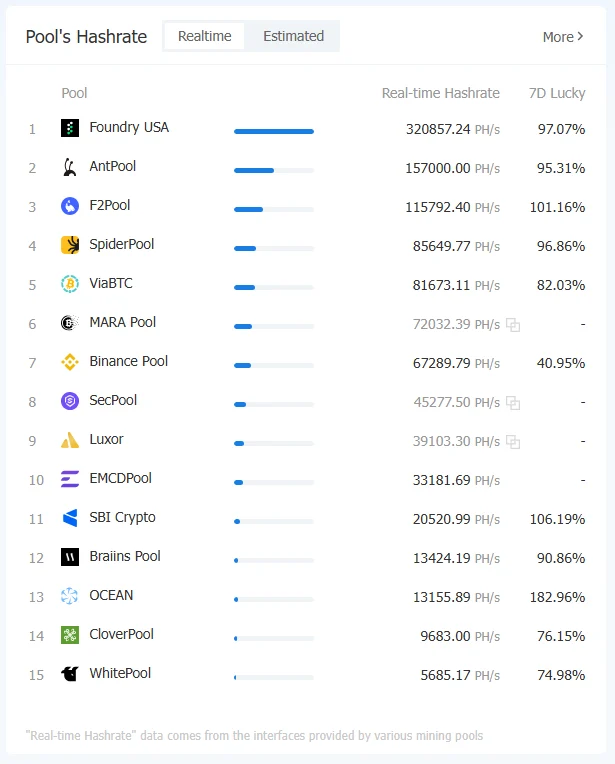
To contextualize CleanSpark’s achievement, market watchers evaluate several intersecting metrics: hash rate distribution, power costs, fleet efficiency (measured in joules per terahash or J/TH), and total network difficulty.
+-----------------------------------------------------------------+
|                   CLEANSPARK GROWTH AT A GLANCE                 |
+-----------------------------------------------------------------+
|  Metric                         |  Status / Value               |
+---------------------------------+-------------------------------+
|  Operational Deployed Hashrate  |  >30 EH/s                     |
|  New Power Capacity Added       |  75 MW (Mississippi)          |
|  Core Focus                     |  Infrastructure & Scale       |
|  Asset Classification           |  Publicly Traded (NASDAQ)     |
+---------------------------------+-------------------------------+
The Scale Game: Why Hashrate Dominance Matters
Bitcoin mining is, at its core, a zero-sum probability game dictated by computational dominance. The global network adjusts its difficulty roughly every two weeks (2,016 blocks) to maintain an average block time of 10 minutes.
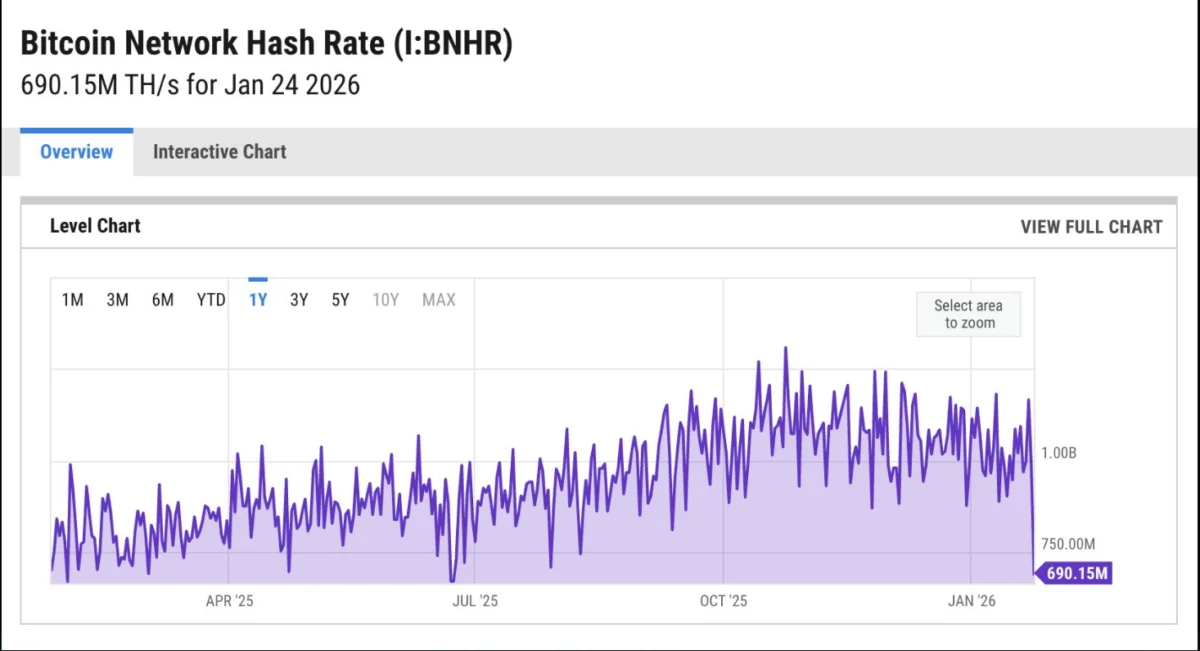
- Relative Share: If total global network hashrate is hovering around 650 to 700 EH/s, a miner controlling 30 EH/s commands roughly 4.2% to 4.6% of the entire global network’s computational power.
- Block Rewards: This percentage dictates the statistical probability of discovering a valid cryptographic block and earning the associated block reward plus transaction fees.
In a high-difficulty environment, small-scale miners often find themselves priced out due to thin margins. Conversely, mega-miners like CleanSpark leverage economies of scale to negotiate lower wholesale electricity rates, secure volume discounts on next-gen hardware from manufacturers like Bitmain and MicroBT, and weather periods of depressed hashprice (revenue per terahash per day).
Deployed vs. Nameplate Capacity
A common pitfall for retail investors is confusing deployed hashrate with nameplate capacity.
- Nameplate Capacity: Represents the theoretical maximum output of all mining rigs a company owns, including those sitting in boxes, units in transit, or facilities waiting on transformer installations.
- Deployed Hashrate: Represents machines that are physically racked, powered, connected to the internet, and actively hashing on the blockchain.
CleanSpark’s emphasis on crossing 30 EH/s in operational deployed terms is a signal of active execution. It confirms that the newly acquired Mississippi data centers are not merely real estate or future projects, but revenue-generating engines capable of immediate contribution.
Official Responses and Corporate Strategy
In official statements released via their Investor Relations platform, CleanSpark executives highlighted the disciplined execution that made the milestone possible. Management has consistently framed its growth strategy around balance sheet strength, vertical integration, and aggressive infrastructure acquisition.
The Power-First Philosophy
CleanSpark’s leadership team has repeatedly emphasized that power is the ultimate commodity in the modern digital asset economy. While procuring advanced ASICs is vital, hardware is ultimately useless without reliable, low-cost electricity and robust thermal management infrastructure.
By securing the 75 MW Mississippi facilities, CleanSpark has not only expanded its immediate mining footprint but has also established long-term energy redundancy. In regions prone to grid stress or extreme weather events, owning or directly controlling power assets grants miners the flexibility to curtail operations during peak pricing hours—sometimes even generating revenue through demand-response programs with local utilities—without permanently damaging their operational cadence.
Capital Discipline in a Volatile Sector
Unlike competitors who over-leveraged themselves with heavy debt loads during past bull runs, CleanSpark has historically maintained a disciplined approach to capital markets, often utilizing at-the-market (ATM) equity offerings to fund acquisitions while keeping debt ratios manageable. This structural resilience allows the company to act opportunistically, snapping up distressed assets when weaker market participants are forced to liquidate infrastructure.
Strategic Implications for the Bitcoin Mining Sector
CleanSpark’s milestone arrives at a fascinating inflection point for the broader cryptocurrency mining industry. The sector is undergoing a profound structural evolution, forcing companies to look beyond traditional Bitcoin generation models.
          [ THE MODERN BITCOIN MINING EVOLUTION ]

  [Historical Focus]                 [Emerging Realities]
  ------------------                 --------------------
  • Monthly BTC mined    -------->   • Power asset control
  • Pure hashrate race               • AI / HPC data centers
  • Hardware hoarding                • Grid stabilization
                                     • Balance sheet discipline
1. The Convergence of Bitcoin Mining and High-Performance Computing (HPC)
Over the past year, institutional investors have begun re-evaluating Bitcoin miners not merely as crypto proxies, but as power-rich real estate and digital infrastructure plays.
With the exponential surge in demand for artificial intelligence (AI) and high-performance computing (HPC) data centers, energy-dense sites controlled by miners have become prime targets for tech giants seeking massive blocks of contiguous power. While CleanSpark remains explicitly focused on scaling its Bitcoin mining operations and maximizing shareholder value through native BTC accumulation, the broader industry trend underscores why power assets are commanding premium valuations. Owning strategic megawatts in favorable regulatory and climatic jurisdictions provides optionality that goes far beyond proof-of-work mining.
2. Operational Execution Over Forward Promises
The public markets have grown increasingly impatient with mining companies that issue grand, multi-year expansion roadmaps without delivering consistent execution. By hitting 30 EH/s ahead of schedule, CleanSpark has reinforced its reputation for operational reliability.
Analysts note that investors are increasingly rewarding miners who demonstrate:
- Predictable fleet efficiency gains.
- Low cost-to-mine metrics per Bitcoin.
- Transparent communication regarding energized versus unenergized capacity.
3. Navigating the Post-Halving Hashprice Reality
Even with 30 EH/s of operational hashrate, CleanSpark—like all miners—remains hostage to macroeconomic and network-level forces. Hashprice, which measures the expected daily revenue of 1 TH/s of hashing power, fluctuates based on Bitcoin’s fiat price, transaction fee markets (such as those driven by ordinals, runes, and layer-2 activity), and global difficulty spikes.
If network difficulty surges faster than the price of Bitcoin, profit margins narrow. Therefore, scaling hashrate is defensive as much as it is offensive: miners must continuously expand their computational footprint simply to maintain their existing slice of the global reward pie against aggressive competitors operating out of low-cost energy jurisdictions globally.
What Investors Should Watch Next
As CleanSpark digests its latest acquisitions and solidifies its position above the 30 EH/s threshold, market participants and equity analysts will be monitoring several key performance indicators (KPIs) in the coming quarters:
- Monthly Production Reports: Tracking whether the increase in operational hashrate translates into a proportional or growing share of monthly mined Bitcoin, accounting for network difficulty adjustments.
- Fleet Efficiency Metrics: Monitoring the average Joules-per-Terahash (J/TH) of the active fleet, particularly as older machines are phased out in favor of cutting-edge hardware.
- Uptime and Curtailment Rates: Observing how effectively the newly integrated Mississippi data centers maintain high operational uptime, especially during seasonal temperature extremes.
- Energy and Hosting Costs: Evaluating the cost-per-kilowatt-hour (kWh) across CleanSpark’s expanded facility portfolio to ensure gross margins remain healthy in varying hashprice environments.
- Strategic Diversification: Assessing whether management intends to leverage its growing power portfolio for ancillary grid services or explore alternative high-performance computing data center opportunities.
Conclusion
CleanSpark’s crossing of the 30 EH/s operational hashrate milestone represents a watershed moment of disciplined execution in the industrial Bitcoin mining sector. By absorbing 75 MW of power capacity in Mississippi ahead of schedule, the company has proven its ability to scale infrastructure efficiently in a demanding post-halving environment. While market risks—including network difficulty spikes and hashprice volatility—remain permanent fixtures of the cryptocurrency landscape, CleanSpark’s expansion underscores a fundamental truth of the modern mining ecosystem: scale provides the foundation for survival, but operational execution decides whether that scale ultimately pays off for investors.