Institutional Crypto Exodus: Bitcoin Faces Record Outflows as Market Sentiment Shifts Amidst Macroeconomic Uncertainty
The digital asset landscape experienced a dramatic reconfiguration this week as institutional investors executed a massive tactical retreat from Bitcoin, culminating in nearly $1 billion in outflows. While the broader cryptocurrency market is often buoyed by the prospect of easing monetary policy, the latest data from asset management firm CoinShares reveals a complex, bifurcated reality where high-conviction plays on alternative coins are thriving even as the flagship cryptocurrency faces heavy liquidation.
Main Facts: A Billion-Dollar Liquidation Event
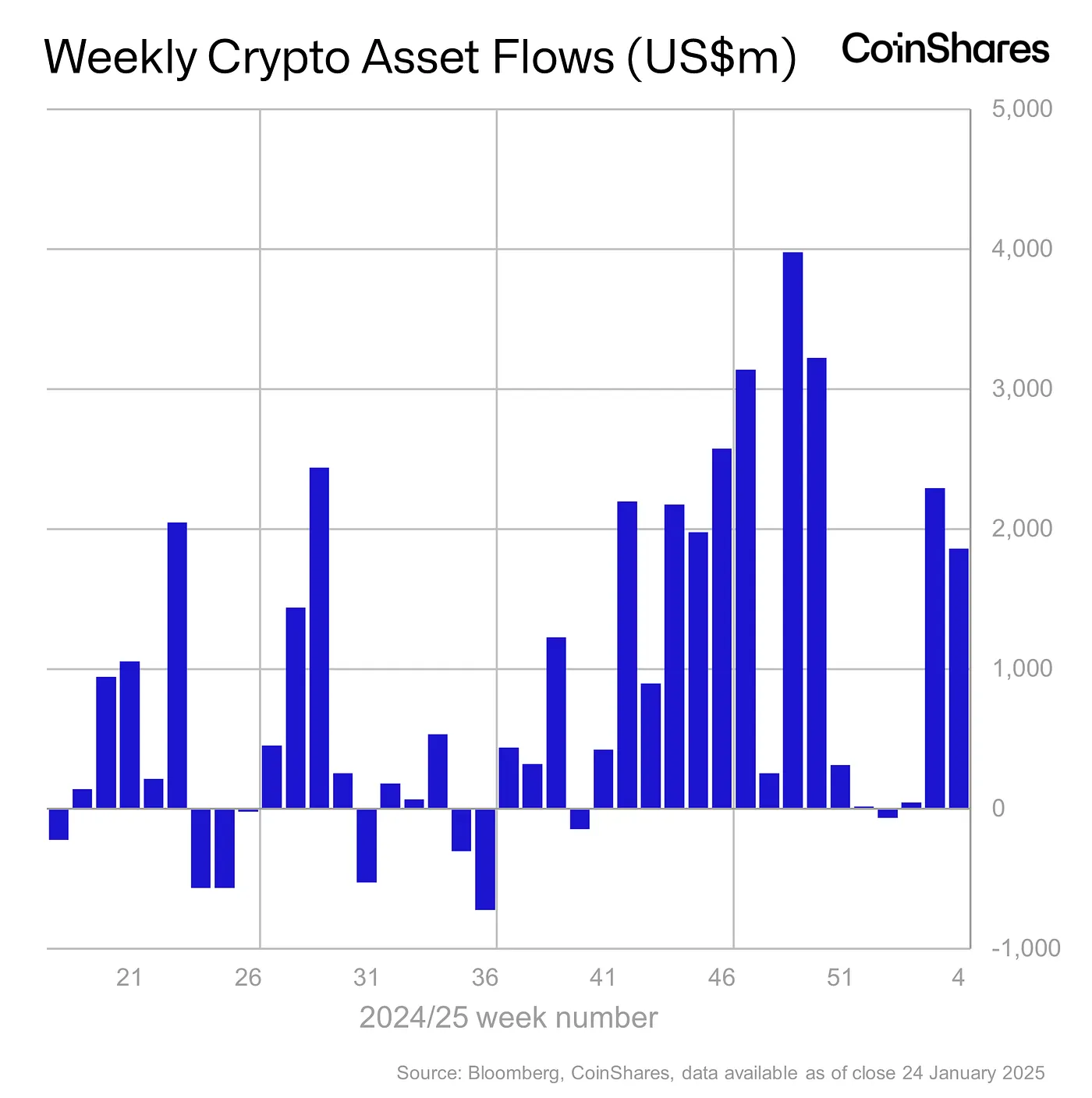
According to the latest weekly fund flow report from CoinShares, institutional sentiment toward Bitcoin has soured significantly. A staggering $945.89 million was pulled from Bitcoin-focused investment products within a single seven-day period. This massive sell-off contributed to a net total of $360 million in outflows across the entire crypto-asset sector, despite the backdrop of a recent interest rate cut by the United States Federal Reserve.
The exodus was not uniform across the board. While the US market acted as the epicenter of the sell-off, recording $439 million in net outflows, European markets displayed a notable appetite for risk. Germany and Switzerland, in particular, saw positive inflows of $32 million and $30.8 million, respectively, suggesting that institutional sentiment remains geographically fragmented.
Perhaps most surprisingly, the capital exiting Bitcoin did not entirely leave the ecosystem. Instead, it appears to have been redistributed into "altcoin" alternatives, with Solana (SOL) serving as the primary beneficiary. Solana recorded an impressive $421.11 million in inflows—the second-largest weekly haul in the asset’s history—while Ethereum and XRP also saw significant capital accumulation, netting $57.59 million and $43.18 million, respectively.
Chronology of the Shift
The week leading up to these figures was defined by high-stakes macroeconomic theater. The chronology of the market’s reaction began with the anticipation of the Federal Reserve’s latest policy decision.
- Pre-Announcement Tension: As the market waited for the Federal Open Market Committee (FOMC) meeting, capital began to rotate out of risk-on assets in anticipation of potential volatility.
- The Powell Press Conference: Federal Reserve Chair Jerome Powell delivered comments that markets interpreted as "hawkish." While a rate cut was implemented, Powell’s signaling regarding future trajectory cast doubt on the speed and frequency of further cuts.
- The Immediate Sell-Off: Within 48 hours of Powell’s remarks, institutional desks began unwinding Bitcoin positions. The narrative shifted from "buy the rate cut" to "protect capital against sustained high rates."
- The Altcoin Pivot: As the mid-week trading session progressed, institutional flows shifted from Bitcoin to high-throughput Layer-1 blockchains, indicating a search for yield and utility beyond the "digital gold" thesis that typically anchors Bitcoin’s valuation.
Supporting Data: Dissecting the Flow Dynamics
The data provided by CoinShares highlights a market in transition. To understand the scale of this movement, one must look at the comparative flow analysis:
- Bitcoin (BTC): -$945.89 million. This represents a substantial portion of the total AUM (Assets Under Management) for many funds, signaling a major rebalancing exercise by institutional giants.
- Solana (SOL): +$421.11 million. This inflow is indicative of institutional confidence in Solana’s scalability and ecosystem growth, positioning it as a dominant hedge against Bitcoin’s stagnation.
- Ethereum (ETH): +$57.59 million. The resurgence in Ethereum inflows suggests that institutional investors are beginning to factor in the potential for renewed DeFi (Decentralized Finance) activity.
- XRP: +$43.18 million. XRP’s performance indicates that investors are still bullish on payment-oriented protocols, even amidst a wider climate of skepticism.
The regional disparity is equally compelling. The US market’s outflows were driven by high-frequency trading desks and institutional funds that are hyper-sensitive to Fed policy. Conversely, European inflows suggest that institutional investors in the EU are less reactive to US-centric interest rate rhetoric, perhaps viewing current price dips as a long-term entry opportunity rather than a signal to exit.
Official Perspectives and Market Implications
The primary driver behind this volatility is the perceived shift in the Federal Reserve’s trajectory. Chair Jerome Powell’s messaging has created an environment where the "easy money" era is no longer a guarantee. When the cost of capital remains higher for longer, institutional investors typically prioritize liquidity and proven utility, which explains why they are flocking to altcoins that provide active network usage.
The Impact of Hawkish Rhetoric
Institutional investors operate on sophisticated models that are heavily weighted toward discount rates. When Jerome Powell signaled that the December rate cut is no longer a certainty, the "opportunity cost" of holding non-yielding assets like Bitcoin increased. For institutional portfolios, this often mandates an immediate reduction in exposure to minimize risk-adjusted losses.
The "Altcoin" Renaissance
The fact that Solana and Ethereum saw positive inflows despite the broader market sell-off suggests a "flight to utility." Institutions are no longer viewing the crypto market as a monolith. Instead, they are differentiating between "Store of Value" assets (Bitcoin) and "Platform" assets (Solana/Ethereum). This suggests that if macroeconomic uncertainty persists, we may see a prolonged period where Bitcoin faces selling pressure while high-performance platforms continue to capture institutional capital.
Strategic Outlook: What Investors Should Monitor
As we move toward the end of the year, the market is bracing for further volatility. The implications of this week’s data are twofold:
- Macro-Sensitivity: Institutional crypto flows are now inextricably linked to the Fed’s dot-plot. Investors should watch the next round of CPI (Consumer Price Index) data and any subsequent commentary from Fed officials, as these will likely dictate the next wave of fund flows.
- Asset Rotation: The success of Solana and XRP suggests that the institutional narrative is shifting toward "functional blockchain." Investors should monitor which protocols are seeing the highest developer activity and daily active addresses, as these will likely be the next targets for institutional allocation.
Conclusion: A Market Searching for Direction
The latest CoinShares data serves as a sobering reminder that institutional adoption is not a one-way street. While the long-term outlook for digital assets remains robust, the short-term reality is governed by the shifting tides of global monetary policy.
The record-breaking outflows from Bitcoin are not necessarily a sign of a "crypto winter" returning; rather, they represent a sophisticated, calculated rebalancing. By shifting nearly half a billion dollars into Solana and maintaining healthy positions in Ethereum and XRP, institutional investors are signaling that they believe the future of finance is moving beyond simple digital scarcity.
For the average investor, this period of volatility underscores the necessity of due diligence. As institutional money flows rapidly between assets, the market will likely experience significant price fluctuations. Staying informed, monitoring macroeconomic indicators, and understanding the distinct value propositions of different blockchain ecosystems will be the key to navigating the coming months.
Disclaimer: The information provided in this article is for educational and informational purposes only and does not constitute financial, investment, or legal advice. The Daily Hodl is not an investment advisor. Cryptocurrency investments carry high risk; always conduct your own research or consult with a qualified financial professional before making any investment decisions. The Daily Hodl may receive compensation for certain links or advertisements included in this content.