Bitcoin Crosses the 20 Million Milestone: 95% of Total Supply Mined, Leaving Just One Million Coins for the Next Century
By Financial Wire Desk
Published: March 2026
Main Facts
The global cryptocurrency market reached a monumental scarcity milestone over the weekend as the circulating supply of Bitcoin officially crossed the 20 million threshold. Exactly 17 years, two months, and one week after the network’s genesis block was mined in January 2009, miners successfully pulled the 20 millionth coin into existence.
This landmark event means that 95.24% of the ultimate 21 million Bitcoin supply has now been unlocked. For every 20 coins mined since Satoshi Nakamoto launched the protocol, only a single whole coin remains to be created. However, the final phase of Bitcoin’s issuance will be a protracted, multi-generational affair. While the milestone was celebrated by blockchain enthusiasts worldwide, the remaining 1 million coins will take approximately 114 years to fully issue, with the very last fractional satoshi expected to be minted around the year 2140.
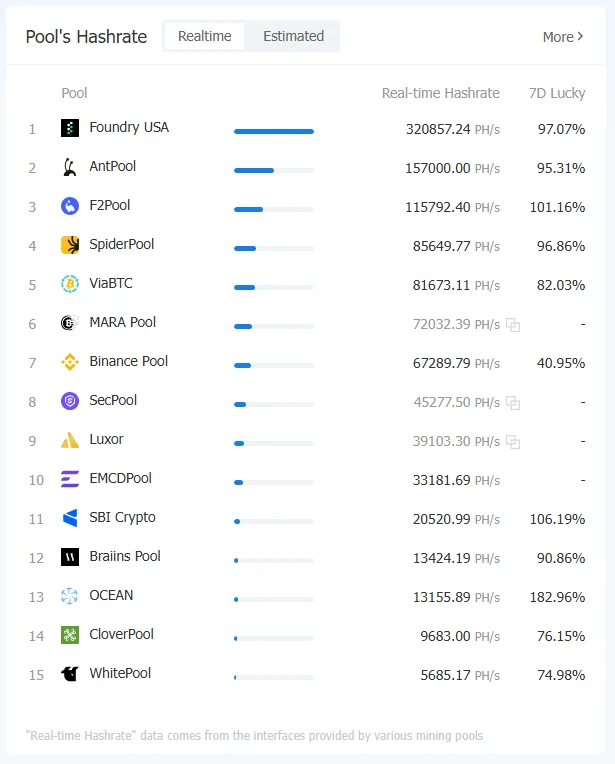
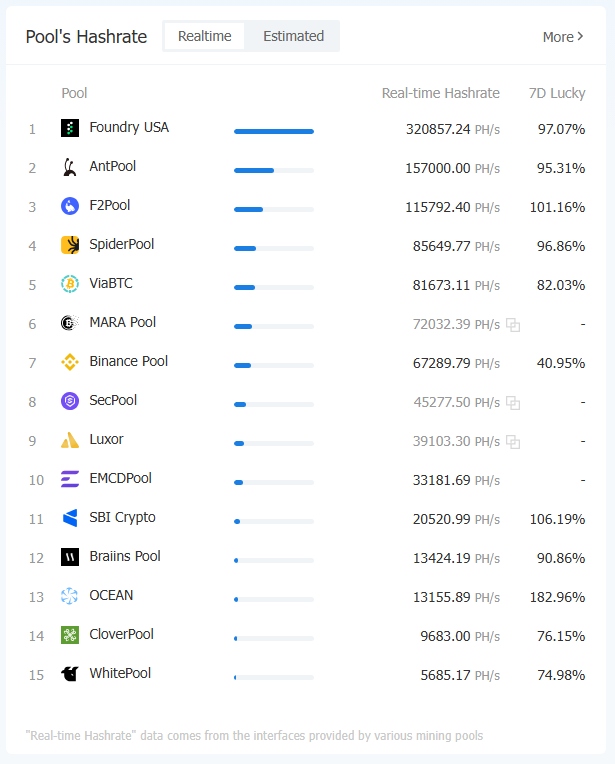
The milestone-achieving block—designated block height 939,999—was processed by the major mining pool Foundry USA. The block yielded a standard reward of 3.125 BTC, a figure established by the April 2024 halving event, which cut daily network production from 900 BTC down to approximately 450 BTC.
Despite the mathematical certainty of the 21 million cap, analysts emphasize that the "effective" supply available to the open market is significantly lower. Between 2.3 million and 3.7 million Bitcoins are estimated to be permanently lost, trapped behind forgotten passwords, discarded hard drives, and the irretrievable wallets of early cypherpunks. As Bitcoin transitions past its 20 millionth coin, the ecosystem faces a shifting paradigm characterized by extreme scarcity, evolving miner incentives, and long-term macroeconomic questions.
Chronology: The Journey to 20 Million
To understand the magnitude of crossing the 20-million mark, one must look back at the deliberate, algorithmic progression of Bitcoin’s supply schedule.
- January 2009: Pseudonymous creator Satoshi Nakamoto mines the Genesis Block (Block 0), introducing the concept of decentralized, mathematically scarce digital currency. The initial block reward is set at a generous 50 BTC per block, intended to incentivize early adopters and secure a bootstrapping network.
- November 2012: The first Bitcoin halving takes place at block height 210,000. The block reward drops from 50 BTC to 25 BTC. By this point, millions of coins have entered circulation, though Bitcoin remains largely a niche project known primarily to cryptography enthusiasts and darknet pioneers.
- July 2016: The second halving reduces the block reward to 12.5 BTC. Bitcoin experiences its first major institutional wave, crossing the $1,000 mark and subsequently rallying toward $20,000 by late 2017, putting mining front and center as a lucrative global enterprise.
- May 2020: Amid global economic stimulus packages during the COVID-19 pandemic, the third halving cuts rewards to 6.25 BTC. Bitcoin begins shedding its speculative reputation, attracting corporate treasuries like MicroStrategy and eventually paving the way for spot Exchange-Traded Funds (ETFs).
- April 2024: The fourth halving drops the block reward to 3.125 BTC per block, lowering daily issuance to roughly 450 BTC.
- March 2026: Foundry USA mines block height 939,999, officially crossing the 20 millionth coin threshold. At the time of the event, Bitcoin trades hovering near the $70,000 region, reflecting a mature asset class deeply integrated into traditional macroeconomic frameworks.
- The Road Ahead (2028–2140): The next halving is slated for April 11, 2028, cutting block rewards to 1.5625 BTC. The final whole Bitcoin is projected to be mined sometime in the 2090s, with subsequent halvings yielding microscopic fractions of a coin until the final satoshi is produced near 2140.
Supporting Data and On-Chain Metrics
The crossing of the 20 million mark invites a closer examination of on-chain data, circulating supply dynamics, and structural market realities.
According to comprehensive blockchain analytics provided by firms such as River Financial and Chainalysis, the headline figure of 20 million minted coins is misleading when assessing market liquidity. Between 2.3 million and 3.7 million BTC are locked away in a state of permanent limbo.

+-------------------------------------------------------------+
|              BITCOIN SUPPLY BREAKDOWN (MARCH 2026)          |
+-------------------------------------------------------------+
| Total Supply Cap          : 21,000,000 BTC                  |
| Mined to Date (Circulating): 20,000,000 BTC (95.24%)        |
| Remaining to be Mined     :  1,000,000 BTC (4.76%)         |
| Estimated Permanently Lost:  2.3M - 3.7M BTC                |
| Real Liquid Supply        : ~16.3M - 17.7M BTC              |
+-------------------------------------------------------------+
Data indicates that approximately 1.8 million coins were lost during Bitcoin’s embryonic years (2009–2012). During this epoch, individual coins traded for fractions of a cent, and basic security hygiene—such as writing down seed phrases or backing up wallet.dat files—was treated with casual indifference. Furthermore, roughly 230 BTC are hardcoded into the genesis block and early script outputs in ways that render them cryptographically unspendable under current protocol rules.
When factoring in these irretrievable assets, the practical supply available for institutional accumulation, retail trading, and protocol-level settlement is far tighter than the 95% milestone suggests.
Market conditions at the time of the milestone showed Bitcoin trading near $70,733, down roughly 21% from previous all-time highs amid persistent macroeconomic uncertainty, geopolitical tensions in the Middle East, and shifting central bank monetary policies. Despite this regional correction, the asset demonstrated resilience, registering a 3.44% gain over the preceding seven days.
Official Responses and Industry Perspectives
The crossing of the 20 millionth coin generated widespread commentary across the fintech, mining, and institutional investment sectors. Industry leaders viewed the milestone not merely as a numerical curiosity, but as a validation of Bitcoin’s core economic design.
"Reaching 20 million coins minted is a testament to the uncompromising predictability of code over human discretion," noted a senior strategist at a digital asset management firm. "While central banks around the globe continue to expand fiat money supplies in response to political pressures, Bitcoin has quietly and autonomously executed its monetary policy for over 17 years without a single second of unscheduled downtime."
Mining executives, however, view the milestone through a more pragmatic lens. With 95% of the supply already distributed, the conversation within mining boardrooms has decisively shifted toward the diminishing block subsidy.
A spokesperson for CloverPool remarked, "The era of easy block subsidies is drawing to a close. Mining is no longer a gold rush fueled by high inflation rewards; it is becoming an industrial-grade, energy-arbitrage enterprise where operational efficiency is the only path to survival."
Cryptocurrency exchanges and custody providers also reported heightened interest from retail clients following the news, with educational campaigns highlighting the rarity of whole coins. Financial advisors noted that as fewer than 1 million whole bitcoins remain to be claimed by an expanding global population of 8 billion people, the psychological barrier to holding even a fraction of a coin is shifting.
Long-Term Implications: The Miner Revenue Problem
While the 20 million milestone underscores Bitcoin’s absolute scarcity—making it structurally deflationary compared to fiat currencies—it also brings a long-term existential question to the forefront: Can the network survive once the block subsidy drops to zero?
Bitcoin’s security model relies on miners dedicating immense computational power (hashrate) to secure the blockchain against malicious actors. Historically, miners have been compensated through two mechanisms: newly minted Bitcoin (the block subsidy) and user-paid transaction fees.
As dictated by the halving schedule, the block subsidy is cut in half every four years. Daily issuance will fall below 30 BTC by the 2040s and drop below 2 BTC per day by the 2060s. By the time the final satoshi is mined in 2140, the block subsidy will be entirely gone.
+-------------------------------------------------------------+
|                MINER REVENUE EVOLUTION OVER TIME            |
+-------------------------------------------------------------+
| Era (Years)         | Primary Income Source                 |
+---------------------+---------------------------------------+
| 2009 - 2024         | Block Subsidy (New BTC Generation)    |
| 2024 - 2060s        | Hybrid (Subsidy + Growing Fees)       |
| 2100s - 2140+       | Transaction Fees Exclusively          |
+-------------------------------------------------------------+
This structural shift introduces a long-term revenue problem for the mining industry. If transaction volume and network utility do not scale to generate substantial fee revenue, miner revenues could plummet, potentially leading to a drop in network hashrate and compromising baseline security.
Conversely, proponents argue that as traditional financial architecture integrates deeper into layer-2 scaling solutions like the Lightning Network and rollups, on-chain transaction congestion will naturally drive higher fee markets. In this bullish scenario, high-value settlements on the base layer will provide robust, sustainable compensation for miners entirely independent of new coin issuance.
Conclusion
The mining of the 20 millionth Bitcoin marks the closing chapter of the asset’s rapid distribution phase. With only 1 million coins left to be distributed over the next 114 years, the rules governing digital scarcity have never been more apparent. As the crypto ecosystem prepares for the next halving in April 2028, the crossing of this threshold serves as a permanent reminder of Bitcoin’s fixed mathematical ceiling—cementing its status as a unique economic experiment in the digital age.