
Bitcoin Miners Dump Record Holdings in Q1 2026 Amid Squeezed Margins and Surging Hashrates
Main Facts: The 2026 Mining Crisis at a Glance
The global Bitcoin mining industry is facing an unprecedented financial bottleneck. Driven by relentlessly rising operational costs, shrinking profit margins, and a post-halving landscape marked by fierce competition, approximately 20% of the entire Bitcoin mining sector is currently operating at a net loss. This harsh economic reality has forced publicly traded mining enterprises to engage in a desperate race to liquidate their treasury holdings simply to cover overhead and service debt.
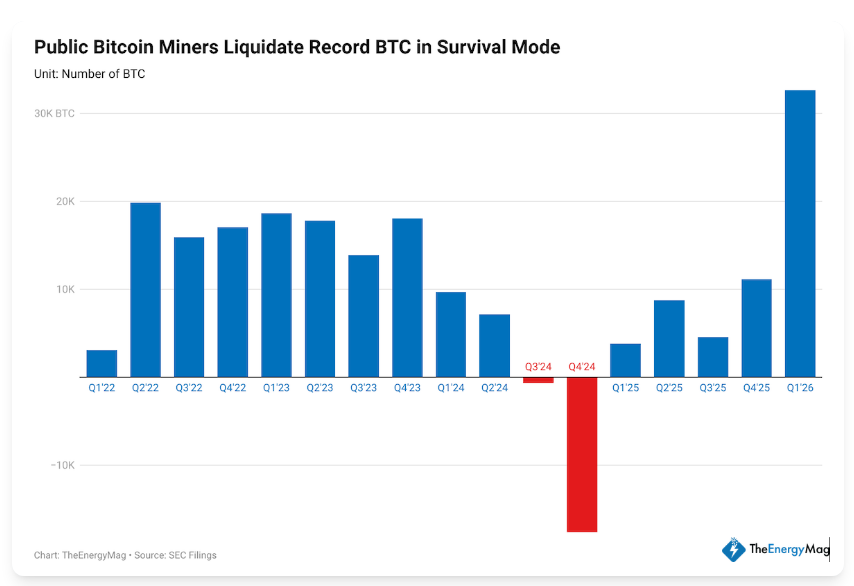
According to data compiled by TheEnergyMag, major publicly traded mining firms—including MARA, CleanSpark, Riot, Cango, Core Scientific, and Bitdeer—collectively offloaded more than 32,000 BTC during the first three months of 2026. This massive sell-off shatters historical records, completely eclipsing the total volume sold by these same corporations across all four quarters of 2025. Furthermore, it easily surpasses the previous quarterly liquidation record of roughly 20,000 BTC, which was set during the turbulent second quarter of 2022 in the wake of the catastrophic Terra-Luna ecosystem collapse.
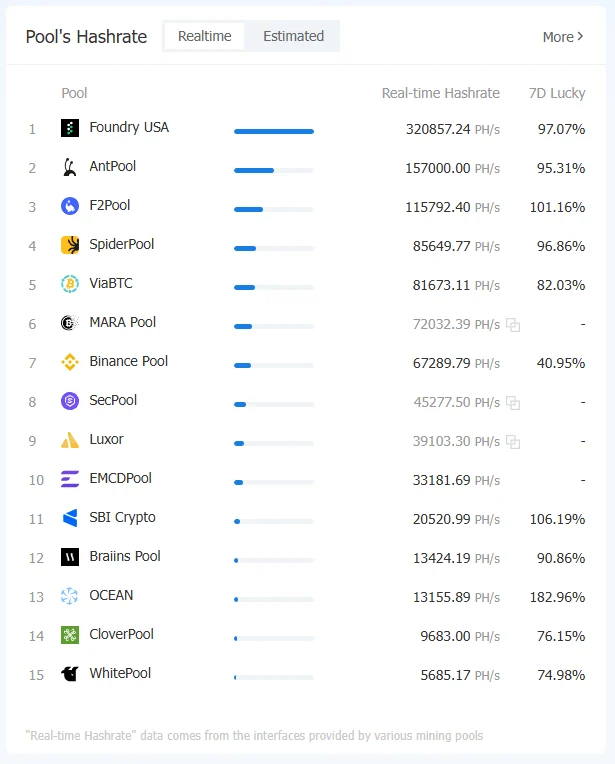
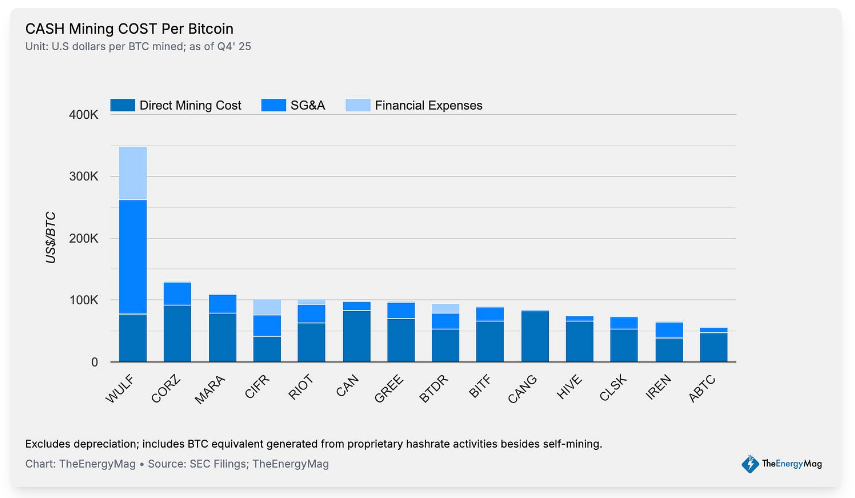
Underpinning this crisis is the compression of "hashprice"—the daily revenue a miner generates per unit of computing power. Hashprice has been on a downward trajectory since July 2025, hovering around $33 per petahash per second per day ($33/PH/s/day), according to metrics from Hashrate Index. Meanwhile, the calculated breakeven point for a significant segment of the industry—particularly those utilizing older-generation ASIC hardware—sits at roughly $35. That razor-thin two-dollar deficit has pushed a critical fifth of the industry deep into the red, igniting fears of widespread market capitulation if macroeconomic conditions and cryptocurrency valuations fail to recover in the near term.
Chronology: How the 2026 Mining Squeeze Unfolded
To understand the severity of the current crisis, one must trace the compounding pressures that have battered the Bitcoin mining ecosystem over the past several years.

2023–2024: The Steady Drain of Reserves
The systematic reduction of miner-held Bitcoin did not materialize overnight. According to on-chain data from CryptoQuant, total Bitcoin reserves held by miners globally have been on a gradual, downward slope since 2023. At the close of that year, miners collectively held a formidable treasury exceeding 1.86 million BTC. However, escalating hardware costs, facility expansions, and early preparations for the subsequent halving forced firms to slowly chip away at these reserves. By early 2026, that aggregate figure had dwindled to approximately 1.8 million BTC, demonstrating a persistent trend of balance-sheet depletion.
Mid-2025: The Hashprice Inflexion Point
The situation deteriorated significantly in July 2025. Up to that point, miners could comfortably offset hardware inefficiencies and rising energy costs through periodic price surges. However, a relentless influx of new, highly efficient application-specific integrated circuits (ASICs) pushed the global network hashrate to unprecedented heights. As competition intensified, the daily revenue per petahash began its steady descent, eventually crossing below the critical $35 operational breakeven threshold.
Q1 2026: The Liquidation Floodgates Open
As hashprice flatlined near $33 in the opening months of 2026, cash reserves dried up. Facing mounting electricity bills, hardware financing commitments, and facility maintenance costs, publicly traded miners could no longer afford to hoard their mined rewards. The resulting liquidation wave peaked during the first quarter, resulting in the historic offloading of over 32,000 BTC. Rather than holding out for higher future valuations, survival became the sole operational mandate for a broad cross-section of the industry.
Supporting Data: Metrics, Margins, and Market Realities
The structural shifts governing the 2026 mining economy are best understood through hard quantitative data. Industry analysts point to three primary economic levers currently dictating the health of the sector:
- Hashprice Decay: Sitting at roughly $33/PH/s/day, current revenues fail to support legacy operations. Miners running older hardware models (such as the Antminer S19 series or equivalent) find themselves priced out of profitable operation, as their power consumption per terahash is too high relative to the low daily return.
- The Breakeven Gap: With an industry-wide average breakeven threshold hovering around $35, even minor downward fluctuations in Bitcoin’s spot price instantly push marginal operators into negative cash flow territory.
- Declining Aggregate Reserves: CryptoQuant data highlights the structural shift in miner behavior. From a peak of over 1.86 million BTC at the end of 2023, aggregate miner reserves have steadily eroded down to roughly 1.8 million BTC. This multi-year distribution phase highlights how miners have systematically converted their native digital assets into fiat currency to fund aggressive infrastructure expansions that are now biting back.
- Price Context: Amid these liquidations, spot market volatility has kept pressure high. Trading charts on TradingView have captured Bitcoin consolidating and trading around the $74,993 mark on 24-hour intervals, a price level that, while historically high, fails to provide the safety buffer required to sustain an over-expanded, capital-intensive mining apparatus.
Official Responses and Industry Analysis
Institutional observers and market researchers have been quick to weigh in on the unfolding events, issuing stark warnings regarding the vulnerability of high-cost operations.
In its comprehensive Q1 2026 Bitcoin Mining Report, prominent asset management firm CoinShares pulled no punches. The report warned that further financial pain is likely on the horizon for the sector. CoinShares explicitly stated that higher-cost operators should expect continued capitulation throughout the first half of the year unless Bitcoin’s spot price stages a substantial and sustained recovery. Without an influx of fresh capital or a major upward price correction, smaller and mid-tier mining firms risk insolvency, hostile takeovers, or forced asset fire-sales to larger, better-capitalized competitors.
Conversely, while mining firms are actively divesting from their Bitcoin holdings to maintain operational liquidity, institutional treasury buyers are moving aggressively in the opposite direction. Strategy, the world’s largest corporate holder of Bitcoin, has continued its relentless accumulation strategy despite near-term market fluctuations and paper losses.
Michael Saylor, co-founder of Strategy, signaled to markets that yet another massive treasury purchase was imminent. Utilizing his trademark social media presence, Saylor shared the company’s comprehensive BTC acquisition history chart—a subtle yet unmistakable signal that his firm views current market conditions not as a crisis, but as a strategic accumulation window.
Implications: A Bifurcated Future for the Bitcoin Economy
The unprecedented events of early 2026 carry profound implications for the future trajectory of the Bitcoin network and the broader cryptocurrency ecosystem.
First, the mass liquidation of 32,000+ BTC by public miners in a single quarter underscores a fundamental shift in market dynamics: miners are no longer the exclusive price-setters and hoarders they once were. The centralization of hash power among heavily capitalized, publicly traded giants—and their subsequent vulnerability to public market pressures—means that miner capitulation events can inject sudden, heavy supply shocks into the open market.
Second, the current shakeout is accelerating an industry-wide consolidation. Well-funded miners with access to ultra-cheap, renewable, or stranded energy sources are poised to weather the storm, absorbing distressed assets, failing facilities, and bargain-priced ASICs from bankrupt competitors. Meanwhile, marginal players operating in high-cost energy jurisdictions are being systematically washed out of the ecosystem.
Ultimately, while the short-term picture for miners is fraught with hardship—characterized by razor-thin margins, depleted reserves, and relentless competition—the broader market ecosystem continues to adapt. As traditional miners step back to stabilize their balance sheets, deep-pocketed corporate treasury buyers like Strategy are stepping forward to absorb the circulating supply. Whether this divergence marks a cyclical bottom for the mining industry or the beginning of a deeper structural transformation will depend entirely on Bitcoin’s price action and energy market developments in the quarters ahead.