The 20-Million Milestone: Bitcoin Crosses Major Supply Threshold as the Countdown to 2140 Accelerates
By Financial Markets Desk
Published March 2026
Main Facts
Bitcoin has officially crossed a monumental threshold in its monetary lifecycle. On a Sunday matching the relentless cadence of the world’s most successful decentralized network, miners extracted the 20 millionth Bitcoin.
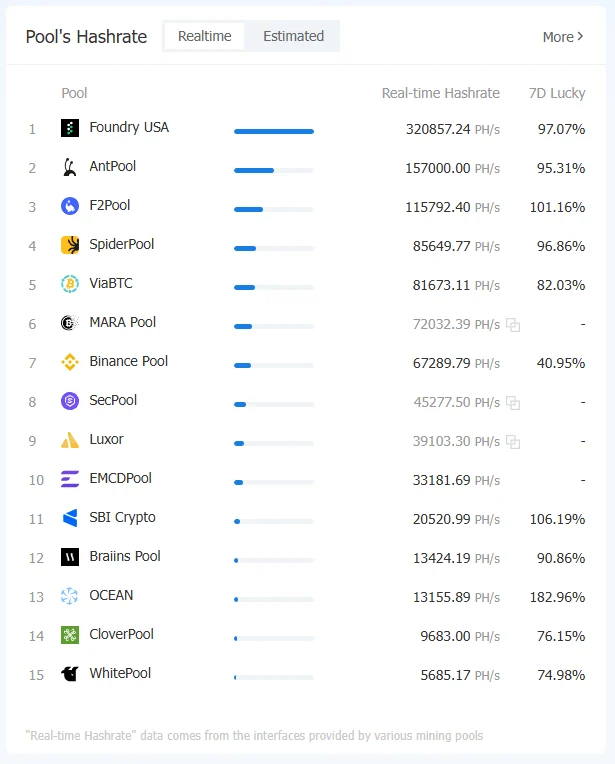
This historic event occurred precisely 17 years, two months, and one week after the genesis block was mined by pseudonymous creator Satoshi Nakamoto in January 2009. The milestone was marked at block height 939,999, with major mining pool Foundry USA securing the block and collecting the standard block reward of 3.125 BTC.
With this latest issuance, 95.24% of all Bitcoin that will ever exist—the hard-coded maximum of 21 million coins—is now out in circulation. For every 20 Bitcoins already mined over the past nearly two decades, merely a single coin remains to be created.
However, the final chapter of Bitcoin’s supply expansion will not happen quickly. While the first 20 million coins took roughly 17 years to produce, the remaining 1 million coins will take approximately 114 years to fully issue. The last whole Bitcoin is projected to be mined sometime in the 2090s, with fractional satoshis trickling out until roughly 2140, when the final satoshi enters circulation.
Despite this supply milestone—which underscores Bitcoin’s deflationary design—the asset traded at approximately $69,282 to $70,733 during the announcement, experiencing a modest 3.44% weekly recovery despite being down roughly 21% year-to-date amid macroeconomic turbulence and geopolitical tensions in the Middle East.
Chronology of the 21-Million Journey
To understand the weight of the 20-million-coin milestone, one must trace the timeline of Bitcoin’s programmatic scarcity, which is governed by automated "halvings" occurring every 210,000 blocks (roughly every four years).
- January 3, 2009: The Genesis Block (Block 0) is mined by Satoshi Nakamoto, introducing the world to decentralized digital scarcity with an initial block reward of 50 BTC.
- November 2012 (First Halving): The block reward drops from 50 BTC to 25 BTC. Daily issuance falls, and Bitcoin crosses early adoption waves.
- July 2016 (Second Halving): The reward is cut in half again to 12.5 BTC per block, coinciding with growing retail and institutional awareness.
- May 2020 (Third Halving): Amid global pandemic stimulus and monetary expansion, the block reward drops to 6.25 BTC.
- April 2024 (Fourth Halving): The reward is reduced to its current level of 3.125 BTC per block, cutting daily network production from 900 BTC down to roughly 450 BTC.
- Sunday, March 2026: Foundry USA mines block 939,999, extracting the 20 millionth Bitcoin.
- April 11, 2028 (Projected Fifth Halving): The block reward is scheduled to drop from 3.125 BTC to 1.5625 BTC.
- The 2040s and Beyond: Daily issuance will fall below 30 BTC in the 2040s and below 2 BTC per day by the 2060s, culminating in the final mined satoshi around 2140.
Supporting Data and the Reality of "Lost" Coins
While the circulating supply officially stands at 20 million, the practical supply available to buy, sell, or hold on open markets is significantly lower. A considerable portion of those 20 million coins has vanished permanently from the active economy.

According to comprehensive blockchain analytics provided by firms such as River Financial and Chainalysis, an estimated 2.3 million to 3.7 million BTC are permanently gone.
Where Did the Coins Go?
- Early Era Loss: Approximately 1.8 million coins were lost during Bitcoin’s formative years (2009–2012). During this epoch, Bitcoin possessed negligible financial value, cryptographic keys were frequently stored on unsecured hard drives, and robust cold-storage solutions did not exist. Early pioneers routinely discarded old laptops, threw away flash drives, or simply forgot passwords.
- Unspendable Scripts: Roughly 230 BTC remain permanently locked in the original genesis block and early outputs written with rigid, unspendable scripts that cannot interact with modern protocol upgrades.
- Deceased Holders: A continuous, untrackable trickle of coins is lost annually when long-term holders pass away without leaving behind seed phrases or estate-planning instructions for their digital assets.
Consequently, the actual liquid supply circulating in global markets is vastly smaller than the headline 20 million figure suggests, compounding the long-term scarcity narrative.
Official Responses and Industry Perspectives
The crossing of the 20-million threshold elicited commentary from across the digital asset ecosystem, highlighting the tension between programmatic scarcity and evolving market mechanics.
A spokesperson for Foundry USA, the mining pool responsible for extracting the historic 20 millionth coin, emphasized the operational resilience required to reach this point:
"Mining the 20 millionth Bitcoin is a testament to the hard work, technological advancements, and sheer persistence of the global mining community. We have transitioned from an experimental hobby run on consumer laptops to a heavy industrial sector anchoring global energy grids. Reaching this milestone reminds everyone why Bitcoin’s monetary policy is unmatched in human history."
Meanwhile, macroeconomic analysts point out that the diminishing issuance rate arrives at a crucial juncture for institutional adoption. A senior strategist at a leading digital asset fund noted:
"We are watching the greatest monetary transition in real-time. Central banks can print fiat currency at will, but Bitcoin’s supply curve is absolute math. With 95% of the supply already mined, the marginal buyer is competing for an increasingly scarce asset class—especially when you factor in how many millions of coins are sitting in dead wallets."
Implications for Miners, Markets, and the Network
While investors celebrate the deflationary milestone, the approaching end of Bitcoin issuance introduces profound long-term questions regarding the economic security of the network.

1. The Miner Revenue Dilemma
Bitcoin miners secure the network through Proof-of-Work, earning revenue from two distinct sources:
- Block Subsidies (New issuance): The newly minted Bitcoin created with every block.
- Transaction Fees: Fees paid by users to have their transactions prioritized and included in a block.
Because the halving schedule systematically cuts block subsidies in half every four years, miner income faces an inevitable squeeze. Daily issuance will fall below 30 BTC by the 2040s and drop below 2 BTC per day by the 2060s.
Once the block subsidy approaches zero toward the end of the 21st century, transaction fees will become the sole compensation for miners. Industry experts remain divided on whether transaction volume and fee markets (such as Layer-2 scaling solutions like the Lightning Network or native asset protocols) will generate enough revenue to permanently incentivize enterprise-grade security.
2. Heightened Market Sensitivity
With 20 million coins mined and millions lost forever, the remaining supply is heavily concentrated among long-term holders ("HODLers"), treasury-backed corporations, and spot Exchange-Traded Funds (ETFs). As institutional accumulation accelerates, any sudden influx of demand encounters an increasingly inelastic supply curve. This structural dynamic suggests that future demand shocks could trigger significantly sharper price volatility than seen in previous market cycles.
3. Looking Ahead to 2028
As the dust settles on the 20-million milestone, attention is already shifting toward the horizon. The next major protocol event—the April 11, 2028 halving—will reduce the block reward from 3.125 BTC to 1.5625 BTC, further tightening the daily inflow of new coins into an already constrained global market.
For now, the network marches forward block by block, executing code written seventeen years ago that continues to redefine the nature of digital property.