
Bitcoin Mining Difficulty Surges to All-Time Highs: A Double-Edged Sword for the Network
Despite Bitcoin’s ongoing struggle to decisively breach the psychological $30,000 resistance level, the underlying architecture of the world’s largest cryptocurrency is exhibiting unprecedented strength. As of April 6, 2023, the Bitcoin network recorded yet another historic milestone: a record-shattering increase in mining difficulty. This trend, which has seen four consecutive upward adjustments, highlights a paradox in the digital asset space where the network’s security and competitive intensity continue to climb even as price action enters a period of consolidation.
The Mechanics of Mining: A New Difficulty Benchmark
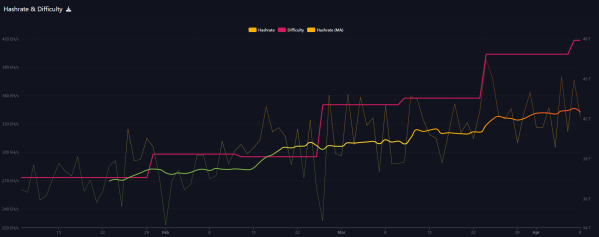
On April 6, 2023, the Bitcoin protocol underwent its latest automated difficulty adjustment, pushing the mining difficulty metric to an all-time high of 47.8 trillion. This represents a 2.3% increase from the previous epoch, cementing a trend of consistent growth that has remained unbroken since February 11.
To understand the significance of this figure, one must look at the protocol’s internal "heartbeat." Bitcoin is designed to maintain a consistent block production time of approximately 10 minutes, regardless of how much computing power is directed at the network. Every 2,016 blocks—roughly every two weeks—the network recalibrates the mathematical complexity required to successfully mine a block. When more miners join the fray or existing miners upgrade their hardware, the difficulty rises to compensate for the added computational power, ensuring that block times do not accelerate.
This record-breaking 47.8 trillion figure is not merely a number; it is a testament to the sheer scale of the global infrastructure currently dedicated to securing the Bitcoin blockchain. It indicates that the "arms race" for block rewards has intensified, as the barrier to entry for profitable mining becomes increasingly prohibitive.
Chronology of a Resilient Network
The recent surge in difficulty is best understood when viewed through the lens of the preceding year.
- 2022: The Winter of Discontent: The crypto market faced a series of cataclysmic events in 2022, headlined by the collapse of the Terra-Luna ecosystem and the subsequent implosion of the FTX exchange. These events triggered a massive liquidity crunch across the sector. For miners, 2022 was a survival test. As BTC prices plummeted, the cost of electricity often outpaced the value of the rewards earned, forcing many operations to shutter, liquidate their hardware, or declare bankruptcy.
- January–March 2023: The Recovery Phase: As the market turned the corner in early 2023, Bitcoin experienced a price appreciation of over 50%. This "relief rally" acted as a siren song for the mining sector. Miners who had previously disconnected their rigs began to dust off their equipment and bring capacity back online, sensing that the worst of the bearish cycle had passed.
- April 2023: Setting the Record: The culmination of this increased interest is reflected in the current four-month streak of upward difficulty adjustments. Despite the current price stagnation around $28,000 to $30,000, the mining industry has demonstrated a "bullish" commitment to the network, betting on long-term appreciation rather than short-term volatility.
Supporting Data: Hashrate and Profitability Metrics
The relationship between hashrate and difficulty is the primary driver of mining economics. While difficulty is the network’s internal calibration, the hashrate is the external measurement of the total processing power deployed by the network.

The Hashrate Discrepancy
Recent data from major industry trackers illustrates the immense scale of the network. BTC.com currently reports the hashrate at approximately 338 EH/s (exahashes per second), while mempool.space provides a slightly higher reading of 347 EH/s. While these metrics vary slightly based on the methodology of the reporting source, they paint a clear picture: the network is operating at near-record capacity.
However, observers have noted a slight cooling-off in the hashrate this week, which dropped by an average of 20 EH/s. This dip is likely a result of the increased difficulty: as it becomes harder to mine, less efficient hardware is forced offline, leading to a natural pruning of the network’s processing power.
The Hash Price Dilemma
A critical metric for miners is the "hash price"—the dollar value earned per unit of hashrate provided. When difficulty rises, the hash price typically falls. This is a simple matter of competition: if the "pie" (the block reward) remains the same size, but the number of "eaters" (miners) increases or becomes more efficient, each individual miner receives a smaller slice. This creates a challenging environment where miners must constantly innovate in terms of energy efficiency and hardware density just to maintain their previous profit margins.
Implications for the Future of Mining
The current mining environment carries significant implications for the future of the Bitcoin network and its participants.
The Efficiency Mandate
The record-high difficulty essentially mandates that mining becomes an enterprise-scale endeavor. The days of home-based, low-efficiency mining are largely behind us. Modern miners must now prioritize low-cost, sustainable energy sources and cutting-edge ASICs (Application-Specific Integrated Circuits). Those who cannot secure institutional-grade electricity rates or operate the latest generation of hardware will find themselves increasingly pushed out of the market.
Regulatory Headwinds
While the technical landscape is flourishing, the political landscape is becoming more complex. The United States, specifically states like Texas that have served as hubs for the mining industry, are beginning to weigh new regulations. Proposals to tighten controls on electricity usage for industrial mining operations could potentially stifle growth in one of the world’s most friendly jurisdictions for crypto-assets.
Furthermore, as global conversations around environmental, social, and governance (ESG) criteria intensify, the energy-intensive nature of Bitcoin mining will continue to be a point of friction. Miners are increasingly under pressure to integrate with renewable energy grids, using Bitcoin mining as a tool to balance energy demand rather than just a source of load.
A Signal of Market Maturity?
Some analysts interpret the sustained growth in mining difficulty as a sign of institutional maturation. Despite the regulatory uncertainty and price volatility, the willingness of large-scale players to invest in and power up infrastructure at this scale suggests a long-term conviction that Bitcoin’s value proposition is firmly established. It signals that the network is not reliant on the day-to-day whims of retail traders, but rather on a robust, decentralized, and increasingly secure foundation.
Conclusion
The Bitcoin network’s ability to reach record difficulty levels while its price faces resistance is a testament to the resilience of its underlying protocol. While the rising difficulty increases the pressure on individual miners—demanding higher efficiency and lower costs—it simultaneously reinforces the network’s security, making it harder for any single actor to compromise the chain.
As we move further into 2023, the narrative of the mining sector will be defined by this tug-of-war between technical efficiency and external regulation. For now, the machines continue to hum, the difficulty continues to climb, and the global Bitcoin network remains as secure as it has ever been. Whether the price follows the hashrate to new heights remains to be seen, but the infrastructure supporting the digital gold standard has never been more prepared for the future.