CleanSpark Secures $2.276 Billion in Senior Notes to Fuel Massive Infrastructure and High-Performance Compute Expansion
By the News Desk | Edited by Samuel Rae
Source Material: CleanSpark SEC Filings
Executive Summary: The $2.276 Billion Capital Injection
CleanSpark, one of the leading names in the North American industrial Bitcoin mining sector, is aggressively returning to the capital markets. In a landmark move that underscores both the scale of modern digital asset infrastructure and the soaring global demand for power, the company has officially priced a staggering $2.276 billion offering of senior secured notes due 2031. Carrying an annual interest rate of 7.875%, this monumental debt financing represents one of the most significant capital raises in the history of the publicly traded cryptocurrency mining ecosystem.
The transaction highlights a profound transformation sweeping across the digital asset landscape. While CleanSpark built its formidable reputation entirely on the back of Bitcoin mining, the strategic deployment of this fresh capital reveals a broader ambition. The proceeds are heavily targeted at expanding the company’s power and data-center footprint—specifically at its sprawling campus in Sandersville, Georgia—with an eye toward supporting not only traditional Bitcoin production but also high-performance computing (HPC) and artificial intelligence (AI) workloads.
As traditional energy constraints choke off growth in major metropolitan tech hubs, power-rich industrial miners are increasingly evolving into hybrid entities: part cryptocurrency enterprise, part power developer, and part data-center landlord. CleanSpark’s latest multi-billion-dollar bond offering places the company squarely at the vanguard of this lucrative evolution.
Main Facts: Breaking Down the Offering
To fully appreciate the weight of CleanSpark’s latest financial maneuver, it is necessary to examine the structural details of the debt issuance as disclosed in the company’s recent filings with the United States Securities and Exchange Commission (SEC).
- Total Principal Amount: $2.276 billion.
- Instrument Type: Senior Secured Notes.
- Maturity Date: 2031.
- Coupon Rate: 7.875% per annum.
- Primary Use of Proceeds: Infrastructure expansion, site development, power acquisition, and the integration of capabilities supporting both Bitcoin mining and high-performance compute (HPC) workloads.
- Key Geographic Focus: The Sandersville, Georgia campus development project.
The sheer size of the deal is remarkable, even within a mining sector that has grown increasingly comfortable with massive infrastructure financing. By utilizing secured debt rather than launching a dilutive equity offering, CleanSpark has opted to preserve its existing share structure while taking on substantial long-term fixed liabilities. This calculated gamble places the burden of success squarely on the company’s ability to transform raw power and real estate into high-margin revenue streams.
Chronology: The Evolution of CleanSpark’s Capital Strategy
To understand how CleanSpark arrived at a $2.276 billion debt issuance, it is helpful to trace the company’s trajectory alongside the broader maturation of the Bitcoin mining industry.
Phase 1: The Hash Rate Era (Pre-2023)
For much of its early history, CleanSpark operated much like its peers. Valuation metrics were simple and closely tied to hash rate efficiency, the total volume of Bitcoin mined daily, and access to low-cost electricity. Expansion strategies typically relied on purchasing fleets of the latest-generation application-specific integrated circuit (ASIC) miners and securing modest power purchase agreements (PPAs) in regions with cheap, stranded energy.
Phase 2: The Infrastructure Gold Rush (2023–2024)
Following the 2024 Bitcoin halving—which slashed block rewards and squeezed profit margins—miners were forced to rethink their operational models. Capital became harder to source as investors grew wary of pure-play mining volatility. However, a parallel global phenomenon was taking shape: the exponential rise of generative artificial intelligence and large language models (LLMs).
Suddenly, tech giants and cloud service providers faced an acute shortage of data-center capacity and, more importantly, multi-megawatt power supplies. Industrial Bitcoin miners, who had spent years quietly acquiring land rights, substation access, and multi-hundred-megawatt grid connections, found themselves sitting on goldmines of a different kind. CleanSpark began aggressively expanding its operational footprint, snapping up facilities and laying down roots in power-friendly jurisdictions like Georgia, Mississippi, and Wyoming.
Phase 3: The Multi-Billion-Dollar Debt Play (Late 2025 – 2031 Horizon)
The culmination of this strategic shift arrived with the pricing of the 2031 senior secured notes. By securing over $2.2 billion in capital, CleanSpark has signaled that it is no longer just a digital asset producer waiting for the next bull market. Instead, the company is positioning itself as a foundational digital infrastructure provider capable of weathering market cycles by diversifying its revenue streams between proof-of-work mining and enterprise-grade data-center hosting.
Supporting Data & Industry Context: Bitcoin Mining Meets the Data-Center Trade
The intersection of Bitcoin mining and high-performance computing (HPC) is one of the most closely watched trends in global finance. However, industry analysts are quick to caution that transitioning a Bitcoin mining site into an AI-ready data center is neither simple nor inexpensive.
The Power Paradox
At first glance, the synergy is undeniable. Bitcoin miners consume vast amounts of electricity, typically measured in hundreds of megawatts. AI data centers also require immense power. Consequently, Wall Street has increasingly rewarded mining companies that possess robust power infrastructure.
Yet, operational realities present distinct engineering hurdles:
- Cooling Systems: Bitcoin miners utilize aggressive air-cooling or specialized immersion systems tailored for ASIC hardware. Modern AI chips, such as NVIDIA’s advanced GPUs, generate extreme thermal loads that often require sophisticated liquid-cooling architectures.
- Network Latency and Uptime: Bitcoin mining is resilient to minor network disruptions; if a miner goes offline for a few minutes, it simply misses a fraction of hashing output. Conversely, enterprise AI workloads demand carrier-grade redundancy, ultra-low latency, and near-zero downtime.
- Infrastructure Redundancy: Enterprise-level cloud providers require strict adherence to Tier III or Tier IV data center standards, which necessitate duplicated power paths and backup generators far beyond standard mining setups.
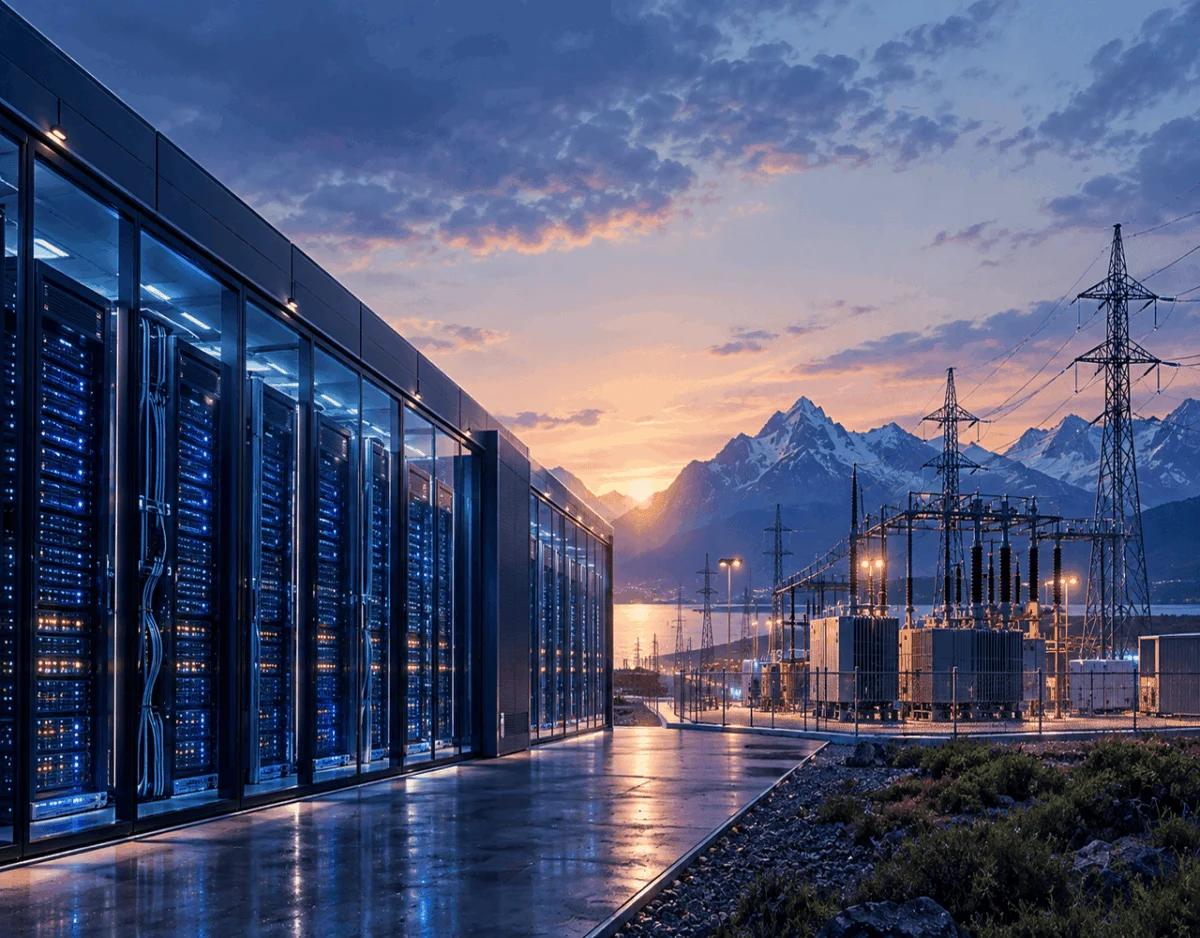
Despite these technical divergences, possessing secured access to hundreds of megawatts of grid-connected power is an invaluable starting point. CleanSpark’s development at its Sandersville, Georgia campus is specifically designed to bridge this gap, incorporating infrastructure versatile enough to pivot between digital currency generation and high-performance compute workloads as market demands dictate.
Official Responses and Stakeholder Perspectives
While the official SEC filings lay out the mechanical parameters of the bond offering, reactions from financial analysts, market observers, and company stakeholders provide a deeper context regarding the risks and rewards of the deal.
The Financial Burden
Carrying a 7.875% interest rate on a $2.276 billion debt obligation is not a trivial matter. Annually, this translates to substantial interest expenses that CleanSpark must service regardless of Bitcoin’s price volatility. Industry critics have pointed out that fixed-rate debt can become a heavy anchor if the digital asset market enters a prolonged bear cycle or if the anticipated revenues from HPC clients take longer than expected to materialize.
The Shareholder Calculus
From an equity perspective, management’s decision to tap the debt markets rather than execute a massive secondary stock offering has been generally well-received by long-term shareholders. Issuing over $2.0 billion in common stock would have resulted in catastrophic dilution, crashing existing share values. By utilizing senior secured notes, CleanSpark avoids immediate dilution, though it transfers risk to the balance sheet via senior claims on corporate assets.
Management remains confident that the long-term cash flow generation unlocked by these infrastructure upgrades will comfortably outweigh the cost of capital. By securing capital now, CleanSpark ensures it will not miss out on the generational buildout of AI and cloud data infrastructure currently reshaping the global corporate landscape.
Strategic Implications: The Future of the Hybrid Miner
The broader narrative extending from CleanSpark’s $2.276 billion note offering goes far beyond a single corporate bond deal. It signals a permanent structural evolution in how the public markets view industrial-scale Bitcoin mining operations.
- Convergence of Energy and Compute: The traditional boundaries separating energy developers, telecom operators, cryptocurrency miners, and cloud computing giants are rapidly dissolving. Companies that control power generation and land rights hold the ultimate keys to the digital economy.
- Institutionalization of Mining Debt: The ability of a Bitcoin miner to raise billions of dollars in senior secured notes at sub-8% interest rates demonstrates that institutional fixed-income investors are increasingly comfortable treating digital infrastructure assets as mature, bankable collateral.
- Agility as a Competitive Advantage: CleanSpark’s aggressive capital deployment gives the firm the financial firepower to outpace smaller competitors who lack access to deep institutional debt markets. As consolidation sweeps the sector, well-capitalized operators are poised to absorb stranded assets and smaller mining fleets.
Conclusion
CleanSpark’s $2.276 billion senior secured note offering is a watershed moment for the company and a bellwether for the digital asset industry at large. By transforming heavy-duty power access and land acquisition into high-performance computing optionality, CleanSpark is hedging its bets against the inherent volatility of Bitcoin mining.
Whether the company can successfully navigate the engineering hurdles of AI integration while servicing a formidable 7.875% debt load will determine its legacy over the decade. However, one reality remains unmistakably clear: the modern Bitcoin miner is no longer just a digital prospector—they are the new landlords of the digital age.