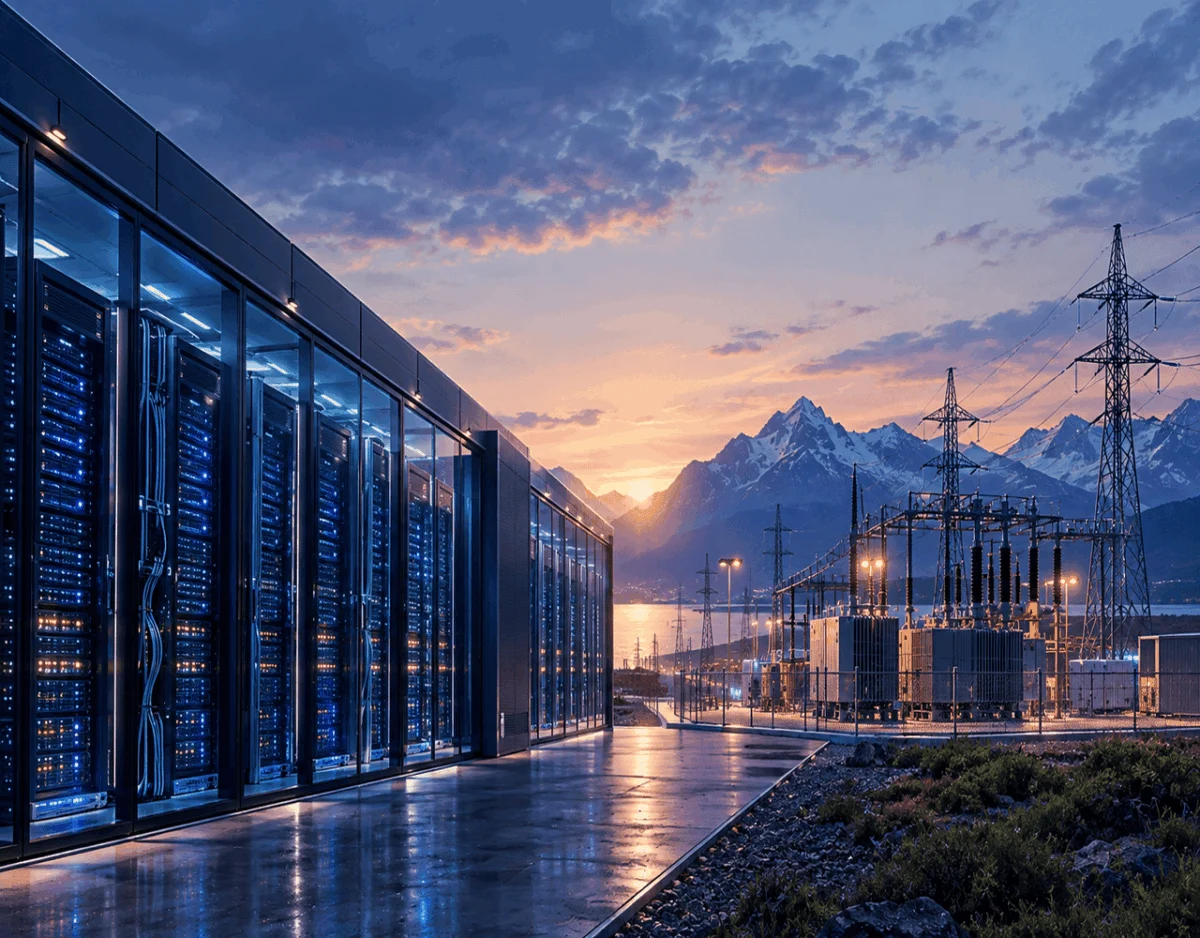
CleanSpark Secures $2.276 Billion in Senior Notes to Fuel Power, Data Center, and AI Infrastructure Expansion
LAS VEGAS, NV — In a landmark transaction that underscores the shifting economics of the digital asset industry, Bitcoin mining giant CleanSpark has officially priced a massive $2.276 billion offering of senior secured notes due 2031. Carrying an annual interest rate of 7.875%, the capital injection represents one of the most significant infrastructure-focused debt raises in the history of the publicly traded cryptocurrency mining sector.
The move signals more than just a routine liquidity event for CleanSpark; it highlights a broader structural transformation sweeping across the crypto economy. As traditional Bitcoin mining competes with the explosive power demands of the artificial intelligence (AI) and high-performance computing (HPC) revolutions, mining firms are increasingly pivoting into power-rich real estate developers. Armed with multi-billion-dollar war chests, companies like CleanSpark are positioning themselves to capture market share at the intersection of energy generation, blockchain validation, and next-generation compute workloads.
Main Facts
The core of CleanSpark’s latest market maneuver revolves around a multi-billion-dollar debt issuance designed to lock in long-term expansion capital. According to regulatory filings submitted to the U.S. Securities and Exchange Commission (SEC), the transaction details include:
- Total Offering Size: $2.276 billion in aggregate principal amount of senior secured notes.
- Maturity Date: 2031, providing the company with a multi-year runway to execute its infrastructure development strategy.
- Coupon Rate: 7.875% per annum, reflecting the current yield environment for secured corporate debt within the capital-intensive energy and technology sectors.
- Primary Use of Proceeds: Funding the expansion and development of the company’s campus in Sandersville, Georgia, alongside broader power and data-center infrastructure initiatives.
- Collateral and Structure: The notes are senior secured obligations of the company, backed by pledged corporate assets, offering lenders a prioritized claim on underlying real estate and equipment relative to unsecured bondholders.
Rather than resorting to dilutive equity offerings—which would have required issuing massive blocks of new common stock and depressing per-share value—CleanSpark has chosen to leverage the debt markets. This strategy preserves equity value for existing shareholders while placing the financial burden squarely on the company’s ability to generate cash flows from its newly developed physical assets.
Chronology of Events
The road to CleanSpark’s $2.276 billion capital raise has been paved by years of strategic positioning, rapid asset accumulation, and a shifting macroeconomic landscape.
Phase 1: Building the Foundation (2020–2022)
For much of its early history in the digital asset space, CleanSpark differentiated itself through a heavy focus on operational efficiency, proprietary logistics, and securing low-cost, sustainable energy portfolios. While many peers relied on leased facilities, CleanSpark aggressively acquired and built out owned-and-operated data centers, predominantly in regions with favorable regulatory climates and abundant power, such as Georgia.
Phase 2: The Infrastructure Boom and the AI Pivot (2023–2024)
As the generative AI boom took hold globally in 2023 and 2024, a major bottleneck emerged: a severe shortage of grid-connected electricity and large-scale data center space. Tech giants and cloud service providers began scouring the market for hundreds of megawatts of powered land. Concurrently, Bitcoin miners—who already controlled massive electrical interconnections and substation capacity—realized their physical assets held immense strategic value outside of pure-play cryptocurrency mining. CleanSpark began evaluating how its sprawling campuses could dual-boot or pivot toward high-performance computing (HPC).
Phase 3: Scaling Up and Preparing the Balance Sheet (Late 2024–Early 2025)
Entering 2025, CleanSpark accelerated its merger and acquisition (M&A) activity, absorbing smaller regional operators and expanding its geographic footprint. To sustain this hyper-growth without constantly tapping equity markets, management began laying the groundwork for a major institutional debt offering.
Phase 4: Pricing the $2.276 Billion Offering (Recent SEC Filings)
Culminating months of strategic preparation, CleanSpark officially finalized the pricing of its $2.276 billion senior secured notes due 2031 at 7.875%. The filing formalized the company’s transition from a pure-play crypto miner into a diversified digital infrastructure and power developer, clearing the path for immediate construction work, particularly at its flagship Sandersville, Georgia location.
Supporting Data and Financial Analysis
To fully comprehend the significance of CleanSpark’s $2.276 billion debt raise, one must examine the broader financial and operational metrics defining the modern digital asset mining ecosystem.
The Cost of Capital vs. Equity Dilution
A fixed annual coupon of 7.875% on more than $2.2 miles in debt is no trivial matter. It translates to significant annual interest obligations that CleanSpark must service regardless of short-term volatility in Bitcoin prices.
Financial Comparison: Debt vs. Equity Financing for CleanSpark
-------------------------------------------------------------------------
Metric                  Senior Secured Notes      Traditional Equity Raise
-------------------------------------------------------------------------
Share Dilution          None                      Immediate & Significant
Fixed Obligations       Annual 7.875% Coupon      None
Asset Claims            Secured by Assets         Unsecured / Equity Risk
Capital Availability    Immediate ($2.276B)       Dependent on Market Sentiment
-------------------------------------------------------------------------
By opting for debt over equity, CleanSpark’s leadership team has made a calculated bet: they believe the cash flows generated by expanding their data center capacity—whether via Bitcoin mining rewards or future enterprise AI lease contracts—will comfortably outpace the ~7.9% cost of borrowing. However, this structure increases balance sheet leverage, meaning any extended downturn in digital asset markets or delays in data center monetization will heighten financial pressure.
The Sandersville Expansion Blueprint
A substantial portion of the proceeds is earmarked for the Sandersville, Georgia campus. Sandersville has long served as one of CleanSpark’s crown jewels, offering robust electrical infrastructure, scalable land plots, and strong local regulatory support.
With the new capital, CleanSpark plans to upgrade the campus to handle next-generation, high-density computing hardware. This includes reinforcing electrical distribution systems, deploying advanced liquid and air-cooling architectures, and expanding physical square footage to accommodate server racks that far exceed the thermal design power (TDP) limits of traditional ASICs (Application-Specific Integrated Circuits).
Official Responses and Industry Perspectives
While official corporate commentary accompanying the SEC filings has focused primarily on operational execution and strategic growth, industry analysts and market observers have offered a wide array of perspectives regarding CleanSpark’s move.
Management’s Strategic Vision
In communications tied to the filing and recent earnings calls, CleanSpark executives have emphasized that owning and developing power infrastructure is the Sandersville project’s true long-term value driver. Management has frequently noted that power is the ultimate commodity of the 21st century. By securing multi-megawatt blocks of power capacity backed by long-term financing, the company insulates itself against grid congestion and positions itself as a premier partner for compute-heavy industries.
Wall Street and Analyst Reactions
Wall Street analysts covering the digital asset and infrastructure sectors have expressed nuanced views on the transaction:
- The Bull Case: Proponents argue that the market drastically undervalues the real estate and power portfolios held by major miners. By raising institutional-grade debt at scale, CleanSpark is proving that traditional fixed-income markets view these companies not as speculative tech plays, but as legitimate utility-scale infrastructure providers. The ability to lock in billions in capital validates their operational maturity.
- The Bear Case: Skeptics point out that a 7.875% interest rate represents a heavy fixed overhead cost during cyclical crypto bear markets. Furthermore, transitioning a facility designed for Bitcoin mining into an enterprise-grade AI data center is neither cheap nor instantaneous. Critics caution that retrofitting requires specialized networking gear, stringent enterprise security, and 99.999% uptime standards that standard mining facilities rarely maintain.
Implications for CleanSpark and the Broader Market
The ramifications of CleanSpark’s $2.276 billion note offering extend far beyond a single corporate balance sheet, signaling several key trends for the future of digital infrastructure.
1. The Blurring Lines Between Miners and Data Center Operators
The days of Bitcoin miners acting merely as warehouse operators housing loud, single-purpose computers are rapidly coming to an end. CleanSpark’s multi-billion-dollar bet demonstrates that the future belongs to companies capable of managing the entire stack: energy procurement, substation development, real estate engineering, and compute deployment. The sector is permanently evolving into a hybrid asset class—part energy developer, part data center REIT, and part blockchain validator.
2. High-Performance Compute (HPC) as the Ultimate Hedging Strategy
As the Bitcoin network’s block reward halving cycles continue to compress profit margins for miners, finding alternative revenue streams has become existential. By upgrading sites like Sandersville to handle high-performance workloads, CleanSpark creates a strategic hedge. If Bitcoin prices stagnate or transaction fees drop, the company retains the flexibility to pivot power capacity toward enterprise AI clients, cloud providers, or rendered graphics workloads that command steady, contracted lease revenues.
3. A New Benchmark for Industry Financing
The sheer size of CleanSpark’s debt issuance sets a new benchmark for capital raising within the crypto mining sector. Historically, miners relied heavily on equipment financing, venture capital, or dilutive stock sales during bull runs. CleanSpark’s successful navigation of the senior secured notes market proves that institutional credit markets are increasingly willing to underwrite multi-billion-dollar infrastructure plays in the digital asset space—provided the underlying collateral consists of tangible, power-rich real estate.
Conclusion
CleanSpark’s pricing of $2.276 billion in senior secured notes due 2031 at a 7.875% interest rate marks a watershed moment in the maturation of the Bitcoin mining industry. By channeling these funds directly into foundational infrastructure upgrades at its Sandersville, Georgia campus, the company is bridging the gap between blockchain validation and the broader high-performance computing revolution. While the debt carries a tangible financial cost and places heavy performance demands on management, the strategic payoff could cement CleanSpark’s status as a dominant power and data-center powerhouse for the next decade.