Crypto Is "Inevitable" Despite 2022’s Historic Turmoil: Industry Strategists Remain Bullish on Long-Term Adoption
Despite a bruising year marked by historic market crashes, high-profile corporate bankruptcies, and a sharp contraction in venture capital funding, prominent digital asset analysts maintain that the broader cryptocurrency ecosystem is structurally unstoppable.
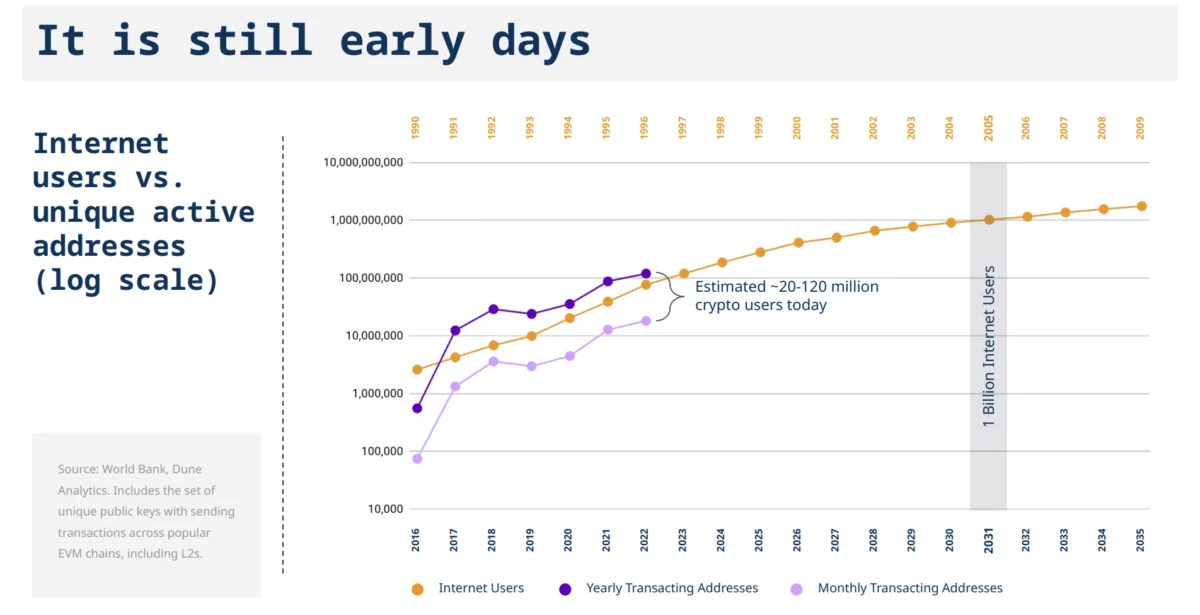
Reflecting on a tumultuous period that shook public confidence, the anonymous host of the widely followed analytics channel InvestAnswers recently told his 443,000 YouTube subscribers that the foundational trajectory of blockchain technology remains firmly intact. Citing macroeconomic shifts, technological milestones, and an insightful annual report by Messari CEO Ryan Selkis, market experts argue that short-term volatility and criminal misconduct cannot derail a secular technological revolution set to onboard the next billion users.
Main Facts: Resilience Amid Ruin
The core narrative surrounding the digital asset sector centers on a glaring paradox: while 2022 was widely characterized as an annus horribilis for token prices and centralized firms, the underlying architecture of Web3 continued to expand at an unprecedented rate.
Key pillars of this ongoing evolution include:
- Institutional and Sovereign Adoption: Bitcoin continues to transition from a speculative asset into a recognized medium of exchange, gaining legal tender status in emerging economies grappling with domestic inflation.
- Stablecoin Expansion: Digital dollars and algorithmic or fiat-backed stablecoins have proliferated, proving indispensable for cross-border settlements and liquidity management.
- DeFi Outperforming CeFi: Decentralized finance (DeFi) protocols largely weathered the storm of cascading liquidations better than their centralized counterparts (CeFi), proving the viability of trustless, code-driven financial systems over opaque corporate intermediaries.
- Infrastructure Scalability: Layer-1 and Layer-2 scaling solutions, decentralized autonomous organizations (DAOs), and non-fungible token (NFT) ecosystems have progressed far beyond experimental novelties, establishing utility across gaming, supply chain management, and digital identity.
Chronology of a Crisis: How 2022 Shaped the Current Landscape
To understand why analysts are so resolute in their long-term outlook, it is essential to examine the sequence of events that defined the 2022 crypto winter and tested the industry’s resilience.
Q1–Q2 2022: The Macro Squeeze and Algorithmic Collapses
The year began under the heavy cloud of shifting global monetary policy. As central banks worldwide raised interest rates to combat soaring post-pandemic inflation, risk-on assets—including cryptocurrencies—suffered massive capital outflows.
In May 2022, the ecosystem experienced its first systemic shock with the collapse of the Terra (LUNA) ecosystem and its algorithmic stablecoin, TerraUSD (UST). The sudden evaporation of roughly $40 billion in market value sent shockwaves through the industry, triggering a chain reaction of insolvencies among major lenders and hedge funds that had taken excessive, unhedged risks.
Q3 2022: The Contagion Spreads
The contagion stemming from the Terra collapse quickly exposed severe structural flaws and reckless risk management practices across centralized lending platforms. High-profile crypto lenders such as Celsius Network and Voyager Digital halted customer withdrawals before ultimately filing for Chapter 11 bankruptcy protection. These events exposed the dangers of rehypothecation—the practice of lending out customer deposits to generate yield without adequate risk controls or transparency.
Q4 2022: The FTX Cataclysm and Regulatory Reckoning
Just as the market was attempting to stabilize, November 2022 delivered the most devastating blow in crypto history: the sudden collapse of FTX, once the world’s second-largest cryptocurrency exchange, alongside its sister trading arm, Alameda Research.
The revelation of massive fraud, commingled customer funds, and executive malfeasance led to criminal charges against former CEO Sam Bankman-Fried. The FTX catastrophe wiped out billions more in investor wealth, shattered remaining retail trust, and invited intense, global regulatory scrutiny that continues to reshape the industry’s operating environment.
Supporting Data: Infrastructure Development Outpaces Market Sentiment
While price action and venture capital inflows dominated mainstream headlines, quantitative metrics from industry intelligence firms paint a more nuanced picture. According to data highlighted in Messari’s comprehensive Crypto Theses for 2023 report, development activity—measured by active developers, GitHub commits, and transaction throughput—remained robust despite the macro bear market.
| Metric / Sector | 2021 Peak Status | 2022–2023 Realities | Long-Term Outlook |
|---|---|---|---|
| Venture Capital Funding | Historic highs; excessive capital chasing unproven ideas. | Significant contraction in total capital deployed. | Healthy normalization; higher focus on sustainable business models. |
| Stablecoin Supply | Rapid expansion driven by DeFi yield farming. | Sustained usage for payments and hedging against fiat devaluation. | Integral to global commerce and tokenized traditional finance. |
| Developer Ecosystem | High influx of talent attracted by skyrocketing token prices. | Steady retention of core developers building critical infrastructure. | Crucial foundation for scaling to 1 billion+ global users. |
| Regulatory Frameworks | Fragmented, reactive, and largely ambiguous. | Transitioning toward proactive, stringent oversight (MiCA in EU, SEC/CFTC actions in US). | Greater institutional clarity and long-term market legitimacy. |
As noted by the InvestAnswers host, although venture capital funding cooled significantly compared to the hyper-speculative frenzy of 2021, the capital that did remain was channeled directly into building essential infrastructure. This includes cryptographic breakthroughs like zero-knowledge proofs (ZK-ps), enhanced cross-chain bridges, and institutional-grade custody solutions.
Official Responses and Regulatory Perspectives
The cascading failures of 2022 forced governments, international regulatory bodies, and central banks to accelerate their supervisory frameworks.
- The United States: Regulatory agencies, notably the Securities and Exchange Commission (SEC) and the Commodity Futures Trading Commission (CFTC), intensified enforcement actions against unregistered securities offerings and platforms operating outside compliance frameworks. Lawmakers on Capitol Hill have since engaged in bipartisan efforts to draft comprehensive market structure bills to define regulatory jurisdictions.
- Global Jurisdictions: The European Union finalized its landmark Markets in Crypto-Assets (MiCA) regulation, establishing a unified legal framework across member states to protect investors and curb market abuse. Meanwhile, various emerging market economies have increasingly looked toward tokenized assets and central bank digital currencies (CBDCs) to modernize their financial systems and mitigate domestic currency volatility.
Industry leaders have largely welcomed these developments, arguing that clear regulatory guardrails—though painful in the short term—are a prerequisite for trillions of dollars in institutional capital to enter the asset class safely.
Implications: The Path to One Billion Users
The ultimate implication of 2022’s trials is a generational purge of bad actors, unsustainable business models, and leverage-driven exuberance. The ecosystem that emerges from this crucible is fundamentally different from the one that entered it.
1. Shift from Speculation to Utility
The era of blind speculation fueled by meme-driven hype is giving way to real-world utility. Blockchain networks are increasingly judged by their transactional throughput, fee structures, and real-world integration capabilities rather than community sentiment alone.
2. Institutionalization of Custody and Settlement
Traditional financial institutions—ranging from global asset managers to legacy payment providers—are pressing forward with tokenization initiatives. By bringing real-world assets (RWAs) like U.S. Treasury bonds, real estate, and private equity onto public and private ledgers, institutional players are validating the efficiency gains of distributed ledger technology.
3. User Experience (UX) Revolution
To achieve the goal of onboarding the next billion users, developers are aggressively tackling onboarding friction. Abstracting away complex seed phrases, gas fees, and network switching through account abstraction and smart contract wallets is transforming Web3 applications to feel as seamless as traditional web applications.
Conclusion
History suggests that major technological revolutions are invariably forged in the fires of crisis. Just as the dot-com bubble of 2000 shook out unsustainable internet startups while laying the groundwork for the modern digital economy, the crypto winter of 2022 has purged fraudulent operators and speculative excess.
As core infrastructure continues to mature behind the scenes, industry leaders remain steadfast in their conviction: digital assets are no longer a passing trend, but an inevitable evolution of global finance.
Disclaimer: Opinions expressed in this report are for informational purposes only and do not constitute financial or investment advice. Investors should conduct thorough due diligence before engaging in high-risk investments involving Bitcoin, cryptocurrencies, or digital assets.