Ethereum’s Great Disconnect: Record Network Activity Meets Bearish Price Pressure
Despite the prevailing gloom in the cryptocurrency markets, a striking phenomenon has emerged within the Ethereum ecosystem: while the asset’s price struggles to maintain key support levels, the underlying network is witnessing its most prolific period of activity in history. This "great disconnect"—where fundamentals flourish while price action falters—has sparked intense debate among analysts regarding whether Ethereum is currently undervalued or bracing for a deeper correction.
Main Facts: The Duality of the ETH Ecosystem
The current state of Ethereum is defined by a paradox. On one side, the price of ETH remains under significant bearish pressure, with market sentiment wavering as the asset eyes a potential retest of the $1,500 psychological support level. Conversely, the Ethereum network itself—the backbone for decentralized finance (DeFi), institutional tokenization, and enterprise-grade smart contracts—is performing at record-breaking levels of intensity.
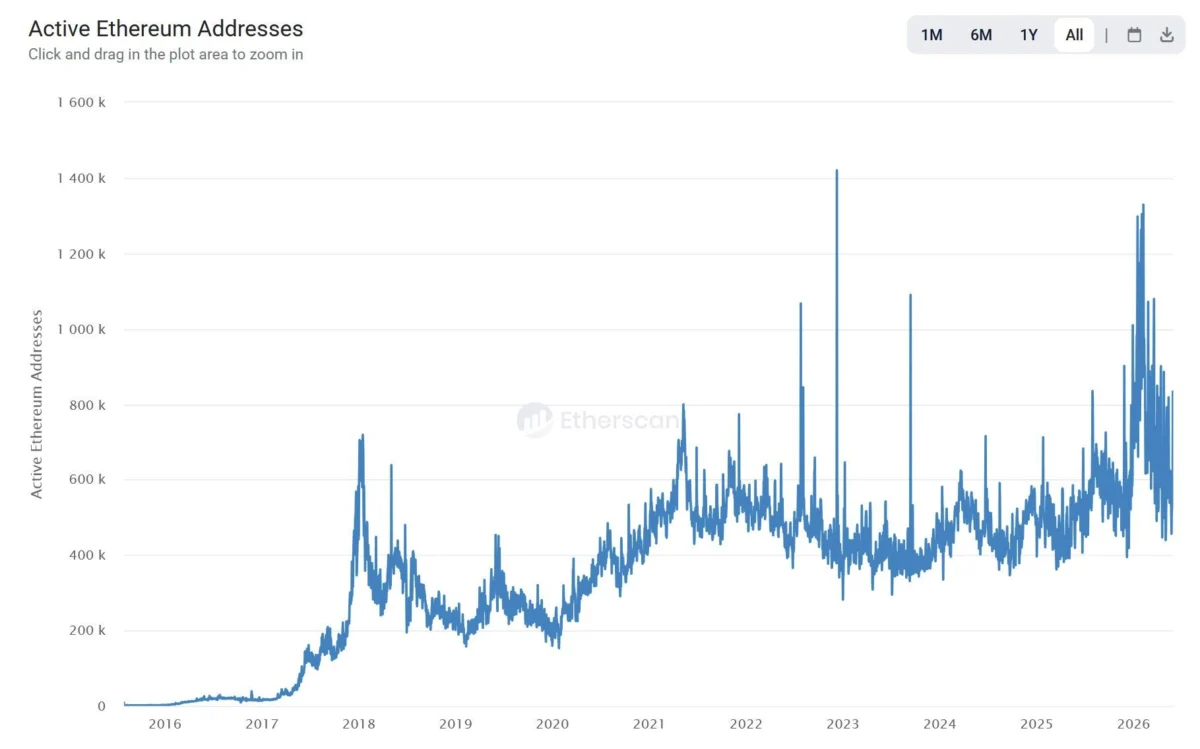
Data analysts and industry experts point to a surge in daily active addresses, which have moved well beyond the peaks observed in the 2018 and 2021 bull cycles. This surge suggests that while speculative interest may be cooling, the functional utility of the Ethereum blockchain is expanding at an unprecedented rate. The core narrative is clear: Ethereum is no longer just a speculative asset but an increasingly vital layer for the next generation of global financial infrastructure.
Chronology: Evolution of Network Vitality
To understand the significance of current metrics, one must look at the historical trajectory of Ethereum’s user adoption:

- The 2018 Milestone: During the previous market cycle, Ethereum’s daily active wallet addresses reached a significant peak of approximately 720,000. At the time, this was viewed as a monumental achievement in blockchain adoption.
- The 2021 Bull Run: As decentralized finance exploded, the network saw daily active addresses climb to 800,000, setting a new benchmark that would hold for several years.
- The 2025–2026 Expansion: In the current cycle, the network has shattered these previous records. Daily active addresses are consistently breaching the 1 million mark, with recent peaks exceeding 1.3 million. This confirms that the current "bearish" market is, in terms of sheer utility, more active than the height of the last major bull run.
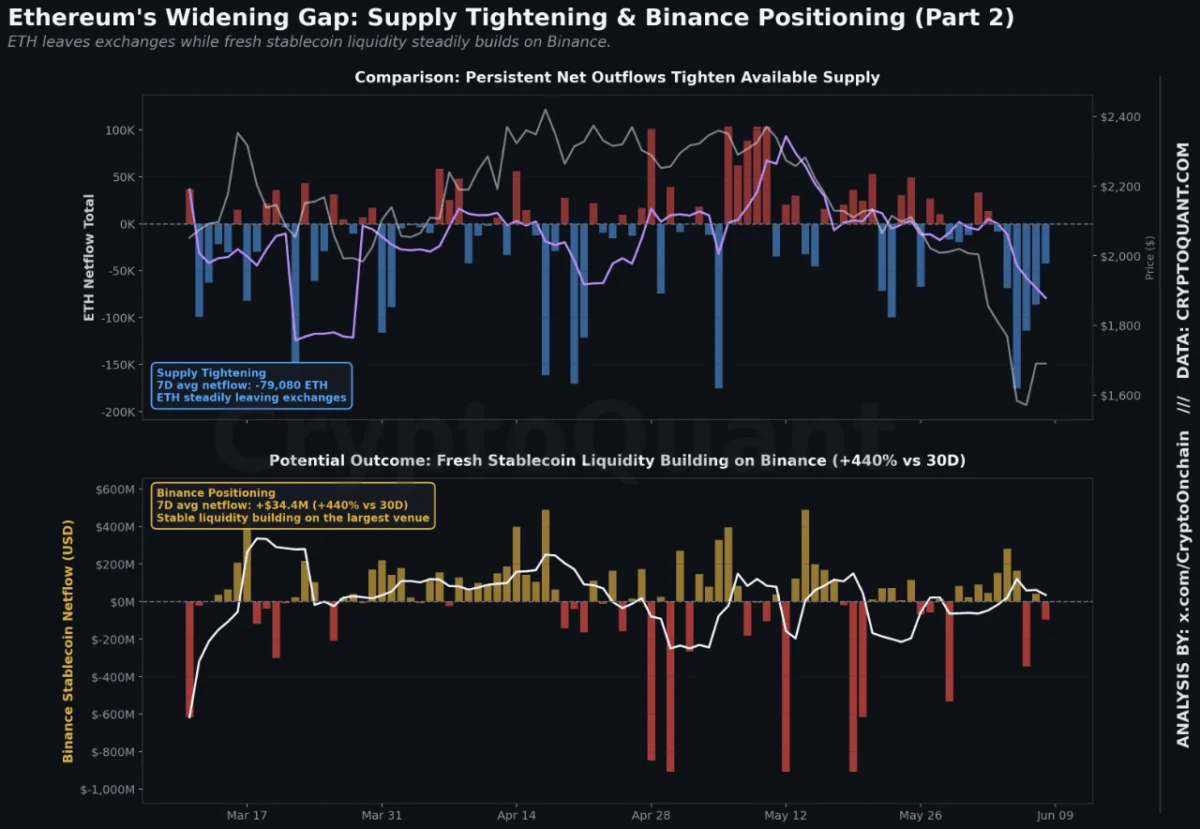
- The Exchange Supply Squeeze: Since October 2023, there has been a massive net outflow of ETH from centralized exchanges. Over the past 30 months, more than 6 million ETH have been moved into private custody or staked, reducing liquid supply to approximately 14.5 million ETH—the lowest level in the asset’s history.
Supporting Data: The Case for Fundamental Strength
The divergence between price and activity is supported by hard data from leading research firms. Leon Waidmann, Head of Research at Lisk, has been at the forefront of tracking this data. According to Waidmann, the surge in on-chain activity is a structural shift, not a temporary spike.
The "Delta Price" Analysis
While network activity is bullish, price-based indicators from experts like Ali Charts suggest a more cautionary tale. Using the "Delta Price" metric—a technical indicator that maps the relationship between the investor cost basis and the miner production cost—analysts have identified critical support zones. Historically, the Delta Price has served as a reliable floor for Ethereum during market capitulations. Current projections based on this model suggest that Ethereum could face a technical retest of the $700 level before finding the structural base required for a sustained, long-term upward trend.
Supply Dynamics
The massive exodus of ETH from exchanges is perhaps the most compelling piece of evidence that "smart money" is not exiting the ecosystem. When assets move from exchanges to cold storage or protocol-level staking, it typically signals a long-term holding strategy. Waidmann’s observation that "whoever is buying here isn’t selling back" highlights a significant shift in market psychology: long-term holders are capitalizing on low prices to accumulate, effectively creating a supply shock that could trigger a violent price reaction once liquidity begins to return to the broader market.
Official Perspectives and Expert Consensus
Industry experts remain divided on the timeline for recovery but are largely unanimous regarding the long-term viability of the network.

- The Institutional View: With the rise of tokenized real-world assets (RWA) and institutional interest in Ethereum-based settlement layers, the network is increasingly insulated from purely retail-driven price volatility. The growth in daily active addresses is largely attributed to these institutional use cases, which require consistent, high-volume interaction with the chain.
- The Technical View: Critics of the current price action argue that until the macroeconomic environment improves, Ethereum may struggle to decouple from Bitcoin or broader risk-on assets. The potential drop to $700, as suggested by the Delta Price model, is seen not as a failure of the network, but as a final "washout" phase required to clear out speculative leverage.
- The Developer View: The consistent growth in activity confirms that developers continue to prioritize the Ethereum Virtual Machine (EVM) over competing chains. This developer "stickiness" is the primary driver of the network’s long-term value proposition.
Implications: What This Means for the Future
The current state of Ethereum carries profound implications for investors and developers alike.
1. The Decoupling Potential
If Ethereum’s network activity continues to scale while its price remains suppressed, the market will eventually reach a point of "forced correction." When the macroeconomic winds shift, the combination of high fundamental utility and the supply squeeze (due to massive exchange outflows) could result in a rapid, vertical price recovery.
2. A Shift in Valuation Models
Traditional models that value Ethereum solely on price-to-earnings or speculative interest are becoming obsolete. A new framework is emerging that prioritizes "network value," where the number of active users and the volume of tokens being locked or bridged serve as the primary indicators of health. Investors who ignore these on-chain metrics in favor of pure technical analysis of price candles risk missing the "structural" bottoming process.
3. The Institutional "Hold"
The fact that exchange balances are at an all-time low suggests that the current cycle is characterized by a "strong hands" accumulation phase. Institutions are not just buying; they are locking up supply. This behavior drastically reduces the sell-side pressure that typically defines the bottom of a bear market, suggesting that when the turn comes, it may be sharper and more decisive than previous cycles.
Conclusion
Ethereum finds itself in a period of intense structural transition. While the price action reflects the anxieties of a cautious global market, the underlying blockchain is demonstrating a level of resilience and adoption that dwarfs all previous cycles. Whether or not the asset tests the $700 level as the Delta Price model suggests, the overarching trend is one of profound growth.
For the Ethereum ecosystem, the message is clear: the network is busier, more secure, and more liquidly constrained than ever before. As the crypto market navigates these uncertain waters, the data suggests that Ethereum is not just surviving the bear market—it is preparing the foundation for its next era of dominance. Investors should keep a close watch on the delta between active addresses and price movement, as this relationship will likely be the primary indicator of the next major trend reversal.