Ethereum’s Structural Crisis: Derivatives Reset and the Search for a Price Floor
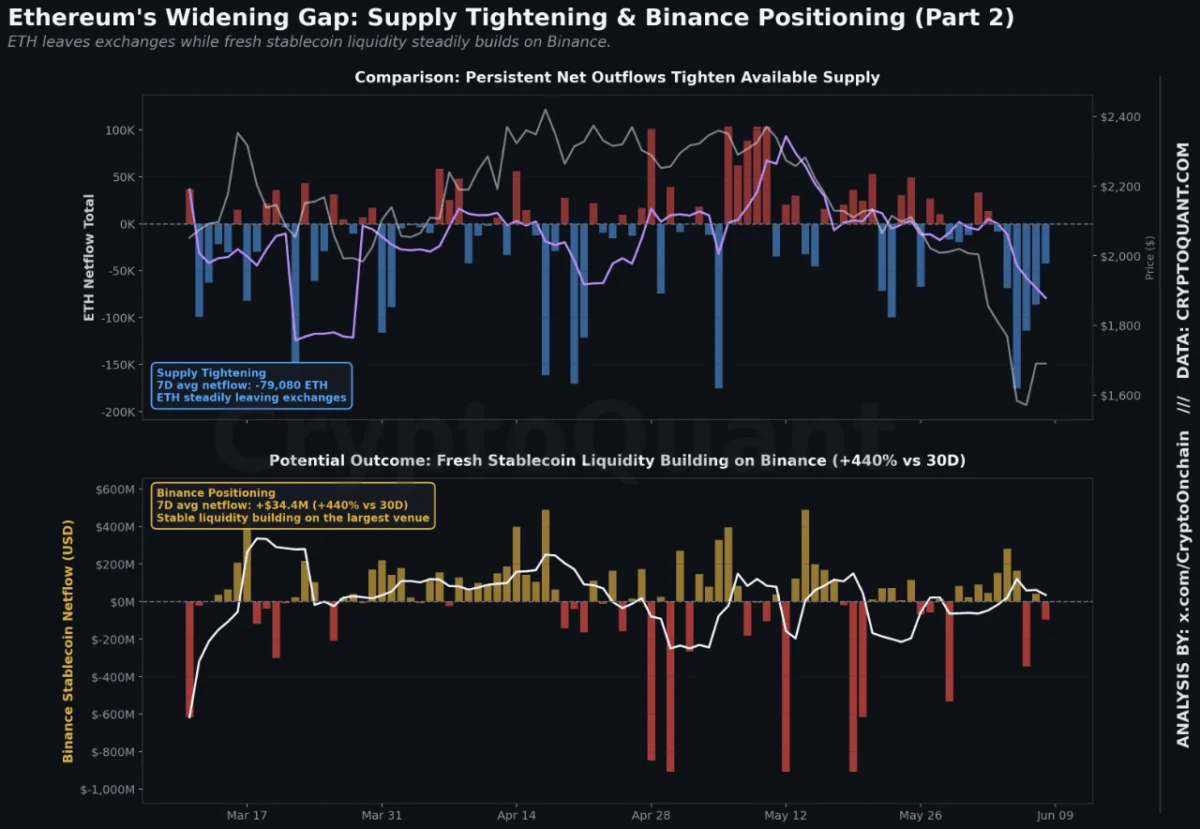
Ethereum (ETH) is currently navigating its most perilous market phase since the dawn of the 2026 cycle. With the price slipping below the critical $1,700 threshold, the second-largest cryptocurrency is facing a structural test that transcends simple volatility. Market analysts are now closely scrutinizing derivatives data, which suggests that the recent 28% drawdown is not merely a liquidity flush, but a fundamental unwinding of leveraged positions that had been building for over a year.
As Ethereum struggles to maintain its footing, the divergence between exchange behavior and investor sentiment has created a complex, often contradictory, landscape for traders.
The Core Data: An Unwinding of Leveraged Exposure
The most compelling narrative in the current market is the systematic reset of Open Interest (OI) across major global derivatives exchanges. For context, Open Interest represents the total number of outstanding derivative contracts that have not been settled. When OI drops significantly during a price decline, it typically indicates that leveraged traders are being liquidated or are choosing to close positions in a "deleveraging event."
Data from CryptoQuant highlights a stark contraction. On Gate.io, ETH Open Interest plummeted from $4.84 billion on May 7 to $2.68 billion by June 9—a staggering 45% reduction in just over a month. This effectively resets the exchange to levels last observed in April 2025, erasing more than 14 months of accumulated leverage in a matter of weeks. Bybit has exhibited a near-identical trajectory, with OI falling from nearly $800 million to levels not seen since April 2025.
This synchronized deleveraging suggests that the "easy money" and aggressive bullish bets that characterized the 2025–2026 market growth have been forcibly cleared from the books. However, this clearing is not uniform, leading to concerns about the structural integrity of the remaining positions on major venues like Binance.

A Chronology of the Decline: From Peak to Pressure
To understand the severity of the current situation, one must look at the timeline of Ethereum’s descent from its cycle highs:
- The 2026 Peak: Following the rejection of the $4,800 cycle peak, Ethereum entered a protracted period of distribution. The failure to hold the $2,250–$2,350 resistance zone served as the first major warning sign for long-term bulls.
- The February-March Consolidation: Throughout early 2026, Ethereum maintained a tight trading range, with $1,800 acting as the primary floor. This period was characterized by a false sense of security among market participants who viewed the range as accumulation.
- The Q2 Breakdown: In late May and early June, the $1,800 support level finally gave way. This breakdown was swift, forcing the price toward the $1,500 region.
- The Current June Crisis: As of mid-June, the market is testing the strength of the $1,500 support. The breach of February lows has officially invalidated the bullish structure of the previous year, leaving the market in a precarious state of discovery.
The Binance Anomaly: Understanding Funding Rates
While platforms like Gate.io and Bybit have seen a clean reset of leverage, Binance presents a different picture. Despite the broader market downturn, ETH Open Interest on Binance remains elevated, hovering near $2.76 billion.
In a healthy, recovering market, high OI might suggest building conviction. However, the funding rates on Binance tell a different story. Funding rates are the periodic payments made between long and short traders to keep the perpetual contract price aligned with the spot price. When these rates turn negative, it indicates that shorts are paying longs to maintain their positions—essentially, the market is betting on further downside.
Currently, Binance funding rates have dipped to approximately -0.0038. This combination of high, lingering Open Interest and negative funding is a "red flag." It suggests that the remaining participants on Binance are not necessarily "long-term holders" with high conviction, but rather defensive traders hedging their spot positions or speculative bears actively betting against a recovery. The lack of positive funding indicates that there is no "bullish premium" being paid to hold ETH, a prerequisite for any sustainable price rally.
Technical Analysis: The Absence of Bullish Catalysts
From a technical perspective, Ethereum’s chart is increasingly bleak. The asset is currently trading below its 50-week, 100-week, and 200-week moving averages. In technical analysis, these long-term averages serve as the "spine" of a trend; when price falls decisively below them, it signifies a long-term shift in market sentiment from "buy the dip" to "sell the rally."

The $1,500 support level is now the final line of defense for bulls. Should the weekly candles continue to close below this level, the market will enter a "vacuum" zone. Without significant historical support levels to lean on, Ethereum could face a rapid slide toward the $1,300–$1,400 range. The "lower highs and lower lows" pattern observed since the $4,800 peak remains firmly intact, and until a major resistance level is reclaimed, the path of least resistance remains to the downside.
Implications for the Broader Crypto Market
The current Ethereum situation has profound implications for the broader altcoin market. As the second-largest asset by market capitalization, Ethereum often acts as a barometer for altcoin risk appetite.
- Institutional Sentiment: The clearing of leverage is a double-edged sword. While it creates a "cleaner" market by removing excessive risk, it also indicates that institutional and retail confidence has been significantly shaken. Rebuilding that trust requires time and a stable, non-volatile base.
- The "Defensive" Shift: Market participants are no longer focused on chasing gains; they are focused on capital preservation. This shift in psychology means that even if the market attempts a rally, it will likely be met with heavy "exit liquidity" selling from those who were trapped in the $1,800–$2,000 range.
- Liquidity Fragmentation: The divergence between exchanges like Binance and the rest of the market highlights a fragmentation in liquidity. When major exchanges exhibit such different behaviors in their derivatives books, it often leads to increased volatility and "flash crashes," as market makers struggle to manage risk across disconnected venues.
Expert Consensus and Future Outlook
Industry experts are currently divided into two camps. The first camp believes that the derivatives reset, while painful, is a necessary "cleansing" that will ultimately lead to a more sustainable, albeit slower, recovery. They argue that once the "weak hands" are fully washed out, the price will find a bottom that can support a long-term reversal.
The second camp, however, warns that the macroeconomic environment and the ongoing bearish momentum in the derivatives sector suggest that the worst may not be over. Without a clear fundamental catalyst—such as a shift in regulatory tone or a massive influx of institutional capital—Ethereum may struggle to find its footing for the remainder of the year.
The official stance of many market analysts is one of extreme caution. "Do not attempt to catch a falling knife" has become the mantra for many who are waiting for a confirmed weekly close above the $1,800 resistance before re-entering the market.

Conclusion: The Long Road to Recovery
Ethereum is at a critical juncture. The deleveraging process has successfully cleared out a significant portion of the speculative froth that dominated the 2025–2026 period, but the structural damage to the price chart remains severe.
For bulls, the objective is clear: hold the $1,500 support and reclaim the $1,800 level. For the market at large, the priority remains survival. Until the derivatives market shows signs of renewed bullish conviction—evidenced by positive funding rates and a healthy, organic growth in Open Interest—the outlook for Ethereum remains bearish. Investors and traders alike are advised to monitor the weekly closes closely, as the next few weeks will likely determine whether Ethereum enters a phase of stabilization or continues its downward trajectory into the depths of the current cycle.
Disclaimer: This report is for informational purposes only and does not constitute financial advice. Cryptocurrency investments are subject to high volatility and market risk. Always conduct your own research before making investment decisions.