Institutional Appetite Surges: Crypto Markets See $2 Billion Inflow Following Strategic Policy Shifts
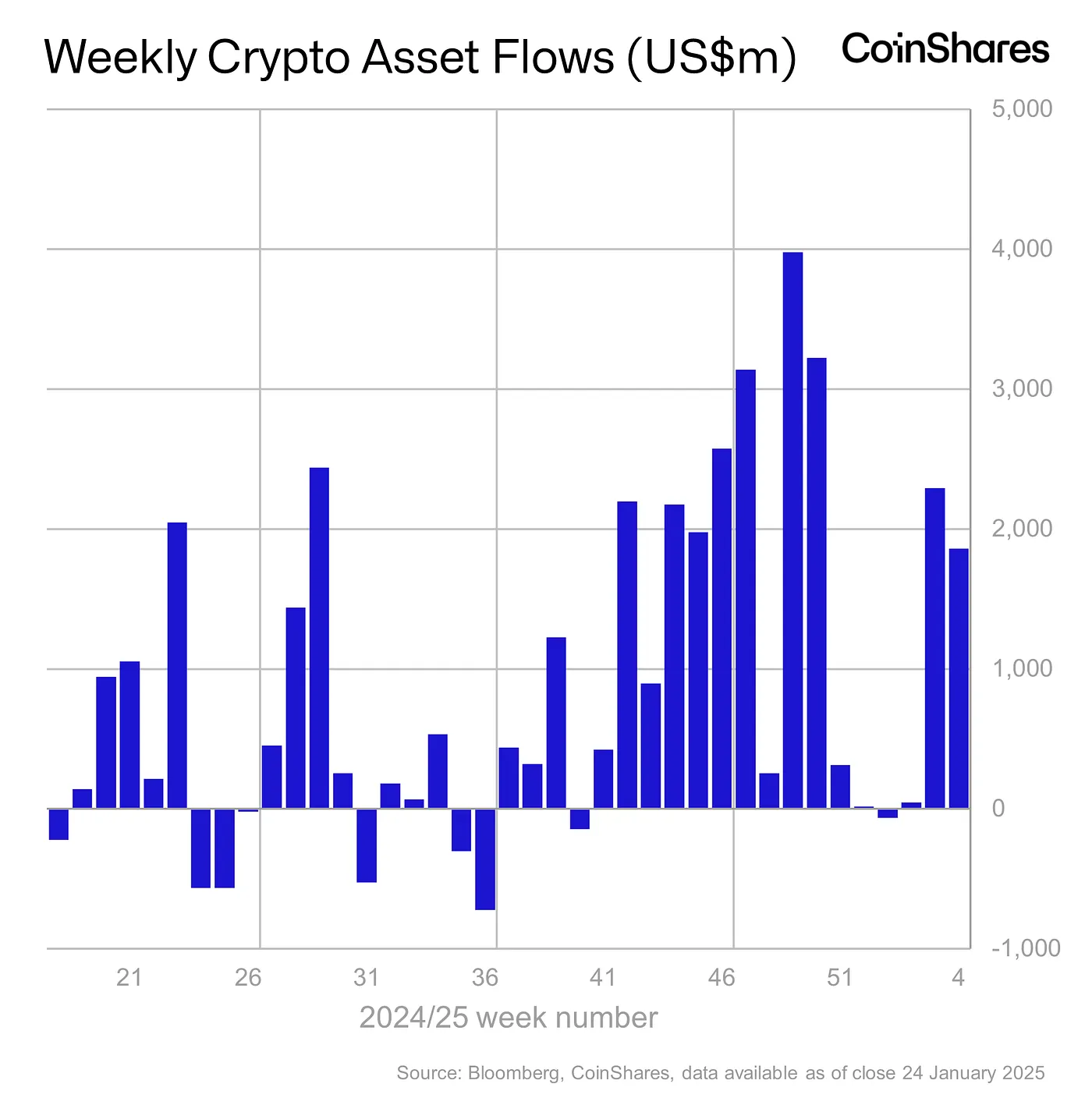
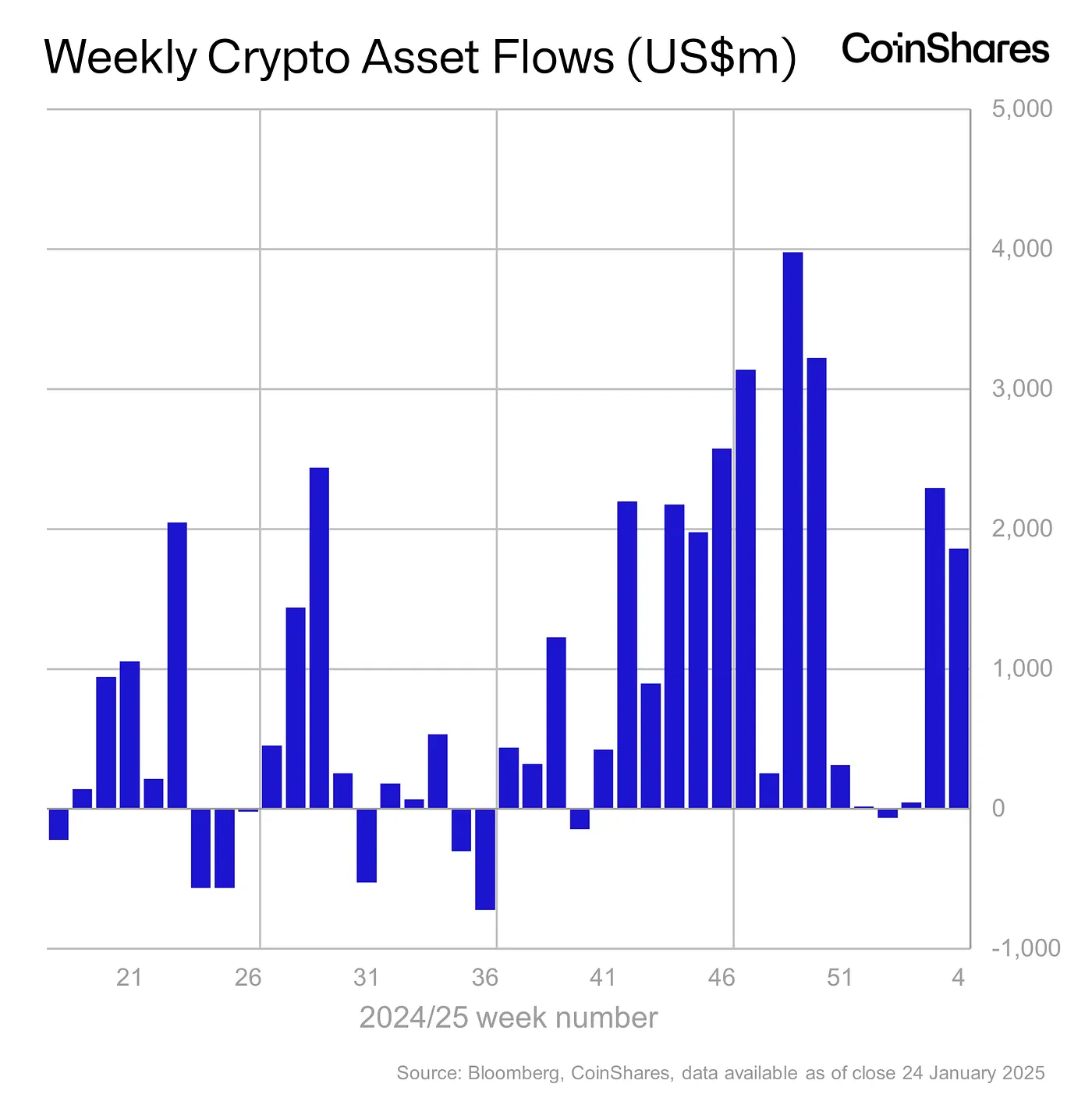
In a dramatic display of market confidence, institutional investors have flooded the digital asset space, injecting nearly $2 billion into crypto-focused investment vehicles over the past week. According to the latest Digital Asset Fund Flows report from CoinShares, this surge in capital reflects a profound shift in market sentiment, largely catalyzed by recent executive actions taken by the U.S. administration, including proposals regarding a strategic Bitcoin reserve.
The State of the Market: A $2 Billion Surge
The financial landscape for digital assets has shifted from a period of cautious observation to one of aggressive accumulation. CoinShares reports that institutional investment products saw total inflows of $1.9 billion last week alone. This staggering figure brings total year-to-date (YTD) inflows to an impressive $4.8 billion.
What makes this week particularly noteworthy is the divergence between price action and market activity. Despite relatively flat price performance during the seven-day period, trading volumes on trusted crypto exchanges remained exceptionally high, hitting $25 billion—representing approximately 37% of total market activity. This suggests that while retail investors may be biding their time, the institutional "smart money" is actively positioning itself for long-term growth, signaling a high conviction in the asset class’s future trajectory.
Chronology: The Catalyst of Executive Action
The recent influx of capital did not occur in a vacuum. The timeline of this surge is inextricably linked to the evolving regulatory and political stance toward cryptocurrency in the United States.
- The Pre-Inauguration Rally: In the weeks leading up to the most recent presidential inauguration, Bitcoin saw a meteoric rise, breaking through previous all-time highs as markets priced in a more favorable regulatory environment.
- Executive Mandates: Following the inauguration, new executive orders directed at the digital asset industry were unveiled. These orders, which hinted at the potential for a strategic national Bitcoin reserve, served as a "green light" for institutional fund managers who had previously been sidelined by regulatory uncertainty.
- The Inflow Spike: Following the announcement of these proposals, institutional investment vehicles experienced an immediate and significant uptick in inflows, with the United States acting as the primary engine of this growth.
Regional Breakdown: America Leads the Charge
The geographical distribution of these inflows highlights the centrality of the U.S. market in the current global crypto cycle. Of the $1.9 billion recorded globally, the United States accounted for a dominant $1.7 billion. This overwhelming concentration of capital reflects the industry’s reaction to the U.S. government’s newfound proactive stance toward crypto-asset integration.
While the U.S. led, other jurisdictions continued to demonstrate consistent, albeit smaller, participation. Switzerland, a traditional hub for crypto-banking, contributed $35 million in inflows, followed closely by Canada with $31 million and Germany with $23 million. This data confirms that the institutional "FOMO" (fear of missing out) is a global phenomenon, though it is currently being steered by the policy narrative emanating from Washington, D.C.
Asset Performance: Bitcoin’s Dominance and the Altcoin Resilience
As is often the case in institutional crypto markets, Bitcoin (BTC) remains the undisputed king of capital allocation.
Bitcoin: The Institutional Choice
Bitcoin captured 92% of the total inflows last week, totaling $1.6 billion. This brings its YTD inflows to $4.4 billion. Analysts suggest that the institutional preference for Bitcoin is driven by its narrative as a "digital gold" and the potential for it to become a foundational component of state-level balance sheets. Interestingly, the report also noted that short-Bitcoin ETFs regained some traction, seeing $5.1 million in inflows—a reflection of some investors hedging against the volatility that typically follows rapid price discovery and new all-time highs.
Ethereum and the Altcoin Ecosystem
Ethereum (ETH) showed signs of renewed strength, leading the altcoin sector with $205 million in inflows. This is a significant turnaround for the world’s second-largest cryptocurrency, which had faced sluggish inflows earlier in the year. The latest data brings Ethereum’s YTD inflows to $177 million, suggesting that institutional investors are beginning to rotate capital into smart-contract platforms as the broader market matures.
Outside of Bitcoin and Ethereum, the market remained stable. Aside from Cardano (ADA), which experienced minor outflows, most institutional crypto products avoided net liquidations. This widespread support across various tokens suggests that institutional investors are moving toward a more diversified "crypto portfolio" strategy rather than relying solely on Bitcoin.

Implications for the Broader Economy
The influx of $2 billion into the digital asset sector has far-reaching implications for both the financial industry and the regulatory environment.
1. Mainstream Financial Integration
The sheer scale of these inflows confirms that digital assets are no longer a peripheral interest for institutional portfolios. Pension funds, hedge funds, and asset managers are increasingly viewing Bitcoin and Ethereum as essential components of a modern, diversified portfolio. As these institutions deploy capital, the liquidity of crypto markets increases, which in turn reduces volatility and makes the asset class more attractive to conservative investors.
2. The Strategic Reserve Narrative
The most significant implication is the shift in the "Strategic Reserve" narrative. If the U.S. government successfully implements a policy that treats Bitcoin as a national strategic asset, it would fundamentally change the global monetary order. Such a move would likely force other nations to follow suit to remain competitive, creating a "race to acquire" that could drive long-term price appreciation far beyond current levels.
3. Regulatory Maturation
The high trading volumes—37% of total market activity—indicate a highly professionalized market. Regulators are now tasked with oversight of an industry that is deeply intertwined with traditional finance. This necessitates a more collaborative approach between policymakers and industry leaders, moving away from the "regulation by enforcement" model that characterized previous years toward a framework that fosters innovation while protecting market integrity.
Expert Perspective: What to Expect Next
Market analysts are watching the sustainability of these inflows closely. While the initial surge was triggered by political developments, long-term stability will depend on the actual execution of these proposed executive policies.
"We are witnessing the institutionalization of the crypto market," noted a senior analyst at a leading fintech research firm. "The fact that institutional investors are reacting to government policy as they would to interest rate changes by the Federal Reserve shows that digital assets have graduated to the status of a legitimate macro-asset class."
However, investors are cautioned that the market remains highly reactive to news. While the current trend is bullish, the crypto market is known for its rapid reversals. The potential for policy friction, unexpected regulatory hurdles, or changes in the geopolitical landscape could quickly shift the sentiment.
Conclusion: A New Era for Digital Assets
The recent data from CoinShares serves as a definitive marker in the history of cryptocurrency. With nearly $2 billion in institutional capital flooding the market in a single week, the "crypto winter" of previous years seems to have been fully replaced by a new, more institutional-grade "crypto spring."
Whether these inflows translate into a sustained bull market will depend on the continued adoption of digital assets as legitimate financial instruments. As the industry moves forward, the focus will undoubtedly remain on the U.S. regulatory environment and the potential for a strategic reserve, both of which have effectively become the primary drivers of global market sentiment. Investors, however, should remain vigilant, conduct their own due diligence, and remember that even in times of record-breaking inflows, the crypto market remains a high-risk environment.
Disclaimer: This article is for informational purposes only and does not constitute financial advice. The Daily Hodl is not an investment advisor. Cryptocurrency investments carry high risks; investors should conduct their own thorough research before making any financial decisions.