Institutional Capital Flight: Bitcoin Faces Massive Outflows as Market Sentiment Shifts Following Fed Signals
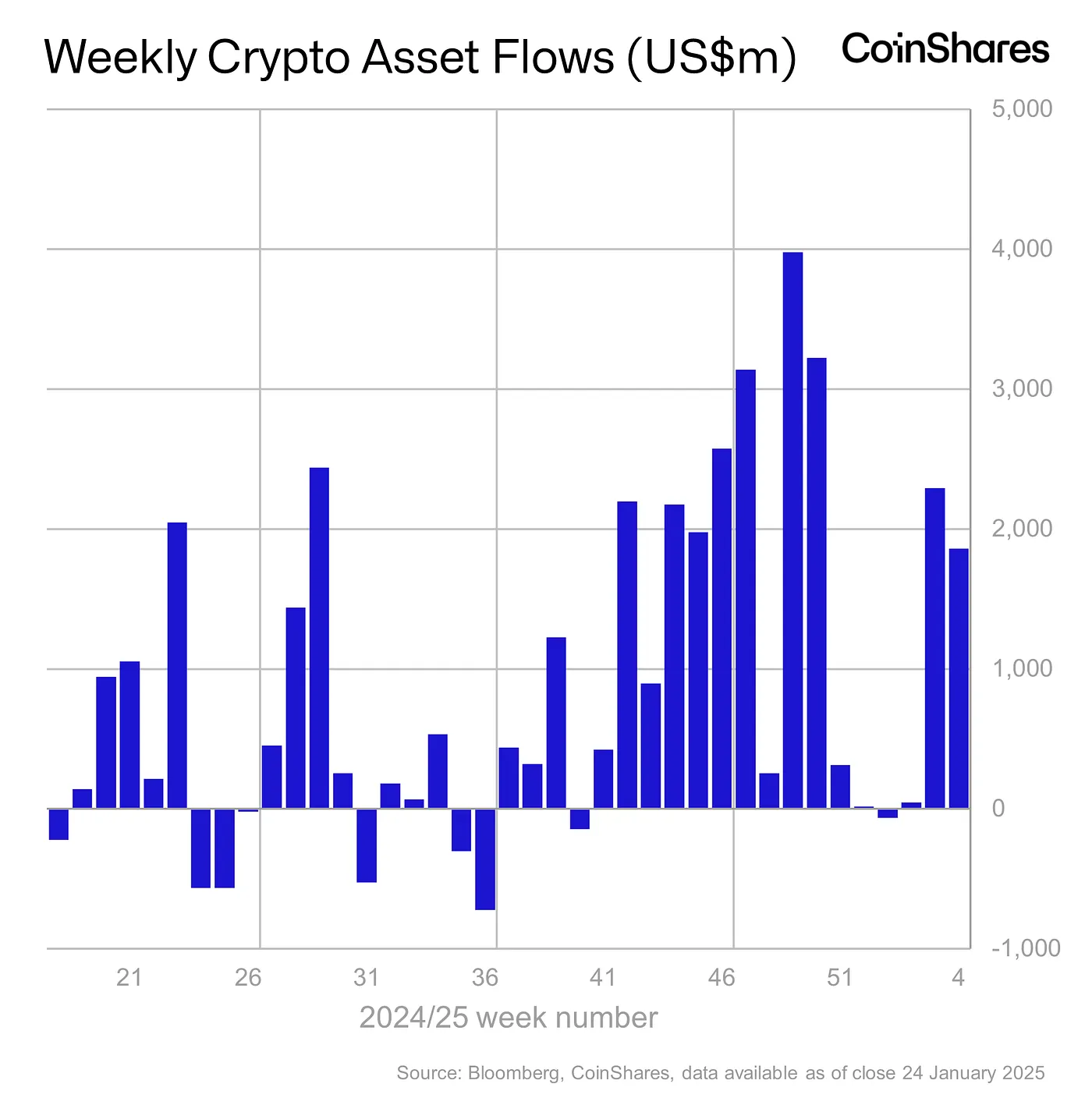
In a week defined by volatility and shifting macroeconomic expectations, the digital asset market has experienced a significant liquidity rotation. According to the latest weekly fund flow report from CoinShares, institutional investors have aggressively pulled capital from Bitcoin, resulting in a staggering $945.89 million in outflows. This trend, which saw total crypto-product outflows hit $360 million, suggests a broader reassessment of risk among institutional players following recent comments from Federal Reserve Chair Jerome Powell.
While the headline numbers paint a bearish picture for the market’s primary asset, the underlying data reveals a more nuanced reality. As capital fled Bitcoin, significant interest was redirected toward smart-contract platforms like Solana, Ethereum, and XRP, signaling that while institutional appetite for "digital gold" may be cooling, the interest in utility-driven blockchain ecosystems remains robust.
The Catalyst: Jerome Powell and the Hawkish Pivot
The primary driver behind this sudden exodus from Bitcoin appears to be a direct reaction to the Federal Reserve’s evolving monetary stance. Despite a fresh interest rate cut—a move typically viewed as bullish for risk-on assets—the market reacted with caution rather than enthusiasm.
The Powell Effect
Fed Chair Jerome Powell’s recent commentary has introduced a new layer of uncertainty into the financial markets. Investors, who had previously priced in a consistent trajectory of easing monetary policy, were caught off guard by what many analysts termed "hawkish" undertones. The primary concern among institutional desks is the potential for a pause in the rate-cutting cycle during the December Federal Open Market Committee (FOMC) meeting.
When the cost of borrowing remains higher for longer, the opportunity cost of holding non-yielding assets like Bitcoin increases. Institutional investors, who manage billions in AUM (Assets Under Management), often rely on predictive models that hinge on the "Fed pivot." When that pivot becomes ambiguous, automated and sentiment-driven strategies often trigger liquidations to preserve capital and de-risk portfolios.
Chronology of the Market Shift
The events of the past week were not an overnight occurrence but rather the culmination of building tension in the macroeconomic landscape.
- Early Week: Bitcoin initially showed resilience following the announcement of the rate cut. However, as the details of the FOMC press conference circulated, trading desks began to recalibrate.
- Mid-Week: Sell-side pressure intensified. Data began to show that Bitcoin ETF flows, which had been a pillar of the 2024 bull market, turned sharply negative. The outflows were not merely profit-taking; they represented a fundamental change in institutional hedging strategies.
- Late Week: By the time the market closed, the $945.89 million figure was solidified. Simultaneously, regional data began to emerge, highlighting a stark contrast between North American risk-off behavior and a more optimistic outlook in European jurisdictions.
Supporting Data: A Regional and Asset-Based Breakdown
The CoinShares report provides a granular look at where the money went and where it came from. The geographical disparity is particularly telling of how different regulatory and economic environments influence institutional sentiment.
Regional Divergence
- United States: The U.S. led the charge in outflows, with a massive $439 million exiting institutional products. This reinforces the idea that the "Powell Effect" is felt most acutely in the heart of the American financial system, where Fed policy is the primary driver of volatility.
- European Resilience: In contrast, Europe bucked the global trend. Germany recorded $32 million in inflows, while Switzerland saw an influx of $30.8 million. This suggests that European institutional investors may be looking at the current price dips as a long-term value opportunity, potentially hedging against localized economic stagnation rather than reacting strictly to U.S. interest rate fluctuations.
The "Great Rotation": Bitcoin vs. Altcoins
The most striking feature of the current market cycle is the shift in asset preference. While Bitcoin suffered a near-billion-dollar hemorrhage, other assets enjoyed record-breaking inflows:
- Solana (SOL): The clear standout of the week, Solana pulled in $421.11 million. This marks the second-largest weekly haul for Solana in its history. Investors appear to be rotating out of Bitcoin and into high-throughput, smart-contract-capable blockchains, likely betting on the long-term utility of decentralized finance (DeFi) and the Solana ecosystem’s scaling capabilities.
- Ethereum (ETH): Ethereum saw a healthy $57.59 million in inflows. As the bedrock of the decentralized web, Ethereum remains a staple in institutional portfolios, serving as a hedge against the volatility of more experimental projects.
- XRP: With $43.18 million in inflows, XRP has regained institutional favor. This is likely linked to ongoing optimism regarding regulatory clarity and the asset’s role in cross-border payment efficiency.
Official Responses and Analyst Implications
The market’s reaction has sparked a flurry of commentary from analysts and institutional strategists. While some argue that this is a temporary "shakeout" designed to clear leverage, others believe it signals the end of the current parabolic run.
The "Risk-Off" Thesis
Market analysts note that institutional investors are currently prioritizing liquidity. When uncertainty regarding the December rate cut arises, the first assets to be liquidated are often those that have seen the most appreciation—namely, Bitcoin. This "sell the news" behavior is standard for institutional desks that operate on quarterly performance targets.
The "Utility-First" Thesis
Conversely, the massive inflows into Solana suggest that institutional capital is not leaving the crypto space entirely; it is maturing. Investors are becoming more selective, moving away from Bitcoin as a generic "macro hedge" and toward projects that offer demonstrable utility and ecosystem growth. The record-breaking performance of Solana indicates that institutional players are increasingly viewing "Ethereum Killers" and high-performance networks as viable long-term infrastructure plays.
Implications: What to Expect in December
As the market heads toward the final month of the year, several critical factors will determine whether the recent outflows are a momentary hiccup or the start of a deeper correction.
1. Macroeconomic Uncertainty
The primary variable remains the Federal Reserve. If incoming economic data (inflation and unemployment) suggests that the economy is overheating, the Fed may indeed hold rates steady in December. Such a move would likely lead to further outflows from risk assets, potentially testing lower support levels for Bitcoin.
2. The ETF Maturity Factor
Bitcoin ETFs are no longer a "new" phenomenon. Institutional investors now have historical data on how these funds perform during periods of macroeconomic stress. The recent outflows prove that these investors are quick to pull the trigger when the macro narrative shifts. We should expect higher volatility in ETF flows in the coming weeks.
3. Altcoin Season?
If the current trend of rotation into Solana, Ethereum, and XRP persists, we may be entering a period of "decoupling." In this scenario, Bitcoin might trade sideways or downward, while the broader altcoin market—driven by fundamental development rather than macro speculation—continues to appreciate.
Conclusion
The crypto market is in a state of flux. The $945.89 million exit from Bitcoin is a loud signal from the "smart money" that the macro-environment has become too volatile for speculative comfort. However, the $421 million injection into Solana proves that the institutional appetite for blockchain innovation remains stronger than ever.
For the average investor, the takeaway is clear: the era of "everything rising together" is fading. We are entering a phase of fundamental differentiation. Institutional investors are no longer buying "crypto" as a monolith; they are buying winners, utility, and infrastructure. As we move toward the close of the year, all eyes will remain on Jerome Powell, but the real story may well be the silent, massive pivot occurring beneath the surface of the top-tier digital assets.
Disclaimer: This report is for informational purposes only and does not constitute financial, investment, or legal advice. Cryptocurrency investments are inherently high-risk. Market conditions are subject to rapid change. Investors should conduct their own due diligence and consult with a certified financial advisor before making any investment decisions.