Institutional Capital Flight: How Tariff Volatility Reshaped the Crypto Landscape
In a dramatic demonstration of the sensitivity of digital assets to macroeconomic policy, the institutional cryptocurrency market has faced a period of intense turbulence. According to the latest "Digital Asset Fund Flows Weekly Report" from CoinShares, a premier research firm and asset manager, institutional investors have aggressively offloaded crypto-based investment products. This mass exodus of capital has been directly attributed to the market-rattling implications of President Trump’s recent trade policies, specifically a series of tariffs that analysts have characterized as "calamitous."
The resulting volatility serves as a stark reminder that Bitcoin and its altcoin counterparts are no longer isolated "digital gold" assets. Instead, they have become deeply integrated into the broader global financial machinery, subject to the same geopolitical headwinds that buffet traditional equities and commodities.
The Main Facts: A Watershed Moment for Crypto Inflows
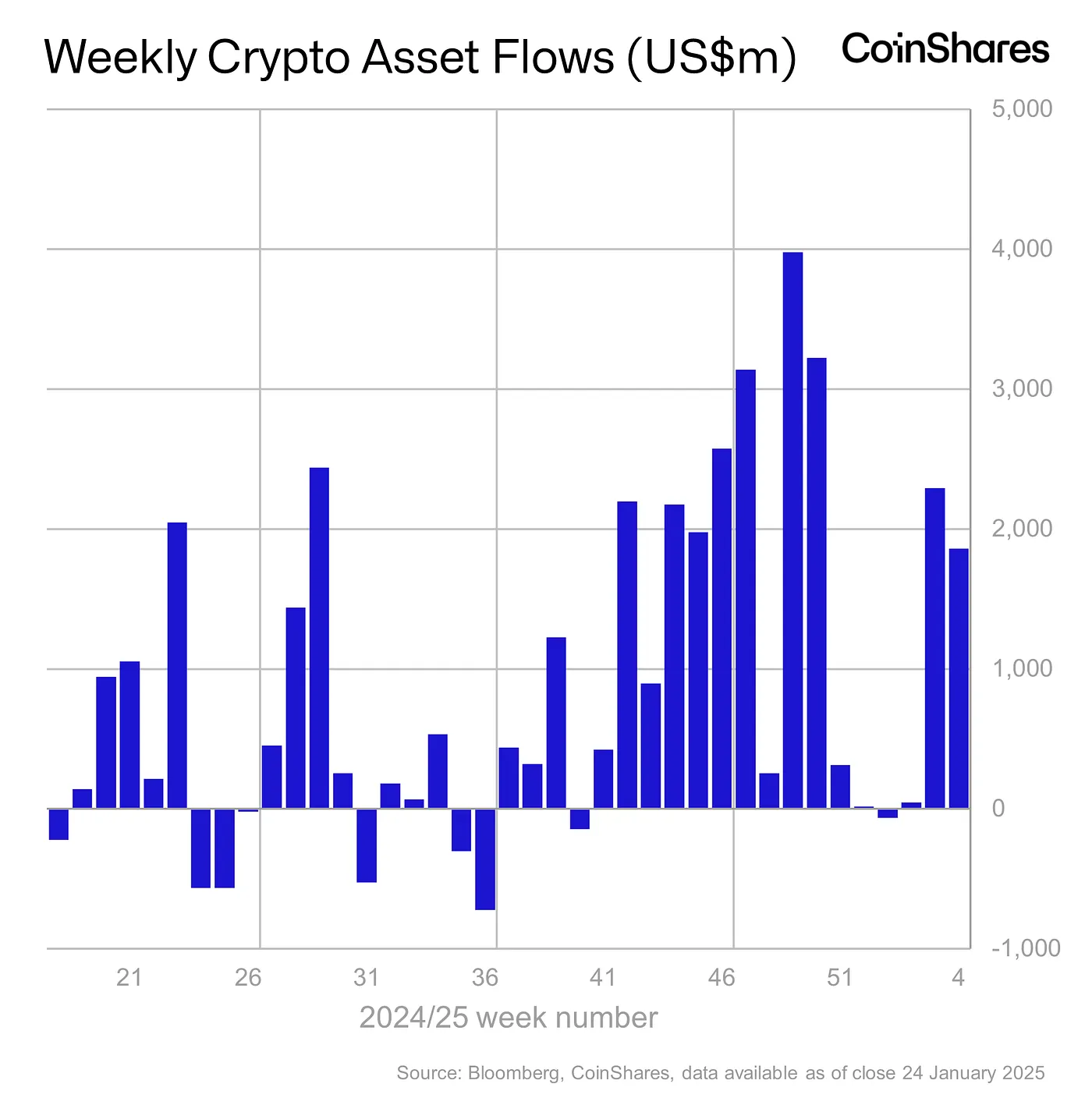
The data released by CoinShares highlights a sobering reality for proponents of the digital asset class. For the third consecutive week, investment products tracking cryptocurrencies have experienced significant outflows. The aggregate figure—an eye-watering $795 million—underscores a profound shift in risk appetite among institutional players.
Perhaps most alarming for market analysts is the impact this recent sell-off has had on year-to-date (YTD) performance. Before this recent "February-to-April" slump, the industry had been riding a wave of optimism, largely fueled by the approval of spot ETFs and growing institutional adoption. However, the $7.2 billion in cumulative outflows recorded since early February has effectively wiped out the entirety of that progress. YTD inflows have plummeted, currently resting at a razor-thin $165 million.
This dramatic contraction suggests that institutional investors—who often operate with longer time horizons and stricter risk-management protocols—are choosing to "de-risk" their portfolios in the face of unpredictable trade wars.
Chronology: From Optimism to Tariff-Induced Retrenchment
To understand the current state of the market, one must look at the timeline of the last three months.
- Early February: The market began to show signs of strain as the administration’s rhetoric regarding international trade shifted toward a protectionist stance. Initial concerns regarding the impact of proposed tariffs on global supply chains began to materialize as "negative sentiment."
- March – Early April: As the reality of the tariff war took hold, institutional selling accelerated. Investment vehicles, which had been vehicles for "long" exposure, became primary targets for liquidation as investors sought liquidity and safe-haven assets.
- April 8, 2024: This date marked the nadir for Assets under Management (AuM). Total industry-wide AuM hit its lowest point since November 2024, signaling a moment of maximum pessimism in the crypto markets.
- Post-April 8: Following the announcement of a temporary reversal of the most aggressive tariffs, the market experienced a technical rebound. This late-week recovery helped push AuM back toward the $130 billion mark, representing a swift 8% increase from the previous lows.
Supporting Data: The Breakdown of Asset Flows
The outflows were not distributed evenly across the digital asset spectrum. The "bleeding" was concentrated primarily in the market leaders, though the resilience of certain smaller tokens offers a fascinating counter-narrative.
The Heavy Hitters
- Bitcoin (BTC): As the bellwether for the entire industry, Bitcoin bore the brunt of the institutional exit. A staggering $751 million was withdrawn from BTC-related products last week alone, highlighting that the institutional "smart money" is not yet ready to hold through periods of geopolitical instability.
- Ethereum (ETH): The second-largest cryptocurrency was not spared, shedding $37.6 million in assets.
- Altcoin Contagion: Other major assets felt the sting as well. Solana (SOL), AAVE, and SUI saw outflows of $5.1 million, $0.78 million, and $0.58 million respectively.
The Divergence: Where Capital Flowed
Despite the overarching bearish trend, specific niche assets managed to attract capital. This divergence suggests that investors are becoming more selective, looking for utility or specific project-based fundamentals rather than broad-market exposure.
- XRP: Led the inflows with a notable $3.5 million, suggesting a potential decoupling or specific institutional interest in Ripple’s ecosystem.
- Emerging Assets: Ondo, Algorand, and Avalanche saw minor inflows of $0.46 million, $0.25 million, and $0.25 million respectively. These figures, while small, indicate that even in a climate of fear, certain narratives continue to hold value for tactical investors.
Official Responses and Economic Analysis
The term "calamitous" used by CoinShares in their report is a strong descriptor, rarely seen in professional fund flow reporting. This choice of language highlights the friction between the crypto industry’s desire for a stable regulatory and economic environment and the current political climate.
Market strategists note that tariffs act as a "double-edged sword." While they are intended to protect domestic industries, they often lead to inflation and higher costs of goods, which historically creates uncertainty in the markets. Institutional investors dislike uncertainty above all else. When trade wars break out, the typical "flight to safety" moves capital toward the U.S. Dollar or gold. In this cycle, the data shows that institutional crypto exposure is being sacrificed as part of that "flight."

The temporary reversal of tariffs by President Trump provided a brief respite, essentially acting as a "relief rally." However, analysts warn that the underlying volatility remains. If future trade policies involve further escalation, the crypto market could face continued pressure, testing the floor of institutional support.
Implications: The Future of Institutional Crypto Participation
What does this mean for the future of digital assets? There are several key implications that stakeholders must consider:
1. The Maturation of Institutional Risk Assessment
The fact that institutional investors are reacting to macroeconomic policy (tariffs) in the same way they react to tech stocks or commodities is a sign that crypto is maturing. It is no longer a fringe asset class governed by its own internal cycles; it is now part of the global portfolio. This means the industry must learn to engage with global political discourse more actively.
2. The Persistence of "Safe Haven" Myths
For years, Bitcoin was marketed as an "inflation hedge" or a "safe haven" from government overreach. The recent data suggests that, for institutional investors, this narrative is currently secondary to liquidity. When the threat of a trade war looms, institutional players prioritize liquidity over the ideological benefits of decentralized finance.
3. The Need for Product Diversification
The resilience of smaller altcoins like XRP and Ondo indicates that investors are moving toward "thematic" investing. Even if the broader market is in a downtrend, projects that can demonstrate real-world use cases or favorable legal/regulatory developments can still attract capital. This could push the industry toward a more fragmented but stable investment landscape.
4. Regulatory and Macro Sensitivity
Moving forward, crypto funds will likely remain highly sensitive to trade data, inflation reports, and geopolitical announcements. Investors should prepare for a future where "crypto news" is no longer just about blockchain updates or protocol upgrades, but about trade agreements, diplomatic relations, and central bank policy.
Conclusion
The recent data from CoinShares serves as a critical pulse check on the health of the institutional crypto market. While the total AuM recovery to $130 billion provides a glimmer of hope, the loss of $7.2 billion in capital is a significant setback that cannot be ignored.
As the global economy navigates the complex waters of modern protectionism, the crypto sector stands at a crossroads. It must reconcile its identity as a decentralized, global financial tool with the reality that its largest backers are deeply embedded in the traditional, policy-sensitive world. Whether the market can regain its momentum will depend not just on the price of Bitcoin, but on the stability of the global trade environment and the ability of institutional investors to find confidence in an increasingly unpredictable geopolitical climate.
Investors are advised to exercise caution and maintain a rigorous due diligence process, as the correlation between trade policy and digital asset volatility remains at an all-time high.