Institutional Capital Floods Crypto Markets: A Mid-Year Analysis of 2025’s Record-Breaking Inflows
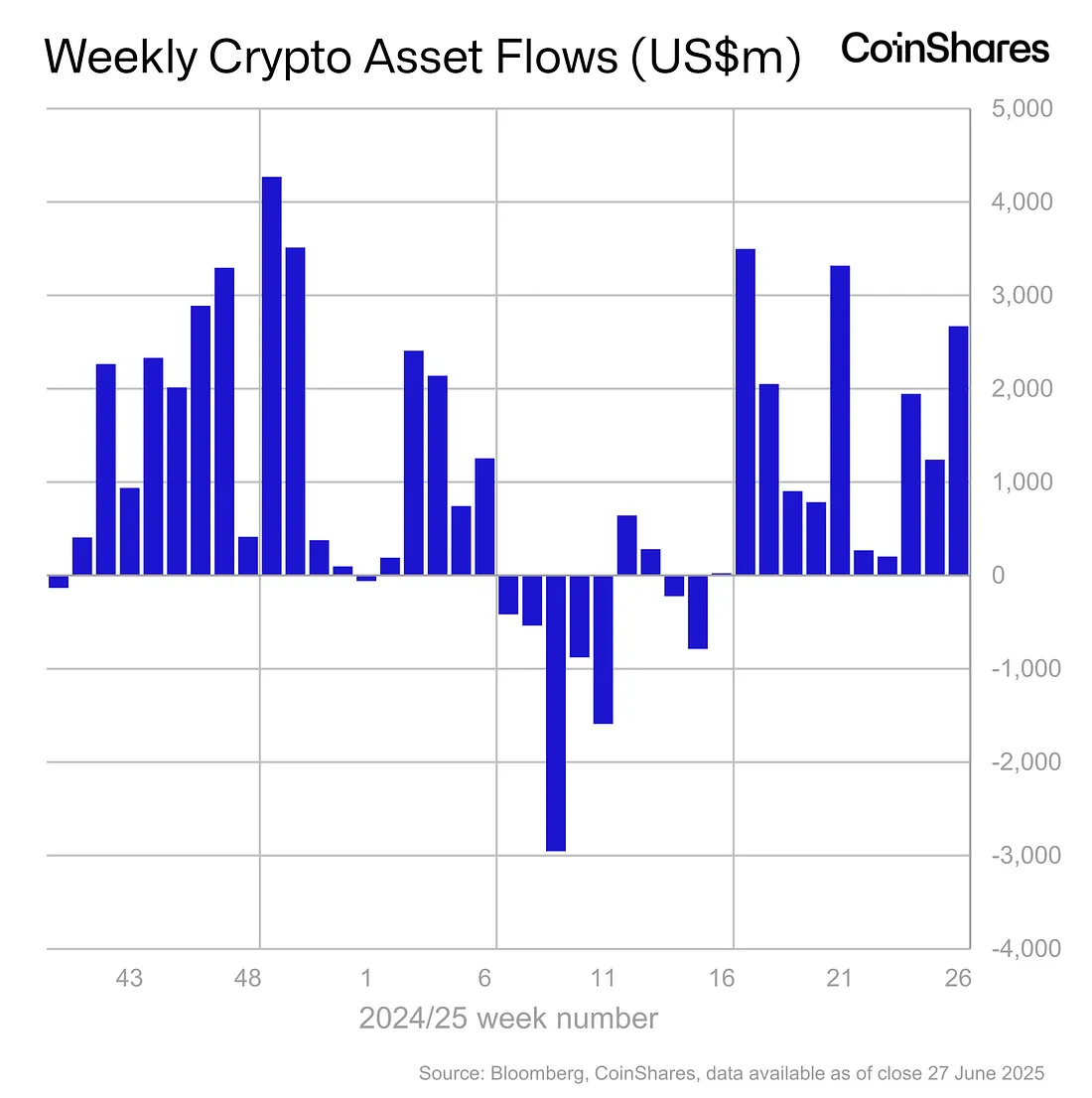
The global financial landscape is currently witnessing a profound shift in asset allocation, as institutional investors double down on digital assets with unprecedented fervor. According to the latest "Digital Asset Fund Flows Weekly" report from crypto asset management giant CoinShares, institutional investment vehicles have recorded a staggering $16.9 billion in inflows over the past eleven weeks alone. This massive surge in capital underscores a growing institutional acceptance of cryptocurrencies, not merely as speculative instruments, but as strategic hedges against a volatile macroeconomic backdrop.
The State of the Market: A Mid-Year Performance Snapshot
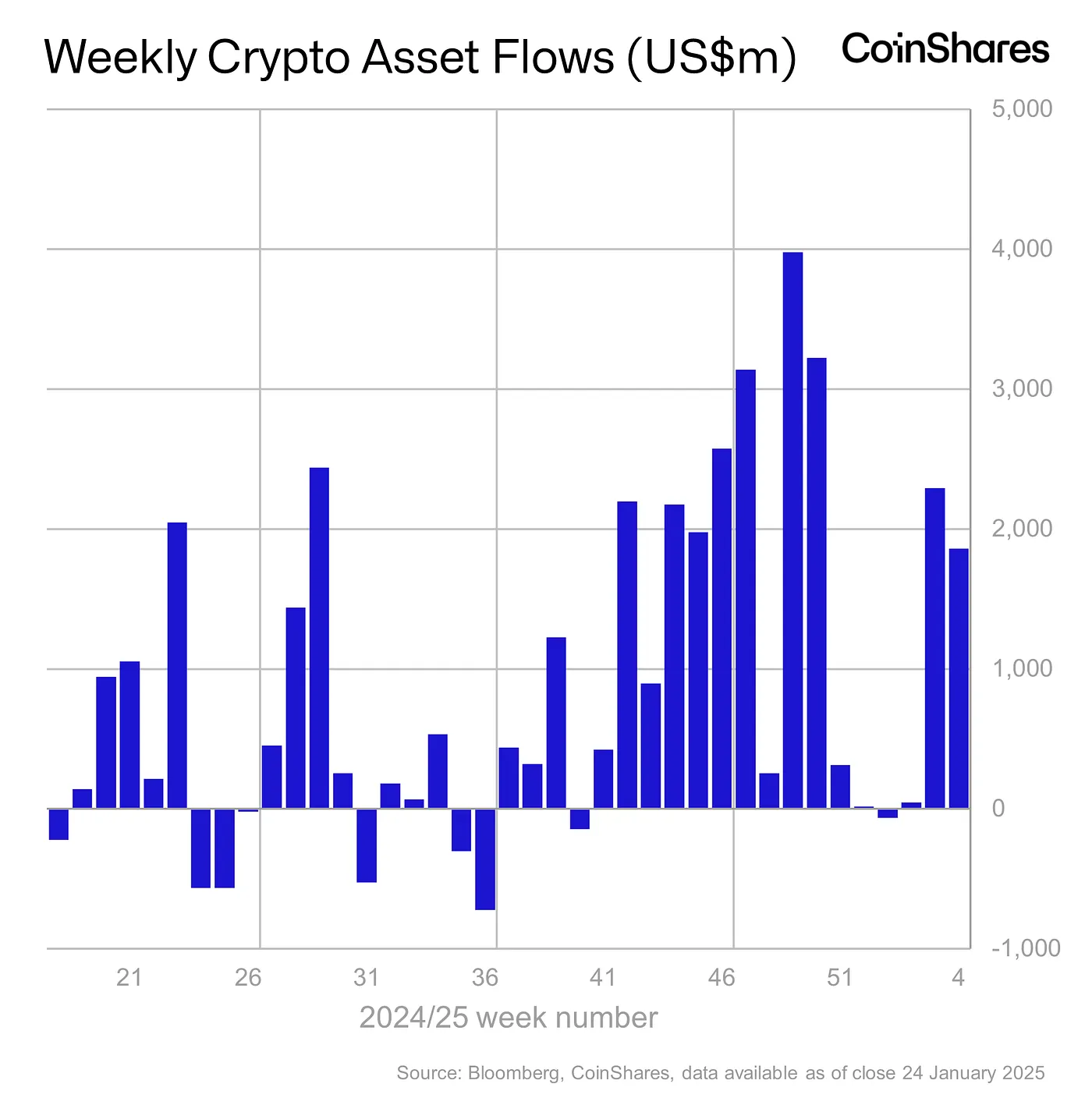
As the first half (H1) of 2025 draws to a close, the data provided by CoinShares offers a compelling narrative of resilience. Despite the cyclical nature of the crypto markets and the inherent regulatory uncertainties that often plague the sector, the inflow trajectory for the first six months of the year is mirroring the explosive growth observed in 2024. During that same period last year, cumulative inflows reached $18.3 billion, a benchmark that the 2025 market is currently tracking with remarkable precision.
The sheer volume of capital entering these products—$2.7 billion in the most recent week alone—signals that institutional appetite remains largely unsatiated. Analysts point to a confluence of factors fueling this momentum, most notably the prevailing climate of geopolitical instability and the persistent ambiguity surrounding global monetary policy. As central banks navigate the delicate balance between curbing inflation and stimulating growth, institutional investors are increasingly looking toward digital assets as a form of "digital gold" or a non-correlated asset class that can offer protection against fiat currency devaluation.
Chronology of the 2025 Inflow Surge
The momentum observed in June 2025 is the culmination of nearly three months of sustained institutional interest.
- Early Q2 2025: Following a period of consolidation in late Q1, institutional interest began to accelerate as macroeconomic data suggested that interest rate pivot points were approaching.
- The Mid-Quarter Rally: By May, capital inflows began to stabilize, moving away from purely speculative retail volume toward more structured, long-term institutional product allocations.
- The June Surge: June proved to be the standout month, characterized by a series of consecutive weekly inflows. This period was marked by a shift in sentiment, as large-scale asset managers began adjusting their portfolios to account for the heightened volatility in traditional equity markets.
- The 11-Week Streak: The current 11-week period of consecutive inflows, totaling $16.9 billion, represents one of the most sustained periods of institutional buying since the inception of crypto-backed ETFs and institutional trust products.
Regional Divergence: Where the Capital is Flowing
While the momentum is global, the geographic distribution of these inflows highlights a clear hierarchy in market maturity and regulatory environment.
The Dominance of the United States
The United States remains the undisputed leader in institutional crypto adoption. In the most recent reporting period, the U.S. accounted for $2.65 billion of the total global inflows. This dominance is largely attributed to the maturity of the U.S. exchange-traded product (ETP) market, which provides institutional investors with a regulated, tax-efficient, and secure gateway into the digital asset ecosystem.
European Market Dynamics
Switzerland and Germany continue to provide steady, albeit smaller, contributions to the global tally, recording $23 million and $19.8 million in inflows, respectively. These regions have long been early adopters of digital asset regulations, providing a stable foundation for European institutional investors to integrate crypto into their broader portfolios.
Outflows in Emerging Hubs
In contrast, other regions have faced headwinds. Canada, Hong Kong, and Brazil have reported modest outflows. Notably, Hong Kong experienced $132 million in outflows throughout the month of June alone. This trend suggests a potential rotation of capital, as investors in these regions may be moving assets toward the more liquid and diverse investment vehicles available in the United States.
Asset Breakdown: Bitcoin’s Hegemony and Ethereum’s Resilience
The composition of these inflows reveals a clear preference among institutional players for the two largest assets in the crypto space: Bitcoin (BTC) and Ethereum (ETH).
Bitcoin’s Undisputed Leadership
Bitcoin continues to serve as the primary vehicle for institutional entry. It accounted for approximately 83% of total inflows during the last week, totaling $2.2 billion. This overwhelming preference highlights the asset’s status as the "blue chip" of the digital asset world. Furthermore, the performance of short-Bitcoin investment products tells a story of dwindling bearish sentiment. With $2.9 million in outflows from short-BTC products last week and a year-to-date total of $12 million in outflows, it is evident that the institutional consensus is heavily weighted toward long-term appreciation for the flagship cryptocurrency.
Ethereum’s Sustained Momentum
Ethereum, while trailing Bitcoin in total volume, remains a critical component of institutional portfolios. The recent $429 million inflow into Ethereum products serves as a testament to the asset’s utility-driven value proposition. As the foundational layer for decentralized finance (DeFi) and smart contract infrastructure, Ethereum is increasingly viewed by institutional allocators as an essential technology play rather than just a currency.

Implications for the Broader Financial System
The sustained influx of $16.9 billion into digital asset funds carries significant implications for the future of traditional finance (TradFi).
The Legitimacy of Digital Assets
The consistency of these flows reinforces the argument that cryptocurrencies have moved beyond the "fringe" status. When major asset managers and institutional funds allocate billions into these products, it serves as a vote of confidence in the underlying blockchain technology and the custody solutions that have evolved to secure these assets.
Market Sensitivity to Geopolitical Events
The report from CoinShares highlights that current market activity is deeply tethered to geopolitical volatility. As nations grapple with trade disputes, regional conflicts, and shifting alliances, institutional investors are utilizing digital assets as a hedge. This suggests that in the coming years, Bitcoin’s correlation with traditional risk-off assets may shift, potentially establishing it as a primary tool for wealth preservation during periods of global uncertainty.
The Future of Monetary Policy
The uncertainty surrounding the direction of monetary policy—specifically the interest rate decisions of the U.S. Federal Reserve and other global central banks—has become a primary driver for investment. Institutional investors are betting that as fiat currencies face inflationary pressures, the finite supply of assets like Bitcoin will provide a superior store of value. This transition in thinking is likely to force traditional banks and financial institutions to further integrate digital asset services into their core offerings.
Challenges and Risks: A Balanced Perspective
While the current figures are undeniably bullish, the institutional landscape is not without risks. Regulatory environments remain in flux. Even as inflows surge, the possibility of future legislative crackdowns or tax policy changes remains a concern for large-scale investors.
Moreover, the volatility inherent in the crypto market means that institutional sentiment can turn rapidly. While the current 11-week streak is a positive indicator, market participants should remain vigilant. The outflows seen in Hong Kong and Canada serve as a reminder that liquidity and regulatory clarity are the primary factors determining where institutional capital chooses to reside.
Conclusion: A New Era of Institutional Integration
The data presented by CoinShares for the first half of 2025 paints a picture of a maturing market. The influx of $16.9 billion is not merely a statistical anomaly; it is a clear trend line indicating that institutional capital is finding a permanent home within the digital asset ecosystem.
As we look toward the second half of 2025, the focus will likely shift to how these institutional participants manage their holdings during periods of potential market correction. If the current trajectory continues, it is highly probable that the industry will see further integration of digital assets into retirement portfolios, sovereign wealth funds, and institutional endowment strategies.
For the average investor, this institutional "stamp of approval" offers a level of validation that was unimaginable just a few years ago. However, as always, the volatile nature of the crypto market necessitates that individuals conduct their own thorough due diligence. The landscape is changing, and while the institutional narrative is currently one of growth and optimism, the path forward remains one that requires careful navigation and a keen understanding of the global macroeconomic forces at play.
Disclaimer: Opinions expressed in this report are for informational purposes only and do not constitute financial or investment advice. Investors should perform their own due diligence before engaging in any high-risk investments in digital assets. All trades and transfers are conducted at the user’s own risk. The Daily Hodl does not recommend the buying or selling of any specific assets and participates in affiliate marketing.