Institutional Capital Retreat: Crypto Markets See $414 Million Exit Amid Geopolitical and Economic Uncertainty
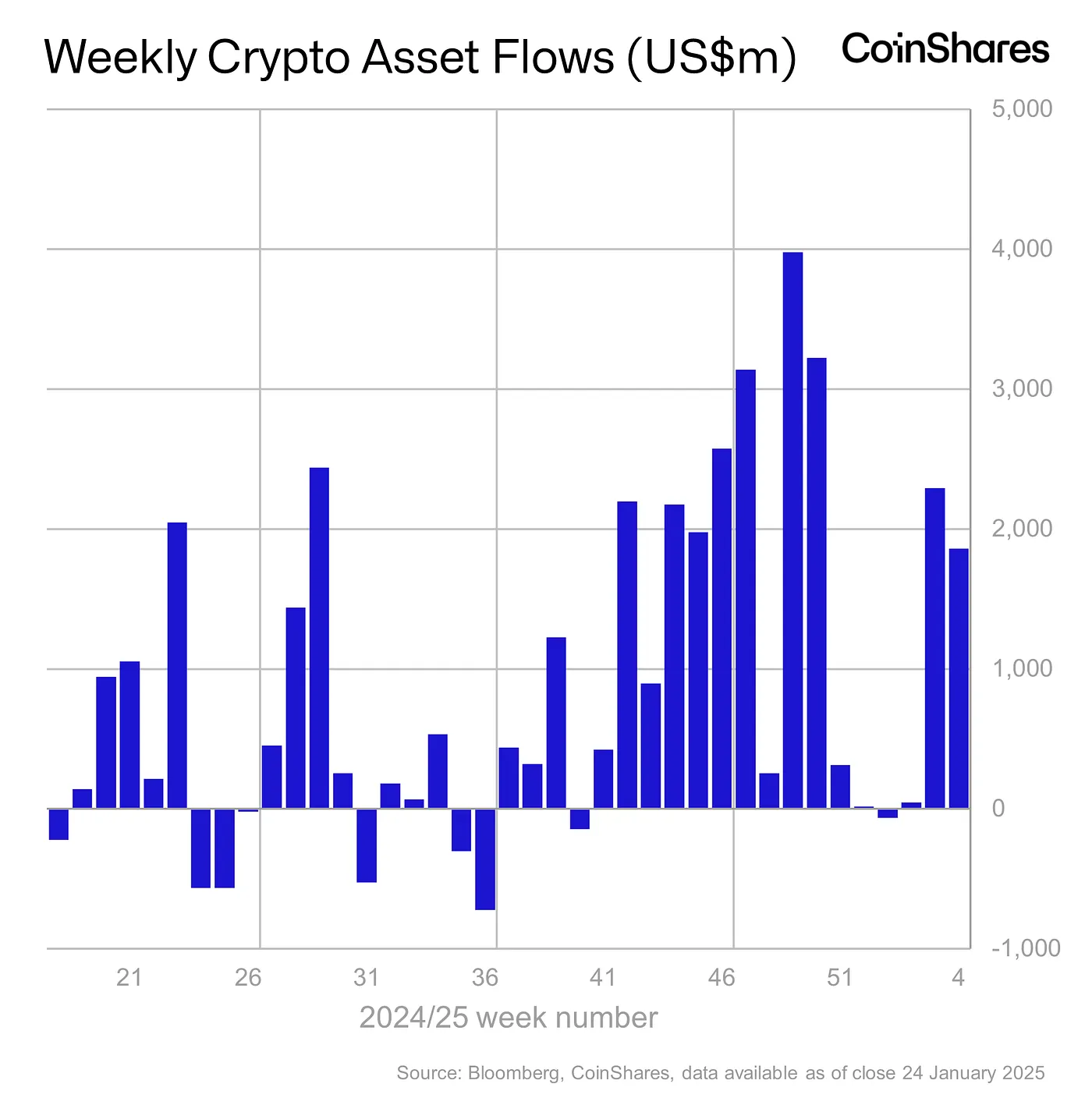
In a decisive shift in market sentiment, institutional investors have executed a significant withdrawal from the digital asset landscape. According to the latest weekly report from CoinShares, a premier European digital asset investment firm, institutional capital outflows reached a total of $414 million in a single week. This move marks the first time in five weeks that institutional sentiment has shifted toward a net-negative position, highlighting a growing anxiety surrounding global macroeconomic conditions and escalating geopolitical tensions.
The sudden reversal in capital flow suggests that the “risk-on” appetite that characterized the early months of the year is currently being tempered by a flight to safety. As market participants recalibrate their portfolios, the broader crypto ecosystem is feeling the weight of macroeconomic pressures that have extended far beyond the digital asset space.
Main Facts: A Global Shift in Risk Appetite
The $414 million outflow represents a notable pivot for institutional players, who have largely been net buyers throughout the first quarter of 2024. This trend, while localized to specific regions and asset classes, signals that investors are prioritizing liquidity and risk mitigation in the face of uncertainty.
Geographic Divergence
The selling pressure was not distributed evenly across the globe, indicating that regional economic policies and local market sentiment played a significant role in the liquidation.
- The United States: Acting as the epicenter of the selloff, the U.S. recorded total outflows of $445 million. This reflects a significant reassessment of crypto-exposure by U.S.-based institutions, likely influenced by the Federal Reserve’s "higher for longer" interest rate rhetoric and persistent inflationary data.
- Switzerland: Switzerland saw minor outflows totaling $4 million, maintaining a relatively stable posture compared to its North American counterparts.
- The "Buy the Dip" Contingents: In contrast to the exodus from the U.S., investors in Germany and Canada took a contrarian approach. Germany recorded inflows of $21.2 million, while Canada added $15.9 million, suggesting that some institutional pockets view the current price volatility as a strategic entry point rather than a signal to exit.
Chronology: From Optimism to Cautious Liquidation
To understand the current state of the market, one must look at the recent trajectory of institutional investment. For the preceding four weeks, the crypto market enjoyed a period of sustained inflow, driven by optimism surrounding institutional adoption and the macroeconomic narrative of a "soft landing" for the global economy.
The Turning Point
The shift began as headlines regarding the Iran-Israel conflict intensified, stoking fears of a broader regional war. Markets globally, including equities and bonds, reacted with increased volatility. For cryptocurrency, which is often viewed as a "high-beta" asset class, the geopolitical unrest served as a catalyst for de-risking.
Macroeconomic Pressures
Concurrent with the geopolitical friction, the latest Consumer Price Index (CPI) reports in the United States showed inflation remaining stickier than anticipated. The confluence of a cooling expectation for interest rate cuts and rising geopolitical risk created a "perfect storm." By the end of the reporting week, the institutional enthusiasm had been replaced by a defensive posture, resulting in the $414 million net outflow.
Supporting Data: Asset-Specific Performance
The outflows were not uniform across all digital assets. While Bitcoin remains the primary benchmark for institutional interest, Ethereum and other altcoins faced varying degrees of pressure.
Bitcoin: A Resilient Core
Despite the weekly outflow of $194 million, Bitcoin continues to be the primary focus of institutional portfolios. On a year-to-date basis, Bitcoin still commands total inflows of $964 million. Furthermore, the continued appetite for "Short-Bitcoin" products—which saw an additional $4 million in inflows—suggests that institutional investors are hedging their bets, utilizing inverse vehicles to protect against further downside volatility.
Ethereum’s Struggle
Ethereum faced the most significant burden during this period, suffering $222 million in outflows. This performance has pushed Ethereum’s year-to-date flows into a net negative position of $273 million. Market analysts attribute this to ongoing uncertainty regarding Ethereum’s regulatory status and its relative underperformance compared to Bitcoin in terms of institutional product adoption.
Altcoins: Mixed Results
- Solana: Often seen as a high-growth alternative, Solana recorded $12.3 million in outflows, reflecting a broader cooling of interest in the smart-contract platform space.
- XRP: bucking the downward trend, XRP stood out as a notable gainer, attracting $15.8 million in inflows. This resilience may be tied to ongoing developments in its legal proceedings and localized interest in its cross-border payment utility.
The total Assets Under Management (AUM) for the industry now stands at $129 billion, a figure that remains robust despite the weekly outflows, suggesting that while institutional capital is shifting, it has not entirely abandoned the sector.
Implications: What This Means for the Market
The recent outflow of $414 million provides a window into how institutional investors perceive the current macroeconomic climate. There are several critical implications for the future of digital asset markets.
1. The Sensitivity to Macro-Geopolitics
The correlation between crypto and traditional risk assets (like the S&P 500 or Nasdaq) remains high. When geopolitical tensions flare, institutional investors are programmed to prune riskier positions first. This confirms that for all its talk of "decoupling," the crypto market remains deeply tethered to the traditional financial system’s reaction to global instability.
2. The Inflationary Narrative
The "inflation hedge" narrative that has long been a pillar of the Bitcoin thesis is being tested. While Bitcoin is fundamentally designed to be a store of value against monetary debasement, in the short term, its price action is dominated by the Federal Reserve’s interest rate policy. As long as inflation remains high, the cost of borrowing capital remains expensive, which historically puts pressure on speculative assets.
3. Divergent Regional Sentiment
The fact that Germany and Canada recorded inflows while the U.S. recorded significant outflows is telling. It suggests that institutional sentiment is not monolithic. International markets may be pricing in different economic realities, or they may be utilizing their domestic regulatory environments to take advantage of price dips that U.S. institutional players are forced to avoid due to internal risk management mandates.
4. Regulatory and Product Maturation
The popularity of "Short-Bitcoin" products indicates that the crypto-financial ecosystem is maturing. Investors no longer have to simply sell their holdings to protect themselves; they can now employ sophisticated hedging strategies. This evolution is likely to increase the stability of the market over the long term, even if it contributes to higher selling pressure during periods of market correction.
Official Responses and Expert Outlook
While CoinShares provides the raw data, the consensus among market analysts is that this $414 million exit should be viewed as a "tactical retreat" rather than a "structural abandonment."
"Institutional investors are not exiting the crypto space permanently," noted a senior analyst at a prominent market research firm. "They are practicing disciplined risk management. When global uncertainty reaches a certain threshold, the liquidity of Bitcoin makes it the easiest asset to sell to raise cash for margin requirements elsewhere."
The focus remains firmly on the upcoming macroeconomic data releases and the cooling—or heating—of the Iran conflict. Investors are waiting for a signal that the inflationary trend is finally breaking, or for a geopolitical de-escalation that allows risk assets to resume their upward trajectory.
In conclusion, while the $414 million outflow is a significant indicator of current market caution, it does not necessarily signal the end of the current bull cycle. Instead, it serves as a reminder that institutional adoption brings with it a higher degree of correlation with the global macro landscape. For the individual investor, this serves as a critical lesson: the crypto market is now a vital component of the global financial architecture, subject to the same pressures, fears, and risk-management strategies that define Wall Street.
Disclaimer: The information provided in this article is for informational purposes only and does not constitute financial, investment, or legal advice. Investing in digital assets, including Bitcoin and cryptocurrencies, involves a high degree of risk and is not suitable for all investors. Market volatility is significant, and you may lose your entire principal. Always conduct your own due diligence and consult with a qualified financial advisor before making any investment decisions.