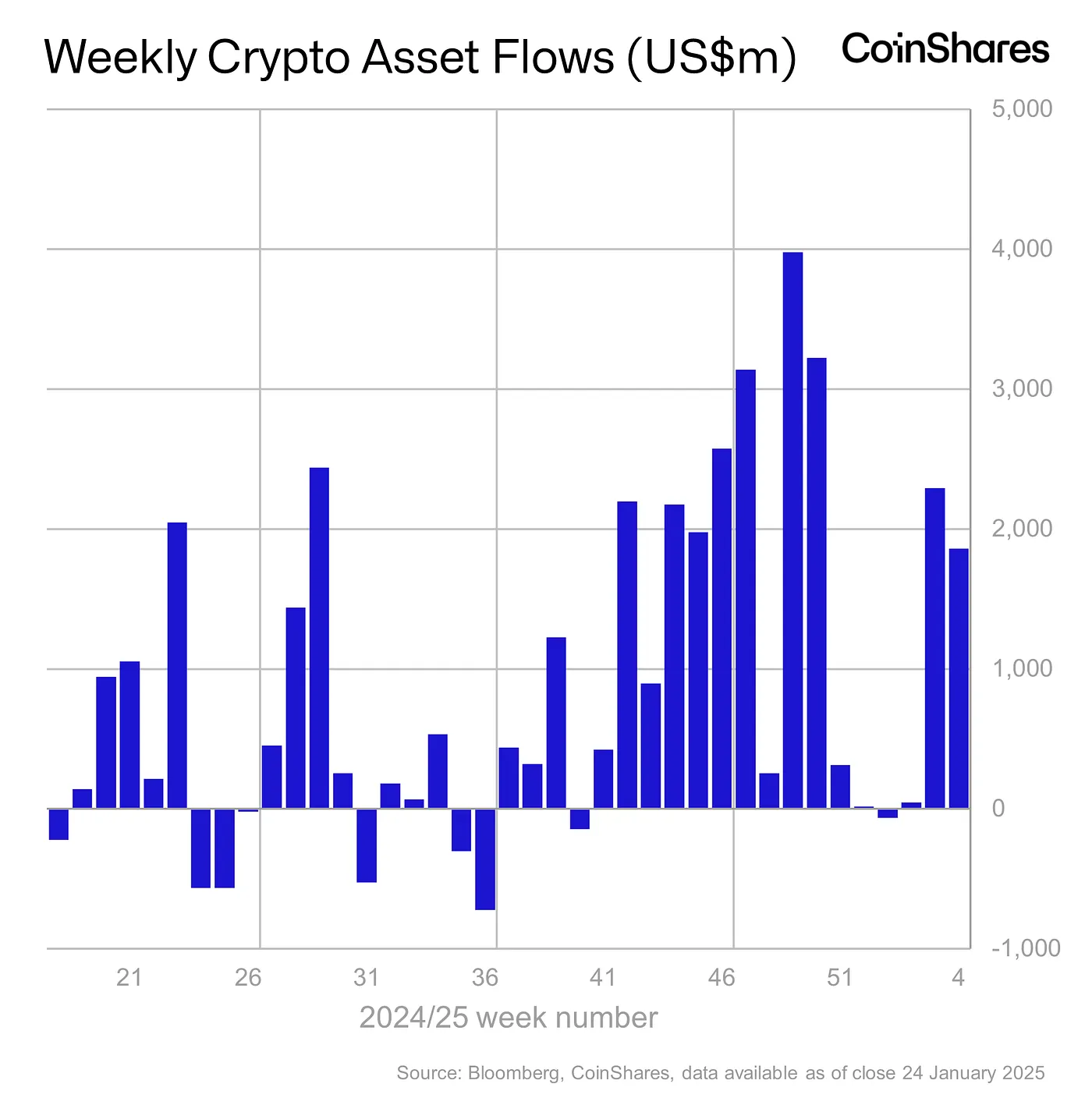
Institutional Capital Shifts: Bitcoin Outflows Surge Amid Fed Uncertainty and Altcoin Rotation
The digital asset landscape is experiencing a period of profound recalibration as institutional investors pivot away from the flagship cryptocurrency, Bitcoin, in response to shifting macroeconomic signals. According to the latest weekly fund flow report from CoinShares, institutional sentiment has turned decidedly cautious, with total crypto-asset outflows reaching a staggering $360 million over the past week.
At the center of this divestment is a nearly $1 billion exodus from Bitcoin-linked financial products. This trend, which stands in stark contrast to the aggressive accumulation patterns seen throughout much of the year, underscores the sensitivity of institutional portfolios to the rhetorical shifts emanating from the U.S. Federal Reserve.
The Catalyst: Jerome Powell and the Hawkish Pivot
The primary driver behind this sudden liquidity contraction appears to be the recent commentary from Federal Reserve Chair Jerome Powell. Despite a recent interest rate cut by the central bank—a move typically viewed as a bullish catalyst for "risk-on" assets like cryptocurrency—the market reacted with skepticism rather than enthusiasm.
Analysts suggest that Powell’s recent tone, which many market participants interpreted as "hawkish," has cast a shadow of doubt over the trajectory of future monetary easing. The prevailing market consensus, which had previously baked in expectations of a consistent series of rate cuts, is now wavering. The uncertainty surrounding a potential December rate reduction has forced institutional desks to de-risk, leading to the liquidation of significant Bitcoin positions.
The Breakdown of Institutional Outflows
The data provided by CoinShares paints a clear picture of the regional divergence in sentiment:
- United States: The epicenter of the sell-off, with the U.S. markets recording a net outflow of $439 million.
- European Resilience: Contrary to the North American trend, European markets showed signs of strategic accumulation. Germany recorded $32 million in inflows, while Switzerland added $30.8 million, suggesting that European institutional players are viewing the current price dip as an entry opportunity rather than a signal to exit.
A Tale of Two Assets: Bitcoin’s Exit and Solana’s Surge
While Bitcoin bore the brunt of the institutional pullback—shedding $945.89 million in outflows—the broader market did not collapse. Instead, a fascinating narrative of "capital rotation" emerged. Rather than moving entirely to cash, significant institutional capital appears to be reallocating from Bitcoin toward high-utility altcoins.
Solana’s Unprecedented Inflow
Perhaps the most striking development in the CoinShares report is the performance of Solana (SOL). Despite the broader market volatility, Solana registered $421.11 million in inflows—marking its second-largest weekly haul in history. This surge suggests that institutional investors are increasingly viewing Solana as a critical infrastructure layer, potentially betting on its capacity for high-throughput decentralized finance (DeFi) applications and tokenization efforts.
Institutional Appetite for Ethereum and XRP
The divergence continues with Ethereum and XRP, both of which bucked the bearish trend seen in Bitcoin:
- Ethereum: Captured $57.59 million in inflows, signaling a stabilization of sentiment for the world’s leading smart-contract platform.
- XRP: Attracted $43.18 million, likely bolstered by ongoing developments in cross-border payment utility and favorable legal outcomes that have improved its regulatory standing in the eyes of institutional compliance departments.
Chronology of Market Sentiment
To understand how we arrived at this current juncture, one must look at the sequence of events over the last fiscal quarter:
- Early Q4 Optimism: Market participants entered the quarter with high confidence, buoyed by anticipation of the Fed’s rate-cutting cycle and favorable political headwinds in the United States.
- The Mid-Quarter Rhetoric Shift: As economic data reports signaled resilient inflation and a cooling labor market, Fed Chair Powell adjusted his messaging. His insistence on a "data-dependent" approach—rather than a pre-committed schedule—began to erode the confidence of speculative traders.
- The November "Shock": Following the most recent FOMC update, the market was forced to re-price the probability of a December rate cut. This shift from "guaranteed" to "uncertain" served as the trigger for the $945 million Bitcoin sell-off.
- The Current Pivot: We are now in a phase of portfolio rotation, where institutional capital is flowing out of the "digital gold" (Bitcoin) and into "utility assets" (Solana, Ethereum, XRP), reflecting a shift in strategic focus from store-of-value preservation to decentralized infrastructure growth.
Supporting Data: Analyzing the Institutional Mindset
The contrast in asset performance provides a window into the current institutional mindset. Institutional investors operate under different constraints than retail traders; they must justify their holdings to risk committees and adhere to strict volatility mandates.
When Fed rhetoric signals a prolonged high-interest-rate environment, the "opportunity cost" of holding non-yielding assets like Bitcoin increases. Conversely, when investors allocate to networks like Solana or Ethereum, they are often doing so with a longer-term horizon, focusing on the revenue generation, transaction fees, and ecosystem growth of those protocols.
The $421 million injection into Solana, in particular, represents a massive vote of confidence in the network’s technical resilience. It suggests that institutional firms are no longer just looking at crypto as a macroeconomic hedge, but as an investable asset class with distinct sub-sectors and growth drivers.
Implications for the Future of Digital Asset Markets
The current market environment carries several critical implications for the future of crypto-asset investing:
1. The Decoupling of Altcoins
We are witnessing a period where Bitcoin is no longer the sole bellwether for the entire market. While Bitcoin remains the largest asset by market capitalization, the ability of Solana and XRP to attract hundreds of millions in capital during a Bitcoin "down week" suggests a maturation of the market. Investors are becoming more discerning, moving away from a "buy everything" approach toward a strategy focused on technical differentiation.
2. Sensitivity to Central Bank Policy
The crypto industry’s sensitivity to the Federal Reserve remains the single most significant factor in short-term price discovery. Until the digital asset market establishes a true "inflation hedge" status that is independent of liquidity cycles, investors must prepare for periods of volatility whenever the Fed updates its outlook.
3. Regional Regulatory Arbitrage
The data showing inflows in Germany and Switzerland highlights the importance of regulatory clarity. As the U.S. continues to wrestle with the political and economic implications of digital assets, European hubs are positioning themselves as stable havens for institutional capital. Firms are increasingly willing to move their capital to jurisdictions where the legal framework is more predictable.
Conclusion: A Period of Strategic Rebalancing
The latest CoinShares data serves as a sobering reminder that the institutionalization of crypto is a double-edged sword. While it brings vast liquidity and legitimacy to the sector, it also ties the market more closely to the whims of global monetary policy.
The $945 million outflow from Bitcoin should not be interpreted as a rejection of the asset class, but rather as a tactical retreat in the face of macro-economic uncertainty. Meanwhile, the robust inflows into Solana, Ethereum, and XRP suggest that the institutional appetite for decentralized technology remains strong.
As we look toward the end of the year, all eyes will be on the Federal Reserve’s December meeting. Until then, the market will likely remain in a state of flux, characterized by rotation, caution, and a renewed focus on assets that offer clear, tangible utility beyond simple market speculation.
Disclaimer: The information provided in this article is for educational and informational purposes only and does not constitute financial, investment, or legal advice. The digital asset market is highly volatile and involves significant risk. Investors are strongly encouraged to perform their own thorough due diligence and consult with a qualified financial advisor before making any investment decisions. The Daily Hodl does not endorse or recommend the purchase or sale of any specific cryptocurrency or digital asset.