Institutional Crypto Exodus: Bitcoin Faces $945M Sell-Off as Macro Uncertainty Grips Markets
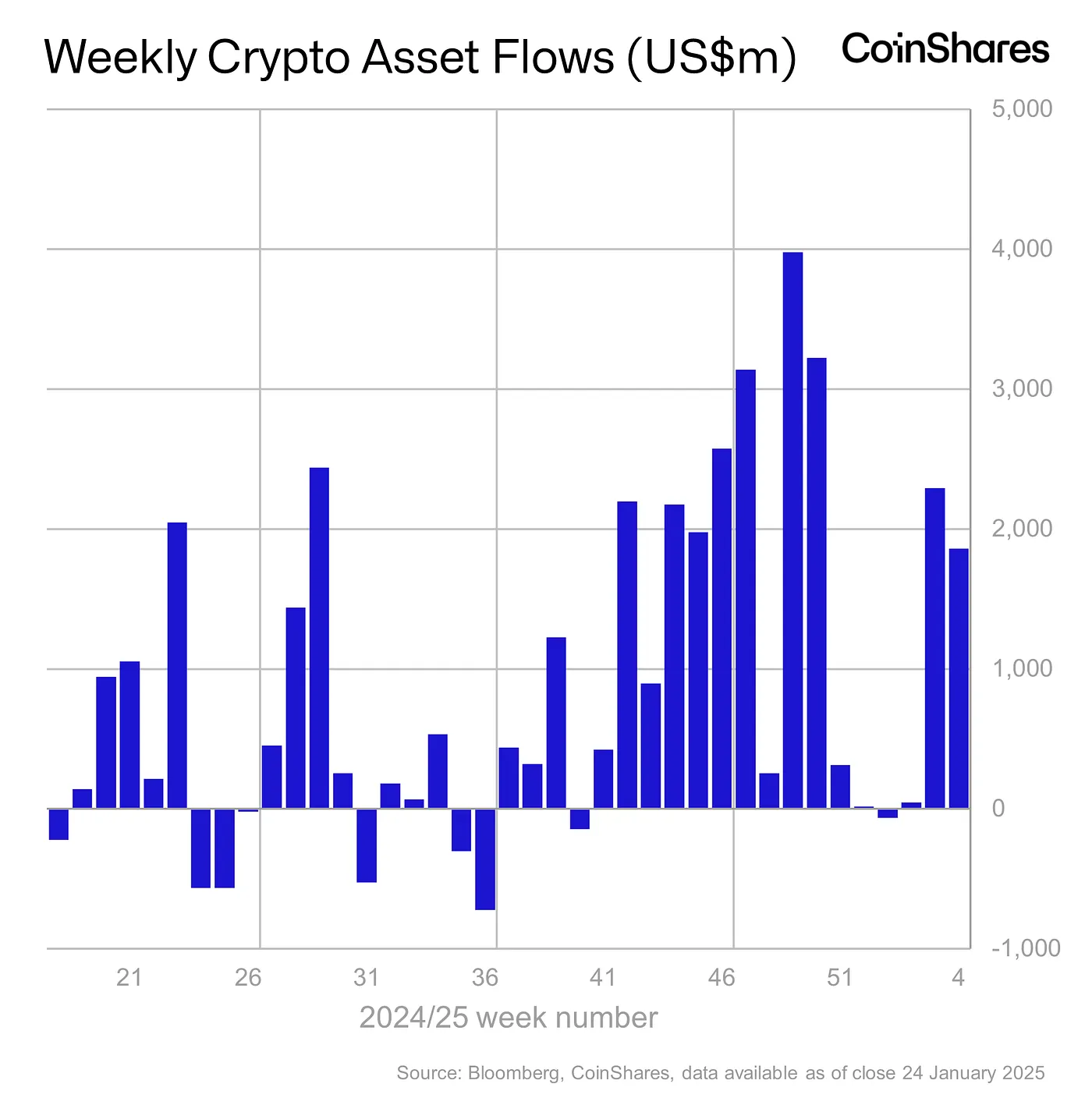
The digital asset landscape experienced a sharp reversal of sentiment this past week, as institutional investors executed a massive tactical retreat from Bitcoin. According to the latest "Digital Asset Fund Flows" report from CoinShares, a staggering $945.89 million was pulled from Bitcoin-focused investment products. This liquidity flight, which contributed to an overall net outflow of $360 million across the crypto fund sector, marks one of the most volatile periods for institutional crypto sentiment in recent memory.
The catalyst for this sudden bearish shift appears to be rooted in the shifting rhetoric of the United States Federal Reserve, specifically the hawkish signaling from Chair Jerome Powell. Despite a fresh interest rate cut, the market’s reaction was one of caution, as investors recalibrated their portfolios to account for a murky outlook regarding future monetary policy.
The Macro Catalyst: Powell’s Hawkish Shadow
The primary driver behind last week’s volatility was the Federal Reserve’s communication strategy. While market participants had largely priced in the latest interest rate cut, the accompanying messaging from Fed Chair Jerome Powell cast a long shadow over risk assets.
Powell’s recent commentary—characterized by observers as "hawkish"—has effectively cooled the market’s enthusiasm. Investors, who had previously operated under the assumption that a sustained easing cycle was firmly on the horizon, are now grappling with the reality that a December rate cut is no longer a foregone conclusion. This uncertainty has forced institutional players, who typically favor long-term stability, to adopt a "risk-off" posture.
When central bank policy becomes unpredictable, capital typically flees from speculative assets like Bitcoin toward the safety of cash or short-term Treasury instruments. The $945.89 million exit from Bitcoin ETFs suggests that institutional fund managers are choosing to protect capital rather than gamble on the possibility of further accommodative policy in the final month of the year.
Regional Divergences: A Tale of Two Markets
The geographic distribution of these outflows reveals a fascinating dichotomy in global investor sentiment. The United States, often the engine of crypto market momentum, served as the epicenter of the sell-off. US-based investment funds recorded a massive $439 million in net outflows, reflecting a localized reaction to the Federal Reserve’s shifting guidance and the broader domestic economic environment.
In stark contrast, European markets demonstrated a resilient, albeit cautious, optimism. Germany and Switzerland emerged as outliers, bucking the global downward trend. German funds reported $32 million in inflows, while Swiss-based vehicles added $30.8 million.
This regional disparity suggests that while American institutions are reacting directly to the volatility of US monetary policy, European investors may be viewing the recent price dips as a strategic entry point or perhaps hedging against different regional inflationary pressures. The ability of European markets to maintain positive inflows amidst a global sell-off underscores the decentralized nature of the current market’s reaction to macro-economic events.
Institutional Asset Breakdown: The Solana Surprise
While Bitcoin bore the brunt of the institutional exodus, the broader cryptocurrency ecosystem witnessed a complex and fragmented reaction. The aggregate data from CoinShares highlights a distinct shift in investor appetite, favoring specific altcoins that provide utility and high-performance potential over the "digital gold" narrative of Bitcoin.
The Solana Surge
Perhaps the most striking finding in the report is the performance of Solana (SOL). Despite the broader market turbulence, Solana recorded a massive $421.11 million in inflows. This marks the asset’s second-largest weekly haul in its history, signaling a robust institutional appetite for the high-throughput blockchain.
Analysts suggest that Solana’s continued growth in developer activity and its dominance in the decentralized finance (DeFi) and memecoin ecosystem are providing a "fundamental buffer" against the macro-economic headwinds that are currently punishing Bitcoin. For institutional investors, Solana is increasingly being viewed not just as a speculative token, but as a core infrastructure play.
Ethereum and XRP Resilience
Beyond Solana, Ethereum and XRP also managed to maintain positive sentiment, further complicating the narrative of a total institutional retreat. Ethereum recorded $57.59 million in inflows, suggesting that despite its recent underperformance relative to Bitcoin, institutional confidence in the leading smart-contract platform remains intact.
XRP followed closely with $43.18 million in inflows. The continued interest in XRP is particularly notable given the ongoing legal and regulatory scrutiny that has historically surrounded the asset. The fact that investors are funneling capital into XRP in the face of a nearly $1 billion Bitcoin sell-off suggests that institutional appetite for alternative assets is being driven by idiosyncratic project developments rather than a broad-market macro trend.
Chronology of the Sell-Off
To understand the speed of this capital flight, it is necessary to examine the timeline of the past week:
- Pre-Announcement Phase: Early in the week, market sentiment was buoyed by the anticipation of the Federal Reserve’s interest rate decision. Many funds had maintained "long" positions in anticipation of a dovish tone.
- The Powell Pivot: Following Chair Powell’s press conference, the sentiment shifted within hours. The ambiguity surrounding the December meeting caused immediate friction in the futures and options markets.
- The Mid-Week Exodus: By Wednesday, the initial cooling of sentiment turned into a liquidating event. Bitcoin ETFs, which had seen weeks of consistent buying, faced heavy redemption pressure.
- The Stabilization Phase: By the end of the week, the outflow velocity slowed. The resilience of altcoins like Solana provided a floor for the market, preventing a total collapse of sentiment and allowing for a partial recovery in total value locked (TVL) across several platforms.
Implications for the Q4 Outlook
The events of the past week serve as a sobering reminder of the tether between cryptocurrency prices and central bank policy. As we enter the final month of the year, the "December effect" remains a subject of intense debate.
1. The Death of the "Certainty" Narrative
The primary implication is that the market can no longer rely on the assumption of a "Fed Pivot." Investors must now prepare for a scenario where interest rates remain "higher for longer." This will likely lead to continued volatility in the crypto space, as institutional managers favor assets with clear, short-term utility—like Solana—over purely macro-correlated assets like Bitcoin.
2. The Maturation of Institutional Strategies
The divergence between Bitcoin outflows and Solana/Ethereum/XRP inflows is a sign of a maturing institutional market. We are seeing a move away from "crypto-as-a-single-asset-class" toward a more nuanced, portfolio-based approach. Institutional investors are beginning to treat digital assets with the same level of scrutiny applied to traditional tech stocks, focusing on individual project fundamentals, ecosystem growth, and network utility.
3. Increased Regulatory Sensitivity
With the US leading the outflows, the regulatory environment remains a dominant variable. Institutional investors are hypersensitive to any sign of increased oversight or shifts in the SEC’s stance. Any further hawkish rhetoric from the Fed, combined with potential regulatory hurdles, could lead to further, albeit more controlled, outflows in the coming weeks.
Conclusion: A Market in Transition
The $945.89 million Bitcoin sell-off is a significant event, but it is not necessarily a harbinger of a "crypto winter." Instead, it represents a necessary recalibration in an environment where the easy-money policies of the past are being replaced by high-stakes macro maneuvering.
Investors should note that while Bitcoin’s dominance is currently being tested by the flight of institutional capital, the sustained interest in Solana, Ethereum, and XRP suggests that the institutional appetite for blockchain technology is far from extinguished. The winners in the coming months will likely be those assets that can demonstrate resilience to macroeconomic volatility through tangible network usage and ecosystem expansion.
As the market looks toward the December Federal Reserve meeting, the focus will shift from simple price action to the fundamental stability of these networks. For now, the crypto sector remains in a state of high-alert, with institutional participants waiting for clearer signals before committing to their next major positions.
Disclaimer: The opinions expressed in this report are for informational purposes only and do not constitute financial, investment, or legal advice. Digital asset investments carry a high level of risk and may not be suitable for all investors. The Daily Hodl is not an investment advisor and does not recommend the buying or selling of any assets. Always conduct your own due diligence and consult with a professional financial advisor before making investment decisions.