Institutional Crypto Exodus: Bitcoin Faces Record Sell-Off as Market Sentiment Shifts Amid Hawkish Fed Outlook
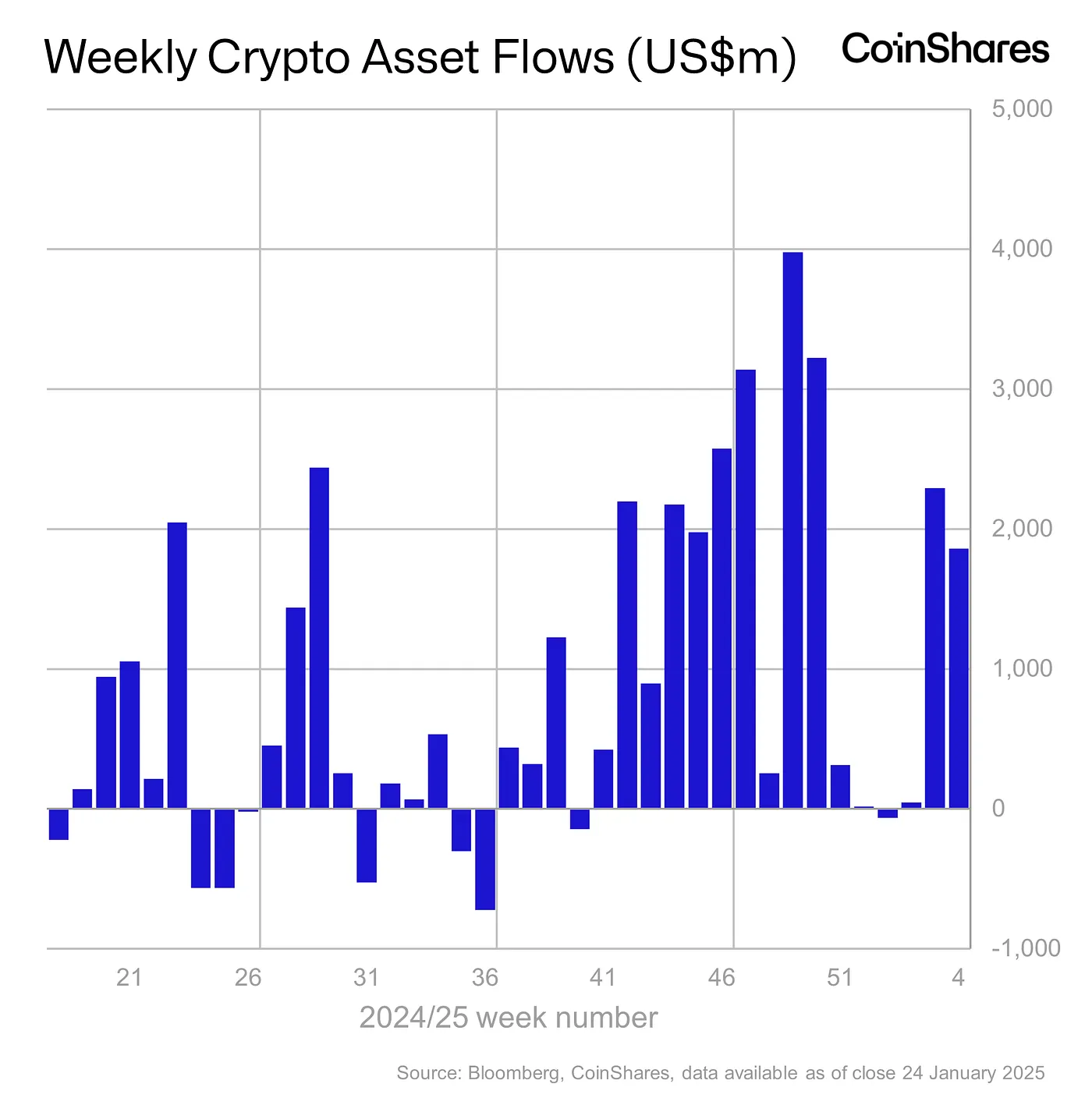
In a stark reversal of the bullish momentum that has characterized much of the final quarter of 2024, institutional investors have initiated a massive retreat from digital asset markets. According to the latest weekly fund flow report from CoinShares, a staggering $360 million in net outflows was recorded across the cryptocurrency sector, a figure largely driven by a massive liquidation of Bitcoin-linked financial products. This sudden cooling of institutional appetite comes despite the Federal Reserve’s recent decision to cut interest rates, highlighting a complex and often contradictory relationship between macroeconomic policy and investor behavior in the digital asset space.
The Catalyst: Jerome Powell’s Hawkish Turn
The primary driver behind this abrupt market contraction appears to be the shifting rhetoric from Federal Reserve Chair Jerome Powell. While the central bank did proceed with an interest rate cut—a move typically viewed as a bullish signal for risk-on assets—the accompanying commentary from Powell struck a noticeably hawkish tone.
Institutional investors, who often rely on forward guidance to allocate capital, interpreted Powell’s remarks as an signal that the Federal Reserve may be hesitant to continue its aggressive easing cycle into the final month of the year. The market, which had previously priced in a high probability of continued rate reductions, is now grappling with the uncertainty of a December pause. This ambiguity has triggered a “risk-off” response, with institutional desks moving to lock in profits or mitigate exposure to high-volatility assets.
Chronology of the Market Shift
The week’s data reveals a clear timeline of investor apprehension. As the Federal Open Market Committee (FOMC) deliberations concluded and Powell took to the podium, the market sentiment shifted within hours.
- Early Week: Expectations were high, with capital flowing into diversified crypto baskets as traders anticipated a dovish outcome from the Fed.
- Mid-Week (The Powell Effect): Upon the release of the Fed’s statement and the subsequent press conference, institutional outflows began to accelerate. The realization that future rate cuts were no longer guaranteed led to immediate selling pressure on spot Bitcoin ETFs.
- End of Week: By the close of trading, the cumulative total of Bitcoin outflows reached an eye-watering $945.89 million, representing one of the most significant single-week liquidations of the year.
- Regional Divergence: While the US market led the charge in selling—recording $439 million in total outflows—the European markets demonstrated a counter-cyclical resilience. Germany and Switzerland, in particular, saw net inflows of $32 million and $30.8 million, respectively, suggesting that non-US institutional players may be capitalizing on the price dips caused by the American sell-off.
Supporting Data: A Bifurcated Market
The most striking element of the current report is not the total outflow, but the divergence in asset performance. While Bitcoin experienced a massive institutional exodus, other altcoins—most notably Solana—saw significant capital inflows.
Bitcoin vs. The Altcoin Surge
The $945.89 million outflow from Bitcoin indicates a "flight to safety" or a profit-taking exercise among long-term institutional holders. However, this liquidity did not necessarily exit the crypto ecosystem entirely.
- Solana’s Remarkable Resilience: Solana (SOL) bucked the broader trend with a massive $421.11 million in inflows. This marks the second-largest weekly haul for the asset in its history, signaling that institutional appetite for Layer-1 smart contract platforms remains robust even as the primary bellwether, Bitcoin, falters.
- Ethereum and XRP: Ethereum (ETH) saw a modest inflow of $57.59 million, suggesting that institutional interest in the world’s second-largest cryptocurrency remains stable. Meanwhile, XRP recorded $43.18 million in inflows, further reinforcing the idea that capital is being rotated out of Bitcoin and into altcoins with strong utility-based fundamentals.
This bifurcation suggests that institutional investors are becoming increasingly sophisticated. Rather than a blanket exit from the sector, the current movement appears to be a reallocation strategy—moving capital away from Bitcoin’s store-of-value proposition and toward assets that offer high-speed transactional capability and ecosystem growth.
The Global Perspective: Regional Sentiment
The geographical breakdown provided by CoinShares is particularly revealing. The United States has long been the engine of institutional crypto adoption, but its recent volatility has created a vacuum.
The inflow of capital into European investment vehicles suggests that regional regulatory clarity and a different perception of global economic risks may be at play. While US-based funds are hyper-sensitive to Fed policy, European investors appear to be taking a longer-term view, treating the current market dip as an entry point for accumulation rather than a signal to exit. This contrast highlights the fragmentation of global liquidity and suggests that institutional crypto strategy is no longer a monolith.
Implications for the Future of Crypto Markets
The current market turbulence carries several critical implications for both retail and institutional market participants as we approach the end of the year.
1. The End of the "Easy Money" Correlation
For much of 2024, crypto markets moved in lockstep with the expectation of lower interest rates. The recent sell-off proves that the market is beginning to decouple from simple interest rate narratives. When the central bank’s guidance becomes murky, institutional capital is quick to retreat to cash or rebalance into assets with stronger short-term performance metrics, such as Solana.
2. The Rise of "Utility-Driven" Investing
The surge in Solana inflows serves as a strong indicator that institutional investors are moving beyond the "Digital Gold" narrative of Bitcoin. Large-scale capital is now increasingly focused on ecosystems that show high developer activity, low transaction fees, and tangible use cases. This shift could mark a new chapter in the crypto cycle, where the narrative pivots from macroeconomic hedging to infrastructure-based growth.
3. Increased Volatility and Liquidity Risk
The scale of the Bitcoin outflow ($945 million) creates a massive liquidity swing. For retail investors, this translates into increased volatility. When institutional desks sell in such large volumes, it creates downward pressure that can trigger stop-loss orders among smaller traders, often leading to rapid, deep wicks in the price charts. Investors should prepare for a period of heightened uncertainty as the market attempts to find a new equilibrium following this aggressive rebalancing.
Professional Analysis: A Necessary Correction?
Market analysts are divided on whether this trend represents the start of a protracted bear market or a necessary "shakeout" of leveraged positions. Historically, periods of intense institutional rebalancing have preceded major price floors. By clearing out short-term speculative positions, the market may eventually find a more stable base of "strong hands."
However, the uncertainty surrounding the December Fed meeting remains a significant headwind. If the Fed continues to signal a pause in rate cuts, institutional pressure on Bitcoin may persist. Conversely, if economic data prints softer than expected, forcing the Fed’s hand toward a more accommodative stance, the "smart money" may quickly reverse its position, leading to a sharp recovery.
Final Thoughts for Investors
As the market navigates this complex macroeconomic environment, the importance of due diligence cannot be overstated. The recent CoinShares data serves as a reminder that institutional investors are not immune to fear and uncertainty. Their recent actions—selling the market leader while aggressively buying into high-growth altcoins—reflect a strategy of diversification and tactical risk management.
For individual investors, the takeaway is clear: the crypto landscape is evolving. Following the "smart money" is no longer as simple as watching Bitcoin’s performance. The divergence between Bitcoin and assets like Solana proves that institutional capital is becoming more discerning.
Disclaimer: The information provided in this article is for educational and informational purposes only and does not constitute financial, investment, or legal advice. Cryptocurrency investments involve high risk, including the potential loss of principal. Readers should conduct their own independent research and consult with a certified financial advisor before making any investment decisions. The Daily Hodl does not endorse any specific asset or trading strategy.